

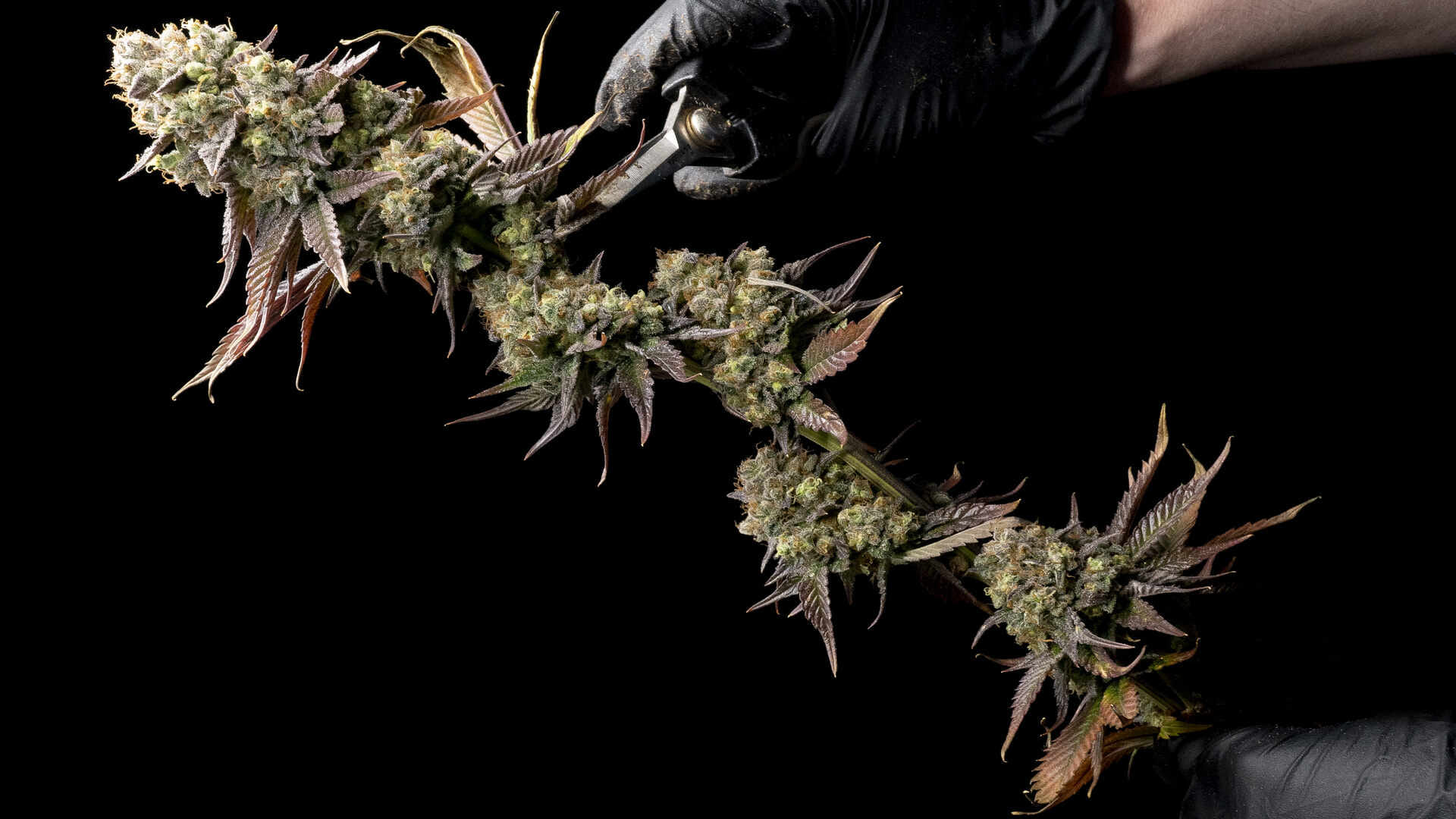
Growing cannabis can be wonderfully simple and surprisingly complicated all at the same time. A seed becomes a seedling, the seedling becomes a plant, and eventually - all being well - bud will develop. From there, the grower starts looking more closely: Are the buds developing evenly? Are they big enough? Is the plant getting enought light? Does anything need to be adjusted?
There's no single answer to how to grow weed that guarantees bigger, denser, or more resinous flowers. Bud development is shaped by genetics, light, nutrition, water, environmental conditions and the plant's overall structure. And these factors can interact in ways that aren't always predictable.
That might sound complicated, but it's also part of what makes growing so fulfilling. Rather than everyone chasing one perfect technique, growers can learn to notice the small things their plants are telling them and make thougtful adjustments along the way.
Key Takeaways
- Genetics set much of a plant's potential, so choose cultivars that suit your growing space and expectations.
- Light is fundamental to flower development, but more isn't automatically better. Aim for appropriate intensity and good canopy coverage.
- Stable environmental conditions matter. Avoid extremes in temperature and humidity and maintain gentle, consistent airflow.
- Nutrition is about balance rather than excess. Increasing feed isn't guaranteed to produce larger flowers.
- Training can help shape the canopy, but different cultivars can respond differently to the same technique.
- Observation is one of the grower's most useful tools. Small, thoughtful adjustments can often be more valuable than dramatic changes.
How To Grow Weed With Better Buds Starts With Genetics
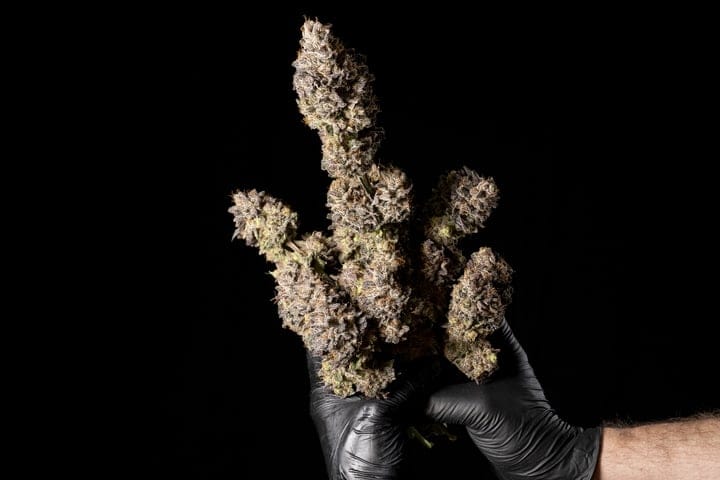
Before changing a light, adusting a nutrient mix, or reaching for the training ties, remember that the plant already has a blueprint. Locked away in that seed is the genetic code that will play a huge part in determining what the final plant is capable of.
Cannabis cultivars can differ greatly in flowering time, plant architecture, bud shape, and yield potential. One study examining seven cannabis genotypes found substgantial differences in average yield between them, even when they were grown under the same controlled conditions [1].
That makes genetics one of the quiet factors behind bud development. A cultivar bred to produce relatively compact flowers may respond very differently to the same growing conditions as one that naturally produces longer, more open buds. It's worth keeeping this in mind when assessing your plants. If one cultivar produces smaller buds than another, it doesn't necessarily mean something has gone wrong.
When choosing cannabis strains, consider the characteristics you actually want from the finished plant. Flowering time, structure, expected plant size, and the breeder's description can all help you choose something that suits your growing space and your expectations.
The better the match between plant and environment, the less the grower will have to try to make the plant behave differently from the way it naturally wants to grow
How Light Influences Cannabis Bud Development
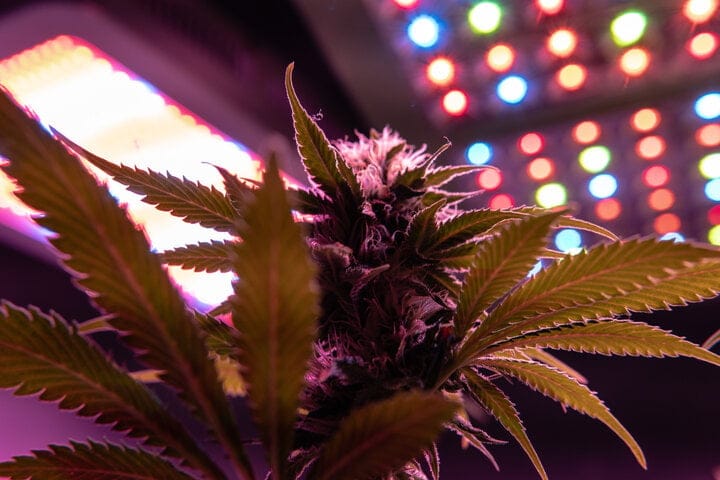
Light provides the energy a cannabis plant uses to build itself. This makes it one the most important environmental factors to consider when learning how to grow weed.
During flowering, the plant is investing considerable resources into its buds. Providing enough usable light across the canopy can help support that process. Of course, this is far easier to achieve in indoor grows, where cultivators have complete control over the lighting setup.
In a controlled indoor study, boosting light intensity increased bud yield across the conditions tested, although photosynthesis and cannabinoid concentration did not respond in exactly the same way [2].
That last point is well worth remembering. More light isn't automatically better simply because more light is available. Instead, think about the canopy. Is the upper growth receiving considerably more light than the lower branches? Are some flowers shaded by larger leaves or taller branches? Is the plant showing any signs that the light is becoming excessive, such as light burn?
For some growers, making gradual adjustments to light intensity or canopy height can be more useful than constantly changing the rest of the grow.
Reading the plant will reveal answers. A few simple observations can help:
- Look for obvious differences between the brightest and shadiest parts of the canopy.
- Make light changes gradually rather than dramatically.
- Watch the plant's response before deciding whether another adjustment is needed.
There's something really satisfying about finding that sweet spot where the canopy looks evenly engaged with the light. It's a small adjustment, but sometimmes those are the changes that make growing feel less like following instructions and more like understanding a living plant.
How To Grow Weed Better By Getting The Flowering Environment Right
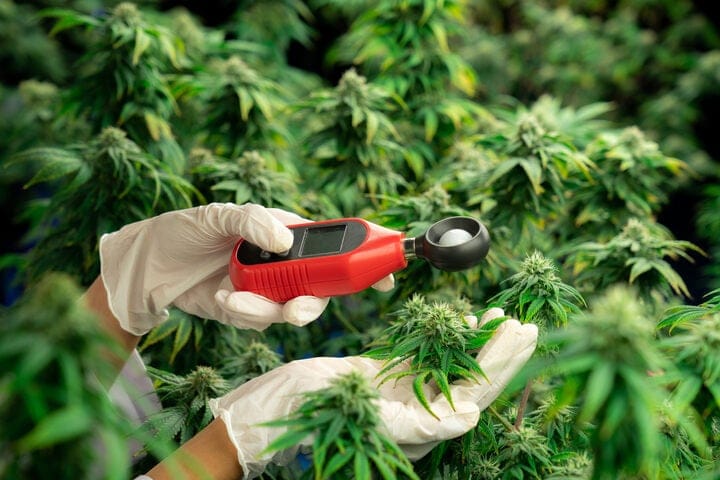
For growers wondering how to grow weed with better bud development, light is only part of the picture. Temperature and humidity influence transpiration, plant water relations and other physiological processes. Maintaining a stable environment can help a flowering plant make the most of the resources available to it.
Humidity is a particularly good example of why cannabis cultivation rarely works in absolutes.
A 2025 controlled study found that extremely high canopy RH (relative humidity) delyaed flowering and substantially reduced flowering biomass and cannabinoid concentrations in a CBD-dominant genotype [3]. But the researches specifically cautioned that their lower-humidity treatment should not be interpreted as a universal ideal for every cannabis plant.
That distinction matters.
Rather than obsessing over a single humidity number, learn how your growing space behaves. Notice how quickly moisture builds up after watering. Pay attention the air around a dense canopy. Check whether your extraction and circulation are keeping the enviornment reasonably stable.
Good airflow is useful here. It doesn't mean blasting the flowers with a powerful fan. Gentle, consistent movement can help prevent stagnant pockets of humid air from forming around dense foliage and flowers.
Related Article:How To Grow Weed Indoors: How To Control Humidity In A Grow Tent
Temperature deserves the same thoughtful approach. Recent research has found that higher temperatures can affect cannabinoid production and bud development, with responses varying between genotypes [4].
For the growers, the practical lesson is fairly simple: avoid extremes where possible, and make changes gradually. A stable environment is often more useful than constantly chasing a theoreitcal 'perfect number'.
Nutrition: Feed The Plant, Don't Chase Bigger Buds
Few subjects generate more advice in cannabis cultivation circles than nutrients. Flowering plants certainly need nutrients, but that doesn't mean increasing the feed whenever you want larger flowers. In a 2021 study of cannabis grown in a soilless system, yield responded to nitrogen and phosphorus in a nonlinear way, while yield did not respond significantly to potassium within the range tested [5].
In other words, the relationship between nutrients and bud development isn't simply more equals more. A better approach seems to be to provide an appropriate nutritional environment and pay attention to how the plant responds. Follow the recommendation for your growing medium and nutrient system, and be wary of making several changes at once.
If a plant is healthy and developing normally, there may be little to gain from constantly adjusting the nutrient mix. This is one of those quieter lessons that tends to come with experience. Sometimes good cultivation means resisting the temptation to intervene.
Watering works in much the same way. Plants need water, but their roots also need access to oxygen. Allowing the growing medium to remain excessively saturated for long periods can interfere with healthy root function.
Rather than watering according to a rigid calendar, learn the rhythm of your particular container, substrate and environment. A plant in a small pot under strong lights may dry considerably faster than one in a large container in a cooler room. That little bit of observation can make a surprisingly big difference.
How Canopy Structure Can Influence Bud Development
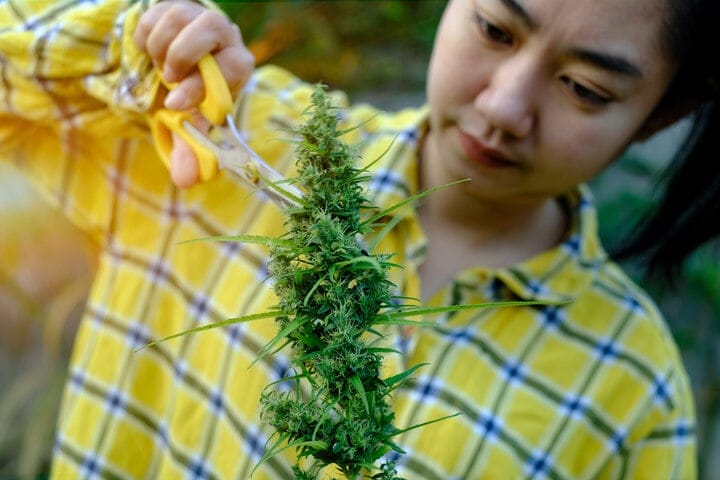
Training doesn't create extra genetic potential, but it can change how a plant occupies its growing space.
Techniques such as LST, topping and FIMming, and other forms of pruning can alter the arrangement of branches and growing points. The aim is often to create a more even canopy so that more flowering sites have useful access to light.
Research into pruning has produced interesting results, but it also demonstrates why we shouldn't promise that one technique will work identically on every plant. In one controlled study, topping increased the dry weight of cannabis flowers in the particular genotype tested, but other pruning treatments did not produce the same response.
That doesn't mean topping is the answer to how to grow weed with better bud development. It means plant structure can be manipulated, and some plants may respond favourably to particular approaches.
If experimenting with cannabis plant training techniques, study the plant in front of you rather than the plant in someone else's grow journal. They'll likely respond differently.
Consider:
- How much vertical space is available?
- Are branches naturally spreading or growing upright?
- Can the canopy be opened without removing large amounts of healthy growth?
- Does the plant recover quickly after training?
Training can become particularly satisfying when it stops being about forcing the plant into a predetermined shape and becomes more about helping it make better use of the space available.
How To Grow Weed By Learning To Read The Plant
Perhaps the most useful skill a grower can develop is observation. A cannabis plant doesn't need to look dramatically different every day to tell you something. Leaves can change posture. Flowers gradually swell. New growth can reveal whether the plant is comfortable with its environment.
The temptation, particularly for newer growers, is to respond to every small change. But healthy cultivation often involves knowing when to leave things alone. Try to make small observations each time you check the grow space. Look at the colour and posture of the leaves. Examine the canopy from a few different angles. Feel how heavy containers are before watering. Notice whether flowers are developing evenly. Check temperature and humidity rather than relying on how the room feels.
Understanding the plant, not just the process, becomes a vital skill in the great adventure of how to grow weed. Over time, all of these observations allow the grower to build a kind of growing vocabulary.
That's where the process becomes especially rewarding. You stop seeing the plant as a collection of problems that need fixing, start seeing the subtle rhythm of its development, and you become a better cultivator with every new cycle.
Bud Development FAQS
What makes cannabis buds develop well?
Bud development depends on several interacting factors, including genetics, light, nutrition, water availability and the growing environment. There isn't one technique that guarantees a particular result.
Does more light mean bigger cannabis buds?
Not necessarily, although research has shown that increasing light intensity can increase inflorescence yield under certain controlled conditions [2]. The plant's genetics and overall environment also matter, and excessive light can create problems of its own.
Should I give cannabis plants more nutrients during flowering?
Flowering plants have nutritional requirements, but increasing nutrients beyond what the plant needs isn't guaranteed to improve bud development. Research suggests that cannabis responds differently to different nutrient concentrations [5], making balanced nutrition more useful than simply feeding more.
Does humidity affect cannabis bud development?
It can. Humidity influences transpiration and the plant's water relations, while very high humidity can create an unfavourable flowering environment. A 2025 study found significant effects from extremely high canopy humidity in one CBD-dominant genotype [3], although those results shouldn't be treated as a universal humidity prescription.
Does training make cannabis buds bigger?
Training can alter plant architecture and light distribution, and some research has found yield benefits from particular pruning techniques in specific genotypes [6]. However, results can vary, so training is best viewed as a way of managing plant structure rather than a guaranteed yield-boosting trick.
What is the most important thing when learning how to grow weed?
There isn't a single most important trick. Learning to provide a suitable environment while paying attention to how your particular plant responds is arguably more useful than chasing individual techniques. Growing becomes easier when you learn the plant's rhythm and make changes for a reason.
--------------------------------------------------------
References:
[1] Janatová et al. (2018) — Yield and cannabinoids contents in different cannabis (Cannabis sativa L.) genotypes for medical use
https://www.sciencedirect.com/science/article/pii/S0926669017308221
[2] Rodriguez-Morrison, Llewellyn & Zheng (2021) — Cannabis Yield, Potency, and Leaf Photosynthesis Respond Differently to Increasing Light Levels in an Indoor Environment
https://www.frontiersin.org/journals/plant-science/articles/10.3389/fpls.2021.646020/full
[3] Corredor-Perilla, Kwon & Park (2025) — Elevated relative humidity significantly decreases cannabinoid concentrations while delaying flowering development in Cannabis sativa L.
https://www.frontiersin.org/journals/plant-science/articles/10.3389/fpls.2025.1678142/full
[4] Holweg et al. (2025) — High air temperature reduces plant specialized metabolite yield in medical cannabis, and has genotype-specific effects on inflorescence dry matter production
https://www.sciencedirect.com/science/article/pii/S0098847225000024
[5] Bevan, Jones & Zheng (2021) — Optimisation of Nitrogen, Phosphorus, and Potassium for Soilless Production of Cannabis sativa in the Flowering Stage Using Response Surface Analysis
https://www.frontiersin.org/journals/plant-science/articles/10.3389/fpls.2021.764103/full
[6] Saloner & Bernstein (2021) — Impact of Harvest Time and Pruning Technique on Total CBD Concentration and Yield of Medicinal Cannabis


