
If you're new to growing cannabis, one of the most common issues that you may encounter is light burn. If the leaves at the top of your plants appear crispy and yellow, there's a good chance your grow lights are too intense or positioned too close, causing damage. Simply put, light burn occurs when cannabis plants receive too much light. This can harm both the buds and leaves, ultimately affecting plant growth and reducing overall quality. In this article, we'll take a closer look at what light burn is, how to prevent it, and how to fix it to ensure your plants stay healthy and thrive.
What Is Light Burn on Cannabis Plants?
Light burn occurs when cannabis plants are exposed to more light than they can handle. While light is essential for photosynthesis and plant growth—without it, your cannabis plants wouldn’t grow at all—too much of it can be harmful.
Overexposure to intense light or excessive heat from grow lights can cause significant damage, affecting both the health and yield of your plants. This issue primarily affects indoor growers using artificial lighting, as outdoor plants are rarely subjected to such extreme intensity. However, outdoor growers may still encounter light stress if plants are improperly transitioned from an indoor environment to full sunlight without gradual acclimation. Understanding the balance between providing enough light and preventing overexposure is crucial for maintaining healthy cannabis plants and achieving optimal yields.
Cannabis Light Burn Symptoms

To prevent and fix light burn, you first need to recognize its symptoms. Catching light burn early allows you to minimize damage before it significantly impacts your plants. Here are the key signs to watch for:
Yellow or Brown Leaves
One of the most common symptoms of light burn is discoloration of the leaves, particularly at the top of the plant where they are closest to the grow lights. Affected leaves may turn yellow or even brown as the burn progresses. If left unchecked, the discoloration will continue to spread, leading to further plant stress.
Leaf Curling and Dryness
Another clear indicator of light burn is when leaves start to curl upwards. This is often a sign that they are becoming too dry due to excessive light exposure. Over time, light-burned leaves become crispy, dry, and curled at the edges. As the damage worsens, the leaves will eventually die, reducing the plant’s ability to photosynthesize and stunting its overall growth.
Bleached Buds and Droopy Tops
Light burn doesn’t just affect the leaves—it can also cause buds to lose their color. If the buds at the top of the plant appear bleached or pale, they may be suffering from overexposure. Just like how prolonged sunlight can bleach hair, excessive light can bleach cannabis buds, diminishing their quality. Studies have found that it is excessive amount of red light in the spectrum that causes bleached buds.
Additionally, branches may begin to droop under intense light stress. Since light burn primarily affects the upper portions of the plant, this symptom is another strong indicator that your grow lights may be too close or too intense.
How to Prevent Light Burn on Cannabis Plants
Preventing light burn comes down to carefully planning your lighting setup—choosing the right type of lights, determining their intensity, and positioning them correctly. Here are key steps to avoid light burn in your grow space:
Proper Light Distance and Wattage
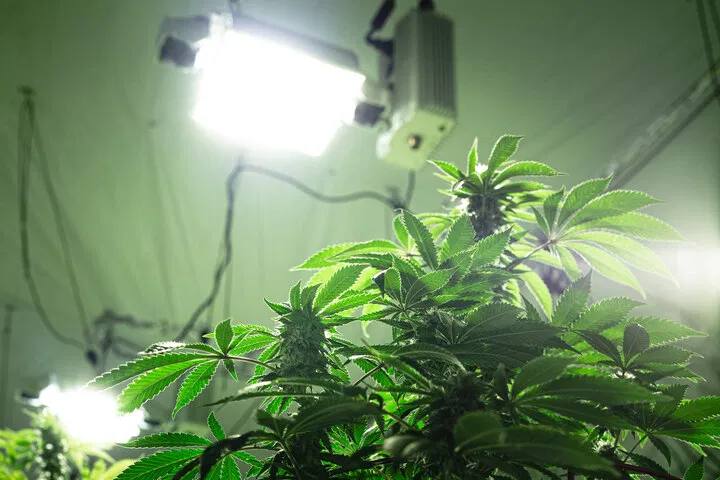
The most common cause of light burn is grow lights that are either too strong, too close to the plants, or both. Since every grow light is different, it’s always best to refer to the manufacturer’s guidelines for your specific grow light model. Additionally, as a general rule, many growers adamantly say that you shouldn’t exceed 50 watts per square foot in your grow space.
Use a PAR Meter
A PAR meter is a valuable tool for measuring light intensity and ensuring your plants receive the right amount of light without being overexposed. Here are some general PAR ranges that you can aim for during the different stages of growth
- Seedlings/Clones/Mother Plants: 200-400 PPFD
- Vegetative Stage: 400-600 PPFD
- Flowering Stage: 600-900 PPFD
The recommendations above apply to an 18/6 light cycle for the seedling and vegetative stages and a 12/12 light cycle for the flowering stage.
Environmental Control
Although high temperatures and low humidity won’t directly cause light burn, they can make your plants more susceptible to it. Maintaining a stable grow environment helps reduce stress on your plants and lowers the risk of light burn. Here are some general temperature and humidity ranges that you can aim for to prevent light burn:
Temperature: Keep your grow room below 77°F (25°C) to prevent excessive heat stress.
Humidity Levels: Aim for 50%–70% RH during the vegetative stage and 40%–60% RH during the flowering stage.
How to Fix Light Burn on Cannabis Plants
Unfortunately, once light burn has occurred, you won’t be able to fully reverse the damage. However, you can prevent further harm and help your plants recover by taking the right steps.
Adjust Light Distance and Intensity
The first and most important step is to increase the distance between the grow lights and the plant canopy. You can do this by either raising the lights or lowering the plants, ensuring they are positioned according to the manufacturer recommended distances.
Additionally, cannabis plants should receive no more than 50 watts of light energy per square foot. Be sure to calculate the total wattage reaching your plants and adjust accordingly to prevent excessive light exposure.
Optimize Environmental Conditions
As mentioned earlier, both temperature and humidity levels play a role in preventing light burn. Ensure that these conditions remain within optimal ranges for each stage of plant growth to reduce stress and support recovery.
Will Cannabis Plants Recover from Light Burn?

If you follow the steps above, plants that have experienced mild to moderate light burn should recover and begin producing healthy new growth. However, any leaves or buds that are severely damaged—especially bleached buds—are unlikely to regain potency, flavor, or color. Bleached buds will not recover and may have reduced cannabinoid and terpene content.
How to Tell Light Burn from Nutrient Burn
A common issue growers face is distinguishing light burn from nutrient burn, as they can look quite similar. However, there are key differences:
Light Burn: Primarily affects the uppermost parts of the plant closest to the light source. Leaves turn yellow or brown and feel firm to the touch.
Nutrient Burn: Usually starts at the lower parts of the plant and moves upward. Leaves turn brown, become limp, and may curl downward.
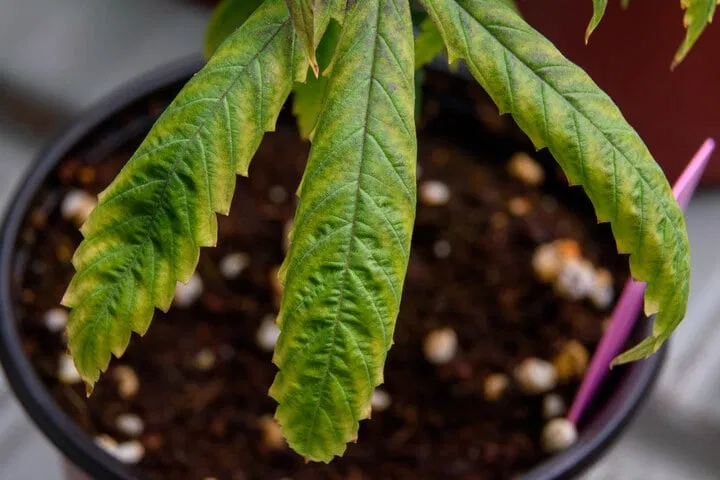
Recognizing these differences is crucial, as misdiagnosing the issue could lead to ineffective or even harmful corrective measures.
Diagnosing and Fixing Light Burn in Cannabis Plants: Final Thoughts
The bottom line is that if your grow lights are too close or too intense, your plants will likely suffer from light burn. However, this issue is easily preventable by keeping your lights at an appropriate distance and ensuring they are not too strong for your grow space. By monitoring light intensity, adjusting distance, and maintaining proper environmental conditions, you can protect your plants, prevent light burn, and ensure healthy growth throughout the entire cycle.