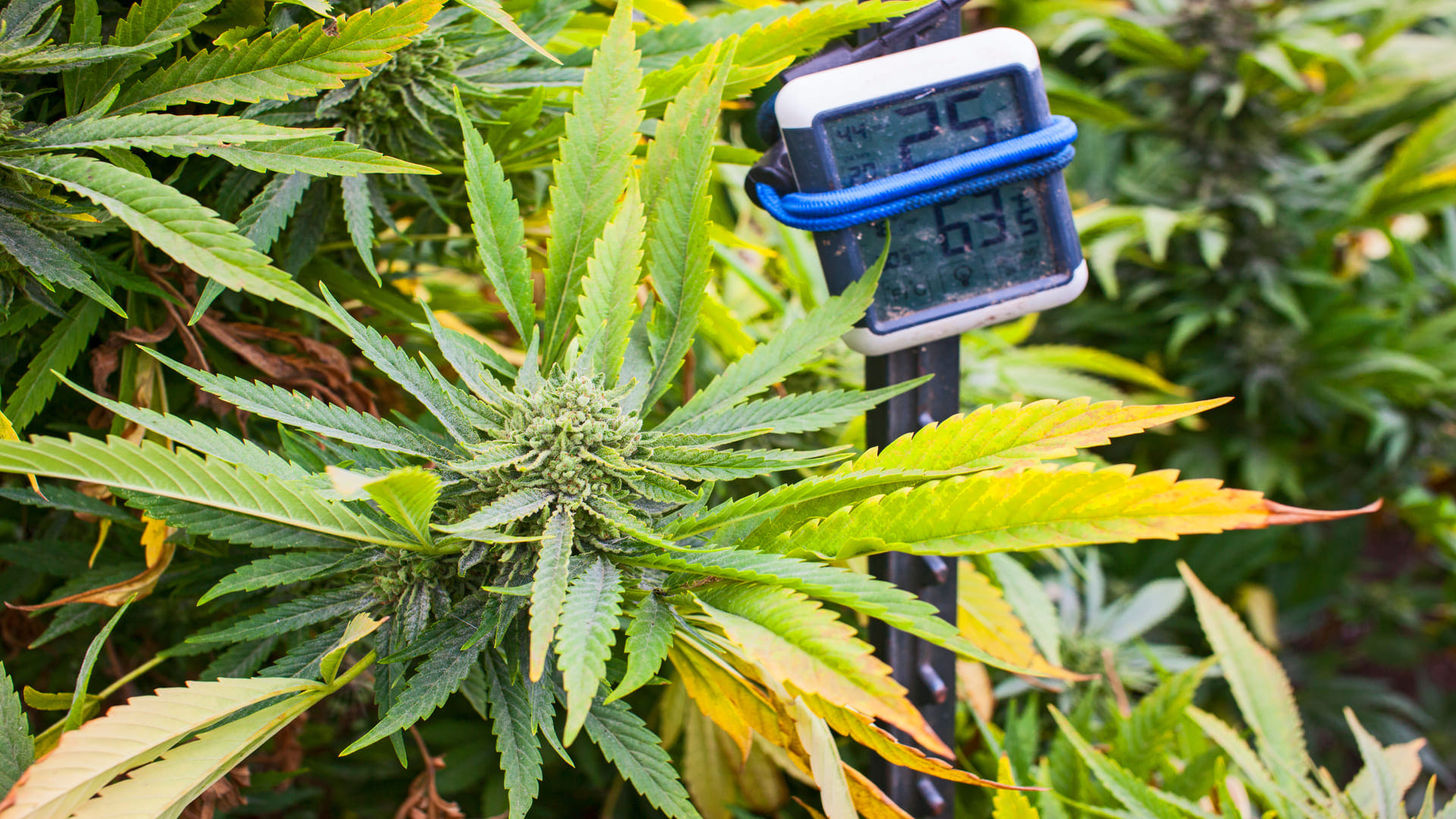

Temperature is one of those factors that growers often feel before they fully understand it. It's noticed in stretched seedlings that curl upward, or in slow, stubborn growth that never quite finds momentum. Yet despite how influential it is, temperature is still often treated as a background setting rather than a core part of the plant's environment.
This guide breaks down the ideal cannabis temperatures across every stage of growth, from germination through to curing. More importantly, it explains why those ranges matter in real terms, not just as numbers on a thermostat. Cannabis doesn't respond to perfection - it responds to balance, consistency, and the subtle rhythm of its environment.
Understanding Ideal Cannabis Temperatures

Cannabis is a highly responsive plant. Its metabolic rate, nutrient uptake, transpiration, and photosynthesis all shift depending on temperature. When conditions are in range, enzymatic activity runs smoothly and growth feels steady and predictable. When temperatures drift too far in either direction, the plant compensates - often at the cost of efficiency or quality.
Related Article:How A Weed Plant Uses Light: The Science of Photosynthesis
Warm conditions generally accelerate metabolism, and cooler temperatures tend to slow it down. But the relationship isn't linear or simple. Too much heat increases stress and water demand. Too much cold reduces nutrient mobility and can stall development entirely.
The goal is not to chase a single "perfect number," but to maintain ideal cannabis temperatures that match the plant's developmental stage.
Ideal Cannabis Temperatures by Growth Stage
| Growth Stage | Day Temperature | Night Temperature |
| Germination | 22-26°C | 22-26°C |
| Seedling | 22-26°C | 20-24°C |
| Vegetative Growth | 22-28°C | 18-24°C |
| Early Flowering | 20-26°C | 18-22°C |
| Late flowering | 18-24°C | 16-20°C |
| Drying | 15-20°C | - |
| Curing | 15-21°C | - |
These ranges reflect typical controlled-environment horticulture reseach and commercial practice, where stability often matters as much as the absolute temperature itself.
Ideal cannabis temperatures for germination
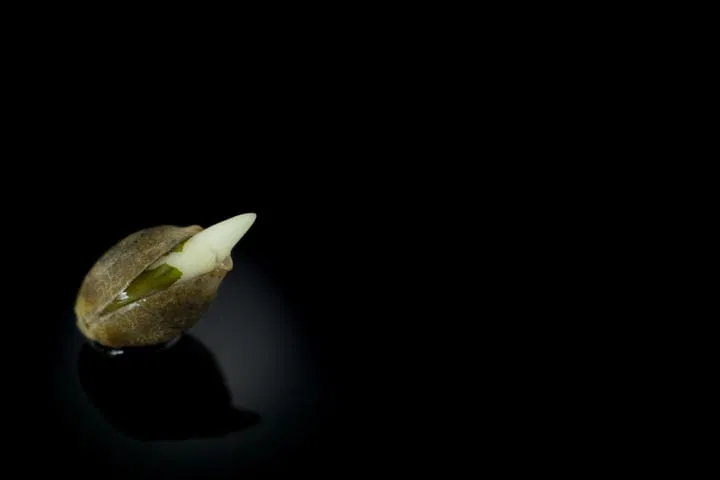
Germination is less about growth and more about activation. Seeds are essentially waiting for environmental confirmation that conditions are safe to begin development.
At this stage, ideal cannabis temperatures sit between 22-26°C consistently. Within this range, enzyme activity increases and water uptake becomes efficient enough to trigger germination. If temperatures drop too low, germination slows dramatically. If they rise too high, the seed can become stressed or dehydrated before it fully activates.
Related Article:Why Didn't My Cannabis Seeds Germinate?
There's a quiet simplicity here: consistency matters more than intensity. A stable environment communicates reliability to the seed, and that alone improves outcomes.
Ideal cannabis temperatures for the seedling stage
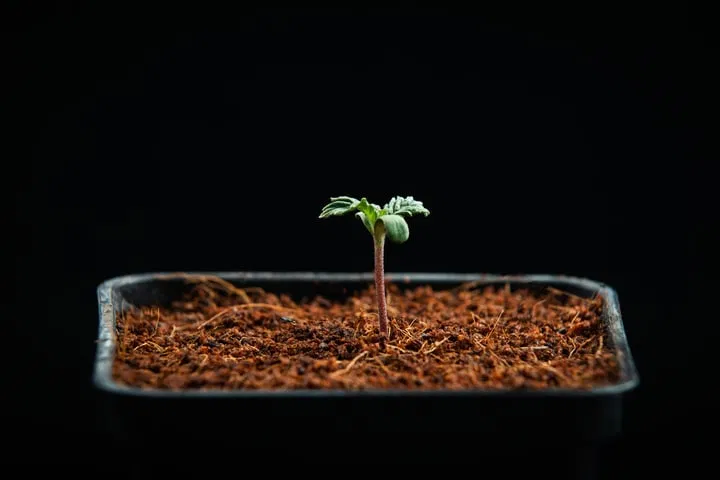
Seedlings operate with limited reserves and a developing root system. This makes them highly sensitive to environmental changes. The ideal cannabis temperatures for seedlings remain similar to germination - around 22-26°C during the day, but slightly cooler at night.
At this stage, temperature begins to directly influence plant structure. Warmer conditions within range encourage steady cell division and compact growth. Cooler temperatures can slow development, but also reduce the risk of stretching when paired with suitable light levels.
The seedling stage isn't about pushing growth. It's about setting a stable foundation that the plant can build on without stress.
Related Article:3 Steps To Master The Seedling Stage
Ideal cannabis temperatures for vegetative growth

The vegetative stage is where cannabis expresses its most rapid structural development. Now's the time where leaves expand, stems thicken, and root systems extend aggressively. This is where the plant really begins to pack on size. Here, ideal cannabis temperatures shift slightly higher, between 22-28°C during the light cycle and 18-24°C at night.
Within this range, photosynthesis operates efficiently, and nutrient transport remains active. The plant is effectively in a phase of construction, building the framework it'll come to rely on during flowering. But pushing temperatures too high here can create imbalance. Transpiration increases causing water demands to rise, and nutrient uptake can become inconsistent. The plant may well continue to grow, but it'll have to work harder for diminishing returns.
This is also where environmental synergy becomes important. Temperature doesn't act alone. It continuously interacts with humidity, airflow, and light intensity.
Ideal cannabis temperatures for the flowering stage

As cannabis transitions into flowering, its priorities change. Growth (height) slows and energy shifts toward bud production and resin development. Ideal cannabis temperatures decrease slightly during this phase, typically falling inside a range of 20-26°C during the day and somewhere between 18-22°C at night.
This adjustment supports more stable metabolic conditions. Lower temperatures also help preserve the aromatic compounds that contribute to terpene profiles. When temperatures remain too high during flowering, the plant can experience increased stress and reduced resin quality. On the other hand, overly cool conditions may slow bud development and reduce overall metabolic activity.
Flowering is not about pushing the plant. It's about maintaining balance while it completes its reproductive cycle.
Ideal cannabis temperatures for late flowering
In late flowering, with the plant moving toward harvest, the focus shifts toward preservation. The plant is finishing its life cyle, and environmental control becomes more about protecting quality than encouraging growth. Ideal cannabis temperatures here sit around 18-24°C and 16-20°C at night.
Cooler conditions in this range can help maintain terpene integrity and reduce stress-induced degradation. Many experienced growers deliberately allow a slight drop in temperature during the final weeks - not as a rule, but as a subtle environmental cue.
At this stage, small environmental changes can influence final expression more than major interventions earlier in the cycle.
Ideal temperatures for drying and curing
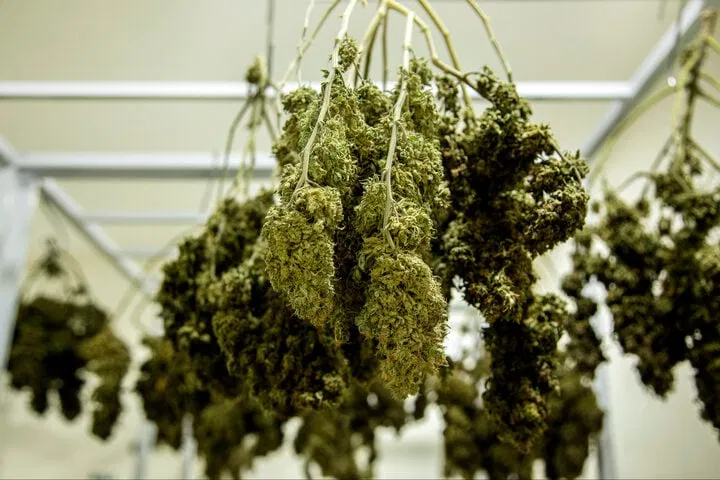
Post-harvest conditions are often overlooked, yet they're a vital component in determining final quality. During drying, ideal cannabis temperatures sit between 15-20°C with controlled airflow. This slows moisture loss enough to preserve aromatic compounds while guarding against the dreaded mould.
During curing, a very slightly wider range of 15-21°C is typically maintained. At this stage, stability is absolutely vital. The goal isn't a transformation - it's refinement, allowing the moisture inside the buds to redistribute evenly over time.
Taking the extra time to set up drying and curing environments correctly will pay dividends. These stages shape the aroma, smoothness, and overall experience of the end product as much as cultivation itself.
Related Article:Top Tips On Drying And Curing Cannabis Buds
Temperature and Vapour Pressure Deficit
Temperature alone does not define a plant's comfort. Vapour pressure deficit (VPD) describes how temperature and humidity interact to influence transpiration. Higher temperatures mean an increase in how much water the plant loses through leaves. Lower humidity amplifies this. But when balanced correctly, VPD supports efficient nutrient movement and gas exchange.
This is why two grow rooms at the same temperature can perform very differently depending on humdity levels. The most effective growers treat temperature and humdity as a single system rather than separate controls.
Understanding this relationship is often what separates a stable grow from an inconsistent grow.
Related Article:Understanding Vapor Pressure Deficit And Its Role In Cannabis Cultivation
Common Mistakes When Managing Cannabis Temperature
Even with a solid understanding of ideal cannabis temperatures, a few common issues can still appear.
Overheating during lights-on cycles is one of the most frequent. This can lead to excessive transpiration and stress responses from the plant that are easily mistaken for nutrient issues. That makes diagnosis trickier, especially for inexperienced cultivators.
Another common mistake is ignoring night-time temperatures. Large swings between day and night can disrupt the plant's metabolic rhythm, so it's key to manage the change in light with care.
Lastly, relying on temperature alone without consideration for airflow and humidity will often lead to incomplete environmental control. Plants don't respond to isolated conditions - they respond to the entire environment at once.
Ideal Cannabis Temperatures: Bringing It All Together
Temperature management is not about precision for precision's sake. It's about creating conditions where the plant can grow without havng to compensate. Across all stages, the ideal cannabis temperatures form a pattern rather than a fixed rule. Warmth supports growth, and cooler conditions support preservation. But consistency is key.
When viewed through this lens, growing cannabis becomes less about control and more about attentiveness. Small adjustments replace large corrections. Observation can become more valuable than intervention. In the end, growing cannabis is less about forcing outcomes and more about creating an environment where the plant can move through its life cycle without resistance.
That's where consistency lives, and consistency is where quality begins.
FAQ: Ideal cannabis temperatures
What is the ideal temperature for growing cannabis?
The ideal cannabis temperatures generally sit between 22–28°C during the day in vegetative growth and slightly lower during flowering, around 20–26°C. Night temperatures are typically 4–6°C cooler.
What temperature is too hot for cannabis?
Sustained temperatures above 30°C can begin to stress cannabis plants, leading to increased transpiration, slower growth efficiency, and potential loss of terpene quality during flowering.
Can cannabis survive cold temperatures?
Cannabis can tolerate short periods of cooler temperatures, but prolonged exposure below 15°C will slow metabolic activity and stunt growth. Frost or near-freezing conditions can cause severe damage.
Should temperatures drop at night?
Yes, a moderate drop in temperature at night is natural and beneficial. A difference of around 4–6°C helps support healthy metabolic rhythms without stressing the plant.
What is the best temperature for cannabis flowering?
During flowering, the ideal cannabis temperatures are typically 20–26°C during lights on and 18–22°C during lights off. Cooler late-flower conditions can help preserve aroma and terpene expression.
Does temperature affect yield and potency?
Yes. Temperature influences photosynthesis, nutrient uptake, and terpene stability. Consistently stable temperatures within the ideal range support better overall plant performance and final quality.
Is temperature or humidity more important?
Neither works in isolation. Temperature and humidity interact through VPD (vapour pressure deficit), meaning the best results come from managing both together rather than focusing on one alone.
-----------------------------------------------------------------
References:
[1] Frontiers in Plant Science – Environmental factors in cannabis production
https://www.frontiersin.org/articles/10.3389/fpls.2021.729113/full
[2] Frontiers in Plant Science – Cannabis yield and environmental conditions review
https://www.frontiersin.org/articles/10.3389/fpls.2023.1276697/full
[3] MDPI Plants – Controlled environment cannabis cultivation parameters
https://www.mdpi.com/2223-7747/13/2/177
[4] Taiz et al., Plant Physiology and Development (Oxford University Press)
https://global.oup.com/academic/product/plant-physiology-and-development-9781605357909
[5] Annual Review of Plant Biology – Temperature effects on plant development
https://www.annualreviews.org/doi/10.1146/annurev-arplant-050718-100407
[6] Cannabis Research Journal – Postharvest drying and quality preservation
https://cannabisresearchjournal.biomedcentral.com/articles/10.1186/s42238-023-00195-8