

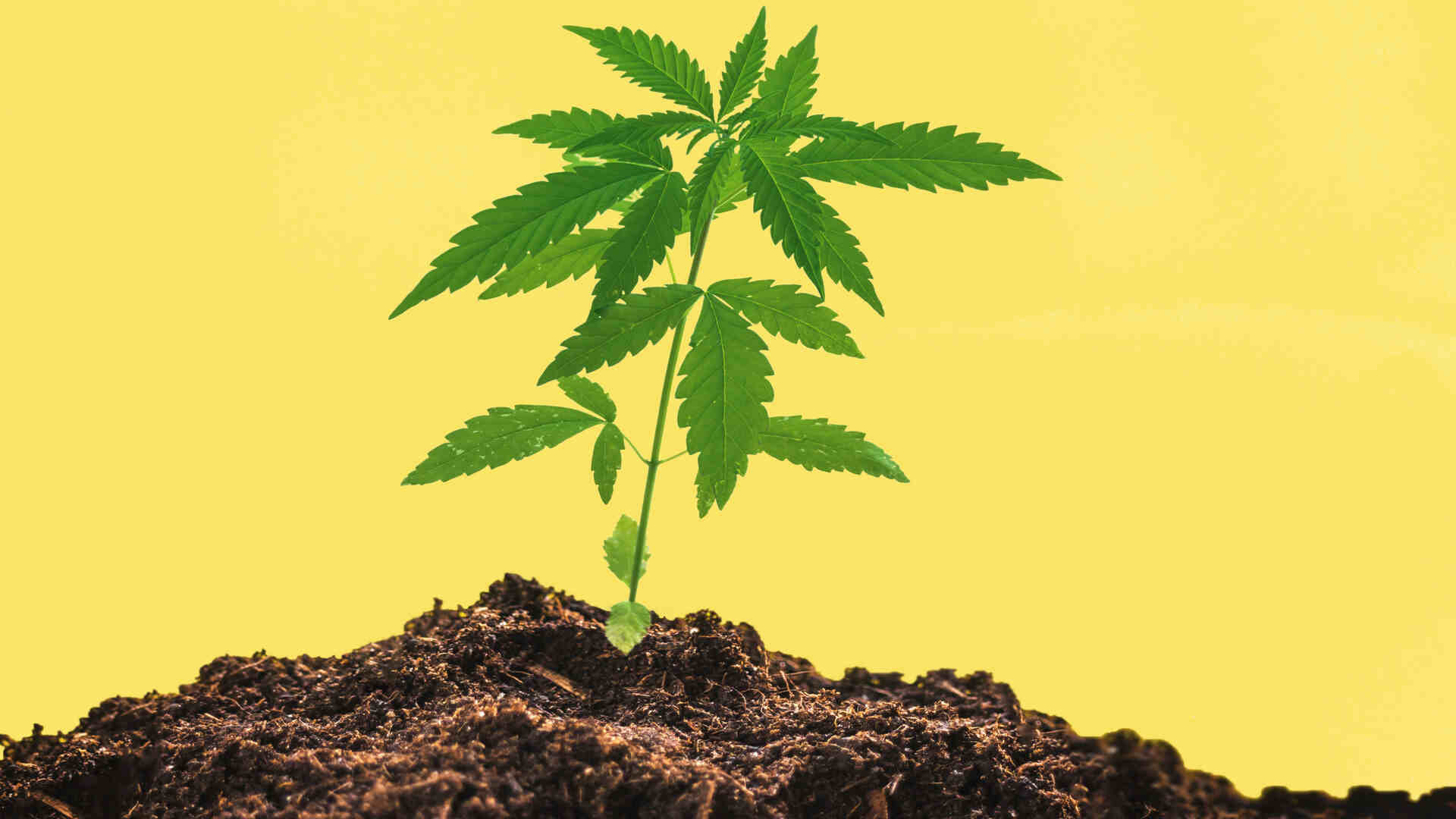
When choosing a growing medium for cannabis plants, you’re somewhat spoiled for choice. There’s the tried-and-true soil method, hydroponics, rockwool, and coco coir. Of those four, growing in coco feels like switching your plants to “sport mode”. Many growers find the plant responds faster, although it requires a little more of your attention. If you’ve ever wondered how to grow cannabis in coco coir without complicating things, you’ll want to bookmark this guide.
Understanding Coco Coir as a Growing Medium
Coco coir is one of those materials that sounds exotic until you realise it’s basically a by-product. It’s made from the fibrous husk of coconuts, processed into a light, springy growing medium that sits somewhere between soil and hydroponics. And that in-between quality is exactly why it’s become so popular with cannabis growers. Compared to soil, coco is far more consistent. Good soil is alive, complex, and forgiving – but it’s also variable. You need to understand how to choose a good soil for growing cannabis, and one bag can behave very differently from the next. Coco, by contrast, is inert. It doesn't bring much nutrition to the party, but what it does offer is control. You know what’s in it. More importantly, you know what isn’t.
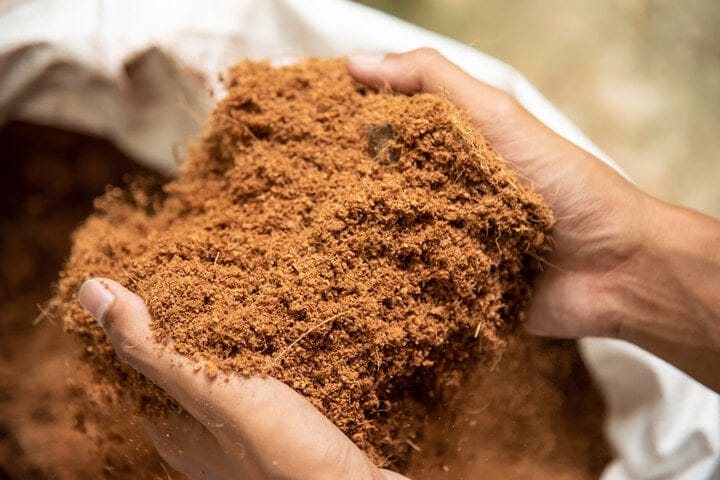
Physically, coco has excellent structure. It holds onto moisture while still allowing plenty of air around the roots. That balance – water retention without waterlogging – is a big deal for fast-growing plants like cannabis, which demand oxygen at the root zone. Soil can compact over time, but coco tends to stay open and breathable.
There’s some real science behind this. Coco has a high cation exchange, meaning it can temporarily hold onto nutrients and release them gradually, rather than dumping everything at once. That gives growers a buffer – not as hands-off as soil, but far more forgiving than pure hydro.
Of course, there are tradeoffs. Coco doesn’t feed plants on its own, and it doesn’t have soil’s biological safety net. It rewards attention and consistency but punishes neglect faster than soil ever will. Coco also requires proper processing; poor-quality coco can cause more problems than it solves. Coco coir suits cannabis because it matches the plant’s pace. It’s clean, predictable, and responsive. Not magic – just well aligned with what the plant actually wants.
What Coco Isn’t
Before getting into how to grow cannabis in coco, it helps to clear up a few assumptions. Coco coir is often described as soil-like, but that comparison only goes so far. Coco isn’t soil, and treating it as such is a bad idea. Soil is a living system that contains organic matter, microbes, and stored nutrition that slowly feeds cannabis plants over time. With coco, what you put in is what the plant gets.
Why Cannabis Responds Well to Coco
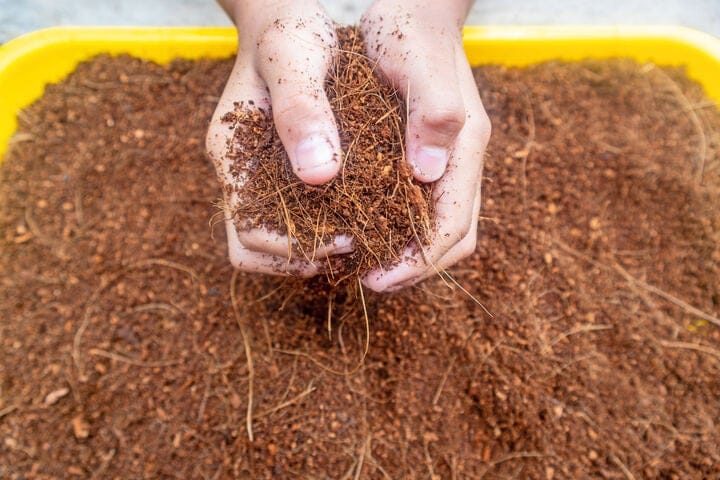
Cannabis is a fast-growing, oxygen-hungry plant. Its roots like moisture, but they really don’t like sitting in stagnant conditions. Coco’s physical structure suits that biology almost perfectly.
The fibres hold water efficiently, but they also maintain plenty of air space. In soil, achieving that balance depends heavily on texture, drainage, and compaction. In coco, it’s built in.
When people talk about how to grow cannabis in coco successfully, what they’re really describing is a system that matches the plant’s natural pace and appetite.
How To Grow Cannabis in Coco
Step 1: Prep Your Pots and Your Coco
When growing cannabis with coco, start by getting the basics done properly and the rest of the run gets easier.
Choose The Right Pot Size
For photoperiods, many growers end up in 11-15L final pots. Autoflowering varieties often do well if you put them straight into their final pots (8-15L) as they don’t love being transplanted.
Use Quality Coco
Go for pre-rinsed, pre-buffered coco from a reputable brand. If you’re rehydrating bricks, rinse with plain water, then run a light nutrient solution with added calcium and magnesium through it before use. This will help avoid early deficiencies.
Fill and Lightly Compact
Fill the pot with coco, tap the sides to settle it, and gently – gently – press down with your fingers. Cannabis will respond well when the pot is evenly filled with coco but not brick hard. Roots benefit from the air pockets in coco, so be careful not to crush them out of existence.
From the very start, you’re already practicing how to grow cannabis in coco the smart way: airy structure, clean medium, and a pot size that matches your plan.
Step 2: Starting Seedlings or Clones in Coco
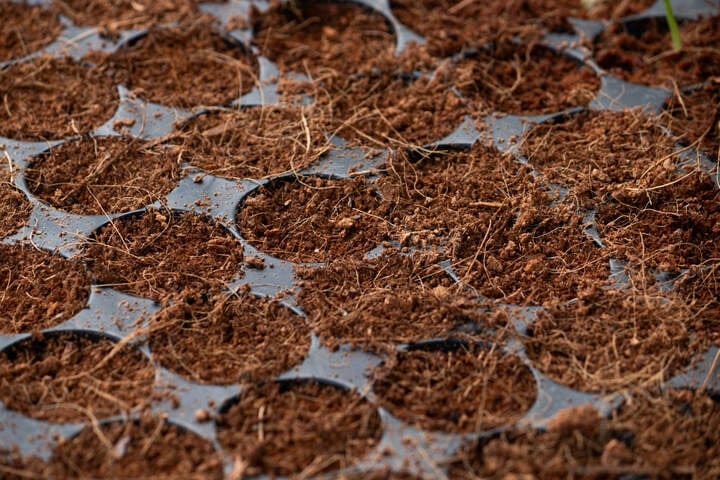
As mentioned, coco behaves differently from soil, especially with young plants.
Use smaller starter pots: Seedlings and clones are happy in something like 0.5-1L pots to begin with. This lets the root zone fill out quickly and keeps watering manageable.
Pre-wet the Coco
Before planting, soak the coco with a mild nutrient solution (around seedling strength – check manufacturer’s instructions) and a touch of Cal-Mag. Let any excess run off. Coco shouldn’t be bone dry at any point.
Plant Gently
Pop your seedling or clone into a small hole in the top of the coco. Avoid overhandling and cover lightly. Keep the top layer of coco just moist – not swampy, and not dusty.
At this stage, one of the keys of how to grow cannabis in coco is consistency: don’t let the coco dry out completely, and don’t drown the tiny root system either.
Step 3: Watering the Coco
Here’s where coco really stops behaving like soil. With soil, you only need to water every few days. With coco, more frequent watering is necessary.
Water More Often
Coco likes to stay moist. Once your plant develops a few sets of leaves, successful growers usually water once a day, then often twice a day in mind to late veg and flowering, depending on pot size and environment.
Always Feed When You Water
Since coco is essentially inert, every watering is a feed. Use a coco-specific nutrient line if possible and include Cal-Mag unless your base nutrients already cover it.
Aim for runoff
Give enough of the nutrient solution so that 10-20% runs out of the bottom of the pot. This helps prevent salt build-up and keeps the root zone stable. Read 6 Tips To Understand The Cannabis Root Zone to gain a full understanding of what your plant's roots need.
Watch the Weight of the Pot
Lift the pot before and after watering. You’ll quickly learn the “light and thirsty” vs “heavy and happy” feel. That’s more reliable than staring at the surface.
A fundamental rule of how to grow cannabis in coco is this: Keep the coco moist, feed every time you water, and don’t be scared of frequent watering. There’s much less risk of overwatering coco than there is when growing cannabis in soil.
Feeding and Managing Growth in Coco
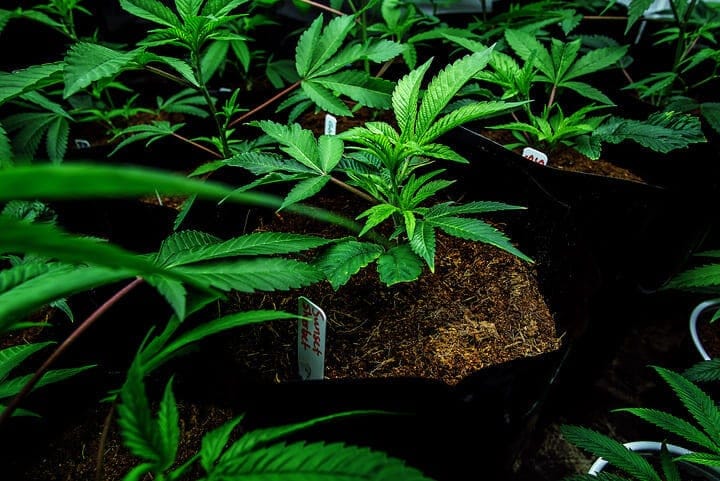
Growers who use coco coir often cite the feedback loop of the medium as one of its advantages. Coco is highly responsive, so your plants will tell you quickly if they’re happy or not.
Start light, build up
Begin at the lower end of the nutrient schedule and only increase if the plants look hungry (yellowing lower leaves, pale foliage, slowed growth). Dark, clawed leaves mean you’ve gone too hard.
Mind your pH.
For coco aim for a nutrient solution around 5.8-6.0. This keeps the most essential elements and avoids nutrient lockout.
Further Reading:How Do I Fix Nutrient Lockout In Cannabis Plants?
Calcium and magnesium are key:
Coco tends to hold onto calcium and magnesium, so cannabis in coco often needs a bit more of both. If you see rusty-looking spots or pale new growth, add some Cal-Mag.
Train as usual
All the plant training techniques you’d use in soil work the same in coco – topping, LST, and SCROG are all fine. Just rememebr the plants may grow faster, so be ready to adjust those ties and supports more often.
Further Reading:Introduction To Cannabis Plant Training Techniques
This is the part of how to grow cannabis in coco that feels like driving a responsive car: small tweaks show up quickly, so don’t make huge swings in feed strength from one day to the next.
Step 5: Transplanting (potting up) in coco
As long as you’re not growing autos, potting up is your friend.
Transplant when roots circle the pot: When you see roots at the drainage holes and the plant is growing steadily, it’s time to move up a size.
Pre-soak the new pot
Fill the larger pot with coco and soak it with your usual nutrient solution. Let it drain so it’s evenly moist.
Move quickly and cleanly
Slide the plant out of its old pot, place it into a hole in the new one, and then backfill with coco. Water in again to settle everything.
Transplanting in coco is usually less stressful than in soil because the root ball stays moist and airy. When done right, plant growth barely skips a beat.
Further Reading:A Guide To Transplanting Your Cannabis Plants
Step 6: Flowering in coco
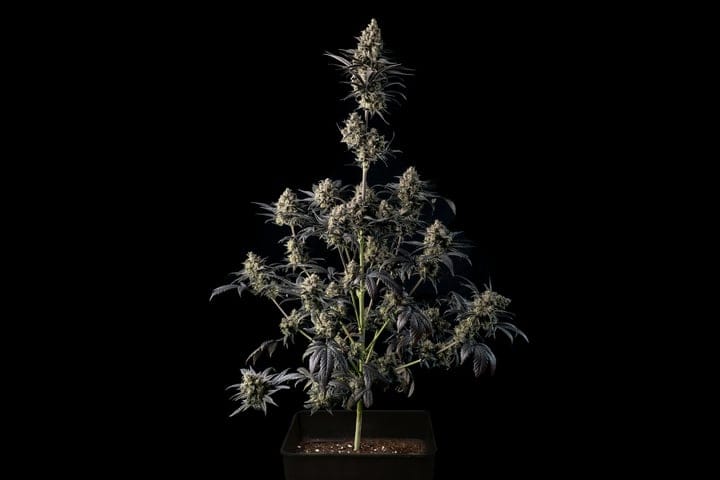
Once you flip to 12/12 lighting to initiate flowering, coco really shows its strengths.
Increase feeding frequency, not necessarily strength
As the plant gets bigger, it often prefers more frequent feeds rather than stronger ones. Many growers stick close to mid-range nutrient strength and simply water more often.
Support those buds
Coco-grown plants can stack heavy flowers. Use stakes, nets, or ties to keep branches upright and well-spaced.
Watch out for salt build-up
If leaf tips burn or you see crusty deposits on top of the coco, give a light flush with pH-balanced water and then resume feeding at a slightly lower strength. Knowing how to grow cannabis in coco coir through flowering is mostly about setting the right rhythm: same feed, same pH, same timing, day after day, while the plant does its thing.
Step 7: The Final Weeks and Finishing Strong
Dial nutrients back near the end
In the last week or so, many growers reduce nutrient strength or switch to plain, pH-balanced water to let the plant use up what’s stored in the leaves.
Keep the coco moist right to harvest
Don’t suddenly let the coco dry out completely. That can stress the plant at the finish line, jeopardising all your hard work.
Harvest as you would with soil
Monitor trichomes, pistils, aroma – your usual cues still apply. Coco doesn’t change when the plant is ready; it just helps you get there a little faster and often with better root health.
Why Consistency Matters More When Growing Cannabis in Coco
Coco is highly responsive, which makes consistency more important than complexity. Because it doesn’t contain long-term reserves or a living ecosystem to smooth out extremes, stable inputs and regular habits matter more. When conditions are steady, cannabis grown in coco often shows strong, even growth. When they aren’t, coco doesn’t disguise the imbalance. This is why guides on how to grow cannabis in coco tend to emphasise mindset as much as method.
Growing Cannabis in Coco: Who it Isn’t For
Coco has its advantages, but it isn’t a universal solution all growers will necessarily love. It may not suit:
- Growers looking for a more hands-off approach
- Those relying on rich organic soil-food webs Anyone expecting the medium to do most of the work for them
How To Grow Cannabis in Coco: Summary
Learning how to grow cannabis in coco is less about memorising a complicated new system and more about unlearning a few soil-growing habits. Keeping the coco moist, feeding every time, aiming for runoff, and paying attention to what the plant is telling you all matter.
Once you’ve run a full cycle in coco – from filling your first pot to trimming your last cola – you'll see why so many growers do make the switch. It’s clean, fast, and incredibly straightforward once you find the rhythm. Keep your inputs consistent and nailing the art of how to grow cannabis in coco coir becomes relatively stress-free – and there’s nothing better than a stress-free cannabis grow.
