

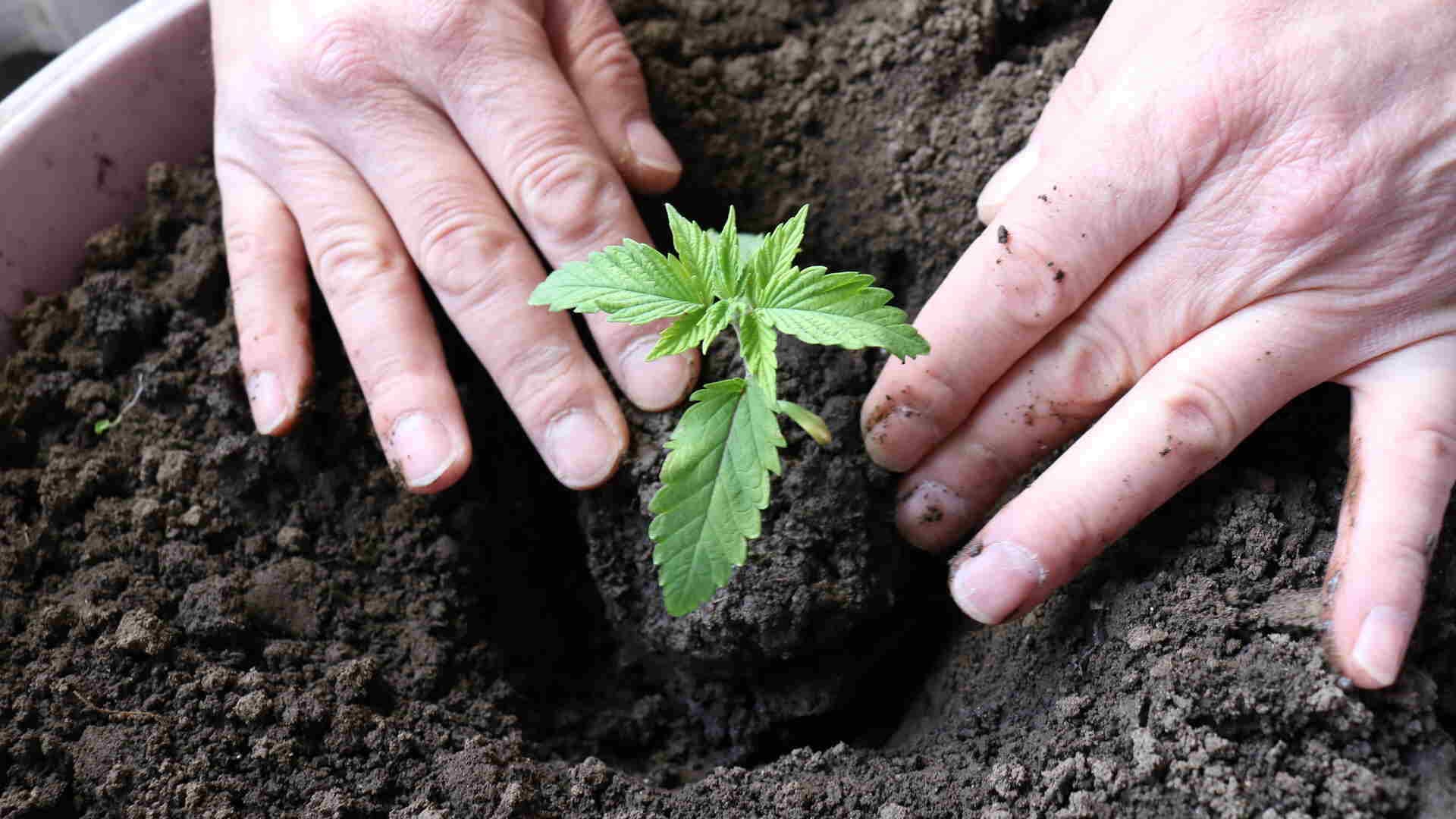
Consideration of the media used and types of pots is often an afterthought for cannabis growers, especially for experienced growers. Understanding the underlying issues and processes is useful for helping growers make informed decisions. Here, we cover some of the mechanisms at play when a cannabis plant is repotted.
The practice of potting up, aka transplanting, or gradually transitioning plants into increasingly larger containers, is something which is scientifically supported and professionally practised. The initial use of smaller containers encourages denser and healthier root systems, making the young plants easier to manage. If potting into the final pot size from seed or clone, the roots may grow disproportionately long and thin as they navigate the extensive area to access water and nutrients. This lanky and somewhat spindly growth initial pattern can cause issues with the strength and structure of the plant. It can also affect the efficiency of the root system, making growth slower than desired or expected. In pot sizes more typical to the stage of life, roots form a more condensed network, enhancing the water and nutrient uptake from a more ‘local’ area and aiding their ability to support the plant as it matures and gets bigger.
Transplanting - The Hows and the Whys
Water management is much easier in smaller pots as the grower can gauge how much water the plant uses and, consequently, avoid overwatering or waterlogging. This is very important to a young plantlet as it is more likely to suffer health problems that can cause root rot, damping off disease, and a host of other issues. Smaller pots dry out quicker, which can be very useful for developing plant root systems and keeping plants healthy. Nutrient delivery and uptake are affected by the pot size in similar ways to the water, but with the added headache of the plant potentially ignoring large sections of the media and therefore, the nutrients don’t get used up. This is a costly issue and one that can cause issues with nutrient balance further into the grow, creating pockets of nutrient-rich or nutrient-poor areas in the media.
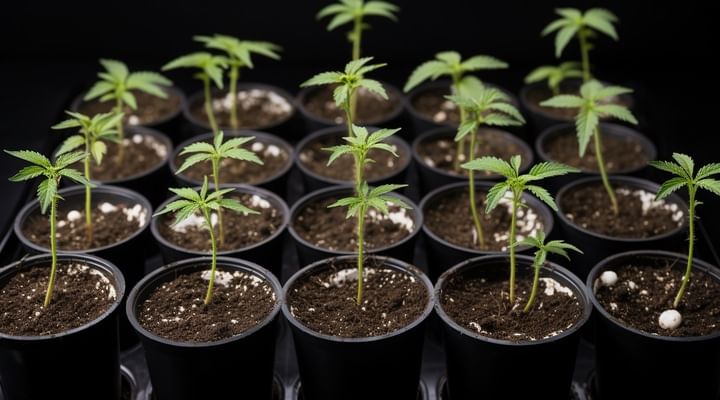
However, the most practical thing about transplanting is the sensible use of space and resources. In a small space, the use of small pots when the plants are small makes perfect sense. Managing the space and handling a large number of plants is much easier in small pots. Even exposure to light and controlling smaller environments (temperature and humidity) is much less of a hassle when everything is small and easily handled. With transplanting, as the pots get bigger, this remains true until the final size is in use and the plants are put in their final spot for the grow.
Step One: Selecting the Right Pot
Both cannabis and other plants require appropriate pot sizes for the stage of life. For cannabis, while a pot which is too large can cause issues as described above, a small pot can cause issues too, such as restriction of root growth. When transplanting, It's essential to find a balance to enable the root system to flourish without leaving too much space, which can lead to excess water and root issues. For cannabis seeds, using standard trays with 12, 16 or 24 spaces is perfect. Otherwise, a small plastic/paper cup (8oz) is also ideal for seedlings. It doesn’t have to be an exact size, but the trade-off with smaller first containers and slightly larger first pot is the balance between frequency of repotting vs potential water build-up.
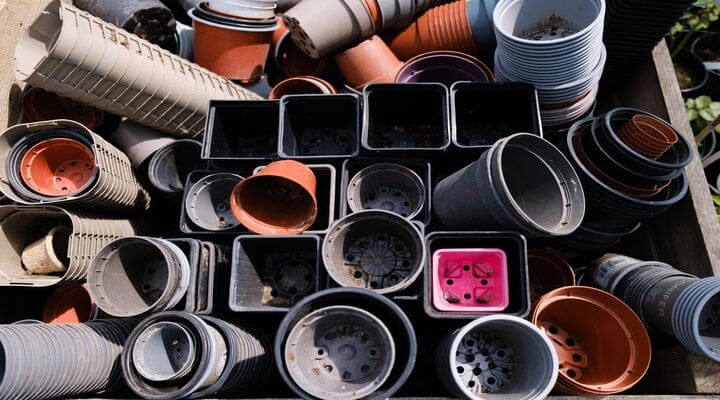
For the second pot, it is necessary to know the final desirable pot size to manage the frequency of repotting with consideration to the duration of the growing period. Typically, the transplanting process for cannabis involves repotting a plant about three times, each into a significantly larger container. The volume of each new pot should be at least twice that of the previous one. However, the size increase between the first and second pots is usually smaller compared to the jump from the second to the third pot. This gradual escalation in pot size helps accommodate the plant's growing root system effectively, allowing the roots to spread adequately to accommodate a larger aerial biomass.
Step Two: Choosing Potting Media
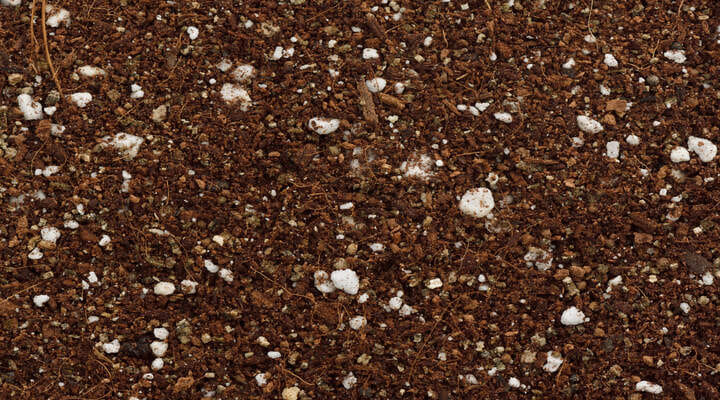
If growers are aware of the type of environment and know what to expect in terms of growing conditions, then they are best placed to decide what type of mix to use. There isn’t really a good one-size-fits-all for this, and it should be customized to the situation. One thing to consider, however, is the use of a high-quality potting mix. If in an arid area, you want a mix that retains water well, with a pot volume to help keep water in the pot (second pot onwards) so it’s not drying out too quickly. If you grow in a temperate or cool/wet area, you should use a mix optimized for good drainage and aeration. While holding enough moisture and having adequate drainage seem to be the opposites of each other, the truth is each case is slightly unique to its conditions. Therefore, to keep the roots healthy, astute monitoring and a little trial and error will help hone that balance for a given situation. For cannabis, growers probably aim for a 12 or 24-hour drying-out period, which is correlated with the volume and frequency of watering for that media. It is also essential to make sure the mix isn't too dense, leading to compacting the media, which will impede root growth. If you like to oversee every aspect of your growing, you can get three handy recipes for making your own soil here, each of which is ideal for a transplanting media.
Step Three: Transplanting
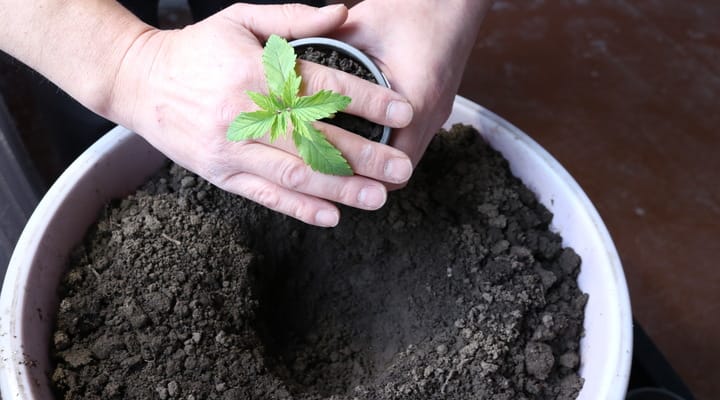
During transplantation, avoiding stress and damage to the roots is critical. This is especially true for autoflowering cannabis, where root stress can lead to stunted growth, regain of light-dependent flowering or even hermaphroditism. Deciding the frequency of potting up at the start is very useful and can help keep a plant vigorous throughout its lifecycle. However, deciding the frequency of transplanting and exactly when to repot are not necessarily equal in terms of pre-planning. A good guide to knowing when the plant needs repotting is to check how much of the roots can be seen from the media and how long these visible roots are. Typically, once the roots reach the outer edge and are less than about ½ inch long, repotting is good to go. If the roots end up running circles around a transient pot, then it is most likely a bit late for repotting, leading to stunting after transplant. Checking the roots by lifting the plant out of its pot in a low-light situation is advisable; however, don’t do it too early, or the roots may not be spread far enough to keep the media together.
Potting Up Aftercare
After transplanting, it is essential to soak the plant media to help the roots bed into the new media, eliminating any dry spots and reducing the ‘barrier’ between old and new media. This immediate post-transplant watering is essential in cannabis plants, as with all plants, as it leads to a rapid recovery and keeps the plant on its original healthy growth trajectory. Managing moisture is key at this stage to support typical root growth establishment in the new pot. After the initial soaking, allow the pot to dry before watering again, encouraging root elongation into the fresh media.

Cannabis plants can experience what is known as transplant shock, where mismanagement of the transplanting leads to wilting, leaf drop, or stunted growth. A significant temperature differential, exposure to intense direct light, or partial drying of the roots can cause shock. Even the aerial parts of the plant can be a cause of transplant shock; for example, a sudden increase in light intensity can put the plant under a lot of pressure, and roots are slow to migrate into the new media. This is due to the light causing a higher photosynthetic rate, whilst the roots cannot keep up with the demand. Thus, the plant's energy reserves are stretched, and all growth, including roots, is slowed.
Conclusion
The successful transplantation of cannabis plants requires pre-planning and good decision-making to suit the containers to the environment and type of plant being grown. Adequate watering is essential, but ensuring the plant is as stress-free as possible during each step is crucial. Ideally, the plant does not skip a step after transplanting and is back to health, promoting vigorous growth within 24 hours.
