

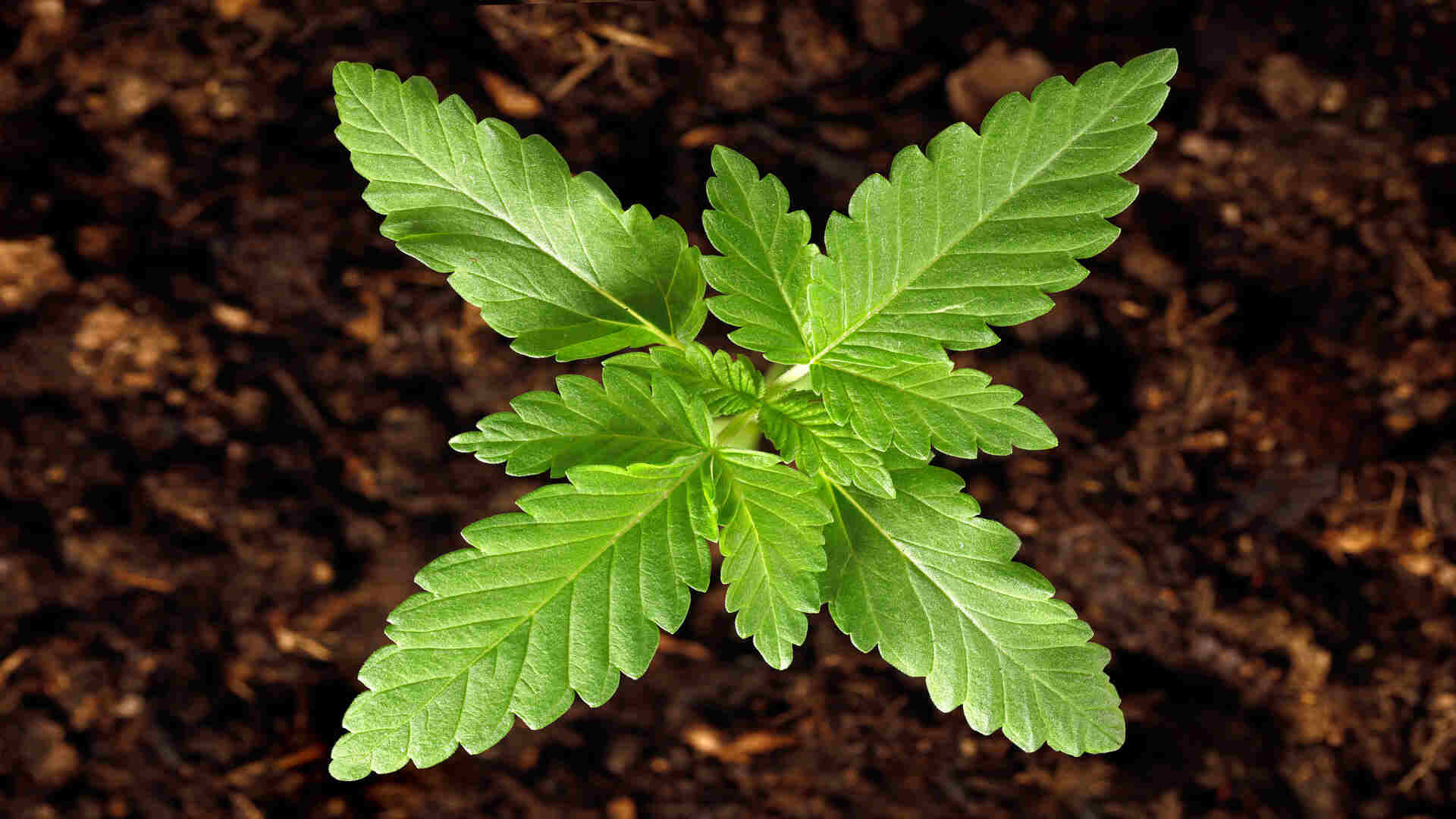
Explore our special offers on cannabis seeds for Outdoor March Promotion 2026. Visit our Promotions page for full details, terms, and conditions.
--------------------------------------------------------------------------------------
Cannabis plant growth usually starts quietly.
One day you’ve got a seed in your hand, and the next it’s in the soil. No big moment, no fanfare. Just the beginning of something special. And then, over the next few weeks, things begin to take shape. Changes happen. Noticeable changes. Suddenly, you have a plant, and the joy of cultivation is in your hands.
The first 30 days of outdoor growth don’t usually feel dramatic when you’re in them. In fact, most days it can seem like not much is happening at all. But step back, even just for a moment, and you start to see it come together – roots settling in, leaves stretching a little further each day, and the plant slowly getting comfortable where it is.
For growers, this first month is less about doing loads and more about paying attention. Getting a feel for your enivornment. Noticing how your plants respond. Finding a rhythm that works for both of you. On the surface, it’s a simple phase. But it’s where everything really begins.
Why The First Month Matters

Early cannabis plant growth can be a bit deceptive. Above ground, things can look slow – a few leaves here, bit of height there. Nothing that feels especially impressive. But beneath the soil, cannabis plants are usually doing some of their most important work.
Roots are pushing outward, looking for space, water, stability. They’re laying the groundwork for everything that comes later. And that’s the thing – plants that settle well early on tend to carry that forward. They don’t need to be rushed or pushed. They just need to establish themselves properly. Patience and observation and key for cultivators.
You don’t need to force growth in the first 30 days. You’re creating the conditions for it to happen naturally.
Week 1 of the First 30 days: Your Plant Is Finding Its Feet
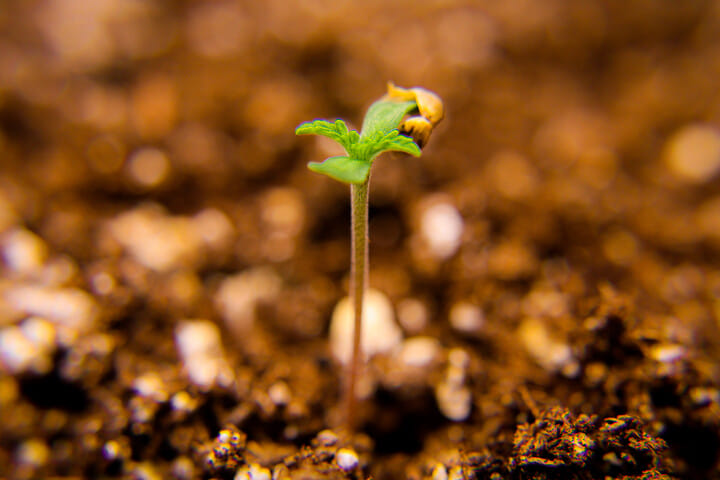
The first week is very much about settling in. Once a seed successfully germinates, the plant makes its first move into the world above soil. A thin stem appears, carrying those small, rounded first leaves, known as cotyledons. It’s just enough to start capturing light and getting goiing.
Further Reading:The Ultimate Guide To Germinating Cannabis Seeds
At this point, its important to remember everything is still delicate. Roots are shallow. Stems are soft. And plants can be sensitive to sudden changes in their environment. Most of what helps here is just keeping things steady, and that involves simple steps. Understanding the science of cannabis root health helps you care for your plant at this stage and beyond..
- Keeping the soil lightly moist – not soaked
- Making sure the plant isn’t getting battered by wind or heavy rain
- Letting it ease into full sunlight, especially if started indoors.
If a seedling has been raised inside, this is often where hardening off comes into play. Hardening off just means gradually introducing seedlings to outdoor conditions over a few days so nothing feels like a shock. Let your plant spend some outdoors to eperience the change in conditions, then bring it back inside. Two to three days of this should be plenty.
There’s often a temptation to do more at this stage. But in reality, plants often respond better when they’re just given a bit of breathing room.
Further Reading:Avoid These Common Cannabis Seedling Mistakes
Note: Photoperiod and autoflowering cannabis strains behave pretty much the same at this stage. No real differences yet – just a young plant getting started,
Week 2 of the First 30 Days: Plants begin to Move
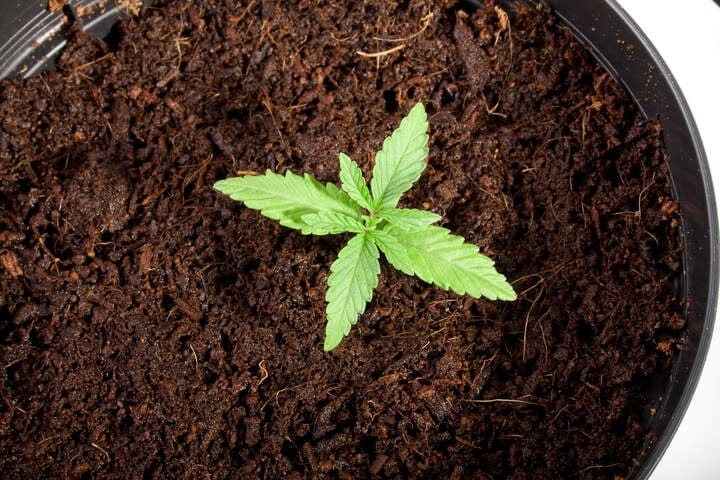
By week two of the first 30 days, the plant is becoming recognisable. Hallmarks of the cannabis plant start showing up around this stage. The first proper leaves start to come through – small, with serrated ages, and identifiable as tiny but classic cannabis leaf shapes. The plant is still small at this stage, but there’s a bit more presence to it now.
This is where cannabis plants ordinarily start to move into early vegetative growth, and begin to pack on green mass.
Growers typically notice things picking up pace slightly. New leaves often begin to appear a little quicker. The plant may sit more confidently in the soil, looking safe, stable, and sturdier. Nothing explosive yet – just steady progress.
For the cultivator, this is where routines begin to settle in.
Watering becomes more consistent rather than reactive. Growers start to get a feel for how quickly the soil dries out, and how much sun plants receive across the day. If the grower has started in small pots, this is when some begin to think about transplanting into something bigger. Giving the roots more space usually helps everything else follow.
Autoflowering cannabis plants are normally ticking along above ground, but run on a tighter timeline. For that reason, successful growers tend to grow autos in a larger pot from the outset, and leave them be.
Photoperiod plants, though, are in no rush. They’ve got time to build.
Further Reading:Avoid These Mistakes When Growing Autoflowers
Week 3 of the first 30 Days: Plants start filling out
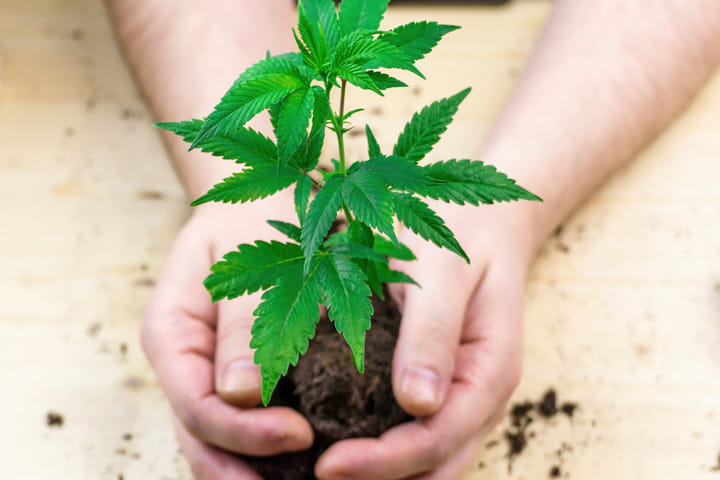
Week three of the first 30 days is often where growers start to really see the reward. If all is going well, the plant looks stronger. The stem thickens up. Leaves appear broader. And you start to see multiple nodes forming, which gives you a glimpse of what the plant might become later on.
Growth can really begin to pick up here, especially if the weather’s been good. This is also the stage where cultivators begin to interact with the plant a little more – not in a heavy way, just some small adjustments.
Maybe you gently guide a branch outward to open things up. Maybe add a little bit of support if its getting windy. It’s less about controlling the plant and more about working with it.
Some growers introduce lighter cannabis plant training techniques around this point, like low stress training. Nothing aggressive – just encouraging a slithly wider, more open shape so more of the plant gets access to light.
Nutritionally, a lot depends on your setup. Good outdoor soil often carries plants comfortably through this stage. If growing in pots or lighter soil, it may be prudent to add a small amount of feed – but expeienced growers often find less is more early on.
At this point, the plant is still learning its environment.
Week 4: The last week of the first 30 days: Finding the Rhythm
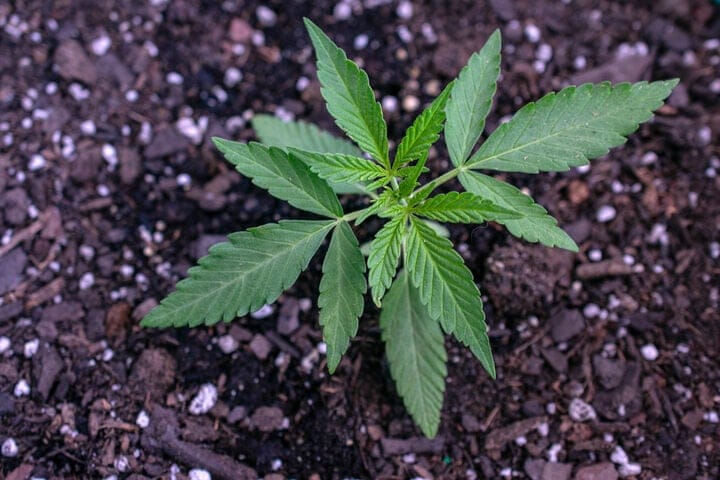
By week 4, things typically start to feel established. It’s a sign of all being well if the plant doesn’t look fragile anymore. It’s more likely to look like it belongs there. Leaves are usually consistently reaching, the structure is usually forming nicely now, and overall growth tends to feel more setlled.
This is where growers tend to notice a bit of real momentum.
The plant may begind to use more water now, and respond more clearly to sunlight. And from one week to the next, the differences become easier to spot.
But the grower’s role tends to shift slightly here too. Rather than simply protecting and observing, it’s now time to support growth. Making sutr the plant has enough space. Making sure airflow is adequate. Keeping regular checks for pests, which can sometimes show up once plants get a bit fuller.
Nothing drastic, and nothing dramatic. Just staying aware.
Around this stage, differences tend to be noticeable between plant types. Photoperiod plants will usually just keep pushing on with vegetative growth, building out size and structure as the daylight hours stay long.
Further Reading:The Vegetative Stage Explained
Autoflowering plants, though, veer off on a different track now. They can begin to show early pre-flower signs around this time. Look for small pistils appearing at the nodes, hinting that the next phase isn’t far off.
Because their lifecycle is shorter, that early stability really matters with autos. A smooth first month tends to make everything that follows easier.
The First 30 Days of Growing: The Grower’s Role
If there’s one thing that becomes clear in the first 30 days of outdoor plant growth, it’s that growing outdoors isn’t about constant input. It’s about being present. Observant. Mindful. Checking in regularly. Noticing small changes. Getting a feel for how plants react to the weather, the soil, and the light. Over time, those small observations stack up. Less second-guessing. More trust.
And that’s where the process becomes more enjoyable. There’s a rhythm to it – simple, steady, and surprisingly grounding.
Looking Beyond the First 30 Days
By the end of the first 30 days of outdoor plant growth, young cannabis plants should be well on their way. What started as something small and uncertain is beginning to feel established. Rooted. Comfortable in its space. From here, things tend to open up a bit.
Photoperiod plants should keep building through the longer days, gradually shaping themselves for what comes later in the season. Autoflowers move a little faster, already edging toward flower.
Either way, the hard part – the uncertain beginning – is behind you. And that’s where a bit of confidence can start to creep in. Because once you’ve made it through the irst 30 days of outdoor plant growth, you’re not really guessing anymore.
You’ve found your rhythm.
