
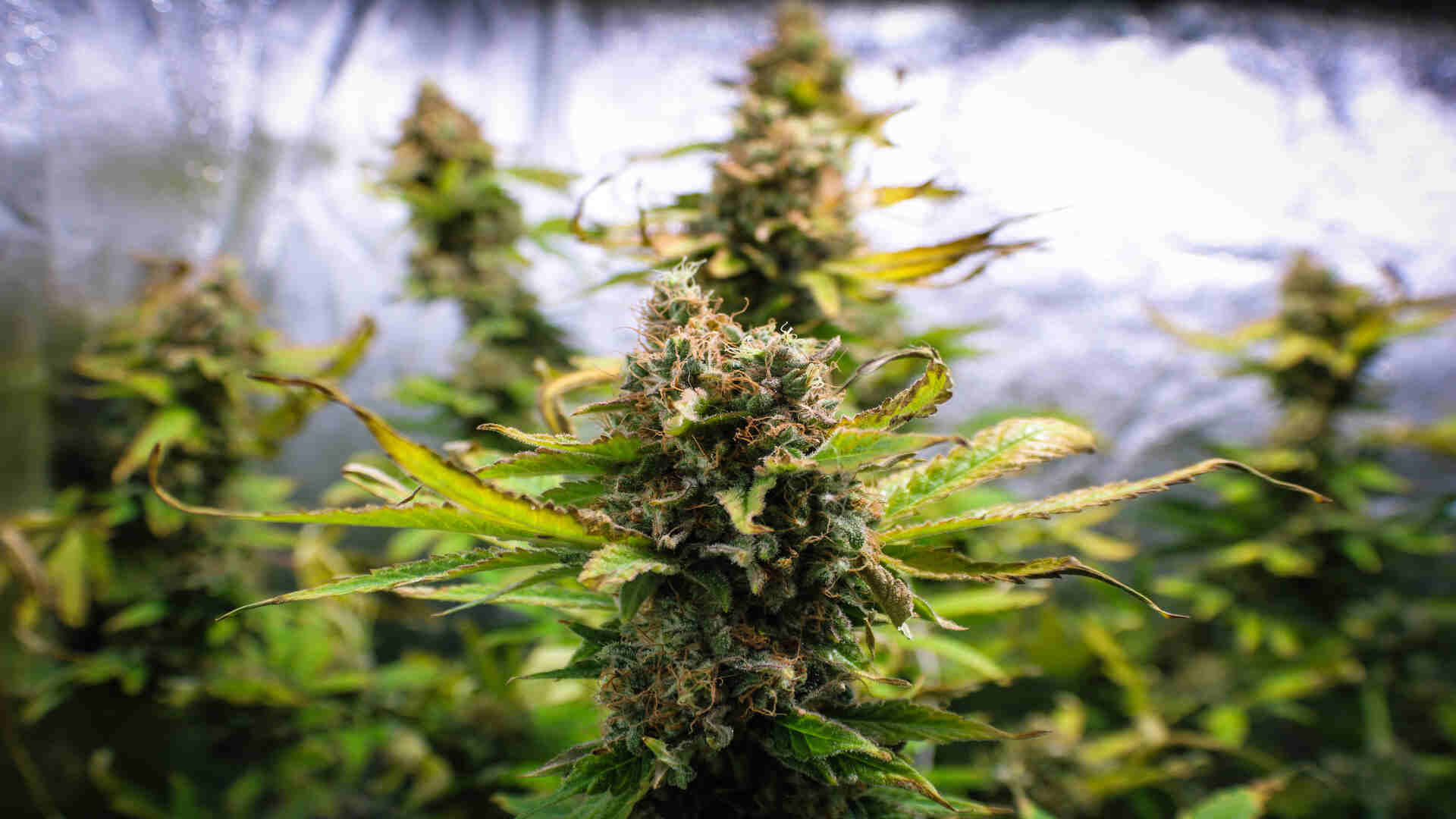

Learning how to grow weed indoors gives us an unusual relationship with nature. We control the light, manage the temperature and decide when to water and feed, but the plant still follows its own rhythm.
Humidity is part of that conversation.
Learning how to control humidity in a grow tent isn't about chasing one perfect number. It's more about understanding how moisture moves through the growing environment, recognizing what the plant needs at different stages, and making small adjustments to create conditions in which they can thrive.
Key Takeaways
- Cannabis plants generally benefit from higher humidity when young and gradually lower humidity as they mature.
- Temperature and relative humidity work together, which is why vapor pressure deficit can be a useful environmental guide.
- Good ventilation moves humidity away from the canopy; a dehumidifer actually removes moisture from the room.
- Humidity should be monitored during both the light and dark periods.
- Dense flowering plants need extra attention as humidity can be higher inside the canopy and flowers than a hygrometer reading of the grow room suggests.
- There is no single humidity setting that works perfectly for every cultivar and growing environment.
How To Grow Weed Indoors: Why Does Humidity Matter?

Relative humidity (RH) describes the amount of water vapor in the air relative to the maximum it can hold at a given temperature. For a plant, that moisture isn't just background information. It affects transpiration - the process through which plants lose water through their leaves.
When humidity is very high, the difference between the moisture inside the leaf and the surrounding air becomes smaller, reducing the driving force for transpiration. Very dry conditions can have the opposite effect, increasing water loss.
This is where the joy of growing comes in: rather than treating the grow room like a machine with fixed settings, growers can create a mini-ecosystem and learn to read how its different parts interact.
Research into controlled cannabis cultivation has found that environmental conditions including temperature, humidity and VPD can influence plant development, while excessive humidity can also increase disease pressure.
What Humidity Does Cannabis Need At Each Stage?
It's an important question often asked when understanding how to grow weed indoors. There isn't one universally agreed humidity schedule - and this is a good thing. Trying to engineer the environment to land on one number and never waiver is pretty difficult. Published cultivation research uses somewhat different environmental setpoints, and cultivar, temperature, lighting, and airflow all matter..
As a useful starting point,, growers can think about humidity in broad stages:
| Growth Stage | Approximate RH Range | General Approach |
| Seedlings and cuttings | 70-80%+ | Higher humidity can help young plants establish |
| Early vegetative growth | 60-70% | Gradually reduce humidity as pants develop |
| Late vegetative growth | 55-65% | Encourage healthy transpiration and airflow |
| Early flowering | 50-60% | Begin prioritizing a drier, well-ventilated canopy |
| Late flowering | 40-55% | Lower humidity can help reduce moisture-related issues |
These aren't hard rules. For example, research on cannabis pathogen management describes higher RH during propagation and progressively lower RH through vegetative and flowering growth. Other controlled-environment studies on how to grow weed indoors have used different combinations of RH and temperatures.
The important thing is the direction of travel. Young plants generally tolerate and may benefit from a more humid environment, while mature flowering plants typically benefit from greater control over moisture.
How To Measure Humidity in a Grow Tent
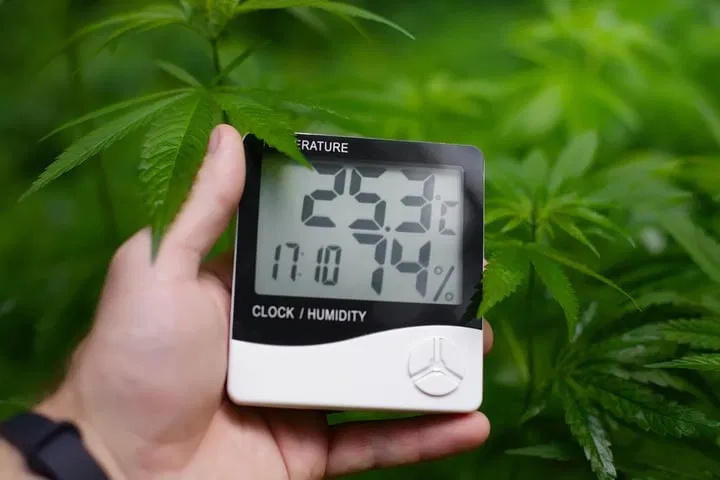
A digital hygrometer is one of the simplest and most useful pieces of equipment every indoor grower can own. These handy devices help immensely with how to grow weed indoors. Position the sensor around canopy height, rather than on the floor or immediately beside the extraction outlet. You're interested in the conditions the leaves and flowers actually experience.
It's also worth monitoring humidity during both the lights-on and lights-off periods Temperature usually falls when lights go out, and cooler air can hold less water vapor. As a result. RH can climb during the dark period even when you hven't added any water to the environment.
Don't assume the reading outside the canopy tells the whole story. Research measuring the microclimate inside cannabis flowers found considerably higher humidity within flowers than in the surrounding air. That matters as plants become larger and flowers become denser.
How to Lower Humidity in a Grow Tent
Improve extraction and ventilation

An extraction fan is one of the first tools to reach for when humidity starts. An effective ventilation system removes warm, humid air from the growing space and replaces it with air from the surrounding room. Make the sure intake can provide enough replacement air and that the extracted air isn't simply being returned to the same room.
Circulation fans are useful here, too, but remember that moving air isn't the same as removing moisture. An oscillating fan can improve airflow through the canopy without significantly reducing the RH shown on the hygrometer.
Related Article:How To Position Fans In A Grow Tent
Use a dehumidifer
If the air entering the grow room is already humid, stronger extraction may only bring more moisture inside. That's where a dehumidifier can make a big difference. It removes water from the air rather than simply moving that air somewhere else.
For a small grow tent, the dehumidifer can often be positioned in the surrounding room, allowing the extraction system to draw in drier air. Bigger growing spaces may benefit from dedicated environmental control.
Emptying the water reservoir regularly can become a nuisance, so a model with continuous drainage might be worth considering where practical. The good news? These can be obtained for a fairly modest price.
Reduce unnecessary sources of moisture
Look at the whole environment. Overwatering, standing water, wet equipment and poor drainage can add moisture. Growers do not necessarily need to make dramatic changes. Sometimes the solution is simply to stop adding adding more water to an already humid room.
Related Article:How To Fix Cannabis Overwatering
How To Increase Humidity in a Grow Tent
Low humidity can be just as inconvenient when lerning how to grow weed indoors, particularly when growing in a heated home during winter. A humidifier is the obvious solution, but it's not always necessary. First consider whether excessive extraction is pulling large volumes of dry air through the tent.
If a humidifier is needed, position it to that moisture is dispersed through the growing space rather than blowing directly onto plants. Keep the unit clean, too - when introducing water into an enclosed environment, hygiene matters.
If learning how to grow weed indoors in small tents, relatively modest changes can make a suprisingly large difference. This is one of those situations where a good hygrometer and a little patience are often more useful than buying the biggest piece of equipment available.
VPD: Looking Beyond Relative Humidity
Something that's talked about more and more among growers learning how to grow weed indoors is vapor pressure deficit (VPD). This describes the difference between how much moisture the air currently contains and how much it could hold at a given temperature. In simple terms, it helps describe how strongly the surrounding air is pulling moisture from the plant.
Research and controlled environment cultivation studies often use VPD alongside relative humidity and temperature when managing cannabis. Published targets vary, but roughly 0.5-1. kPa during propagation, 0.7-1.2 kPa during vegetative growth, and 1.0-1.5 hPs during flowering are ranges often supported in cannabis cultivation literature.
If all that seems confusing, growers can take comfort in this: You don't need to become a VPD mathematician to benefit from the concept. The useful lesson is simply that 50% relative humidity doesn't mean the same thing at every temperature.
Related Article: Understanding Vapor Pressure Deficit (VPD) And Its Role In Cannabis Cultivation
The Importance of the Lights-Off Period
One of the easiest problems to miss when learning how to grow weed indoors is humidity changes after the lights go out. As the temperature falls, relative humidity can rise. If the temperature drops far enough, the air can approach its dew point and moisture may begin to condense on cooler surfaces.
This is especially important in a dense flowering canopy. A room might show a seemingly reasonable RH reading while pockets of air around the flowers are considerably more humid.
Keeping air moving, maintaining sensible night-time temperatures, and using dehumidification when necessary can help keep these fluctuations under control.
Humidity, Airflow, and Mold
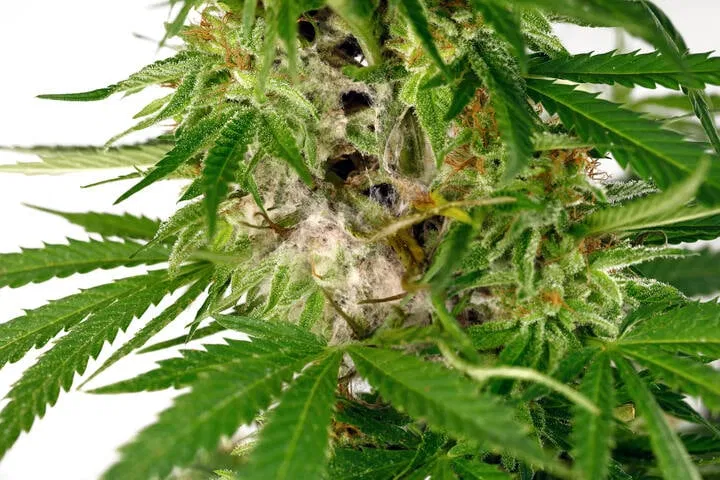
Controlling humidity is a key part of how to grow weed indoors, but it's not just about encouraging healthy plant growth. It's also an important part of protecting the harvest.
Cannabis can be affected by diseases like Botrytis (bud rot) and powdery mildew, and research into cannabis pathogen management identifies environmental control as part of an overall approach to reducing disease risks.
This is why airflow deserves attention alongside the hygrometer. A healthy canopy should have air moving through it rather than stagnant pockets where moisture can collect and linger. As plants grow, consider whether leaves and flowers have become so dense that your existing circulation no longer reaches the interior of the canopy.
Related Article:How To Prevent Bud Rot
What If Grow Tent Humidity Is Too High?
High humidity causes problems when learning how to grow weed indoors. If RH is consistently higher than you'd like, work through the problem rather than immediately changing everything. Following these steps can help:
- Check the hygrometer and its position
- Compare readings during light and dark periods
- Check whether the room supplying intake air is already humid
- Make sure extraction is working correctly
- Improve circulation through dense areas of the canopy
- Look for standing water, leaks, or unnecessarily wet growing media
- Consider a dehumidifier if the surrounding envrionment remains humid.
The same principle works in reverse if humidity is too low: look at the source of the dry air and the extraction rate before automatically reaching for a humidifier.
The Goal Isn't a Perfect Number
It can be tempting to become obsessed with the number on the hygrometer. But remember, learning how to grow weed indoors is a living process, not a spreadsheet.
The most useful humidity target is one that works alongside your temperature, airflow, lighting, and plants. Watch how the garden responds. Notices the differences between day and night. Learn how quickly the room dries after watering and how the canopy changes as flowering progresses. This is all part of understanding the plant, not just the process, and ultimately an attentive grower is a better grower.
That's the rhythm of how to grow weed indoors: creating the environment, observing what happens, and making thoughtful, measured adjustments. You're not trying to overpower nature. You're learning how to work with it.
How To Control Humidity In A Grow Tent FAQs
What is the best humidity for growing weed indoors?
It depends on the stage of growth and the wider environment. Young plants generally tolerate higher RH, while humidity is usually reduced as plants mature and enter flowering. A broad starting point is around 60–70% during vegetative growth and 40–60% during flowering, with temperature and VPD considered alongside RH.
How do I lower humidity in a grow tent?
Start with effective extraction and good airflow. If the surrounding room is humid, a dehumidifier may be more effective because it actually removes moisture from the air. Also check for standing water, excessive irrigation and other sources of unnecessary moisture.
Should humidity be lower during flowering?
Generally, growers reduce humidity as cannabis moves into flowering. Dense flowers can create a more humid microclimate than the surrounding room, so maintaining good airflow and avoiding excessive moisture becomes increasingly important.
Why does humidity rise when the grow lights turn off?
When the lights go out, temperature commonly falls. Cooler air holds less moisture, so relative humidity can rise even if the amount of water vapour hasn't changed.
Is VPD better than relative humidity?
VPD isn't necessarily a replacement for RH. It provides additional context by taking temperature into account. Using RH, temperature and VPD together can give growers a better picture of the plant's environment than RH alone.
Can high humidity affect cannabis flowers?
Sustained excessive humidity can affect the plant's development and increase environmental conditions favourable to disease. A 2025 controlled study found that very high canopy RH was associated with delayed flowering, reduced biomass and lower cannabinoid concentrations in the cultivar studied.
How often should I check grow tent humidity?
Continuous monitoring with a digital hygrometer is ideal, particularly if your environment changes significantly between day and night. Checking the maximum and minimum readings can reveal problems that a single daytime measurement misses.
-------------------------------------------------------------
References:
Buirs, L. & Punja, Z.K. (2024). Integrated Management of Pathogens and Microbes in Cannabis sativa L. (Cannabis) under Greenhouse Conditions. Plants, 13(6), 786.
https://www.mdpi.com/2223-7747/13/6/786
Corredor-Perilla, I.C., Kwon, T-H. & Park, S-H. (2025). Elevated relative humidity significantly decreases cannabinoid concentrations while delaying flowering development in Cannabis sativa L. Frontiers in Plant Science, 16.
https://www.frontiersin.org/journals/plant-science/articles/10.3389/fpls.2025.1678142/full
Punja, Z.K., Ni, L., Lung, S. & Buirs, L. (2023). Total yeast and mold levels in high THC-containing cannabis (Cannabis sativa L.) inflorescences are influenced by genotype, environment, and pre-and post-harvest handling practices. Frontiers in Microbiology, 14.
https://www.frontiersin.org/journals/microbiology/articles/10.3389/fmicb.2023.1192035/full