
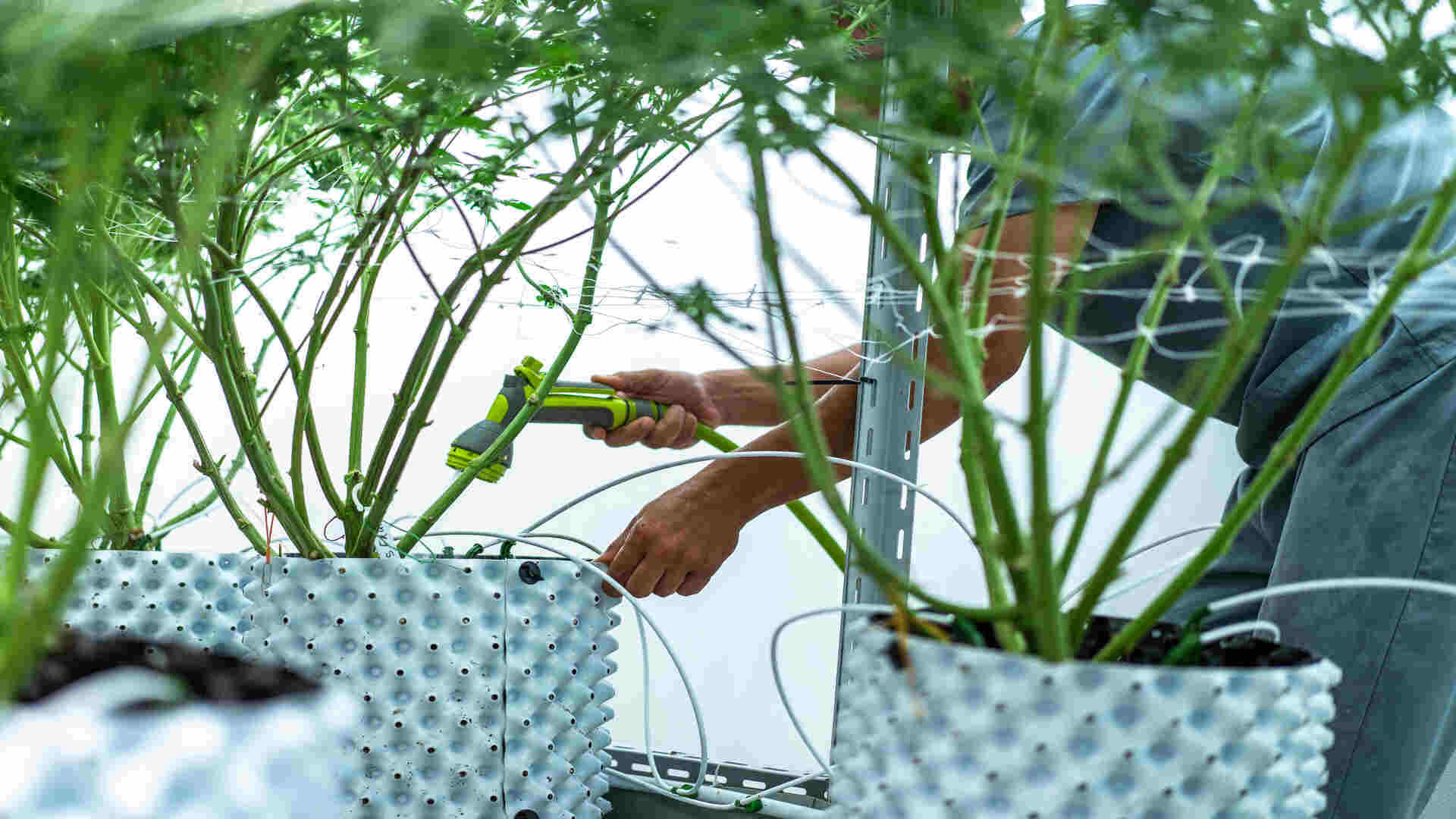

Watering indoor cannabis plants might seem straightforward, but it's one of the easiest aspects of growing to get wrong. Too little water can lead to slow growth, drooping leaves, and unnecessary stress. Too much water, on the other hand, deprives the roots of oxygen, encourages fungal diseases, and often causes the same drooping appearance that many beginners mistake for thirst.
When it comes to watering indoor cannabis, the goal isn't to follow a strict schedule. Instead, it's about understanding the natural wet-dry cycle, observing how your plants respond, and adjusting your approach as they progress from seedlings to the vegetative stage and eventually into flowering. Learning how much water cannabis needs indoors becomes much easier once you begin reading the plant rather than the calendar.
Why Proper Watering Matters
Healthy cannabis roots need both water and oxygen to thrive. When you water, moisture fills the tiny air spaces throughout the growing medium. As the medium gradually dries, fresh oxygen returns to those spaces, allowing the roots to breathe and function properly.
Constantly saturated soil interrupts this process. Although a soaking-wet pot may seem like it's providing everything the plant needs, the roots are actually sitting in oxygen-poor conditions. Over time, this can lead to slow growth, yellowing leaves, root rot, poor nutrient uptake, and an overall unhealthy plant.
Related Article:What To Do If Your Cannabis Plants Have Yellow Leaves
Allowing the medium to become excessively dry isn't ideal either. When this happens, the plant struggles to move water and nutrients efficiently, leaves begin to wilt, and growth slows considerably. Successful growers generally aim for a healthy balance between these two extremes, allowing the medium to partially dry before watering again.
How Often Should You Water Indoor Cannabis?

One of the most common questions growers ask is how much water does cannabis need indoors or how often it should be watered. The truth is that there isn't a single answer.
Most indoor cannabis plants are watered every two to four days, but this is only a general guideline. Young seedlings growing in large containers may need water far less often, while mature flowering plants growing under powerful lights in a warm, dry room may need watering every other day—or even daily in some situations.
Rather than following a fixed schedule, it's more helpful to pay attention to the growing medium and the plant itself. A simple finger test works well. Insert your finger one to two inches into the medium. If it still feels damp, it's usually best to wait. Lifting the pot is another reliable method. A heavy pot generally means there's still plenty of moisture available, while a noticeably lighter pot indicates it's approaching watering time.
Many growers now use moisture meters to help determine when it's time to water. There are a variety of brands available, and they can provide a more accurate indication of the moisture level in the growing medium than relying on guesswork alone. Some models are even digital, such as the Ecowitt moisture meter, which pairs with a smartphone app so you can monitor the medium's moisture percentage remotely.
The leaves also provide useful clues. Drooping leaves combined with a heavy pot often point toward overwatering, while drooping leaves paired with a very light, dry pot usually indicate underwatering. It's also worth paying attention to drainage. If water drains very slowly, your medium may be too compact or poorly aerated.
Learning to combine these observations is one of the most reliable ways to determine how much to water weed and when it's time to water again.
How Much Water Does Cannabis Need Indoors During Each Growth Stage?
The amount of water your cannabis plant needs changes significantly throughout its life cycle. Seedlings, vegetative plants, and flowering plants all have different watering requirements.
Seedling Stage
During the seedling stage, the root system is still very small, so only modest amounts of water are needed. One of the most common mistakes is soaking an entire container when the roots occupy only a small portion of the medium.
Instead, apply small amounts of water in a ring around the seedling rather than directly against the stem. This encourages the roots to grow outward as they search for moisture while reducing the risk of stem rot or damping-off disease.
Anywhere from a few tablespoons to a few hundred milliliters of water is often sufficient, depending on container size. The goal is to keep the immediate root zone lightly moist—not saturated. If the surrounding soil remains wet for several days, you're likely watering too much.
Related Article:3 Steps To Master The Seedling Stage
Vegetative Stage
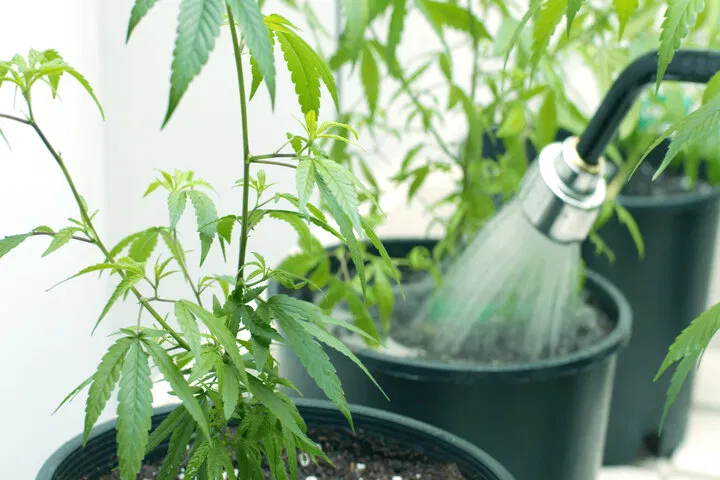
As cannabis enters the vegetative stage, root growth accelerates and water consumption increases considerably. At this point, deeper watering becomes more beneficial.
Water slowly and evenly around the entire container until the medium is thoroughly moistened. If you're using bottled nutrients, allowing approximately 10–15% runoff helps flush excess nutrient salts from the root zone.
Most vegetative plants perform well when watered every two to three days, although the container should always guide your decision. If the pot still feels heavy after several days, wait a little longer before watering again. Conversely, if the medium dries out very quickly, the plant may need more water or a larger container.
Flowering Stage
During flowering, cannabis plants generally consume more water than at any other stage because they are supporting large amounts of flower development.
Many indoor growers find themselves watering every two days, and in particularly warm, dry grow rooms, daily watering may be necessary. The key during flowering is consistency. Large swings between extremely wet and extremely dry conditions can stress the plant during bud development.
Continue checking pot weight regularly, monitor the top layer of the growing medium, and avoid allowing runoff water to sit beneath the container for extended periods.
Related Article:The Cannabis Flowering Stage Explained
Soil, Coco, and Container Size All Affect Watering
When deciding how much to water weed, it's important to remember that the growing medium makes a significant difference.
Soil naturally holds moisture longer and benefits from a true wet-dry cycle. Allowing the top inch or two of soil to dry before watering again encourages healthy root development. If the soil remains saturated for five days or more, your container may be oversized, drainage may be poor, or the soil may be retaining too much water.
Coco coir behaves quite differently. It drains quickly and holds much more oxygen, so growers typically water more frequently—sometimes even daily. Unlike soil, coco should not be allowed to dry out completely, as this can negatively affect root health.
Container size also plays a role. Smaller pots dry out faster than larger ones, while fabric pots often dry more evenly because they allow additional airflow around the root zone.
How to Water Indoor Cannabis Properly
When watering indoor cannabis, begin near the base of the plant and slowly work outward in widening circles until the entire surface has been evenly watered. Pouring too quickly can create channels where water runs down the sides of the container instead of soaking evenly through the root zone.
Water temperature matters as well. Room-temperature water is generally best, as very cold water can shock the roots while overly warm water may increase stress.
If you're using nutrients, mix them thoroughly before checking pH. For soil grows, aim for a pH between 6.2 and 7.0. Once watering is complete, remove any runoff from trays or saucers rather than allowing the containers to sit in standing water.
Recognizing Overwatering and Underwatering
Learning to recognize watering problems early can prevent many common cultivation issues.
Overwatered plants often have drooping leaves despite the pot feeling heavy. Leaves may appear swollen, claw downward, or begin yellowing, and the growing medium may remain wet for an unusually long time.

Underwatered plants usually feel noticeably lighter when lifted. The growing medium becomes dry and crumbly, leaves lose firmness, leaf edges may become crispy, and plants often recover surprisingly quickly after being watered.

While both conditions can produce drooping leaves, checking the weight of the container is often the easiest way to tell the difference.
Bringing It All Together
Learning how to water cannabis indoors takes observation more than memorization. Rather than relying on a fixed schedule, spend time getting familiar with how each container feels when it's fully watered and when it's ready for another drink.
Keep in mind that temperature, humidity, lighting intensity, container size, plant size, and growing medium all influence how much water cannabis needs indoors. As these factors change throughout the grow, your watering routine will naturally change as well.
With experience, watering becomes less about following rules and more about understanding your plants. Paying attention to the wet-dry cycle, watering thoroughly when needed, and allowing the roots access to both moisture and oxygen will help create a healthy foundation for every stage of growth.
For more details on how to grow cannabis indoors, check out my book 7 Steps To Grow Cannabis. It’s a complete beginner’s guide to growing cannabis indoors. You can get it on my website, or on Amazon. Happy growing!
Watering Cannabis Indoors: FAQs
How often should you water cannabis plants grown indoors?
There is no universal watering schedule. The ideal frequency depends on plant size, pot size, growing medium, temperature and humidity. Instead of watering by routine, check the growing medium and water when it begins to dry slightly.
How do I know when my indoor cannabis plants need water?
Check the weight of the pot or feel the top few centimetres of the growing medium. A lighter container and slightly dry soil usually indicate it is time to water. Drooping leaves can be a sign of both underwatering and overwatering, so always check first.
How much water should I give an indoor cannabis plant?
Water thoroughly until a small amount of runoff drains from the bottom of the container. This helps ensure the entire root zone receives moisture. Allow excess water to drain away rather than leaving plants sitting in water.
Can you overwater cannabis plants indoors?
Yes. Overwatering can reduce oxygen around the roots and slow plant growth. Signs include drooping leaves, yellowing foliage and consistently wet growing medium.
Should I water cannabis plants during the dark period?
Most growers prefer watering shortly before or after lights come on, when plants begin their active growth period. Avoid keeping the growing environment overly humid, especially during the dark cycle.
Is tap water safe for indoor cannabis plants?
Tap water can be suitable, depending on local water quality. Check factors such as pH, mineral content and chlorine levels to ensure it is appropriate for your plants.
How should you water cannabis seedlings compared with mature plants?
Seedlings have small root systems and need much less water than mature plants. Overwatering young plants is a common mistake, so provide small amounts and allow the growing medium to dry slightly between waterings.