
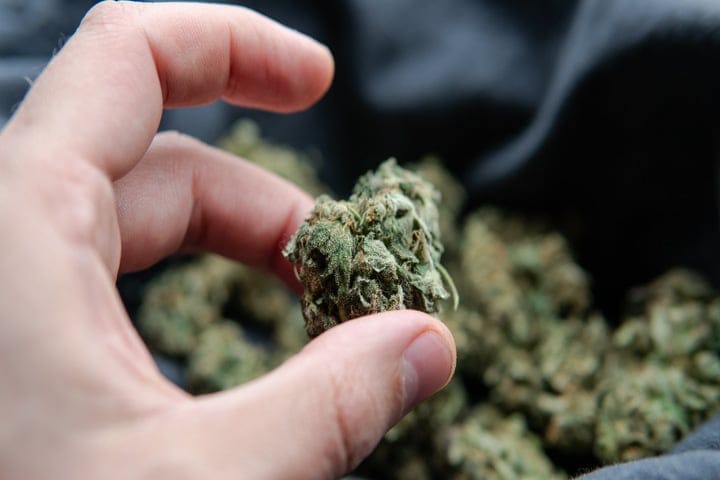

There's a lot to enjoy about growing cannabis, and the finished harvest is only part of it. For many growers, the joy and excitement starts long before flowering. There's something both satisfying and exciting about choosing seeds, watching the first signs of growth appear and gradually learning how a particular plant develops. Over time, growers tend to discover what matters most to them, whether that's the pace of the grow, the gentics behind a variety, terpene profile, or simply the enjoyment gained from tending a healthy plant.
THC is often one of the first specifications people look at when choosing cannabis seeds. It can be useful, especially if high-THC genetics are what growers are looking for, but it doesn't tell the whole story.
The six strains below are all listed in the 16-24% THC category. Beyond that shared characteristic, they're all quite different. Some offer greater yield potential, while others appeal due to their flowering time, plant size, climate suitability, or even resin production.
The variety available from Seedsman is worth celebrating. There's no single "best" high-THC cannabis strain; there's only the variety that feels like the right fit for the grow you're planning.
Six High-THC Cannabis Strains At A Glance
Of the six cannabis strains featured here, there's even diversity among flowering types. Some are photoperiod, and some are autoflowering strains with a faster lifecycle. Each is suited to indoor or outdoor cultivation.
| Strain Name | Type | THC Content | Flowering Time |
| Cali Critical Mass | Photoperiod | 16-24% | 8-10 weeks |
| Alaskan Diesel Auto | Autoflowering | 16-24% | 8-10 weeks (seed to harvest) |
| Alaskan Do-Si-Dos | Photoperiod | 16-24% | 8-10 weeks |
| Bubba Kush | Photoperiod | 16-24% | 9-11 weeks |
| Gorilla Jealousy F1 | Photoperiod | 16-24% | 9-11 weeks |
| Strawberry Cheesecake Auto | Autoflowering | 16-24% | 10-12 weeks (seed to harvest) |
Cali Critical Mass

Cali Critical Mass is a good example of why THC is only one part of the equation. This large photoperiod hybrid variety comes from Critical Kush x Bubba's Gift. It produces a THC content between 16-24% THC, with an 8-9 week flowering period and an indoor yield potential of more than 600 g/m2.
That yield classification sets it apart form the the other varieties in this selection. For growers with enough room to accommodate a larger plant, Cali Critical Mass may be worth conisdering if productivity is an important part of the plan. The climate information is worth noting, too: Cali Critical Mass is suitable for dry, hot and warm conditions. Its high resin production leads to a sugar-coated appearance once flowering is underway.
There's a quieter pleasure in growing a productive strain. Watching plants develop into something substantial over the course of a grow can be rewarding in its own right, particularly when you've taken the time to understand what it needs.



Alaskan Diesel Auto

Autoflowers have changed the way many people approach a cannabis grow. Their development isn't dependent on the grower changing the light shcedule, and their generally straightforward life cycle can make them an appealing option when time or space is a consideration. Autos take a shorter, faster route from seed to harvest.
Alaskan Diesel Auto is a medium-sized autoflower bred from Candy Fruit Auto x Diesel Auto, with a THC content between 16-24%. The entire lifecycle can run in just 8-10 weeks, creating a real shortcut to a respectable indoor yield of 350-450 g/m2.
The plant is also listed as suitable for a broad selection of climates, including cool, dry, high-altitude, hot, temperate, or warm conditions. The yield may not be the highest in the group, but that's not necessarily the point. A grow can be about finding a balance that works for you, and a medium-sized plant with a relatively short cycle may be preferable to some growers over chasing maximum production.
There's something enjoyable about that pace, too. Autoflowers allow growers to watch the plant progress through its life without quite the same emphasis on managing the transition between vegetative growth and flowering.
Explore Seedsman Alaskan Diesel Auto Feminized Seeds


Alaskan Do-Si Dos

The growing environment can have as much influence on your choice of genetics as the figures on a seed pack description. Alaskan Do-Si-Dos is a large photoperiod strain bred from Alaskan Purple x Do-Si-Dos. It falls within the same 16-24% THC range as the others here, with an 8-10 week flowering period and an indoor yield of 450-600g/m2 (outdoor yields may be significantly higher). Climate suitability is particularly broad, covering cool, dry, high-altitude, temperate or warm conditions.
Of course, no strain removes the need to pay attention to the environment. Temperature, humdity, light, and general plant care remain important. But having genetics that are suitable across a range of climates can be useful when deciding what to grow.
For many growers, that's part of the enjoyment. Learning how a particular plant responds to its surroundings turns growing into an ongoing process of observation rather than simply following a fixed recipe. Alaskan Do-Si-Dos rewards careful cultivation with beautiful, resinous plants with a snow-capped appearance, bringing vibrant color to any garden.


Bubba Kush

There's always plenty of excitement around newer and emerging cannabis genetics, but well-established genetics carry a special kind of appeal. Bubba Kush is about as straightforward as a cannabis lineage can get. Its parental lines are Pre-98 Bubba Kush x Pre-98 Bubba Kush - a breeding process known as backcrossing, which keeps the genetic story firmly rooted in the classic Bubba Kush line.
This indica-dominant strain is a large photoperiod plant with a THC content in the 16-24% range, a 9-11 week flowering period, and an indoor yield potential of 450-600 g/m2. Bubba Kush is best suited to dry, high-altitude, hot, and warmer climates.
For growers who enjoy learning about cannabis genetics, the lineage itself can be part of the attraction. There's a certain satisfaction in growing something connected to a historically beloved line and taking the time to see how a classic strain develops with care.


Gorilla Jealousy F1

For growers who love to embrace the newest wave of cannabis genetics, Gorilla Jealousy F1 represents a much more contemporary direction. The parental lines are Gorilla Glue x Jealousy, bringing together two modern names in cannabis breeding. The THC content is the same as the others listed here, but there's a lot going on that's very different.
An F1 strain is the first-generation cross between two distinct, carefully selected parent lines. This approach can produce vigorous plants with consistent growth and a more unifrom overall crop, making F1 genetics appealing to growers who value predictability alongside modern breeding. Gorilla Jealousy F1 stands out for its particularly high resistance to mold.
Gorilla Jealousy F1 is a large photoperiod plant with a 9-11 week flowering period and an indoor yield of 450-600g/m2. Suitable climates are dry, hot, humid, and warm. The appeal isn't that it somehow outdoes the other strains. Instead, it's the genetic combination that makes it so interesting. For anyone who enjoys following the evolution of modern cannabis breeding, growing a newer cross can be an experience in itself.


Strawberry Cheesecake Auto

Strawberry Cheesecake Auto takes some of the ideas we've already explored and puts them together into a medium-sized indica-dominant autoflower. Its genetics are Strawberry Banana x Cheese Auto. The seed-to-harvest time is between 10-12 weeks, with an impressively high yield potential for an auto - 450-600g/m2.
That makes it a slightly different proposition from Alaskan Diesel Auto. Both are autoflowers, but Strawberry Cheesecake Auto has the higher yield range and takes a little longer to reach harvest, It's also listed as suitable for cool-dry, high-altitude, hot, temperate and warm climates.
For growers who enjoy the simplicity of an autoflowering cycle but still want to conisder yield when choosing genetics, that combination - along with its tantalizing fruity flavor profile - could be one worth exploring.
Explore Seedsman Strawberry Cheesecake Auto Feminized Seeds


Choosing High-THC Cannabis Seeds
It's easy to reduce the search for high-THC cannabis seeds to a hunt for the highest number. In practice, choosing genetics can be so much more personal than that.
Available space might influence the decision. So could available time, the climate you're growing in, or whether you prefer the rhythm of an autoflowering plant. Some growers enjoy exploring established genetics, while others are fascinated by the latest crosses coming form modern breeding. That's why these six strains make an interesting group. They all share the same broad THC classification, but they offer quite different growing characteristics.
The more you learn about cannabis plants, the more there is to appreciate beyond a number on a packet. And perhaps that's one of the best things about growing. Every plant brings another opportunity to learn something, experiment, pay attention, and enjoy the process.
Further Reading:How To Choose Cannabis Strains: The Beginner's Guide
FAQs about high-THC cannabis strains
What are high-THC cannabis strains?
High-THC cannabis strains are varieties listed as producing relatively high levels of THC. The six Seedsman varieties featured here are all currently categorised in the 16–24% THC range.
Does a high THC classification mean one strain is better than another?
Not necessarily. THC is only one characteristic of a cannabis variety. Yield, flowering time, plant size, genetics and environmental suitability may all be relevant when choosing seeds.
Does higher THC mean a stronger cannabis experience?
THC concentration is an important factor, but it isn't the only one. Terpenes, other cannabinoids, dosage, consumption method, and individual tolerance can all influence the overall experience.
Are high-THC strains suitable for beginners?
They can be more intense for people with little cannabis experience. Beginners may prefer strains with moderate THC levels while they become familiar with how cannabis affects them.