

Blacks and brown spots can appear on cannabis leaves for various reasons, most of which have simple solutions. However, growers who notice discoloured patches on their marijuana plants would do well not to hang around, as rapid treatment is essential. In many cases, diagnosing and correcting the problem early makes the difference between healthy plants and a ruined crop.
Related Post
Why Are Your Autoflower Leaves Turning Yellow?
Nutrient Deficiencies That Cause Black Spots On Cannabis Leaves
The majority of brown or black spots on the leaves of cannabis plants are caused by some sort of nutrient deficiency. However, rather than rushing out to the garden centre to buy more fertiliser, growers should first test the pH of their soil. In most cases, the problem has nothing to do with a lack of minerals but is instead caused by pH levels that are either too high or too low.
Cannabis plants thrive in soil with pH between 6.0 and 7.0. Values outside this optimal range can lead to nutrient lockout, whereby the roots cannot absorb the nutes in their environment.
Only after ascertaining that no lockout has occurred should growers consider supplementing their growing medium with extra nutrients. Figuring out which ingredients to add requires some extra diagnosis, although calcium is often the answer.
Lack of Calcium
Calcium deficiency shows up as spots on new leaves before spreading to older ones. Some beginners might mistake these signs for the symptoms of pest infestation, although more experienced growers can easily tell the difference. For instance, bugs tend to appear all over a plant, while calcium deficiency causes spots to manifest on some leaves but not others.

Usually, leaves that are directly exposed to light are the first to become discoloured, while the lower leaves, which are more shaded, retain their verdant splendour until the problem becomes more severe. Growers who notice this tell-tale sign can quickly remedy the situation by feeding their plants some calcium-magnesium solution.
Potassium Deficiency
Potassium, meanwhile, is a vital nutrient that becomes particularly important during the flowering stage. Plants suffering from potassium deficiency at this point in their life cycle often develop black and brown spots on their leaves and may produce disappointing yields. Assuming nutrient lockout has been ruled out, the problem can usually be fixed by introducing a source of potassium like kelp meal or wood ash.

Phosphorous or Nitrogen
Though less common, phosphorus deficiency can also lead to leaf discolouration, while manganese deficiency can be resolved by adding manganese chelate to the soil. Nitrogen deficiency, meanwhile, results in yellow leaves that later turn brown and die due to an inability to photosynthesise. Because cannabis plants absorb nitrogen reasonably well even when the pH is suboptimal, this problem is rarely caused by nutrient lockout.
Growers who suspect a nitrogen deficiency should therefore supplement their cannabis plants with nutrient-rich ingredients like bat guano or worm castings.

Fungal Infections That Cause Black Spots On Cannabis Leaves
Leaf septoria – also known as yellow leaf spot – is a fungus that can devastate a cannabis plant if left untreated. The disease typically manifests as yellow and brown spots appearing on the lower leaves as a plant enters the flowering stage before spreading to the higher leaves.
Affected leaves eventually wither and die, so failing to deal with an infection early can have damaging consequences.

To avoid this destructive fungus, cultivators need to ensure that the environment in their grow room is not conducive to the spread of such organisms. Temperature and humidity levels should therefore be controlled at all times, while airflow can be improved by pruning bushy plants. Such measures can help keep all kinds of mould at bay, including powdery mildew.
Manipulating the environment is obviously less feasible when growing outdoors, so growers should pay particular attention to their plants during warm, humid weather. It’s also a good idea to avoid planting in a spot that has previously been affected by leaf Septoria, as spores could be lurking in the soil.
Once the disease sets in, it’s best to remove all affected leaves. Some growers also use fungicides while others prefer natural antifungals like neem oil. Acting fast can save a plant from disaster, although the grow medium should be disposed of and the growing space sterilised before any more seeds are planted.
Insects To Look Out For
From aphids to leafhoppers, there are loads of insects that love a good bit of weed. Spider mites, for instance, are a particularly despised enemy of cannabis growers everywhere.
Though tiny, these horrible little creepies can attack in large numbers and are difficult to get rid of once an infestation takes hold. With a voracious appetite, spider mites suck the nutrients out of marijuana leaves and stems, causing them to become pale before later turning brown and dying. Sometimes the poop of spider mites shows up as small black spots on cannabis plants, although this isn’t harmful per se.
Though the insects themselves are too small to see, the webs they spin between the fan leaves of a plant indicate that your grow space has been visited by these uninvited pests. By the time the webbing becomes noticeable, however, it’s often too late to save a plant, so it’s essential to act fast if you think you’ve got spider mites.

Introducing predators such as ladybirds is the most effective way to keep spider mites under control, although even these helpful little bugs are unlikely to eradicate a large infestation.
Thrips are another pain in the backside for cannabis growers. As with spider mites, these little yobs poop all over your cannabis, leaving black spots on the leaves and stems. Once again, this excrement isn’t harmful but is indicative of a much larger problem as thrips suck the sap out of cannabis plants.
Growers usually notice fan leaves turning yellow with a few brown spots once thrips get to work. Over time, the situation deteriorates and leaves eventually die off.
Getting rid of thrips can be tricky if you’ve got lots of them, though neem oil and other pesticides are quite effective. Just remember never to get any of these substances on your buds, as they can wreck the taste of your weed. Placing sticky yellow strips around your plants also lures the bugs in and traps them and is an easy way to deal with a thrips infestation.
Environmental Factors
Brown and black spots on cannabis leaves often signify an environmental imbalance of some sort. We’ve already mentioned how suboptimal pH levels can cause nutrient lockout while high humidity encourages fungal infections, although growers also need to keep an eye on light and heat within their grow space.
Heat stress can occur if plants are suddenly subjected to a dramatic increase in temperature which often results in funky discolourations, which is why it’s important to prevent your equipment from overheating the room. Fans and air conditioning provide an obvious solution to this problem while switching from HPS to LED lights can also prevent temperature increases.
Speaking of illumination, light burn is another common cause of black and brown spots on cannabis leaves. Ironically, LED lights present the most significant danger, as their lack of heat lulls many growers into placing them too close to their cannabis plants. All those lumens can be too much for some leaves to handle, so it’s wise to raise the lights by a few inches if you notice some ugly leaf spots.

Finally, giving plants the wrong amount of water can cause all sorts of visible problems, including spots. Overwatering raises the risk of root rot as plants get “wet feet”, often leading to saggy, discoloured leaves. Wet soil also attracts pests like fungus gnats, which can then attack the roots of your plants.
On the other hand, underwatering causes roots to dry out and prevents plants from carrying out basic biological functions. If this goes on for long enough, chlorophyll starts to disappear, and veg turns from green to yellow to brown.
Fortunately, most of the causes of black spots on cannabis plants are relatively easy to solve, provided you act quickly and don’t wait until the problem has become too severe. Often, the solution can be found in the basics of cannabis growing, so ensuring you’ve got decent air circulation, the right lighting and a suitable watering regime is the first step towards restoring the green glory of your weed plants.
Related Post
Insects And Cannabis: The Good And The Bad
Black and brown spots can appear on cannabis leaves for various reasons, most of which have simple solutions. However, growers who notice discoloured patches on their marijuana plants would do well not to hang around, as rapid treatment is essential. In many cases, these problems are caused by fungal infections, nutrient deficiencies, pest activity or environmental stress. Diagnosing and correcting the problem early makes the difference between healthy plants and a ruined crop.
Key Takeaways
| Main point | What growers need to know |
| Check pH first | Incorrect pH can cause nutrient lockout, preventing roots from absorbing essential nutrients and potetially contributing to leaf spotting |
| Look for leaf septoria | Small dark lesions with yellow halos, often starting on lower leaves and spreading upward, can indicate a fungal infection |
| Check for pests | Spider mites, thrips, and fungus gnats can leave dark specks or cause damage that resembles leaf spotting. |
| Assess the growing environment | High humidity, poor airflow, heat stress, and excessive light can all contribute to leaf damage. |
| Treat underlying cause | Removing affected leaves may help limit spread, but the real solution is correcting whatever is causing the spots. |
| Act early | A plant can recover if the cause is addressed promptly, but damaged leaves won't turn green again. |
What causes Black Spots on Cannabis Leaves?
Black spots on cannabis leaves can indicate several different problems, so the first step is to work out what is causing them. Although some symptoms look similar, their appearance and position on the plant can provide useful clues.
Use the following table to help identify the likely cause before moving on to the relevant section for a closer look.
| Symptom | Likely cause | Where it appears first |
| Circular spots with grey centers, yellow halos and tiny black dots | Leaf septoria | Older, lower leaves |
| Dark spots on newer growth, sometimes accompanied by distorted leaves | Calcium deficiency | New leaves and growing tips |
| Yellowing between leaf veins, followed by dark specks | Magensium deficiency | Older leaves |
| Dark spots accompanied by damaged leaf edges | Potassium deficiency | Older and middle canopy |
| Pale or silvery feeding marks accompanied by black specks | Thrips | Scattered across leaves |
| Tiny dark deposits, pale stippling and fine webbing | Spider mites | Leaf undersides and affected areas throughout canopy |
| Dark patches on leaves closest to powerful lights | Heat or light stress | Upper canopy |
| Small dark flies around growing medium and declining plant health | Fungus gnats | Around the soil and roots |
These symptoms aren't definitive diagnoses, so inspect both sides of affected leaves and check the growing environment before deciding on a treatment.
What Do Black Spots on Weed Leaves Look Like?
Black spots on weed leaves can take several different forms, depending on what's causing them. Some appear as tiny isolated dots, while others develop into larger, irregular patches or circular lesions.
The position of the spots can be just as important as their appearance. Fungal infections like leaf septoria generally produce recognizable lesions within the leaf tissues, whereas insect dropping tend to appear as scattered deposits on the surface.
Nutrient problems can also cause darkened patches, although these are often accopmanied by other symptoms such as damaged leaf edges, yellowing between veins or distorted new growth.
It's also worth remembering that some cannabis varieties naturally develop dark purple or almost black pigmentation. This is particularly common in certain cultivars as temperatures drop during late flowering. Natural pigmentation usually appears as an even coloration or follows the leaf's veins rather than developing into individual areas of dead tissue.
If growing a naturally dark variety, compare affected leaves with healthy growth elsewhere on the same plant before assuming something is wrong. Our guide to [all about black weed explains why some cannabis varieties develop such striking coloration.
Are Black Spots on Cannabis Leaves Harmful?
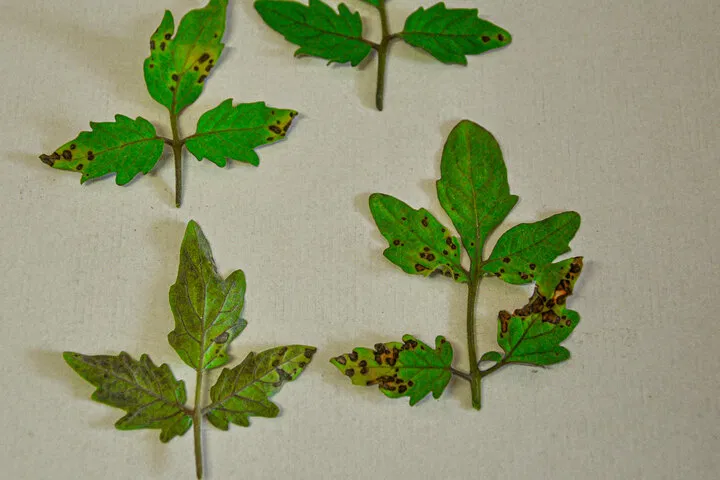
Not necessarily. A few isolated black marks caused by minor pest activity or localized environmental stress don't automatically spell disaster for a cannabis plant.
However, spreading spots can indicate a more serious problem, particularly if they're caused by a fungal infection. Leaf septoria, for example, can spread from older foliage into the upper canopy, causing leaves to wither and die.
This can become particulalry damaging during flowering, when plants need healthy leaves to support the development of their buds. Extensive foliage loss reduces the plant's ability to photosynthesize and can compromise its overall vigor.
The important thing is to establish whether you're dealing with an isolated problem or an active condition that could affect the entire plant.
Can a Nutrient Deficiency Cause Black Spots?
The majority of brown or black spots on the leaves of cannabis plants are caused by some sort of nutrient deficiency. However, rather than rushing out to the garden centre to buy more fertilizer, growers should first test the pH of their soil. In many cases, the problem has nothing to do with a lack of minerals but is instead caused by pH levels that are either too high or too low.
Cannabis plants thrive in soil with pH between 6.0 and 7.0. Values outside this optimal range can lead to nutrient lockout, whereby the roots cannot absorb the nutes in their environment.
Only after ascertaining that no lockout has occurred should growers consider supplementing their growing medium with extra nutrients. Figuring out which ingredients to add requires some extra diagnosis, although calcium is often the answer.
For more information about the minerals cannabis needs to grow, check out our guide, Each Cannabis Nutrient Explained
Lack of Calcium
Calcium deficiency shows up as spots on new leaves before spreading to older ones. Some beginners might mistake these signs for the symptoms of pest infestation, although more experienced growers can easily tell the difference. For instance, bugs tend to appear all over a plant, while calcium deficiency causes spots to manifest on some leaves but not others.
This is one of the most useful ways to distinguish calcium deficiency cannabis symptoms from septoria. Calcium problems generally affect newer growth, while septoria usually starts on the lower leaves.
Usually, leaves that are directly exposed to light are the first to become discolored, while the lower leaves, which are more shaded, retain their verdant splendor until the problem becomes more severe. Growers who notice this telltale sign can quickly investigate the situation and, if a genuine shortage is confirmed, remedy it by feeding their plants a suitable calcium-magnesium solution.

Magnesium Deficiency
Magnesium is another essential nutrient that plays a vital role in photosynthesis. A lack of this mineral can produce a distinctive pattern of discoloration, usually starting on older leaves.
The tissue between the leaf veins begins to turn yellow, while the veins themselves often remain green. As the problem becomes more severe, small dark specks can appear within the affected areas, eventually developing into patches of dead tissue.
This interveinal pattern helps distinguish magnesium deficiency from septoria, which produces individual lesions rathes than yellowing that follows the spaces between veins.
Before adding supplements, check the pH of the growing medium and make sure nutrient lockout isn;t preventing the plant from absorbing magnesium. If a genuine deficiency is confirmed, an appropriate magnesium-containing fertilizer can help restore healthy growth.
Related Article:
How To Identify and Treat Magnesium Deficiency in Cannabis Plants
Potassium Deficiency
Potassium, meanwhile, is a vital nutrient that becomes particularly important during the flowering stage. Plants suffering from potassium deficiency at this point in their life cycle often develop black and brown spots on their leaves and may produce disappointing yields. Affected foliage may also develop damaged or scorched-looking edges, particularly as the deficiency becomes more severe.
Assuming nutrient lockout has been ruled out, the problem can usually be fixed by introducing a source of potassium like kelp meal or wood ash. Avoid adding excessive amounts, however, as too much potassium can interfere with the uptake of other essential nutrients.

Phosphorous Or Nitrogen Deficiency
Though less common, phosphorus deficiency can also lead to leaf discolouration. Plants may develop unusually dark foliage, sometimes accompanied by reddish or purplish coloration and patches of damaged tissue.
Nitrogen deficiency, meanwhile, results in yellow leaves that later turn brown and die due to an inability to photosynthesize. Because cannabis plants absorb nitrogen reasonably well even when the pH is suboptimal, this problem is rarely caused by nutrient lockout.
Growers who suspect a nitrogen deficiency should therefore investigate the plant's feeding regime and, if necessary, supplement their cannabis plants with nutrient-rich ingredients like bat guano or worm castings.
Related Article:
Cannabis Nitrogen Deficiency: How To Identify and Fix the Problem

Manganese Deficiency and Toxicity
Manganese is another mineral required for healthy cannabis growth, although problems can arise when plants receive either too little or too much.
Manganese deficiency typically produces yellowing between the leaf veins, particularly on younger foliage. However, manganese toxicity can also cause discoloration and dark spots. This is particularly likely when the growing medium becomes too acidic, as low pH can increase manganese availability and cause plants to absorb excessive amounts.
Rather than automatically adding manganese chelate to the soil, growers should check pH and investigate possible nutrient imabalances before making any adjustments.
Is Leaf Septoria Causing the Black Spots?
Leaf septoria – also known as yellow leaf spot – is a fungus that can devastate a cannabis plant if left untreated. The disease typically manifests as yellow and brown spots appearing on the lower leaves as a plant enters the flowering stage before spreading to the higher leaves.
Affected leaves eventually wither and die, so failing to deal with an infection early can have damaging consequences.

Research from the University of Kentucky provides some useful clues for identifying leaf septoria cannabis infections. The disease initially produces small, irregular spots that can expand to around 1/4 inch (6mm) across. These develop grey or white centers surrounded by prominent yellow halos.
Look closely at the centers of these lesions and you may notice tiny black structures resembling pepper flakes. These are called pycnidia, which are fungal reproductive structures containing spores. Their presence is a particularly useful indicator when distinguishing septoria cannabis infections from other causes of leaf damage.
The disease typically starts on older leaves and within the inner canopy, where moisture and humidity can accumulate. As the infection progresses, spots expand, leaves turn yellow and eventually fall from the plant.
The potential damage shouldn't be underestimated. University of Kentucky research has documented cases in which severe infections caused plants to lose between 50% and 90% of their leaves. Such extensive defoliation can seriously affect plant vigor, particularly when infections develop early in the growing season.
Preventing Leaf Septoria
To avoid this destructive fungus, cultivators need to ensure that the environment in their grow room is not conducive to the spread of such organisms. Temperature and humidity levels should therefore be controlled at all times, while airflow can be improved by pruning bushy plants. These measures can help keep all kinds of mold at bay, including powdery mildew.
Manipulating the environment is obviously less feasible when growing outdoors, so growers should pay particular attention to their plants during warm, humid weather. It’s also a good idea to avoid planting in a spot that has previously been affected by leaf Septoria, as spores could be lurking in the soil or other infected plant debris.
Treating Leaf Septoria
Once the disease sets in, it’s best to remove all affected leaves. Some growers also use fungicides while others prefer natural antifungals like neem oil. However, neem oil should not be regarded as a proven cure for established septoria infections.
Acting fast can save a plant from disaster, although the grow medium should be disposed of and the growing space sterilized before any more seeds are planted.
Which Pests Leave Black Spots on Cannabis Leaves?
From aphids to leafhoppers, there are loads of insects that love a good bit of weed. Spider mites, for instance, are a particularly despised enemy of cannabis growers everywhere.
Though tiny, these horrible little creepies can attack in large numbers and are difficult to get rid of once an infestation takes hold. With a voracious appetite, spider mites suck the nutrients out of marijuana leaves and stems, causing them to become pale before later turning brown and dying. Sometimes the poop of spider mites shows up as small black spots on cannabis plants, although this isn’t harmful per se.
Though the insects themselves are too small to see, the webs they spin between the fan leaves of a plant indicate that your grow space has been visited by these uninvited pests. By the time the webbing becomes noticeable, however, it’s often too late to save a plant, so it’s essential to act fast if you think you’ve got spider mites.

Introducing predators such as ladybirds is the most effective way to keep spider mites under control, although even these helpful little bugs are unlikely to eradicate a large infestation.
Thrips are another pain in the backside for cannabis growers. As with spider mites, these little yobs poop all over your cannabis, leaving black spots on the leaves and stems. Once again, this excrement isn’t harmful but is indicative of a much larger problem as thrips suck the sap out of cannabis plants.
Growers usually notice fan leaves developing silvery or pale feeding marks alongside a few black spots once thrips get to work. Over time, the situation deteriorates and leaves eventually die off.
Getting rid of thrips can be tricky if you’ve got lots of them, though neem oil and other pesticides are often used as part of an integrated pest management strategy. Just remember never to get any of these substances on your buds unless the product is specifically approved for that use, as they can wreck the taste of your weed.
Placing sticky yellow strips around your plants also lures the bugs in and traps them, making this an easy way to monitor and help manage a thrips infestation.
Can Heat or Light Stress Cause Black Spots?
Brown and black spots on cannabis leaves often signify an environmental imbalance of some sort. We’ve already mentioned how suboptimal pH levels can cause nutrient lockout while high humidity encourages fungal infections, although growers also need to keep an eye on light and heat within their grow space.
Heat stress can occur if plants are suddenly subjected to a dramatic increase in temperature which often results in funky discolourations, which is why it’s important to prevent your equipment from overheating the room. Fans and air conditioning provide an obvious solution to this problem while switching from HPS to LED lights can also prevent temperature increases.
Speaking of illumination, light burn is another common cause of black and brown spots on cannabis leaves. Ironically, LED lights present the most significant danger, as their lack of heat output can lull many growers into placing them too close to their cannabis plants. All those lumens can be too much for some leaves to handle, so it’s wise to raise the lights by a few inches if you notice some ugly leaf spots.
One useful clue is the position of the damage. If affected leaves are concentrated nearest the light source, particularly around the upper canopy, excessive light intensity or heat stress could be repsonsible.

Finally, giving plants the wrong amount of water can cause all sorts of visible problems, including spots. Overwatering raises the risk of root rot as plants get “wet feet”, often leading to saggy, discoloured leaves. Wet soil also attracts pests like fungus gnats, which can then attack the roots of your plants.
On the other hand, underwatering causes roots to dry out and prevents plants from carrying out basic biological functions. If this goes on for long enough, chlorophyll starts to disappear, and veg turns from green to yellow to brown.
Fortunately, most of the causes of black spots on cannabis plants are relatively easy to solve, provided you act quickly and don’t wait until the problem has become too severe. Often, the solution can be found in the basics of cannabis growing, so ensuring you’ve got decent air circulation, the right lighting and a suitable watering regime is the first step towards restoring the green glory of your weed plants.
How Do You Treat Black Spots on Cannabis Leaves?
Treating black spots on cannabis leaves starts with identifying the underlying problem. Applying more fertilizer or spraying pesticides withut understanding the cause can make matters worse.
Follow these steps to get the situation under control:
Isolate the affected plant. Move it away from healthy plants if you suspect a fungal infection or pest infection.
Inspect the leaves. Check both sides of affected foliage for circular lesions, yellow halos, insect droppings, webbing, and feeding damage.
Check the growing conditions. Test pH, inspect moisture levels and assess temperature, humidity and airflow.
Identify the cause. Establish whether you're dealing with septoria, a nutrient imbalance, pest activity or environmental stress.
Remove affected foliage. Prune severely damaged leaves using clean, sterilized tools. Dispose of removed material carefully.
Apply the appropriate treatment. Correct nutrient imbalances, manage pests, or improved environmental conditions according to your diagnosis.
Monitor new growth. Inspect the plant regularly over the following days and weeks to make sure the problem isn't spreading.
Related Article:
Insects And Cannabis: The Good And The Bad
Remember that existing black spots don't heal. Once leaf tissue has died, it won't turn green again. The obective of treatment is to stop further damage and give healthy new growth the opportunity to develop.
Black Spot Treatment Guide
| Cause | Treatment | What not to do |
| Leaf septoria | Remove affected leaves, improve airflow and reduce leaf wetness | Leave infected debris around plants or rely on neem oil as a cure |
| Calcium deficiency | Check pH and correct confirmed calcium shortages | Add calcium without investigating nutrient lockout |
| Magnesium deficiency | Correct pH and provide an appropriate magnesium supplement | Confuse interveinal yellowing with fungal lesions |
| Potassium deficiency | Correct nutrient availability and provide suitable potassium supplementation | Overfeed or ignore other nutrient imbalances |
| Spider mites | Isolate plants, inspect leaf undersides and use suitable pest management | Ignore webbing or assume black deposits are harmless |
| Thrips | Remove heavily affected foliage and use appropriate pest controls | Allow an infestation to spread unchecked |
| Heat or light stress | Adjust lighting distance, intensity and temperature | Increase lighting around already damaged failure |
Should I Cut Off Leaves With Black Spots?
Sometimes, but removing every affected leaf isn't always necessary. The decision depends on what's causing the marks and how much of the plant is affected.
If the spots are caused by a fungal infection or pest infestation, remove affected leaves where necessary to reduce the amount of infected or infested material. This is particularly important with septoria, as infected foliage can contribute to further disease development, potentially putting an entire harvest at risk.
If the spots are caused by a nutrient deficiency, focus on correcting the underlying problem first. A few damaged leaves can remain on the plant if they're still functioning and the condition isn't spreading. Remove leaves that are extensively damaged or dying.
Try not to strip too much healthy foliage at once. As a conservative guideline, aim to remove a maximum of about 20% of the healthy canopy in one session unless there's a compelling reason to do so. The priority should be removing damaged material while preserving as much healthy foliage as possiblle.
Remember: always sterilize pruning tools between cuts, particularly when dealing with suspected fungal infections. Place removed leaves in a sealed bag and dispose of them well away from the growing area. Do not add them to compost.
Can a Cannabis Plant Recover From Black Spots?
Yes. Cannabis plants can recover from many of the problems responsible for black spots, provided the underlying cause is identified and controlled before too much damage occurs.
However, there's one thing all growers should know: the plant can recover, but affected leaves cannot. Once leaf tissue becomes necrotic, it's permanently damaged. Successful treatment won't remove existing spots or restore dead areas to their original green color. Instead, look for signs of healthy new growth. Fresh leaves should develop normally, without new lesions, discoloration, or other symptoms associated with the original problem.
With fungal infections, recover depends on stopping further spread and maintaining conditions that discourage the disease. Nutrient-related problems should gradually improve once the relevant imbalance or lockout has been corrected.
Unfortunately, not every plant is worth saving. A severely infected plant with excessive defoliation, widespread disease or significant damage to its main growing structures may have little chance of producing a worthwhile harvest.
Can You Smoke Buds From a Septoria-Affected Plant?
Septoria primarily affects foliage, and infections on hemp flowers are exceedingly rare in the disease literature. However, this doesn't establish that buds from an infected cannabis plant are safe to consume.
Growers should inspect developing flowers for signs of mold, discoloration, or other deterioration. As a precatution, flowers showing visible fungal growth or contamination should never be smoked or consumed.
When Black Spots Signal a Bigger Problem
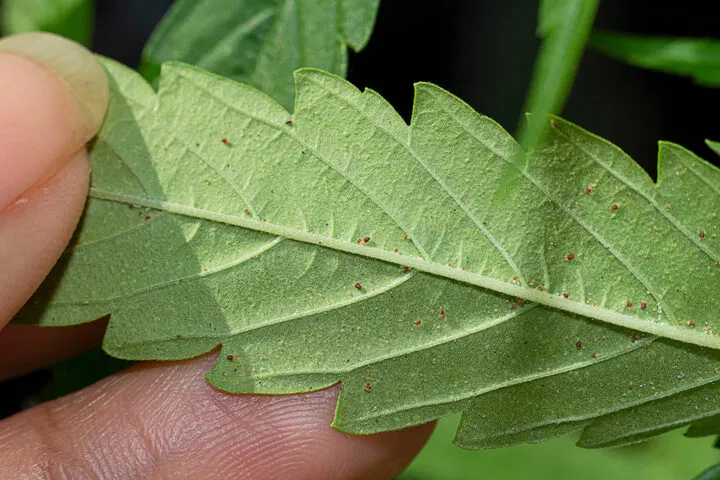
A few isolated marks aren't necessarily a cause for alarm, but certain symptoms suggest that a problem is becoming more serious.
Watch out for:
Rapidly spreading lesions: New spots appearing across multiple leaves may indicate an active fungal infection.
Increasing leaf loss: Widespread damage and falling foliage can significantly reduce plant vigor..
Damage reaching the upper canopy: A problem that began on older leaves but is now affecting fresh growth needs attention.
Visible pest populations: Increasing numbers of mites, thrips, or other insects suggest an infestation is becoming established.
Spotting or discoloration reaching the buds: Darkened or damaged flowers deserve immediate attention, as this could indicate a more serious fungal problem.
Grey mold, also known as Botrytis, is a particularly serious fungal disease that can attack cannabis flowers and destroy an otherwise healthy harvest. If you notice suspicious growth or rotting within your buds, isolate the affected plant and consult our guide to How to Deal With Common Cannabis Pathogens: Grey Mold for further information.
How to Prevent Black Spots on Cannabis Leaves
Fortunately, most of the causes of black spots on cannabis leaves are relatively easy to prevent, provided you maintain good growing practices and don't wait until problems become too severe.
Control the Growing Environment
Maintain suitable temperature and humidity levels for your plants' stage of development. Good air circulation is essential, especially in dense canopies where moisture can become trapped.
Avoid allowing foliage to remain wet for extended periods and ensure that extraction fans and circulation systems are working correctly.
Keep Pests Under Control
Inspect plants regularly for signs of insect activity, including webbing, feeding marks, and black desposits.
Sticky traps can help monitor flying pests, while regular inspection of leaf undersides can reveal infestations before they become established.
Implement suitable biological controls where necessary, and isolate affected plants to reduce the risk of pests spreading.
Maintain Good Tool Hygiene
Dirty pruning tools can transfer contaminants between plants. Clean and sterilize scissors, shears, and other equipment before use, especially when removing infected foliage.
Always dispose of diseased leaves and plant debris reponsibly.
Consider Companion Planting
Certain companion plants can help support an integrated pest management strategy by attracting the best bugs or insects for a cannabis grow. For example, flowering plants such as marigolds, dill, and alyssum can provide food and habitat for some beneficial insects. However, companion planting isn't a guaranteed way to prevent pests or fungal disease, and should complement rather than replace proper grow-room hygiene.
Related Article:
Beyond Buds: Maximizing Your Garden With Companion Planting
Establish a Regular Inspection Routine
One of the simplest ways to prevent black spots on cannabis leaves is to make plant inspections part of your growing routine. Check plants thoroughly at least two or three times a week, paying particular attention to:
- Older leaves near the bottom of the canopy.
- The underside of fan leaves.
- New growth and developing shoots.
- Areas where foliage is crowded or airflow is restricted.
- The growing medium for signs of excess moisture or fungus gnats.
- Developing flowers for any signs of discoloration or mold.
Look for changes rather than simply checking whether leaves appear green. Small symptoms are much easier to investigate and manage than an established infection or infestation.
Black Spots on Cannabis Leaves FAQs
What are the tiny black dots on weed leaves?
Tiny black dots on weed leaves can be fungal structures, insect droppings or areas of damaged tissue. In septoria infections, they may be pycnidia, which are small black reproductive structures found within the centers of fungal lesions. Thrips and spider mites can also leave dark deposits on foliage. Inspect the surrounding tissue and check for other symptoms before deciding on a cause.
Can you smoke buds from a cannabis plant with Septoria?
Septoria primarily affects foliage, and infections on hemp flowers are reported to be exceedingly rare. However, this doesn't establish that flowers from an infected plant are safe to consume. Any buds showing visible fungal growth or contamination should not be smoked.
Do black spots spread between cannabis plants?
They can, depending on the underlying cause. Septoria spreads through fungal spores, which can move between plants through water splash, wind-driven rain and contaminated plant debris. Pests such as spider mites and thrips can also move between plants. Isolating affected specimens and maintaining good hygiene can help reduce the risk of further spread.
Does neem oil kill septoria on cannabis plants?
Neem oil should not be relied upon to eliminate an established septoria infection. Although it is commonly used in pest management, its effectiveness against this particular fungal disease is not established. Focus instead on removing infected foliage, improving airflow, reducing leaf wetness and following appropriate disease-management guidance.
Why do black spots return after treatment?
Black spots can return if the original cause hasn't been properly addressed. Septoria may persist in infected plant debris, while pests can survive in overlooked areas of the growing space. Nutrient symptoms may also reappear if pH problems or nutrient lockout remain unresolved. Recheck the plant, growing conditions and surrounding area rather than simply repeating the previous treatment.
Black spots on cannabis leaves can indicate several problems, from relatively minor pest activity to serious fungal infections. The best approach is to diagnose the symptoms before reaching for a treatment.
Start by checking where the spots appear and what they look like. Investigate possible septoria infections, inspect for pests, assess nutrient availability and rule out environmental stress. Once you've identified the cause, act promptly and monitor new growth to make sure the problem isn't returning.
With a little attention to the basics of cannabis cultivation, including good air circulation, suitable lighting, proper watering and regular plant inspections you can catch many problems early and give your plants the best chance of producing a healthy harvest.