


Nitrogen is one of the most essential nutrients to feed cannabis, playing a vital role in the plant’s overall health, vigor, and productivity. However, cannabis nitrogen deficiency is a common issue that can severely impact growth, hinder leaf and shoot development, and ultimately result in reduced yields if left unaddressed. This problem is particularly prevalent among novice growers who may not fully understand how nitrogen functions within the plant and how to manage its levels effectively.
When cannabis lacks sufficient nitrogen, it exhibits clear signs that growers must recognize early to prevent long-term damage. Symptoms can quickly escalate if corrective action isn’t taken. In this article, we’ll shed some light on the importance of nitrogen, how to diagnose a cannabis nitrogen deficiency, what causes it, and the best methods for correcting and preventing this issue.
Understanding Nitrogen’s Role in Cannabis Plants
Nitrogen is a cornerstone nutrient for cannabis plants, integral to their growth and development. As a key component of amino acids, nitrogen forms the building blocks of proteins, which are essential for the plant’s structural and metabolic functions. Additionally, nitrogen is crucial for the production of chlorophyll, the green pigment that enables photosynthesis by capturing light energy. This process is vital for the plant’s energy production and overall health.
During the vegetative stage, cannabis plants have a heightened need for nitrogen. This is the phase when the plant focuses on producing new leaves and stems, establishing a robust structure that will support future flowering. Nitrogen also plays a role in the synthesis of nucleic acids, the genetic material that guides the plant’s growth and development. Ensuring an adequate supply of nitrogen during this stage is critical for achieving vigorous and healthy cannabis plants.
The Importance of Nitrogen for Cannabis Plants

Nitrogen (N) is a fundamental macronutrient required for cannabis to thrive. It plays a pivotal role in multiple physiological processes, including:
Chlorophyll Production – Nitrogen is a key component of chlorophyll, the pigment responsible for photosynthesis. Without adequate nitrogen, cannabis struggles to absorb light energy efficiently, leading to slow or stunted plant growth.
Protein and Enzyme Synthesis – Nitrogen is a building block of amino acids, which are the foundation of proteins and enzymes essential for plant development. Strong protein synthesis ensures healthy structural growth and metabolic function.
Leaf and Stem Development – Nitrogen is particularly vital during the vegetative stage of cannabis plant growth, as it encourages strong stems and leaves – which is crucial for supporting future flower production. Using a high nitrogen fertilizer can help address nitrogen deficiencies and promote healthy growth.
Regulating Overall Plant Health – Beyond growth, nitrogen contributes to a cannabis plant’s ability to resist stress, pests, and diseases. A well-nourished cannabis plant is naturally more resistant.
Since nitrogen is mobile within the plant, it is first transported to newer growth when a deficiency arises, leaving older leaves to suffer the initial effects. This is why nitrogen deficiency often begins with yellowing lower leaves.
The Impact of Nitrogen on Cannabis Plants
Nitrogen’s influence on cannabis plants is profound, affecting everything from growth rates to overall plant health. When nitrogen levels are optimal, cannabis plants exhibit vigorous growth, with lush, green foliage and strong stems. However, a deficiency in nitrogen can lead to several issues, including stunted growth, yellowing leaves, and ultimately, reduced yields. These deficiency symptoms occur because nitrogen is a mobile nutrient, meaning the plant will transport it from older leaves to newer growth when supplies are low, causing the older leaves to yellow and die off.
Conversely, an excess of nitrogen can be just as detrimental. Overly vigorous growth can result in weak, leggy stems that are prone to breaking. Additionally, too much nitrogen during the flowering stage can lead to excessive leaf production at the expense of bud development, also resulting in lower-quality yields. Nitrogen also plays a critical role in the production of cannabinoids and terpenes, the compounds responsible for the medicinal and recreational properties of cannabis. Balancing nitrogen levels is therefore essential for producing high-quality cannabis.
What Causes Cannabis Nitrogen Deficiency?
Several factors can lead to nitrogen deficiency in cannabis plants. It’s important to understand the root cause - pun intended - if you’re going to resolve the issue effectively, so here are the most common reasons:
Insufficient Nutrient Supply
The most straightforward cause of cannabis nitrogen deficiency is a lack of nitrogen in the growing medium. It's also the easiest to remedy. This can happen when:
- The grower underfeeds their plants, especially during the vegetative stage.
- The soil or nutrient solution lacks adequate nitrogen content
- Organic nutes have been used but have not yet broken down enough to release nitrogen.
Poor Soil Quality

Low-quality or depleted soil may not contain enough nitrogen to support cannabis growth. Over time, plants extract nutrients from the soil, and if these aren’t replenished through feeding or proper soil amendments, a deficiency can occur.
Incorrect pH Levels
Even if nitrogen is present in the soil or nutrient mix, cannabis plants cannot absorb it properly if the pH is too high or too low. The optimal pH for nitrogen uptake is:
6.0-7.0 for soil-grown plants
5.5-6.5 for hydroponic systems
If the pH falls outside this range, nitrogen becomes chemically unavailable to the roots, leading to deficiency symptoms even when nutrients are present!
Overwatering and Poor Drainage
Excessive watering can cause nitrogen to leach out of the soil, washing it away before the roots can absorb it. Poor drainage can also suffocate roots, making it harder for them to take up nutrients effectively.
High Levels of Other Nutrients (aka Nutrient Lockout)
Yes, even just an imbalance of nutrients can cause big problems for your plants. Specifically, this can lead to nutrient lockout, where nitrogen is physically present but unavailable to the plant. High concentrations of calcium, phosphorus (P) of potassium (K) can interfere with nitrogen uptake, leading to a deficiency. Optimal cation exchange capacity is crucial for plant roots to access ionic forms of nitrogen, which ensures effective nutrient uptake and overall plant health.
Excessive Light or Rapid Growth
If you’re growing weed under high-intensity lighting or in rapid growth conditions, your plants may require more nitrogen than usual. If their nitrogen demand exceeds what’s available in the medium, a deficiency can develop.
Nutrient Depletion in Long Grow Cycles
Lastly, cannabis plants that are held in the vegetative phase for an extended period (such as in mother plants or larger outdoor grows) can deplete available nitrogen over time. Withot periodic soil replenishment or additional feeding, deficiencies are likely to occur.
By identifying and addressing the cause of a cannabis nitrogen deficiency, growers can take corrective action and ensure their cannabis plants remain healthy and productive.
Symptoms of Cannabis Nitrogen Deficiency: Understanding Nitrogen as a Mobile Nutrient
The good thing about cannabis plants is that they’ll usually let you know if they take a turn for the worse. Nitrogen deficiency in cannabis can be easily identified if you know what to look for. Plant nutrients play a crucial role in addressing nitrogen deficiency and ensuring healthy plant growth. Here’s a handy checklist:
Early Signs of Cannabis Nitrogen Deficiency:
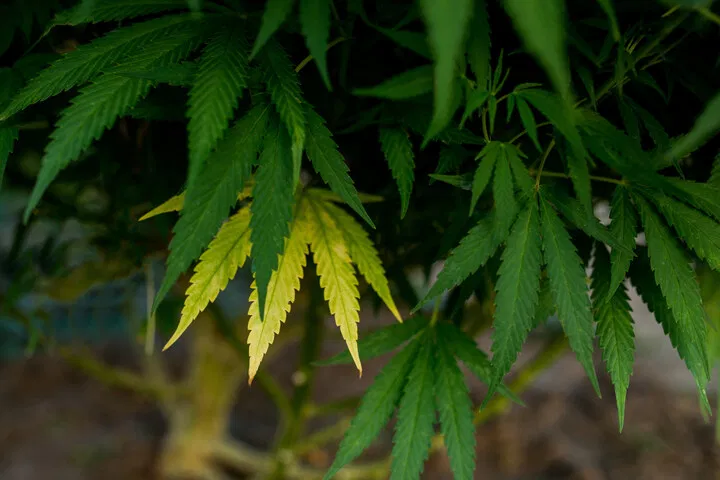
- Older, lower leaves turning light green, then progressively yellowing
- Slowed vegetative growth, with new leaves appearing smaller or paler than normal
Intermediate Signs of Cannabis Nitrogen Deficiency:
- Yellowing moves upward toward the middle leaves as nitrogen continues to be pulled form older foliage
- Weak, thin stems and reduced lateral branching, making the plant look sparse
- Leaves curling downward, making the plant look limp and unhealthy
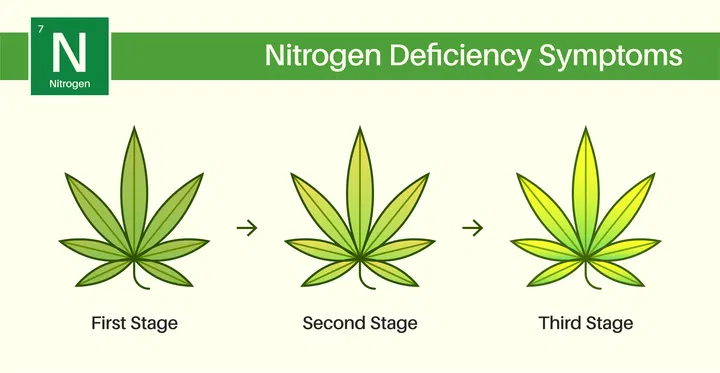
Severe Signs of Cannabis Nitrogen Deficiency:
- Entire lower section of the plant turns yellow, brown, or crispy
- Premature leaf drop, leaving the plant with very few fan leaves to support photosynthesis
- Stunted flowering, leading to small airy buds with low potency
All of these are pretty nasty things to find on your plants, but they’re all fixable. If not attended to, the plant’s overall health declines significantly, reducing yield potential and even leading to plant death in extreme cases. You’ll want to act immediately.
When Do Cannabis Plants Need Nitrogen The Most?
Cannabis requires high nitrogen levels during the vegetative stage, as this is when it focuses on growing leaves, stems, and roots. Strong vegetative growth sets the foundation for healthy flowering, allowing plants to develop a solid structure that can support heavy buds later. And heavy buds are what it’s all about.
However, a plant’s nitrogen requirements change throughout the lifecycle, decreasing during the flowering stage. The plant still needs some nitrogen, but excessive amounts at this stage can actually hinder bud production and lead to overly leafy flowers. Excess nitrogen can cause energy to be redirected toward vegetative development rather than cannabinoid and terpenoid production. This is why most bloom-phase fertilizers contain lower nitrogen levels while emphasizing phosphorus and potassium for flower development.
Failing to supply enough nitrogen during vegetation results in weak, underdeveloped plants that struggle to transition into healthy flowering. Conversely, too much nitrogen in the bloom phase can delay flowering and reduce resin production, leading to lower-quality buds.
How To Treat and Prevent Cannabis Nitrogen Deficiency
Balancing nitrogen levels is crucial, as an excess can lead to nitrogen toxicity, causing overly vigorous growth, dark green leaves, and delayed fruit ripening. If you’re conducting your routine plant checks and spot any of the symptoms mentioned above, it’s best to be proactive. Act swiftly, and consider the following steps:
Adjust Your Nutrient Routine
Ensure a proper nitrogen supply by using organic or synthetic fertilizers with a suitable NPK ratio for vegetative growth.
Test and Adjust Your Soil pH
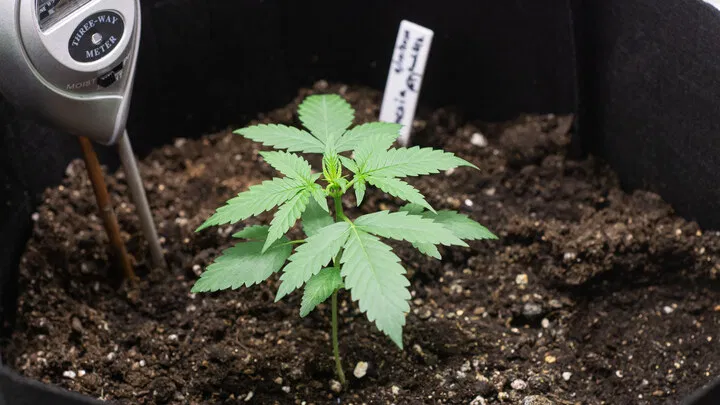
Soil pH is a critical factor in determining the availability of nitrogen to cannabis plants. If the soil pH is too high or too low, it can significantly affect the plant’s ability to absorb nitrogen, leading to deficiencies or toxicities. The optimal pH range for cannabis plants is between 6.0 and 7.0 for soil-grown plants and 5.5 to 6.5 for hydroponic systems. Measure pH levels regularly and make necessary adjustments to ensure that your plants can absorb the nitrogen they need to thrive.
To adjust soil pH, you can use pH up or pH down solutions, which are readily available at gardening stores. For a more organic approach, materials like lime can raise pH, while sulfur can lower it. By maintaining the correct pH levels, you ensure that your cannabis plants have access to the nutrients they need for healthy growth and development.
Improve Soil Quality
Use compost, manure, bat guano, or alfalfa meal to provide long-lasting nitrogen sources
Use Synthetic Nitrogen Fertilizer
Follow the instructions closely, and apply it around the base of affected plants. Then, marvel as the symptoms slowly begin to clear up.
Use Foliar Feeding for Quick Recovery
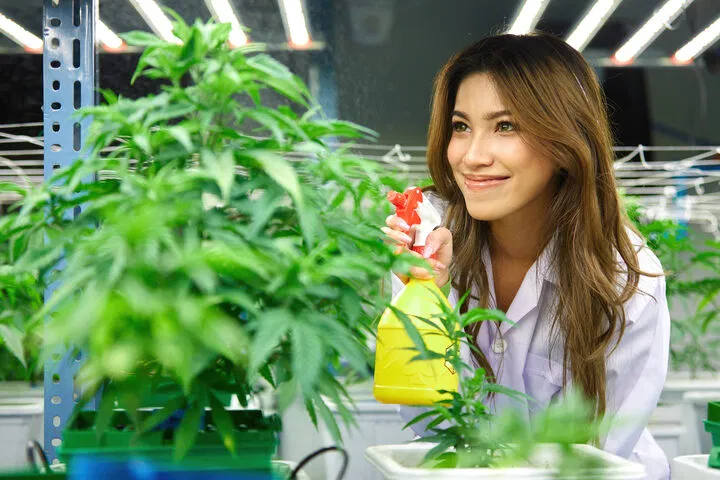
Got a plant in bad shape? Apply a diluted nitrogen-rich foliar spray like liquid seaweed or fish emulstion to provide immediate relief while you adjust your root feeding. Foliar feeding acts fast as plants can absorb nutrients rapidly via tiny pores in the leaves called stomata.
Avoid Overwatering
Make sure your plants have proper drainage to prevent nutrient leaching and root suffocation.
Rotate and Monitor Feeding Practices
Adjust nitrogen levels based on growth stage – high during vegetation, moderate in pre-flowering, and low in the bloom phase.
Fixing Cannabis Nutrient Deficiencies – Final Thoughts
Fixing cannabis nutrient deficiencies requires a comprehensive approach that takes into account the specific needs of the plant. Understanding the role of nitrogen in cannabis plants is crucial for preventing deficiencies and ensuring that your plants receive the nutrients they need to thrive. This includes regularly testing and adjusting the soil pH, providing a balanced fertilizer tailored to the plant’s growth stage, and closely monitoring nutrient uptake.
By following these steps, you can ensure your cannabis plants remain healthy and productive. A proactive approach to nutrient management not only prevents deficiencies but also maximizes yields and enhances the quality of the final product. By being attentive to your plants’ needs and making timely adjustments, you can cultivate strong, vibrant cannabis plants that produce top-quality buds.