
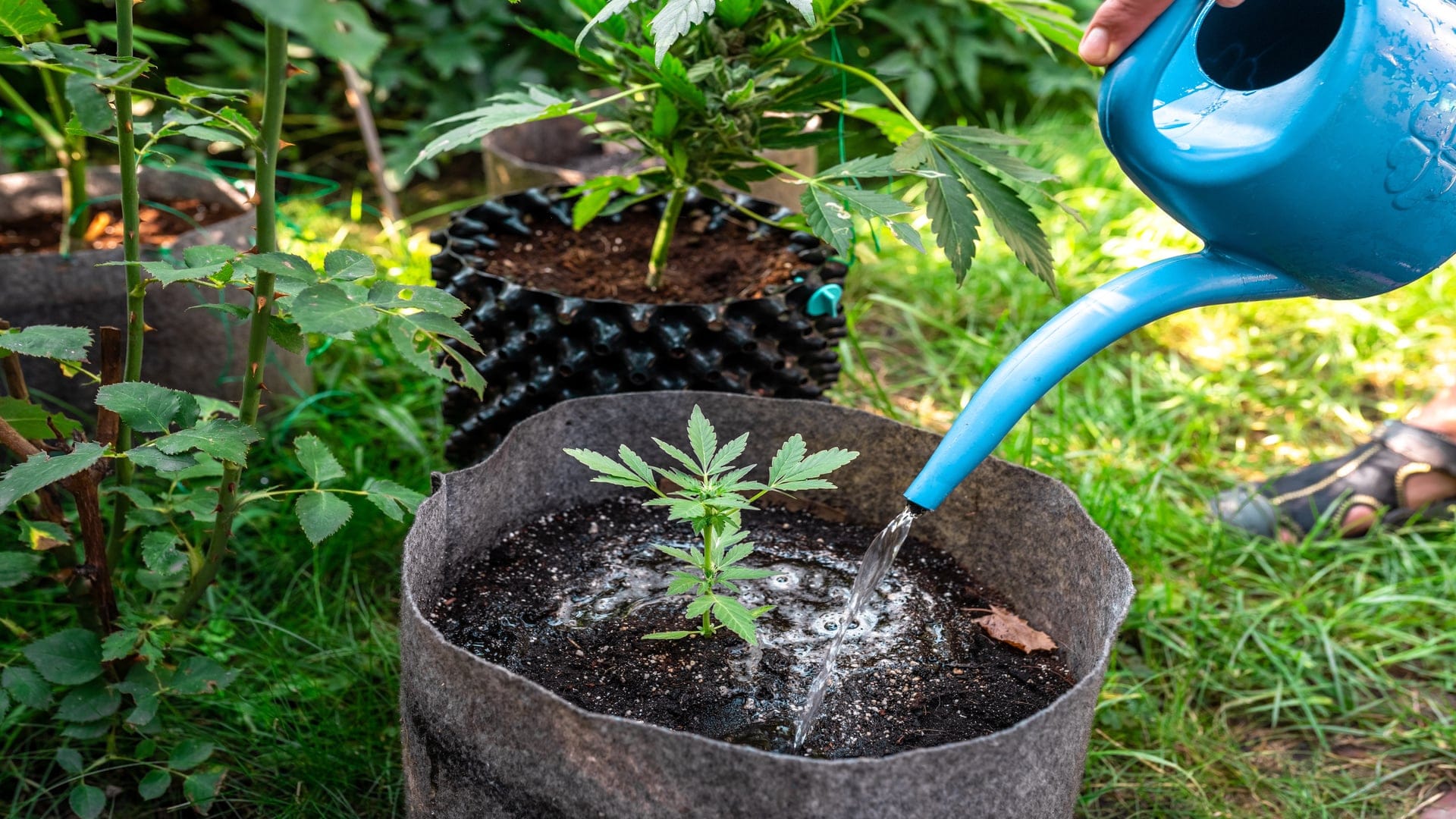

If you've ever stood in the garden, hose in hand, wondering how much water to give cannabis, you're certainly not alone. South African growers deal with intense summer sun, regional droughts, water restrictions, and wildly different climates. It's no wonder many home growers either drown their plants with love, or under-water them out of fear of root-rot.
In this guide, we'll break down exactly how much water to give cannabis at each stage of its life outdoors in South Africa, why it needs that amount, and the best (and worst) times to water. We'll even pull in some insights from science, but translate it into practical garden-hose decisions you can actually use.
Understanding South African Conditions and Cannabis Water Use
Before we talk numbers, let's quickly look at why "how much water to give cannabis" in South Africa is its own unique question.
Hot, Sunny Summers: Many regions of South Africa (especially inland and low-lying coastal areas) experience high solar radiation and warm-to-hot temperatures in the growing season, which pushes up evapotranspiration (ET) - the combined water loss from soil and plant [1]
Regional differences:
- Coastal KZN and Eastern Cape: warm, humid, with significant rainfall but high ET.
- Western Cape winter rainfall, dry summers, strong wind - easy to dry out containers.
- Highveld: big day/night swings, high UV, thunderstroms, but also dry spells [2].
Cannabis is thirsty but efficient: Recent South African research on hemp/cannabis ET in KwaZulu-Natal shows that the crop can use a lot of water, especially in vigorous vegetative growth, but its water use is strongly linked to canopy size and weather rather than a fixed "litres per day" rule [3].
So instead of chasing a single number, you'll learn how to decide how much water to give cannabis in your exact conditions, using simple checks backed by what the plant is actually doing.
Step 1: How Much Water to Give Cannabis Seedlings
At the seedling stage, "how much water to give cannabis" is really "how do I keep things consistently moist without drowning this baby?" Seedlings can get by on a little, and too much water easily overwhelms a cannabis seedling.

How much water to give cannabis seedlings:
In small pots (0.5-1 litre), start with about 50-150ml per watering. This will depend a little on pot size and environment, so observation is a key aspect of whether you give a little more or not.
Goal: The top layer should be moist but not muddy; pots should feel light but not bone dry.
Frequency: Once a day in hot, dry, windy conditions, every 1-2 days in cooler or coastal humidity.
Why this amount? Seedlings have tiny root systems and low transpiration. Studies on early cannabis growth and ET show water use ramps up with leaf area. At this stage, the plant simply cannot drink much yet. Overwatering suffocates these small roots, creating limp, pale seedlings that look thirsty but are actually drowning.
Best time of day to water seedlings
Best: Very early morning (just after sunrise)
Why: Gives soil time to absorb water before midday heat arrives, supports stomatal opening and early-day photosynthesis. Reduces fungal risk compared to evening watering, especially in humid coastal regions.
Second best: Late afternoon, while there's still warmth and airflow.
Avoid: Watering later at night, particularly in KZN/Eastern Cape humidity, as consistently wet surfaces in cool night air encourage damping-off and other seedling diseases.
Step 2: Early Vegetative Growth - How much water to give cannabis as it takes off
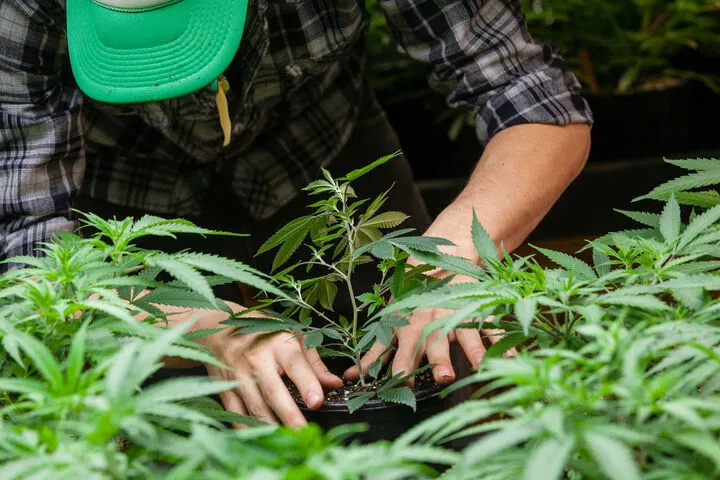
Once your plant has 4-6 nodes and you've safely transplanted into a larger container or into the ground, water use starts to rise fast. This is where ""how much water to give cannabis" begins to feel serious.
How much water to give cannabis in early veg:
For 10-20 litre pots outdoors:
Typical ranges: 0.5-1.5 litres per plant per watering, depending on heat, wind and soil mix. This could be every 2-4 days depending on conditions - so keep an eye on those.
Rule of thumb: Water until 10-20% runoff in containers.
In the ground, water slowly until the soil is moist down to about 10-15cm (check with your finger or a narrow trowel).
Why this amount? As leaf area increases, so does transpiration and ET. South African research shows cannabis ET increases sharply with canopy development, especially under strong summer radiation like that seen in KZN and inland regions. The idea is to wet the root zone deeply, then let it breathe, not to keep the top centimetre consistently soggy.
Best and worst time to water in early veg
Best Time: Early morning remains ideal. The plant will use the water throughout the day, and you're helping it meet rising ET demand as the sun climbs.
When to avoid watering: Midday in extreme heat (e.g. 30+ degrees, full sun, especially in the Karoo, inland KZN, or Highveld). Sudden cold water on hot root zones can stress plants, and much of that water may evaporate from the soil surface before the plant can use it.
Try to avoid watering late at night, especially in humid areas, for disease reasons.
If you're forced to water in the heat due to restrictions, use slow, directed watering at the base and consider a light mulch to reduce surface evaporation.
Step 3: How Much Water to give Cannabis in Late Veg
By late veg, especially with toppiing, training, and big plants in full sun, you'll finally see why everyone says cannabis is a thirsty crop.
How much water to give to cannabis in late veg
For 20-40 litre pots outdoors:
Typical range: 1.5-3.5 litres per plant per watering on warm days.
Frequency: As they gear up for flowering, your plants are going to get real thirsty. Prepare to water them every 1-2 days - if required - in hot, dry inland or windy Western Cape conditions. Every 2-3 days in milder or more humid areas if soil holds moisture well.
In open ground, a mature vegging plant with a well-developed root system in hot sun can easily use several litres per day. Field studies on cannabis and hemp suggest that under high ET conditions, daily water use per square metre of canopy can be substantial - and a vigorous plant is essentially a dense ET engine.

Why this much water?
- More leaf area = more stomata = more transpiration. As the canopy expands, transpiration becomes the major water loss pathway.
- South African sun drives ET hard. High radiation and warm temperatures in the growing season accelerates water loss from both plant and soil.
- Deep, infrequent watering builds resilience. Allowing a partial dry-down between waterings encourages deeper root growth, making plants more drought-tolerant - which is crucial in regions where water restrcitions or mid-season heatwaves hit.
Best time of day to water in late veg
Best: Early morning, especially before high UV index hours. This lets the plant fully hydrate before peak transpiration later in the day.
Acceptable: Late afternoon, as temps drop and winds calm - especially helpful in very hot inland regions.
Avoid: Midday hose-blasting: high evaporation, risk of leaf burn if you splash cold water on sun-heated tissue. Night watering in humid zones, where mold and foliar disease risk increases when foliage stays wet for hours in still, cool air.
Step 4: How Much Water to Give Cannabis in Early Flowering
When photoperiod shifts and the plants starts forming flowers, water management needs a bit more finesse. Now watering plants becomes about avoiding excessive humidity and mold. Keep a close eye on that topsoil.
How much water to give cannabis in early flower
For 20-40 litre pots or strong in-ground plants:
Typical range: 1.5-3 litres per watering with frequency adjusted by climate and soil.
Goal: Maintain a steady, moderate soil moisture level - no extreme drying and no constant saturation.
Why this range?
- Demand is still high. Many cultivars continue to stretch in early flower, so ET and water use remain similar to late veg.
- Flower development is sensitive to stress. Severe drought stress at this stage can reduce bud size and overall yield, while overwatering harms root function and nutrient uptake.

Best time of day to water in early flower
Best: Early morning watering is even more important now.
Why: It allows plants to transpire freely during the day, which helps drive nutrient flow to developing flowers and reduces the risk of high humidity at night in the canopy.
Avoid: Heavy evening watering that leaves soil and surrounding air very humid overnight, especially in regions prone to coastal fog or dew (e.g. certain Western Cape or coastal areas). This combination encourages mold and powdery mildew.
If you must water late in the day, do it early enough that leaves dry completely before dark and focus water at the root zone, not on foliage.
Step 5: How Much Water to Give Cannabis in Peak Flowering
In mid-to-late flowering, your plant's canopy is large, and buds are dense. Now the "how much water to give cannabis" question has to balance high demand with strict moisture control to avoid mold outbreaks, particularly in humid or foggy regions.
How much water to give cannabis as buds peak
For large, flowering outdoor plants:
Typical Range:
- 2-4 litres per plant per watering in 30-50 litre containers.
- In ground, strong plants may need similar volumes, but less frequently if soil holds moisture well.
Frequency:
- Every 1-2 days in hot, dry or windy areas.
- Every 2-3 days in cooler or more humid region where evaporation is lower.
- This is a rule of thumb, but remember observation is key and may determine a different watering schedule.
Why this amount?
- Big canopy, big ET. Research on cannabis ET shows that peak canopy stages have the highest water use, as transpiration drives coolant and nutrient transport.
- But: at the same time, excess soil moisture can drive high night-time humidity near the buds, especially in still air. That's the perfect storm for botryitis (bud rot).
So, you're aiming for the classic "goldilocks zone" - enough water to keep leaves turgid and photosyntheisis humming, but no so much that your grow becomes a damp cave after sunset.

Best and worst watering times in peak flower
Best time:
- Early morning, again. This timing supports daytime transpiration, lets excess surface water evaporate, and helps keep night-time humidity lower around the canopy.
- Good backup: A modest mid-afternoon watering if a heatwave hits and plants are drooping - but water at the base, avoid soaking foliage.
Avoid:
- Late evening or night: It traps water in soil and air overnight, raising RH around those dense buds and massively increasing mold risk.
- Midday overhead watering: Besides water loss to evaporation, wetting flowers in full sun can cause local heat stress on delicate pistils and calyces.
Step 6: How Much Water to Give Cannabis In Late Flowering/Before Harvest
In the last 7-14 days before harvest, many growers in South Africa dial back watering slightly, especially in regions where late-season humidity and rain are a real threat.
How much water to give cannabis as flowering finishes
Moderately reduce volume and/or frequency. For example:
If you were giving 3 litres every second day, you might drop to 2 litres or extend to every third day, depending on weather and soil.
Goal: Avoid severe drought stress that causes leaf death and lowers quality, but keep soils on the drier side to limit mold pressure and support a less humid microclimate around buds.
Why this approach:
- In field studies, cannabis ET naturally tapers near maturation as growth slows, so water demand drops slightly.
- Slightly drier conditions help maintain better air exchange around flowers and reduce disease in the final stretch. Overly wet conditions close to harvest in South Africa's late-season storms can ruin an otherwise brilliant crop.
Best time to water before harvest
- Stick to early morning. This ensures plants have all day to use the water and dry off, while nights stay relatively dry in the canopy.
- Avoid: Any watering that leaves soil wet and air humid going into a cool still night or a forecasted rainy period.
Practical Checks: Beyond numbers - how to decide how much water to give your cannabis today

In real-world outdoor growing, "how much water to give cannabis" isn't just about litre counts. As we've tried to continously emphasize throughout this article, it's also about reading your plant and soil. Here are simple tools that line up nicely with what the research says about water use and ET in cannabis:
Finger test:
- Push your finger 5cm into the soil.
- If dry at that depth: it's time to water.
- If it's still moist, wait and check again later.
Pot weight test:
- Lift or tilt your container. With practice, you'll know "full" vs "nearly empty" by feel. In high ET conditions, pots can shift from heavy to light fast.
Leaf Behavior:
- Morning droop: Often overwatering
- Midday temporary droop, evening recovery: Usually normal high-transpiration stress.
- Persistent droop in cool hours: Suggests root problems (often from too much water, not too little).
One of the best things you can do at this stage is learn how to fix cannabis overwatering. After reading this guide, you should err on the side of caution when watering your plants, of course, but overwatering can happen easily and accidentally. Learning how to take care of it quickly can save your crop.
Final Thoughts: How Much Water to Give Cannabis Outdoors, Really?
If you take one thing away from this guide, let it be this: "How much water to give cannabis" in South Africa is a moving target not a fixed rule. Your plant's stage of growth, local climate, soil type, and container size all change the answer.
Use this as your core framework:
- Seedlings: Small, frequent drinks, early morning, never let get soggy,
- Early veg: 0.5-1.5 L per watering in mid-sized pots, depp but not constant saturation.
- Late veg & early flower: 1.5-3+ l in larger containers, matching rising ET in SA's strong sun.
- Peak flower: 2-4 L, carefully times in early morning to balance high demand with low mold risk.
- Pre-harvest: Slightly reduced watering, still in the morning, aiming for a drier, healthier canopy.
Back this up with your own observations - finger in the soil, eye on the leaves, and awareness of your local weather - and soon you won't just be asking how much water to give cannabis; you'll be confidently answering it for your own garden, grow after grow, season after season.
-----------------------------------------
References:
[1] https://link.springer.com/content/pdf/10.1186/s42238-025-00325-4.pdf
[2] https://www.wrc.org.za/wp-content/uploads/mdocs/3190%20final.pdf
[3] https://link.springer.com/content/pdf/10.1186/s42238-025-00325-4.pdf