
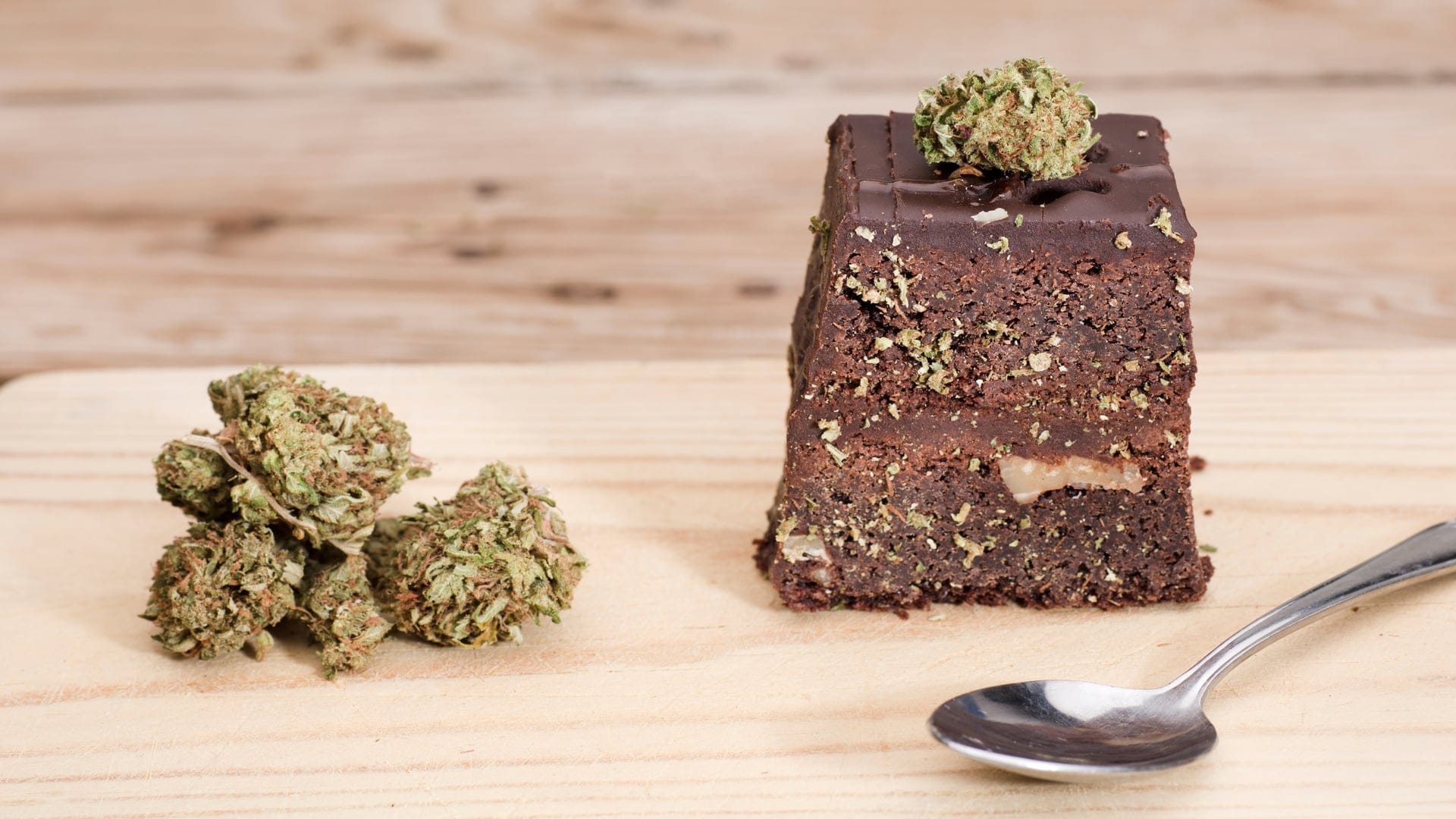

If you’ve ever eyed a slice of weed cake and wondered whether it’s going to hit like a gentle high-five or a cosmic uppercut, you’re not alone. Cannabis edibles live in their own chaotic universe – one where two people can eat identical portions and have wildly different experiences. And while that unpredictability has given rise to many legendary stories (and the occasional regrettable text message), the science behind edible absorption is genuinely fascinating.
So let’s break down why something as simple as a weed cake can feel so different from a joint, how the body processes THC when you eat it, and why “just a little slice” may be the most deceptive phrase ever uttered in the cannabis world.
Why Weed Cake Feels So Different From Smoking

The first thing to understand is that the high from something like a weed cake, brownie, or dagga muffin isn’t merely “stronger” - it’s also fundamentally different. When you smoke or vape cannabis, THC enters the bloodstream through the lungs and goes straight to the brain in minutes.
Edibles ? They take the scenic route.
When you eat that slice of infused weed cake, the cannabinoids have to pass through:
- Your digestive system
- The liver
- Back into the bloodstream
- Then to the brain
This detour through the liver is what changes everything. The liver metabolizes THC into a compound called 11-hydroxy-THC, which is believed to cross the blood-brain barrier more efficiently than good ol’ Delta-9-THC. Several studies suggest that 11-hydroxy-THC may be more potent and longer lasting than inhaled THC [1]. In other words, your body actually transforms the THC into something stronger.
This is why weed cake highs are often described as heavier, deeper, and longer-lasting than anything smoked. This is also why everyone you speak to who’s tried edibles typically has a horror story about getting absolutely moered on at least one occasion.
How Weed Cake Absorption Actually Works
You may have heard people claim edibles “just don’t work” on them. You may also have seen others take the tiniest crumb and swear they’ve astral-projected. There’s science behind those differences, too.
Let’s walk through how absorption happens.
Breakdown In The Stomach
Your stomach begins dissolving the fats your weed cake was baked with. THC is fat-soluble, so it hitches a ride with oils or butter.
Absorption in the Small intestine
This is where the cannabinoids are absorbed into the bloodstream. The presence of fats increases absorption – hence why oil-based edibles tend to hit harder and more consistently even than something like a gummy.
First-Pass Metabolism in the Liver
Before THC gets free rein in your bloodstream, your liver grabs it and begins metabolizing it into 11-hydroxy-THC. According to pharmacology research, this phase dramatically changes the experience compared to inhalation [2].
Slow, Steady Release
Once metabolized, THC compounds circulate for hours. This is why something as simple as a slice of weed cake can last anywhere from 4 to 10 hours, depending on the person (and the dosage, of course).
Why Does A Weed Cake Hit Everyone Differently?
There is no “one experience fits all” with edibles. Many factors influence how strong a weed cake feels:
Metabolism
People with faster metabolisms may experience quicker onset and shorter duration – although the strength can still be significant,
Body Composition
THC is lipophilic, meaning it loves fat cells. Individuals with higher body fat may absorb or release cannabinoids differently [3].
What You Ate Earlier
A full stomach slows absorption. An empty one can speed it up. This is also why experienced edibles aficionados sometimes recommend avoiding weed cake on an empty stomach – it can make the experience unexpectedly intense.
Tolerance
Regular cannabis users may feel edibles less intensely, though edibles do often bypass tolerance to a surprising degree due to their distinct metabolic pathway.
Individual Enzyme Differences
Some people naturally produce more of the liver enzymes that convert THC into 11-hydroxy-THC [4].
As you can see, there’s a lot that can happen to influence the kick of those weed cakes.
How Dosing Works

One of the biggest mysteries in cannabis has always been the dosing of edibles, especially homemade ones. They’ve written sitcom plots around this very phenomenon. A weed cake doens’t exactly come stamped with a nutritional label – although many of us will at some point wished it did.
Commercial edibles
Licensed producers typically provided standardized doses. These products are lab-tested and offer consistent potency. Great!
Homemade weed cake
Here’s where things can get delightfully or dangeorusly unpredictable. Potency depends on a few factors, including:
- Strain THC content
- Decarboxylation quality
- Infusion method (the carrier, such as cannabutter)
- Even mixing consistency
This is why when you make a weed cake, it can have a “chillout in a quiet corner” slice and a “straight to the moon” slice. Scientifically speaking, the challenge is distribution. Knowing how to safely dose your edibles is key, and knowing how to recover from cannabis edibles properly is equally key. THC binds to fats, but not always uniformly. Unless infused oil is mixed perfectly into the batter, pockets of higher potency can occur – and do occur.
Because of these unknowns, the classic edible advice applies: start low, and go slow. You’ll find this mantra repeated in pretty much every single article about cannabis edibles here on the Seedsman blog, because it’s the golden rule of edibles. You have to start with a little and see how your body responds over time. Onset can take anywhere from 45 minutes to 2 hours.
Why Does A Weed Cake Take So Long To Kick In?

The slow onset edibles are known for is one of the main reasons people regularly overdo them – especially newbies. You eat. You wait, Nothing happens. You wait more. Still nothing happens. Maybe you have another piece of weed cake. Next thing you know, you can feel your forehead being tickled by the carpet. How did you end up down there?
The delay comes from digestion speed. The liver doesn’t start converting the THC until the cannabinoids actually reach it, and that depends on the variables we’ve outline above. To recap:
- Stomach content
- Gastrointestinal motility
- Individual metabolism
Unlike inhalation – which is essentially instant – that slice of weed cake has to work its way through the whole digestive system before the magic starts to happen. Clinical studies show that with oral THC, blood levels of THC often peak 1.5-2 hours after ingestion, which helps explain why a weed cake high takes so long to fully land [5].
How The Edible Experience Differs From Smoking

The science around edibles is endlessly entertaining. Here’s a few extra need-to-know facts:
Edible Highs last much longer
One of the key details in every story about overdoing it with the weed cake is just how long the victim was under the influence. People regularly report having been on an unthethered spacewalk that lasted hours. This is actually norma/ form for edibles, but can be especially scary if it goes wrong due to overdoing it. Some studies report active metabolites lingering for 6-12 hours or more, explaining how a few bites too many can lead to you losing most of your day.
Edibles Can Feel “Heavier”
Thanks to 11-hydroxy-THC's potency and penetration into the brain, the body sensations tend to be significantly more intense than from a few joints.
You Can’t Neutralize An Edible
Once you’ve eaten a weed cake, you can’t turn it off. The best you can do is hydrate, relax, and ride it out.
Edibles Don’t Damage The Lungs
Since you’re not smoking, there’s no combustion at play, so no harm to your lungs. This alone is what leads many people to choose edibles as a consumption method.
How Strong Is A Weed Cake, Really?
The truth? A weed cake can be very, very strong – and not because the baker got carried away with the cannabutter (although that certainly does happen). It’s because the human body turn THC into something far more potent when it’s eaten. That journey through the digestive system and liver transforms the experience into a longer, deeper, and often more psychedelic high than you’d get from smoking. And because dosing varies widely in homemade edibles, the strength often catches people by surprise. But with patience, awareness, and a healthy respect for your liver’s enthusiasm for metabolizing THC, something as seemingly innocent as a delicious slice of weed cake can offer one of the most enjoyable and long-lasting cannabis experiences you’ll find anywhere.
Just maybe start with a modest slice. No, make it half a slice to begin with. Your future self with thank you.
-----------------------------------------------------
References:
[1] https://pubmed.ncbi.nlm.nih.gov/31048453/
[2] https://pubmed.ncbi.nlm.nih.gov/16112652/
[3] https://pmc.ncbi.nlm.nih.gov/articles/PMC3570572/