

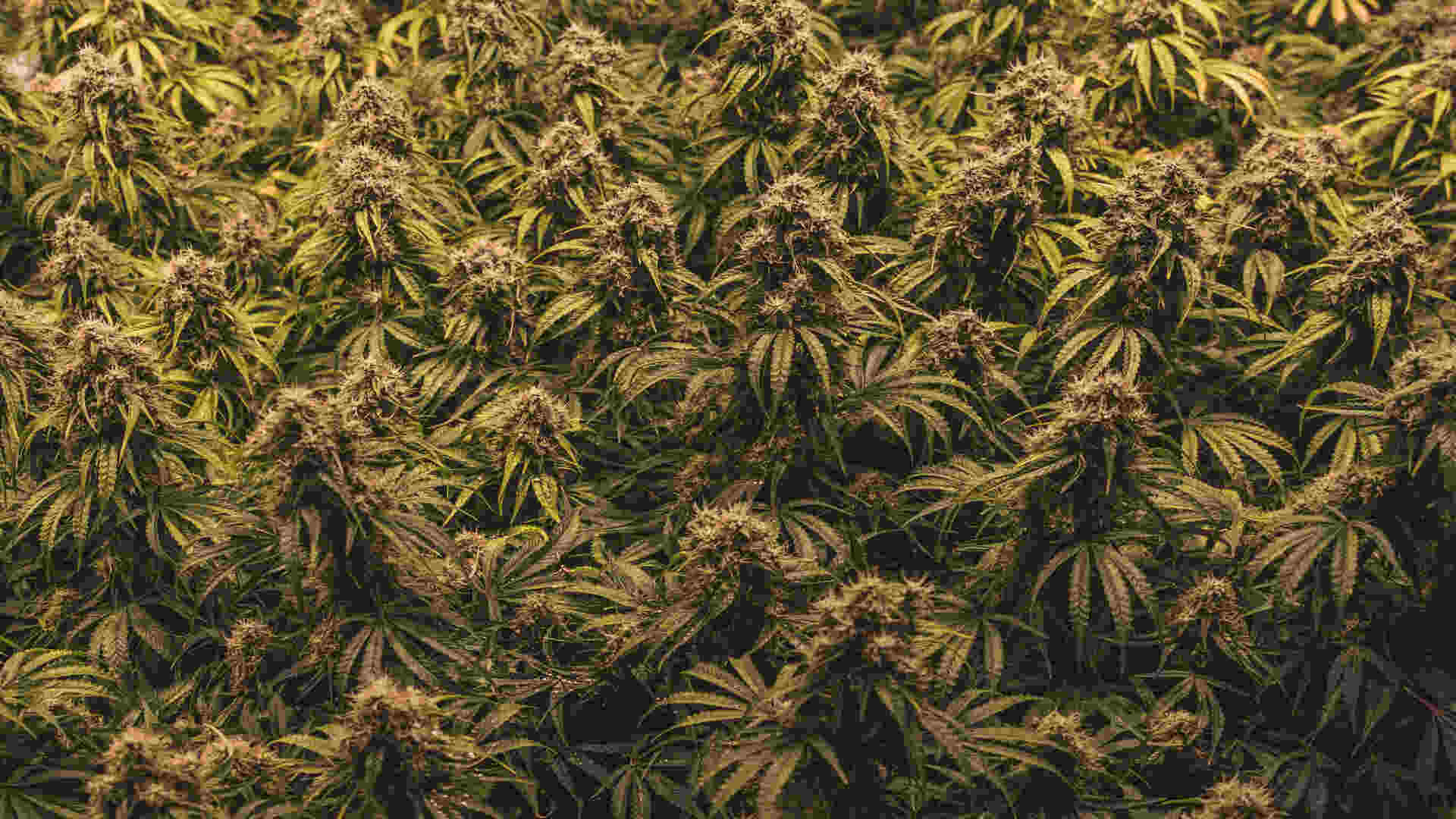
Growing cannabis has been described as a battle between the plant and the grower. The plant wants to stretch toward the light, spread its branches, and occupy every inch of space. The grower, meanwhile, is usually working with practical limitations: a restricted area, a fixed lighting setup, tent roof, and the desire to produce the best possible results from the environment available.
A Sea of Green setup changes that relationship.
Instead of allowing a small number of plants to grow into large, sprawling beauties, this method takes a different approach. It creates a carefully arranged canopy of smaller plants, each contributing to a larger. Think of it less like raising a single mighty tree and more like cultivating a carefully planned garden where every plant has a role to play.
For growers asking how to grow pot in a Sea of Green setup, the answer lies in understanding how cannabis grows, how light moves through a canopy, and how small adjustments in timing and structure can influence the outcome.
How Do You Grow Pot in a Sea of Green Setup: What is Sea of Green?
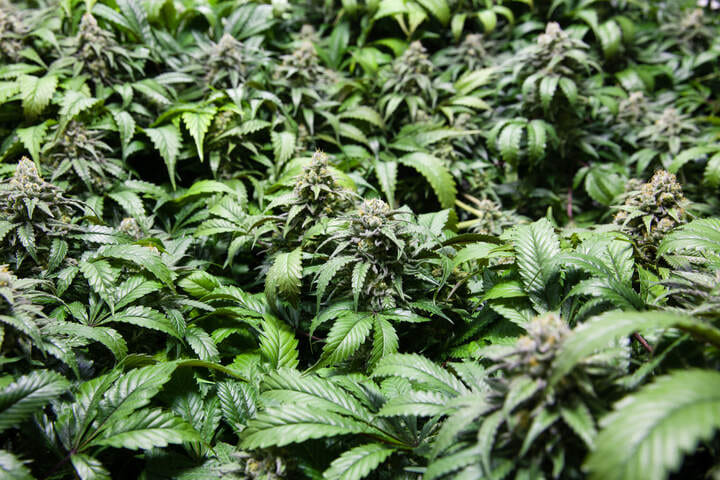
Sea of Green, often shortened to SOG, is a growing technique that focuses on growing multiple smaller cannabis plants together to create a broad, even canopy of flowering sites.
Traditional growing methods often involve allowing a plant to spend a longer period in the vegetative stage, encouraging it to develop into a larger structure with multiple branches. Sea of Green takes the opposite approach.. Plants are usually encouraged to flower much earlier, creating a dense collection of smaller plants rather than a few large ones. Ultimately it's about making the most of available space and allowing a greater number of plants.
The name comes from the visual effect created when the growing area is filled with a uniform layer of green growth. When it works successfully, the canopy resmbles a sea of green, a living carpet with each plant contributing towards an efficient use of the available light.
Athough Sea of Green is now commonly associated with cannabis cultivation, the underlying principles are not unique to the plant. Commercial horticulture has long explored ways to improve canopy management, plant spacing, and light exposure. Greenhouse growers working with a range of crops have used similar ideas to control crop structure and density to encourage efficient growth.
The technique became popular among indoor growers as advances in articial lighting and controlled growing environments made it possible to fine-tune conditions. Rather than relying on the unpredictable nature of outdoor cultivation, indoor growers could now experiment with plant numbers, spacing, and flowering times to create highly efficient systems.
How Do You Grow Pot in a Sea of Green Setup?
The foundation of a successful grow is consistency. Rather than simply aiming to grow more plants, the aim is to create a balanced canopy where each plant receives the conditions it needs to perform. Key principles include:
Selecting the right cannabis genetics
Not every cannabis plant naturally suits a Sea of Green approach. Some varieties naturally grow tall and narrow, while others prefer to spread sideways with extensive branching. For SOG, growers often look for genetics with predictable growth patterns, manageable height, and a tendency to produce a strong central structure.
A strain with a tendency to stretch excessively in flowering can quickly disrupt the carefully planned canopy. A strain with a more controlled growth habit is easier to manage because it allows the grower to maintain consistency from one plant to the next.
This is where genetics become especially important. A winning Sea of Green setup begins long before the plants enter the grow space. Choosing plants with traits and characteristics that naturally complement the method gives the grower a much stronger foundation.
It should be noted that clones have traditionally been favoured for Sea of Green cultivation. That's not to say growing from seed isn't conducive to the method, but clones typically produce a more even canopy. But with the widespread availability of stable feminised seed lines, many home growers now successfully use seeds for SOG as well.
Explore genetics for a Sea of Green setup at Seedsman
Managing Plant Density and Spacing
One of the defining features of Sea of Green is the number of plants used to fill the growing area. Instead of relying on a small number of large plants, SOG uses more plants grown closer together. But more doesn't automatically mean better.
Overcrowding creates its own challenges. Plants competing for space can develop uneven growth, reduced airflow, and areas where moisture becomes trapped. A good Sea of Green canopy should look and feel organised rather than chaotic. Each plant should have enough space to develop while contributing to a consistent layer of foliage.
Selecting the right containers and growing medium
When evaluating how do you grow pot in a sea of green setup, container choice is an importand part of the equation. Because SOG focuses on growing multiple smaller plants rather than a few large ones, growers typically choose containers that support healthy root development without encouraging unnecessary vegetative growth.
The ideal pot size depends on a few factors:
- Genetics
- Growing medium
- Available space
- How long plants will remain in the vegetative stage
A pot that's too small can restrict root growth and create unnecessary stress, while a pot that's too big can encourage plants to become larger than intended. Aim for balance. Roots need enough room to establish a healthy foundation, but the growing system should still support the compact and efficient structure that makes Sea of Green so effective.
The same principle applies to the growing medium. Consistency is key. In a dense SOG canopy, small differences between plants can become amplified, so keeping similar conditions across the growing area helps create better uniformity.
Related Article:A Pot For Your Pot: The Best Cannabis Growing Containers
The importance of the vegetative stage
One of the defining principles of a Sea of Green setup is keeping the plants compact. Unlike other cultivation methods that rely on building larger amounts of biomass, SOG is designed to produce an even canopy of smaller plants that move into the flowering stage relatively quickly.
Rather than focusing on biomass, growers use the vegetative stage to establish healthy roots and consistent early growth before initiating flowering. In many SOG systems, this vegetative period is intentionally kept short to help maintain a uniform canopy and maximise the efficient use of space.
The ideal timing depends on factors such as genetics, plant health, and whether plants are started form seed or clone. The objective isn't to grow big plants, remember - it's to produce healthy, vigorous plants that flower together as a balanced productive canopy. In some cases, growers will give their plants as little as 7 days in veg.
Environmental control and airflow management
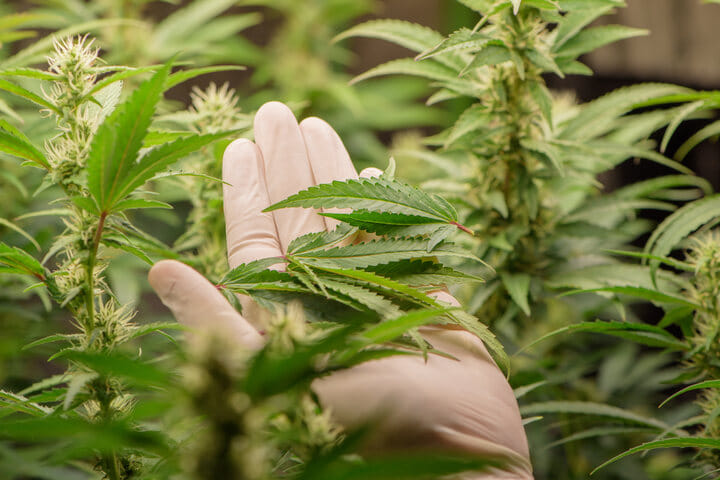
An important question in this discussion is how do you grow pot in a Sea of Green without airflow problems. After all, we're often told that crowding cannabis plants together is a one-way ticket to fungal pathogens like bud rot and powdery mildew.. Yes, the technique naturally creates a denser growing environment, and yes, while packing plants closer together can improve canopy efficiency, it can also create airflow problems.
Successful growers manage this by creating movement throughout the growing space. Air must be able to travel around and through the canopy rather than remaining stagnant, trapped between the plants. Good airflow management in a SOG setup is about more than just adding fans. Growers should consider:
- Ensuring plants are not so crowded that leaves are permanently pressed together
- Maintaining appropriate ventilation and air exchange
- Positioning fans to create gentle movement across the canopy
- Removing unnecessary lower growth through pruning etc
- Monitoring humidty, especially during flowering
A healthy Sea of Green canopy should be organised, not overcrowded. This is where lollipopping comes in especially useful. Lollipopping is a pruning technique where growers remove lower branches and growth that receives limited light, allowing the plants to focus energy on the more productive upper canopy. In a SOG setup, it can also greatly improve airflow, reduce shaded areas and help create a cleaner, more efficient growing structure.
Related Article:A Guide To Lollipopping You Cannabis Plants
Equipment Needed for a Sea of Green Setup
The good news is that Sea of Green doesn't call for a collection of costly specialist equipment. The technique is based on plant management rather than tech. However, certain equipment can help growers achieve more consistent results. This applies to indoor cultivators specifically.
Quality Lighting
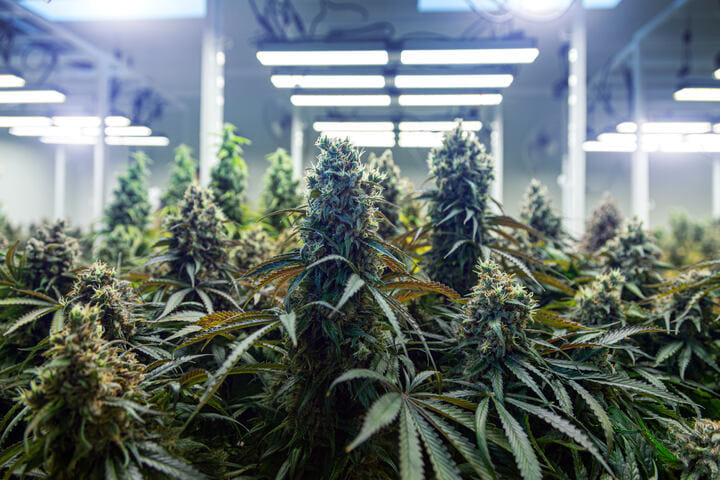
Because Sea of Green focuses heavily on creating an even canopy, lighting plays a central role. A well-distributed light source helps make sure that plants across the grow area receive consistent light exposure.
Uneven lighting can create the same problem as an uneven canopy: some plants thrive, others will struggle.
Environmental Monitoring
A reliable thermometer and hygrometer are valuable tools in any grow. Sea of Green setups often feature a dense arrangement of plants, making environmental awareness especially important. Monitoring temperature and humidity helps growers understand what's happening inside the growing space rather than relying on guesswork.
Airflow Management
A dense canopy needs good air movement. Fans and appropriate ventilation help maintain a healthier (indoor) growing environment by preventing stagnant air pockets around the plants.
Plant Supports
Depending on the growth characteristics of the chosen genetics, some growers use plant supports or trellis systems to help maintain an organised canopy. These are not essential to SOG itself, but they can help keep growth structured.
The most important piece of equipment is knowledge. The ability to observe plants and respond to what they are showing you will always be more valuable than any gadget. Understanding the plant, not just the process, is key.
Why Do Growers Choose a Sea Of Green Setup?
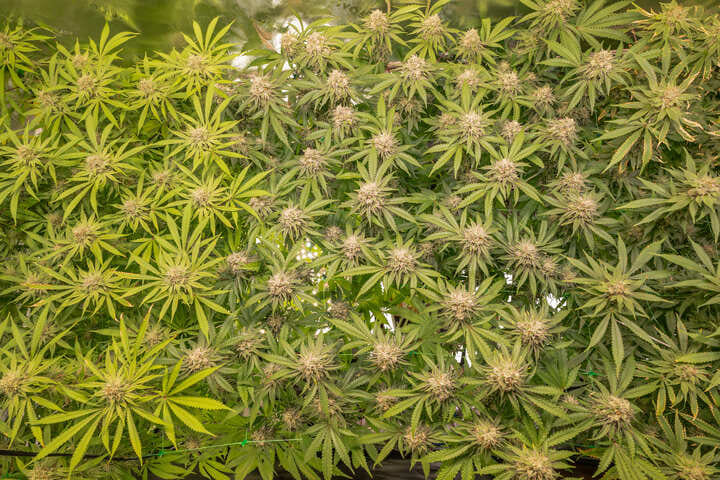
No cultivation technique is a silver bullet. Every approach involves compromises, and Sea of Green is no exception. What has kept SOG popular for decades is that, when paired with the right genetics and a well-managed environment, it solves several common challengers faced by growers.
Making Better Use of Light
Light is one of the most valuable resources when growing cannabis. Any light that misses the canopy is effectively wasted. A Sea of Green setupa ims to create a level canopy where as many flowering sites as possible sit within the most productive light zone. Instead of one plant towering above the rest, or lower branches disappearing into shade, the objective is to spread the available light more evenly across the crop.
More Predictable Plant Management
Large cannabis plants often develop their own personalities. One might stretch dramatically during flowering, another might remain compact. Anotther could produce branches in every direction imaginable.
Sea of Green encourages uniformity. When plants share similar genetics and are managed consistently, they become easier to monitor, feed, and inspect. Spotting nutrient deficiencies, problems with irrigation, or early signs of pests become easier when one plant isn't hiding behind another.
Efficient use of growing space
Indoor cultivation is rarely blessed with unlimited room. Whether you're in a tent or a dedicated grow room, every square centimetre matters. Rather than allowing empty corners or gaps between plants, SOG aims to fill the entire footprint with productive growth. The result is an organised canopy that makes the most of the space available without feeling overcrowded.
A Repeatable growing system
Perhaps one of SOG's greatest strengths is consistency. When the same environmental conditions, similar genetics and consistent spacing are repeated from one cycle to the next, it becomes easier to identify what is working and what needs refining.
In many ways, Sea of Green is less about chasing perfection and more about building a reliable process.
Sea of Green vs Screen of Green: What's The Difference?
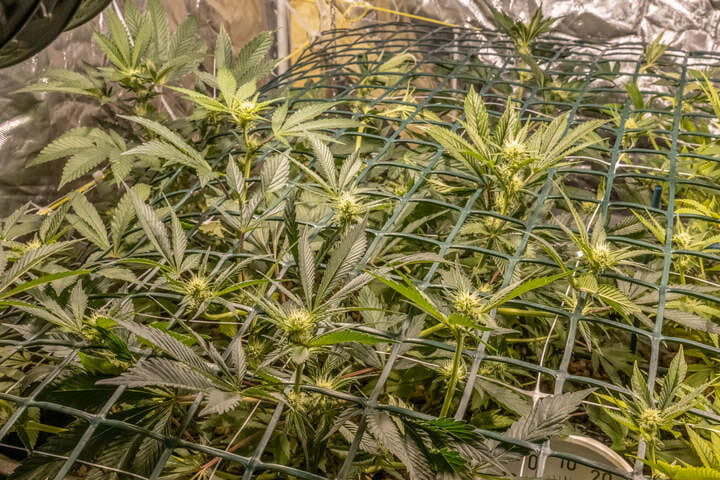
The similar names sometimes cause confusion - especially for those new to cultivating weed. But Sea of Green (SOG) and Screen of Green (SCROG) are very different cultivation techniques.
Sea of Green relies on multiple smaller plants working together to create a level canopy.
Screen of Green usually involves fewer plants that are trained beneath a horizontal screen. As branches grow through the mesh, they are gently guided sideways, encouraging the plant to spread across the available space.
Both techniques share the same objective: maximising productive canopy area.. The difference lies in how they achieve it. Sea of Green creates uniformity through plant numbers and timing. Screen of Green creates uniformity through training and patience.
Neither method is inherently better. Growers often choose them based on available space, preferred growing style, and the genetics they are working with.
Common Sea of Green Mistakes
Even experienced growers occasionally discover that small decisions made early in the grow can have consequences later in flowering. Fortunately, many of the most common mistakes are also the easiest to avoid.
Mixing very different genetics
Uniformity is the foundation of Sea of Green. Combining plants with dramatically different growth habits often results in an uneven canopy. Tall, vigorous plants may overshadow shorter neighbours, reducing the efficiency that SOG is designed to create.
Where possible, select plants with similar structure and flowering characteristics.
Allowing the canopy to become uneven
A few centimetres of height difference during vegetative growth may seem insignificant. After the flowering stretch, those small differences can become much larger.
Regular observation allows growers to make gentle adjustments before uneven growth becomes difficult to correct.
Ignoring root development
Because Sea of Green focuses on relatively compact plants, it can be tempting to think that root systems require less attention.
Healthy roots remain the engine of healthy growth. Appropriate irrigation practices, suitable growing media, and avoiding prolonged waterlogging all contribute to vigorous plants capable of supporting productive flowering.
Chasing Quantity over Quality
One of the biggest misconceptions surrding Sea of Green is that success comes from squeezing in as many plants as possible.
In reality, successful SOG growers focus on balance. A healthy, evenly manged canopy will almost always outperform a crowded collection of stressed plants competing for light, water and airflow.
Fine-Tuning a Sea of Green Setup
Once the fundamentals are in place, small refinements can make a noticeable difference over successive grows. Maintaining a stable environment allows plants to devote more energy to growth rather than constantly adapting to changing conditions.
Keeping detailed notes can also prove surprisingly valuable. Recording observations about genetics, spacing, environmental conditions and flowering behaviour makes it easier to repeat successful results and avoid repeating mistakes.
Successful growers rarely rely on memory alone. Over time, those notes become a personalised cultivation guide shaped by experience rather than theory. Above all, stay observant.
Cannabis is remarkably communicative. Leaf posture, colour, growth rate and flower development all provide clues about how comfortably the plant is performing. Learning to recognise those signals is one of the most rewarding parts of cultivation and a skill that improves with every grow cycle.
Conclusion
Sea of Green has remained one of the most respected indoor cultivation techniques for good reason. Rather than asking individual plants to become giants, it works by creating harmony across and entire canopy. The emphasis shofts from managing one impressive specimen to building a growing environment where every plant controbutes to the final result.
For growers wondering how do you grow pot in a Sea of Green setups, the answer isn't "grow more plants." Success comes from understanding plant structure, choosing suitable gentics, managing the environment carefully and allowing consistency to guide every stage of cultivation.
Like many aspects of cannabis growing, Sea of Green rewards observation far more than shortcuts. Take the time to understand why the techqniue works, and you'll be in a far stronger position to adapt it to your own growing style.
Sea of Green FAQS
How do you grow pot in a Sea of Green setup?
Growing pot in a Sea of Green setup involves cultivating multiple smaller cannabis plants to create an even canopy. Success depends on choosing suitable genetics, managing spacing, controlling growth and maintaining good airflow.
What are the benefits of a Sea of Green setup?
Sea of Green can help maximise available space and lighting by creating a more uniform canopy. It can also make plant management more predictable compared with growing fewer, larger plants.
What cannabis genetics work best for Sea of Green?
Genetics with predictable growth patterns, manageable height and consistent flowering behaviour often perform well in SOG setups. Plants with strong central growth and limited stretching are usually easier to manage.
Does Sea of Green increase cannabis yields?
Sea of Green can improve efficiency and help growers make better use of their available space, but results depend on genetics, lighting, environmental conditions and overall plant health.
How do you prevent mould in a Sea of Green setup?
Good airflow, suitable humidity levels, careful spacing and regular plant inspections all help reduce the risk of mould in a dense Sea of Green canopy.
What is the difference between Sea of Green and Screen of Green?
Sea of Green uses multiple smaller plants to create an even canopy, while Screen of Green uses plant training and a horizontal screen to spread growth across the available space.
-----------------------------------------------------------
References:
Rodriguez-Morrison, V., Llewellyn, D., Zheng, Y. 2021: Cannabis Yield, Potency, and Leaf Photosynthesis Respond Differently to Increasing Light Levels in an Indoor Environment.
https://doi.org/10.3389/fpls.2021.646020
Phillips, A.L., Gill, A., McGorm, B., Burton, R.A.: LED Spectra and Defoliation Independently Shape Canopy Architecture and Cannabinoid Yield in Indoor Cannabis Cultivation, 2025
https://doi.org/10.1016/j.indcrop.2025.121918
Llewellyn, D. et al. 2025: Subcanopy and Inter-Canopy Supplemental Light Enhances and Standardizes Yields in Medicinal Cannabis (Cannabis sativa L.)
https://pmc.ncbi.nlm.nih.gov/articles/PMC12115249
Chandra, S., Lata, H., Khan, I.A., ElSohly, M.A. 2017: Cannabis sativa: The Plant and Its Uses https://doi.org/10.1007/978-3-319-54564-6
Danziger, N., Bernstein, N. 2021: The Effects of Light Intensity on Cannabis sativa Growth, Photosynthesis, and Cannabinoid Production
