

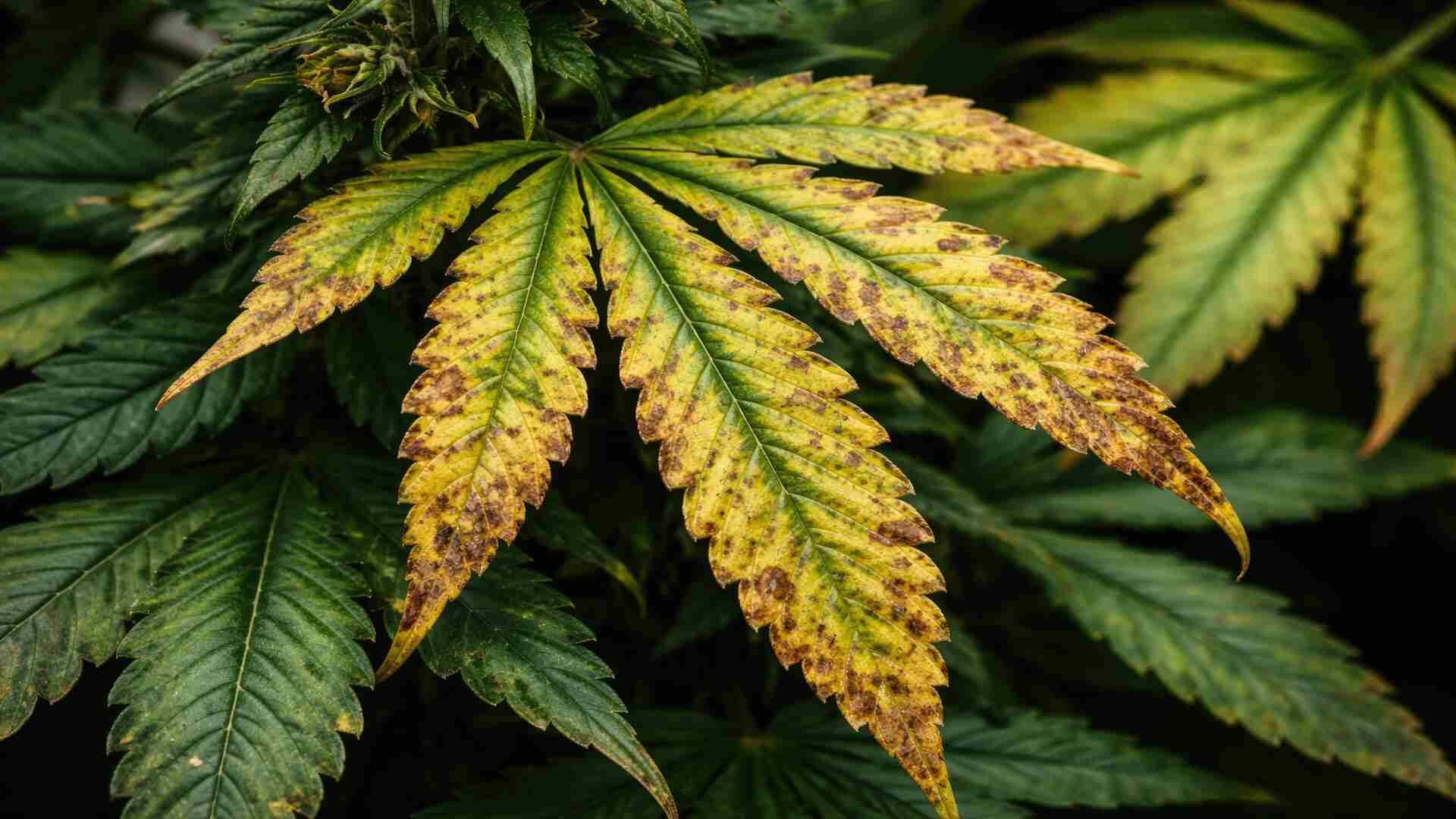
A calcium deficiency doesn't usually start with panic. It starts with something small growers almost ignore. Maybe a faint-rust-colored speck, or a slow patch of growth. Most growers don't name it at that stage. They adjust light, or tweak feeding. Then one morning it's clearer: the problem's not going away. It's getting worse. Cannabis calcium deficiency has officially entered the chat. Not loudly - but early enough that it can still be corrected cleanly - if it's recognized in time.
Calcium issues tend to move like this: subtle at first, then suddenly obvious. The difference between those two stages is where most of the confusion happens.
What is Cannabis Calcium Deficiency?
Cannabis calcium deficiency is a physiological disorder where the plant is unable to access or transport enough calcium to support healthy growth [1]. Calcium isn't just another nutrient on a feed chart. It's structural. Calcium is what helps build and stabilize cell walls. This is particularly true in fast-growing tissue like new leaves, shoot tips, and root zones [1,2].
When calcium delivery is disrupted, the plant doesn't 'fade' in a uniform way like in a cannabis nitrogen deficiency. Instead, it develops distortion, spotting, and irregular growth patterns - especially in new development.
The complication is this: calcium problems are rarely just about calcium. They're usually about availability, uptake, and environment. This is why a cannabis calcium deficiency is often misdiagnosed right up until it becomes visually obvious.
Early Signs of Cannabis Calcium Deficiency
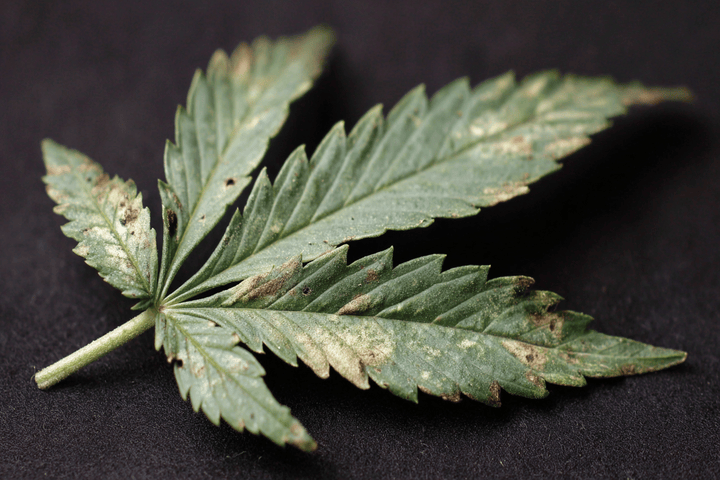
The earliest stage of a cannabis calcium deficiency is easy to miss because the plant still looks mostly healthy. Unless you're an experienced grower who really understands the plant, it's hard to detect at first. This is what tends to happen first:
- New leaves emerging looking twisted or uneven
- Small light-brown spots or rust-colored specks near the edges
- Leaf margins looking dry or pinched
- Roots slow down subtly before any top symptoms appear
What makes identifying calcium deficiency a challenge here is the location of the symptoms. They tend to show up in new growth first, not older leaves [3]. That detail alone separates a cannabis calcium deficiency from several other common plant issues.
At this stage, the plant is still functional, and yield impact is not locked in yet. But the conditions causing the deficiency are already active.
Advanced Cannabis Calcium Deficiency Symptoms
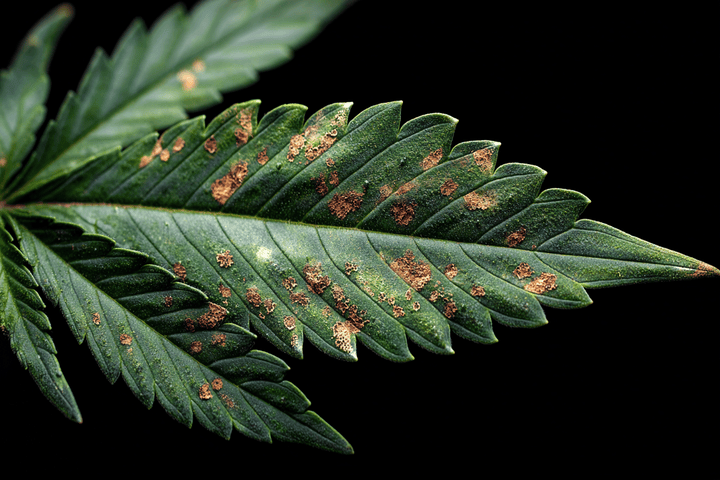
If the underlying issue continues, symptoms become more structural and much harder to ignore. A things progess, growers will typically see:
- Expanding rust or necrotic spotting on younger leaves
- Leaves that stay crumpled or distort, and don't properly expand
- Shoot tips that stall
- Weak stem structure in the new growth
- Uneven bud site development in flowering plants
In more severe case, root health also declines. This creates a secondary problem: reduced uptake of other nutrients, even if they're present in the medium [1,2]. This is where growers often misread the situation and assume multiple deficiencies are happening at once. In reality, calcium is often the bottleneck.
What Causes Cannabis Calcium Deficiency?
This is where diagnosis becomes more important than treatment. A cannabis calcium deficiency is rarely caused by a simple lack of calcium in the feed. More often, it's one of the following conditions:
pH imbalance restricting calcium uptake
Outside optimal pH ranges, calcium becomes unavailable [4]. In soil, this is especially common when pH drifts too low over time.
Soft water or reverse osmosis systems
Reverse Osmosis (RO) water removes calcium almost entirely. Without proper re-mineralization, deficiencies can appear even with a full nutrient schedule [5].
Nutrient competition
Not competition as in, "win a year's supply of nutrients," unfortunately. Competition as in, excess potassium or magnesium competing and interfering with calcium uptake. The plant isn't starved of calcium - the calcium is being blocked [6].
Coco coir binding
Coco naturally binds calcium and magnesium. If it isn't properly buffered, early-stage calcium deficiency is pretty common [7].
Irregular feeding or salt buildup
Fluctuations or overaccumulation off salts can disrupt uptake, even when calcium is technically present [8].
It's a combination of environment and balance, rather than a single missing bottle.
How To Fix Cannabis Calcium Deficiency
We've looked at how to spot a calcium deficiency and what causes it. But the most important question is how to fix it. Fixing a cannabis calcium deficiency is about restoring the availability first, and supplementation second. Successful growers may employ a plan like this:
Step 1: Correct the root environment

Start by checking the pH immediately. Bring it back into the optimal range for your medium and keep it stable. Experienced growers aim for consistency rather than worry about chasing perfect numbers. Run a flush if there's a chance of severe salt buildup or nutrient lockout.
Related Article:How Do I Fix Nutrient Lockout In Cannabis Plants?
Step 2: Stabilize calcium availability
Introduce a balanced calcium source. This could be a Cal-Mag product or a calcium nitrate-based input depending on your feeding system. It's important to avoid overcorrecting, as too much calcium can trigger other imbalances.
Step 3: Support rapid uptake
Next, ensure transpiration conditions are stable. This means:
- Adequate airflow
- Consistent humidity
- No extreme temperature swings
Calcium moves with water. If transpiration is disrupted, uptake slows even when everything else is correct [3].
Step 4: Observe new growth, not old damage
Improvement is only visible in new development. Old leaves affected by the deficiency won't recover. With calcium deficiency, recovery is about what comes next, not what is already damaged.
Preventing Cannabis Calcium Deficiency
Like most problems in or out of the garden, prevention is better than cure. With a cannabis calcium deficiency, prevention is less about adding more calcium and more about removing instability. To prevent a calcium deficiency, there are some key things growers need to do:
Keep pH consistent
pH drift is one of the most common silent triggers. Keeping pH stable matters more than precision [4]. Knowing how to measure pH levels in cannabis soil - and keeping an eye on levels - becomes key.
Match nutrients to your water source
This is something easily overlooked, but not all water is the same. Reverse osmosis water requires re-mineralization. Hard water may already contain usable calcium but can shift balance elsewhere [5].
Avoid nutrient competition
Overloading feeds with potassium-heavy boosters can push calcium out of uptake range 6].
Feed consistently, not aggressively
Erratic feeding patterns create the conditions where cannabis calcium deficiency tends to emerge.
Plants respond better to rhythm than intensity.
Cannabis calcium deficiency vs other nutrient problems
One of the main reasons cannabis calcium deficiency gets misdiagnosed is symptom overlap.
Compared to magnesium deficiency:
- Calcium affects new growth first
- Magnesium shows in older leaves first
Compared to potassium issues:
- Lack of calcium causes structural distortion
- Lockout is broader and usually affects multiple nutrients at once
Reading the plant correctly at this stage save weeks of unnecessary correction.
Final Thoughts: Identifying Cannabis Calcium Deficiency Before It Escalates
Cannabis calcium deficiency rarely arrives as a single moment. It builds quietly in the background until the plant starts showing it in new growth. The growers who handle it well aren't reacting faster - they're noticing earlier. Seeing a twisted leaf tip or a patch of slowed growth is usually the point where correction still feels fairly simple. After that, it beocmes recovery work.
The goal isn't to eliminate every possibility of deficiency. It's to keep the system stable enough that calcium never falls out of reach in the first place. Because once calcim is consistently available, a lot of other problems never get the chance to appear.
-----------------------------------------------------------------
References
[1] White PJ, Broadley MR. Calcium in Plants. Annals of Botany, Volume 92, Issue 4, 2003. https://academic.oup.com/aob/article/92/4/487/258855
[2] Hepler PK. Calcium: A Central Regulator of Plant Growth and Development. The Plant Cell, 2005. https://academic.oup.com/plcell/article/17/8/2142/6018380
[3] University of Minnesota Extension. Calcium for Crop Production. https://extension.umn.edu/plant-nutrients/calcium-crop-production
[4] University of Massachusetts Amherst Extension. Nutrient Management for Greenhouse Crops. https://ag.mass.edu/greenhouse-floriculture/fact-sheets/nutrient-management-for-greenhouse-crops
[5] Penn State Extension. Water quality for Crop Production. https://extension.psu.edu/water-quality-for-crop-production
[6] Crop Nutrition (formerly International Plant Nutrition Institute). Nutrient Interactions. https://cropnutrition.com/resource-library/nutrient-interactions
[7] North Carolina State University Horicultural Substrates Lab. Research and technical sources on coir substrates and cation exchange properties. https://www.substratecat.com
[8] University of California Agriculture & Natural Resources. Slinity and nutrient management resources. https://canr.edu


