
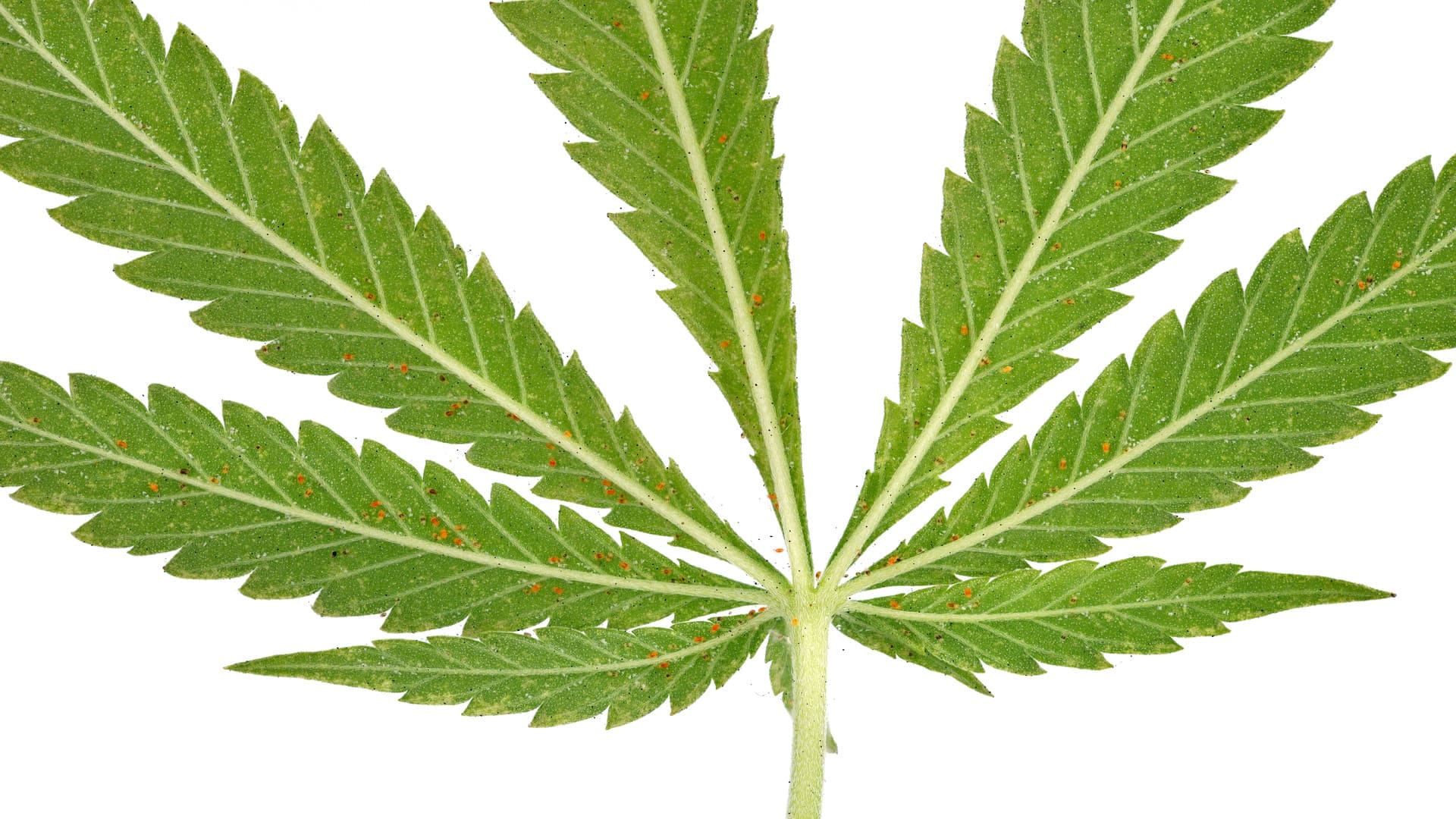

Picture this: You’re out in the garden, coffee in hand, admiring the broad sails of your thriving cannabis plants. The sun’s shining, the breeze is light, and everything seems perfect.
Suddenly you see it: a suspicious hole, a faded speckling, or (heaven forbid) a crawling intruder making itself comfortable on the leaves of cannabis you’ve poured your time, love, and costly nutrients into. Few things strike fear into the heart of a grower faster than the realisation that their grow has become an all-you-can-eat buffet for pests.
Don’t panic just yet. Pest problems are common – but very manageable if you catch them early. This guide will help you identify the most common cannabis pests by the damage they cause to the leaves of cannabis plants, and show you how to take action before your plants turn into salad. But be warned - there's some creepy-crawly images below.
Introduction to Pest Damage

Pest damage is one of the biggest headaches for cannabis growers, whether you’re tending a few plants in a tent or managing a full-scale cannabis crop. The most common cannabis pests—like spider mites, fungus gnats, and aphids—can wreak havoc on the stems, buds, roots, and leaves of cannabis plants, leading to stunted growth and reduced yields. These tiny invaders don’t just nibble on leaves; they can compromise the overall plant health, making your cannabis crops more vulnerable to disease and environmental stress.
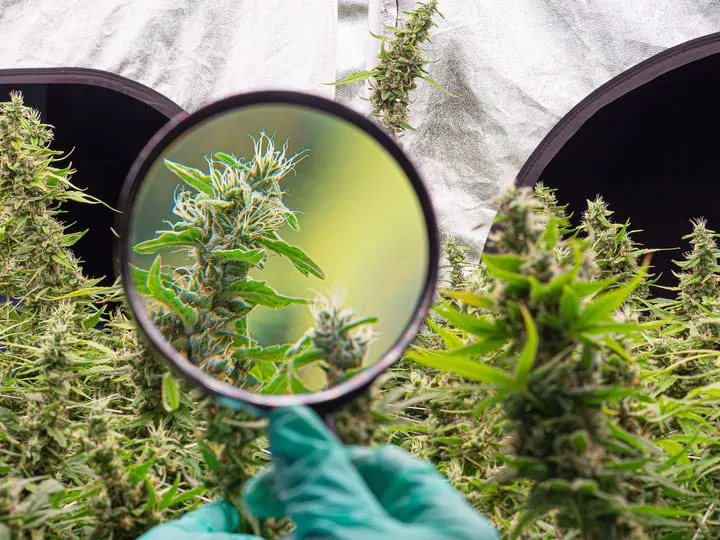
Spotting the early signs of pest infestations is crucial in cannabis cultivation. Regularly inspecting the leaves of cannabis plants, especially the undersides of leaves and around the root zone, can help you catch problems before they spiral out of control. Integrated pest management (IPM) for cannabis is the gold standard for keeping common cannabis pests at bay. This means combining good hygiene, regular monitoring, and the use of natural predators—like ladybugs or predatory mites—to create a balanced ecosystem that protects your plants. By staying vigilant and proactive, cannabis growers can keep their crops healthy and productive, minimizing the risk of pest-related setbacks.
Why The Leaves of Cannabis Matter
Before we go full entomologist, let’s quickly remind ourselves why this all matters. The leaves of cannabis plants aren’t just pretty – they’re essential for the plant's ability to photosynthesize and produce energy, as well as for nutrient storage and plant communication. When pests attack them, they’re not just snacking on aesthetics – they’re sabotaging your entire grow.
Further Reading:How A Weed Plant Uses Light: The Science Of Photosynthesis
Common Pests in the UK – and Damage they Cause to the Leaves of Cannabis
Here’s a breakdown of the key offenders making mischief in British cannabis gardens, and how their damage shows up on the leaves of cannabis plants.
Aphids
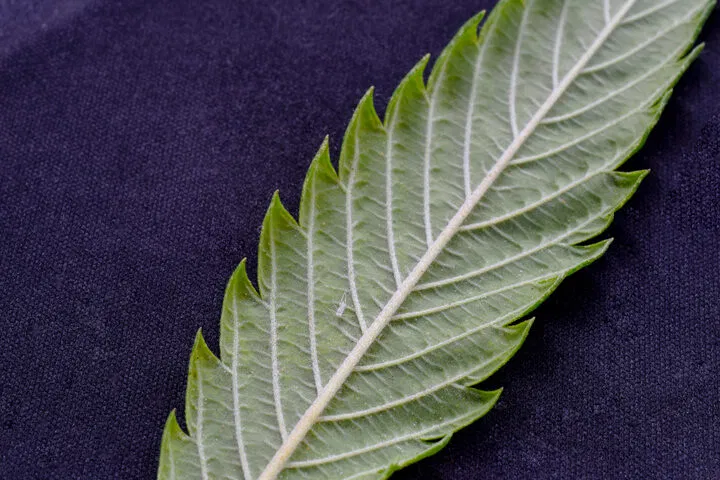
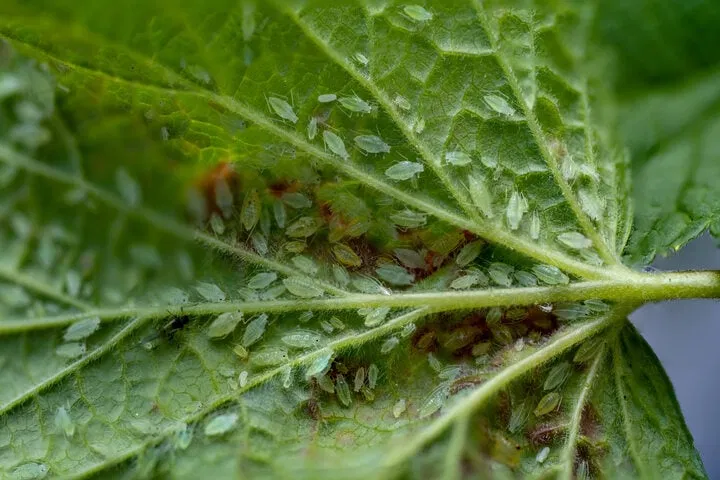
Tiny, soft-bodied sap-suckers, aphids are a common pest affecting cannabis plants. They come in green, black, white, and even pink, clustering in colonies on new growth and the undersides of the leaves of cannabis, where they pierce the plant to drink sugary sap. If you find yourself crying "help - I've got aphids!", know that they don’t poison the plant directly, but they can spread viral diseases and cause curling, yellowing, distorted leaves, and stunted growth. Worst off, these pesky blighters breed like it’s their job – because it is. Left unchecked, a few aphids can become a full-blown infestation in mere days.
Symptoms on Leaves of Cannabis
- Yellowing and curling of leaves
- Sticky, shiny coating (aka honeydew), a sugary excretion that attracts ants and promotes sooty mould.
- Tiny green, white, or black bugs clustering on stems and undersides of leaves
The Damage to Leaves of Cannabis
Aphids suck sap from the plant’s phloem, weakening the plant and spreading viruses [1]. That honeydew also attracts mould, which can spread quickly in the UK’s humid climate.
Action to Take
- Blast with water to dislodge clusters
- Apply neem oil or insecticidal soap (organic and available at most garden centres)
- Introduce beneficial insects like ladybugs, which are voracious aphid predators
Further Reading: How To Use Neem Oil When Growing Cannabis
Spider Mites
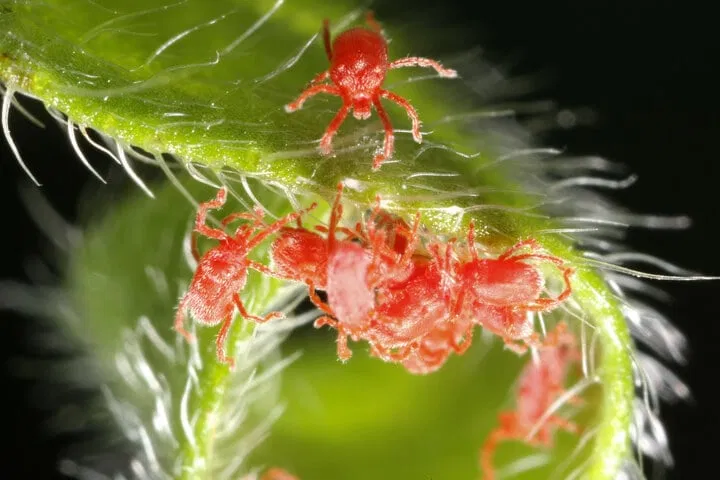
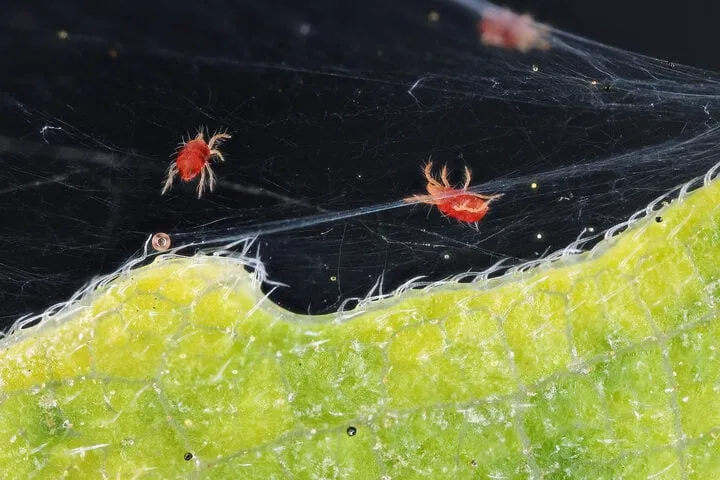
Spider mites are microscopic, eight-legged pests that thrive in hot, dry conditions – basically a grower’s worst midsummer nightmare. These arachnids puncture individual plant cells to feed on essential fluids, including chlorophyll, leaving behind a telltale speckled appearance on the leaves of cannabis. These villainous creatures multiply rapidly and are notoriously resistant to treatment.
Symptoms on Leaves of Cannabis
- Tiny yellow or white speckles, especially on upper leaf surfaces
- Fine webbing in leaf joints and undersides
- Leaf edges may curl or bronze over time
The Damage to Leaves of Cannabis
Spider mites puncture leaf cells to feed. This reduces photosynthetic ability, stresses the plant, and can cause serious yield loss if unchecked {2}.
Action to Take
- Prune affected leaves early
- Use a miticide (opt for plant-safe, non-toxic options)
- Increase humidity briefly – spider mites hate moist environments
Fungus Gnats
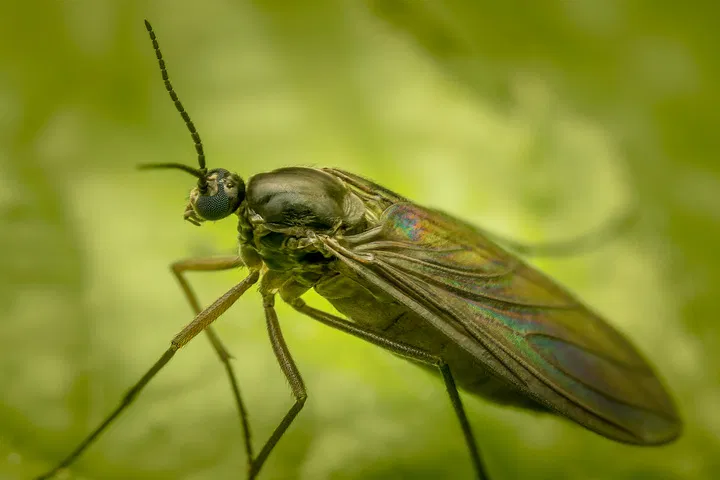
Small, dark, mosquito-like flies that hover annoyingly around soil and drainage trays. The adults are mostly harmless; it’s the larvae that’s the real threat – they burrow into soil and chew on root hairs, disrupting nutrient uptake. Fungus gnats don’t leave poisons or residues on the plant, but the stress they cause can make your plants vulnerable to root rot and other pathogens.
After using biological controls, you can also apply diatomaceous earth as a natural barrier on the soil surface to help control fungus gnat larvae by dehydrating them on contact.
Symptoms on Leaves of Cannabis
- Notched or chewed lower leaves
- Yellowing or wilting (from root damage rather than direct leaf impact)
The Damage to Leaves of Cannabis
Fungus gnats themselves don’t feast on the leaves of cannabis, but their larvae do damage to roots, leading to poor nutrient uptake that manifests as sickly leaves [3].
Action to Take
- Let the soil dry between waterings
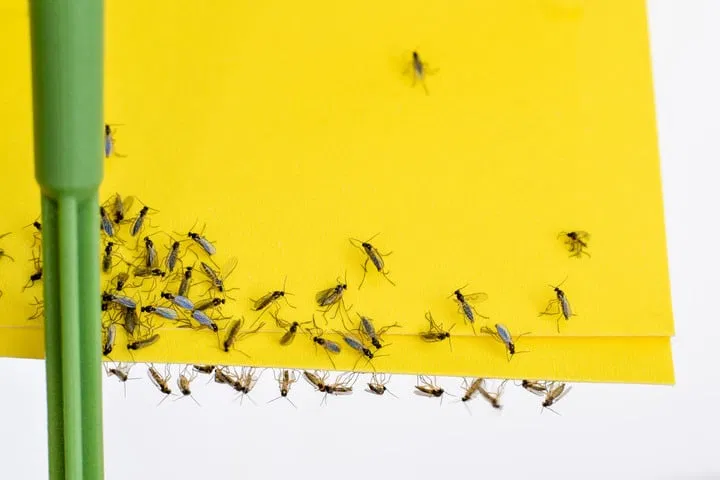
- Use sticky traps for adults
- Apply biological controls like Bacillus thuringiensis irsaelensis (BTI)
Caterpillars (Budworms)
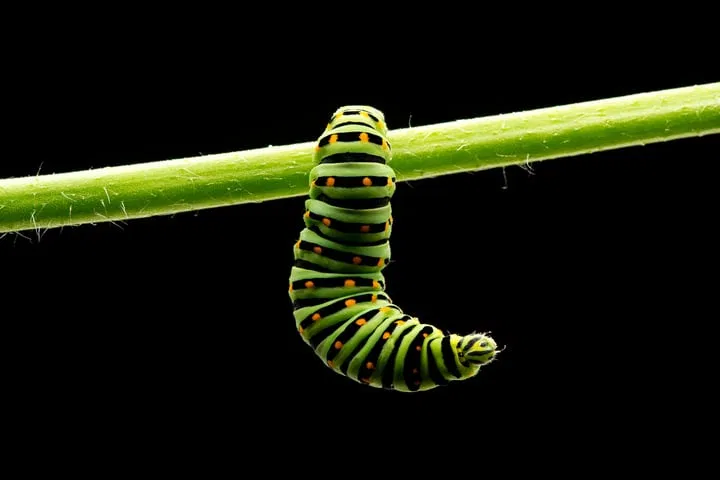
The gluttons of the pest world, caterpillars can devour fan leaves and bore into buds with impressive voracity. They prefer tender foliage, often targeting the young leaves of cannabis plants, but they won’t stop there – many species chew right into the heart of your flowers.
Symptoms on Leaves of Cannabis
- Ragged holes in leaves
- Green droppings (frass) near feeding sites
- Bud rot (grey mould) in flowering plants (from burrowing larvae) [4]
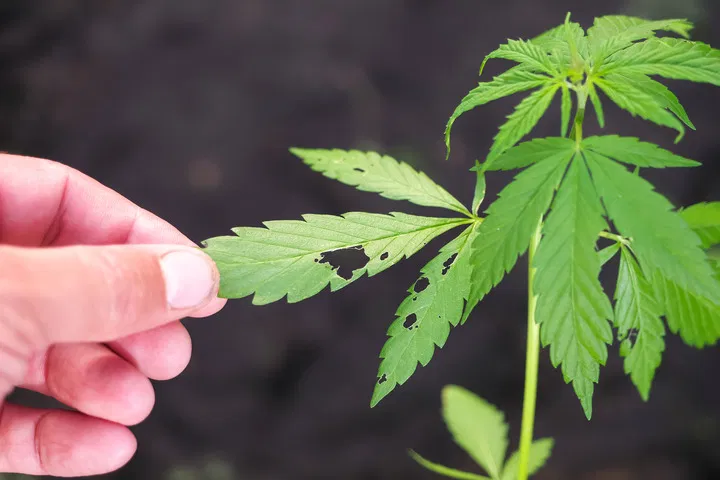
The Damage to Leaves of Cannabis
These leaf-munching machines will chew through fan leaves and even burrow into buds. Damage is quick and often catastrophic.
Action to Take
- Inspect plants daily for eggs and larvae
- Hand-remove caterpillars (satisfying and effective)
- Use Bacillus thuringiensis (BT) spray to target larvae
Thrips
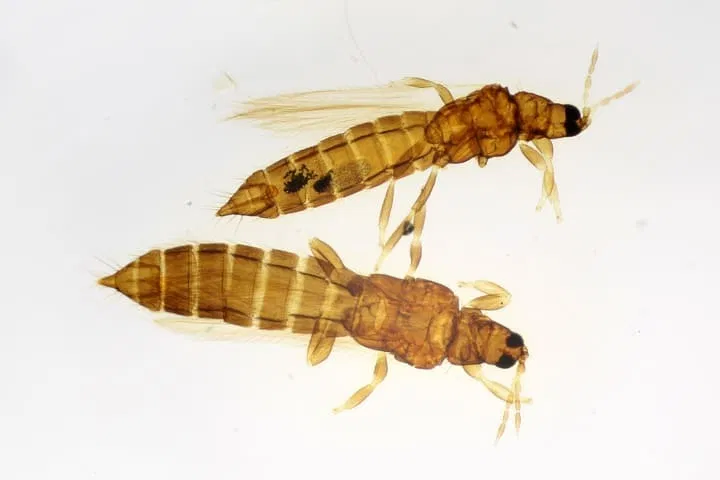
Thrips are slender, winged insects that scrape and suck the surface of cannabis leaves, leaving behind silvery streaks, black specks (droppings) and twisted or deformed foliage. These pests are tiny - often under 1mm - and love to hide on the undersides of the leaves of cannabis plants, making them hard to spot until damage is visible. They can transmit plant viruses as well as stunting growth, making them a double threat.
Symptoms on Leaves of Cannabis
- Silvery or bronze streaks or spots caused by thrips puncturing plant cells to feed on sap
- Black specks (droppings)
- Misshapen or folded leaves
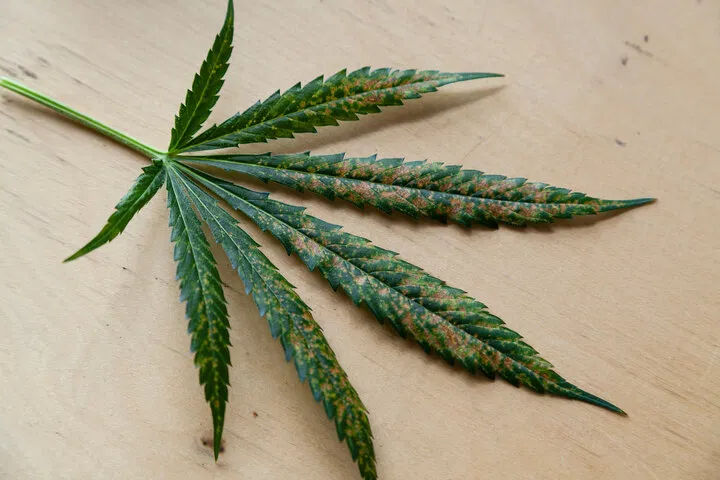
The Damage to Leaves of Cannabis
Thrips scrape the leaf surface, damaging cells and reducing photosynthesis. This leads to stunted growth, reduced yields, and compromised bud quality.
Action to Take
- Apply neem oil or potassium soap
- Use sticky blue traps (thrips are attracted to blue)
- Encourage predatory insects like Orius insidiosus
Further Reading:How To Identify And Eliminate Thrips
Nutrient Deficiencies and Pest Management
A healthy cannabis plant starts with proper nutrition, but when nutrient deficiencies creep in, they can weaken cannabis plants and open the door to pest infestations. Cannabis growers often find that plants lacking in essential nutrients are more likely to suffer from attacks by common cannabis pests, leading to reduced yields and compromised plant health. When a cannabis plant is undernourished, its natural defences are down, making it easier for pests to take hold and cause further damage.
Paying close attention to plant nutrition is a key part of any pest management strategy. By ensuring your cannabis plants receive a balanced diet of macro and micronutrients, you help them build strong tissues and robust immune responses. This not only supports healthy growth but also makes it harder for pests to gain a foothold. In short, well-fed plants are better equipped to resist both pests and diseases, while nutrient deficiencies can quickly weaken cannabis plants and make pest infestations much harder to control.
Further Reading:Understanding Nutrient Mobility
How to Tell the Difference Between Pest Damage and Deficiency Symptoms
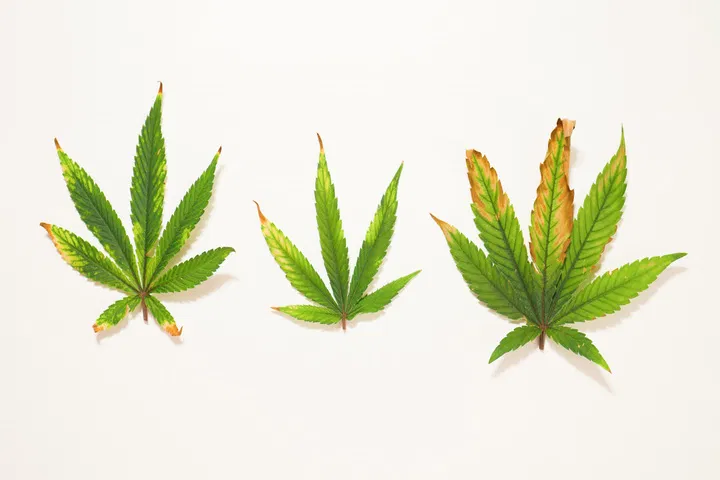
It’s easy to confuse the symptoms of pest damage with those of nutrient deficiencies, since both can cause discolouration, spots, or distorted growth on the leaves of cannabis plants. However, there are some telltale signs to help you differentiate. Pest damage from common cannabis pests like spider mites often appears as random, irregular patterns—think tiny yellow or white speckles scattered across the upper leaf surface, or ragged holes and chewed edges. In contrast, nutrient deficiencies usually show up as more uniform symptoms, such as even yellowing of older leaves (a classic sign of nitrogen deficiency) or purpling of stems.
Careful observation is key. If you notice clusters of tiny bugs, webbing, or sticky residue, you’re likely dealing with a pest problem. If the symptoms are consistent across similar-aged leaves and there’s no sign of insects, a nutrient deficiency may be to blame. Knowing the difference helps cannabis growers take the right action—whether that’s adjusting plant nutrition or targeting specific cannabis pests.
The Link Between Plant Nutrition and Pest Resistance
Strong, healthy cannabis plants are your best defense against pest infestations. A balanced plant nutrition program—providing all the essential nutrients like nitrogen, phosphorus, potassium, and trace minerals—helps cannabis crops develop thick, resilient leaves and stems. This not only supports vigorous plant growth but also boosts the plant’s ability to produce natural defense compounds, such as terpenes and cannabinoids, which can deter many common cannabis pests.
When cannabis plants are well-nourished, they’re less likely to suffer from stunted growth or succumb to pest attacks. On the flip side, nutrient deficiencies can weaken plant structure and reduce the plant’s ability to fight off invaders, making pest problems more severe and harder to manage. For cannabis growers, regular monitoring of plant health, soil quality, and nutrient levels is essential. By prioritizing plant nutrition and integrating natural pest control methods, you can maintain a thriving, resilient cannabis crop with fewer pest-related headaches.
How To Prevent Pests on the Leaves of Cannabis Plants

Prevention is the best pesticide. Here’s how to keep your cannabis plants safe from the start:
- Practice crop rotation and avoid planting cannabis in the same spot year after year.
- Use companion planting and beneficial insects - learn about the best bugs or insects for a cannabis grow, like ladybugs and lacewings to keep pest populations in check. Parasitic wasps are also highly effective for controlling leaf miners and whiteflies.
- Maintain healthy soil with compost and organic amendments.
- Implement an integrated pest management plan that includes regular monitoring, disease control, and early intervention.
- Apply a dilute potassium bicarbonate spray as a preventive measure against fungal diseases such as white powdery mildew.
Cannabis Pest Prevention Tips To Protect the Leaves of Cannabis
Companion Planting: Grow basil, marigold, or mint nearby to repel aphids and thrips.
Improve Airflow: Space plants out and prune excess leaves to reduce moist, stagnant air.
Inspect Regularly: Check under the leaves of cannabis plants at least twice a week.
Sticky Traps: Catch flying insects before they breed – yellow for aphids, blue for thrips.
Clean Tools and Hands: You’d be amazed what you can transfer from one plant to another.
Quarantine New Plants: Keep new arrivals separate for 7-10 days.
Use Mulch Carefully: Organic mulches can harbour fungus gnats if kept too wet.
Implement A Full Integrated Pest Management Plan: Check out Queen of the Sun Grown’s article on building an IPM and follow the steps to protect your cannabis plants.
These steps aren’t pest-proofing magic, but they drastically reduce the chance of an outbreak – especially when combined with vigilance.
Tackling Pest Damage on the Leaves of Cannabis: A Leafy Battle Worth Fighting
Pests are part of growing cannabis outdoors - where every slug thinks your crop is a salad bar and the weather plays a role, too. But if you keep a close eye on the leaves of cannabis plants, you can catch the earliest signs of trouble and take smart, targeted action. Healthy leaves mean a healthy plant. And a healthy plant means better yields, better buds, and less stress (for you and the plant).
So next time you see something odd on the leaves of cannabis plants, don’t reach for the scissors or panic-post on Reddit. Take a breath, inspect closely, and remember: you’re not just growing a plant. You’re learning how to protect it.
-------------------------------------------------------------
References:
[1] https://www.rhs.org.uk/biodiverstiy/aphids
[2] https://ipm.ucanr.edu/PMG/PESTNOTES/pn7405
[3] https://biocontrol.entomology.cornell.edu/pathogens/fungusgnats.php