


Experienced cannabis cultivators know all about the transformative power of nutrients on plant growth, overall yield, and even cannabinoid content. Just like humans require a balanced diet to thrive, plants, including cannabis, rely on essential nutrients for healthy development. In this article, we will delve into the world of cannabis nutrients, exploring why they are crucial for plant growth and understanding the key nutrients required by cannabis plants, leading to vibrant and flourishing cultivars.
Why Cannabis Plants Require Nutrients
Nutrients play a pivotal role in the growth and development of cannabis plants. They are essential for various physiological processes, and without an adequate supply of nutrients, cannabis plants can suffer from stunted growth, nutrient deficiencies, and reduced yield. While plants can grow without additional nutrients, optimal plant health depends on them. You need your vitamins, Popeye needs his spinach, and cannabis plants need nutrients.
The primary reasons cannabis plants require nutrients are:
Photosynthesis: Nutrients are essential for the process of photosynthesis, which is the foundation of plant growth. During photosynthesis, plants convert light energy into chemical energy, utilising carbon dioxide, water, and nutrients to produce sugars and oxygen. Without nutrients, plants struggle to produce energy and grow efficiently.
Enzyme Activation: Enzymes act as biological catalysts that regulate biochemical reactions within plants. Many enzymes, known as cofactors or coenzymes, require specific nutrients to function optimally. These nutrients work as essential components of enzymes, enabling them to carry out vital processes such as nutrient uptake, metabolism, and hormone synthesis.
Structural Development: Nutrients contribute to forming strong cell walls, sturdy stems, and healthy root systems. They provide the building blocks for plant structures and help create a robust framework that supports overall plant growth. Nutrient deficiencies can result in weak and brittle plants, making them susceptible to disease and environmental stress.
Now that we understand the importance of nutrients for cannabis plants, let's explore the critical nutrients required for their healthy growth.
Essential Nutrients for Cannabis Plants (Think: ‘Nature’s Power Kit’)
We’ve separated nutrients into two classes for easier understanding. These are macronutrients, which plants need in higher concentrations, and micronutrients, which are required in smaller amounts.

Macronutrients (NPK):
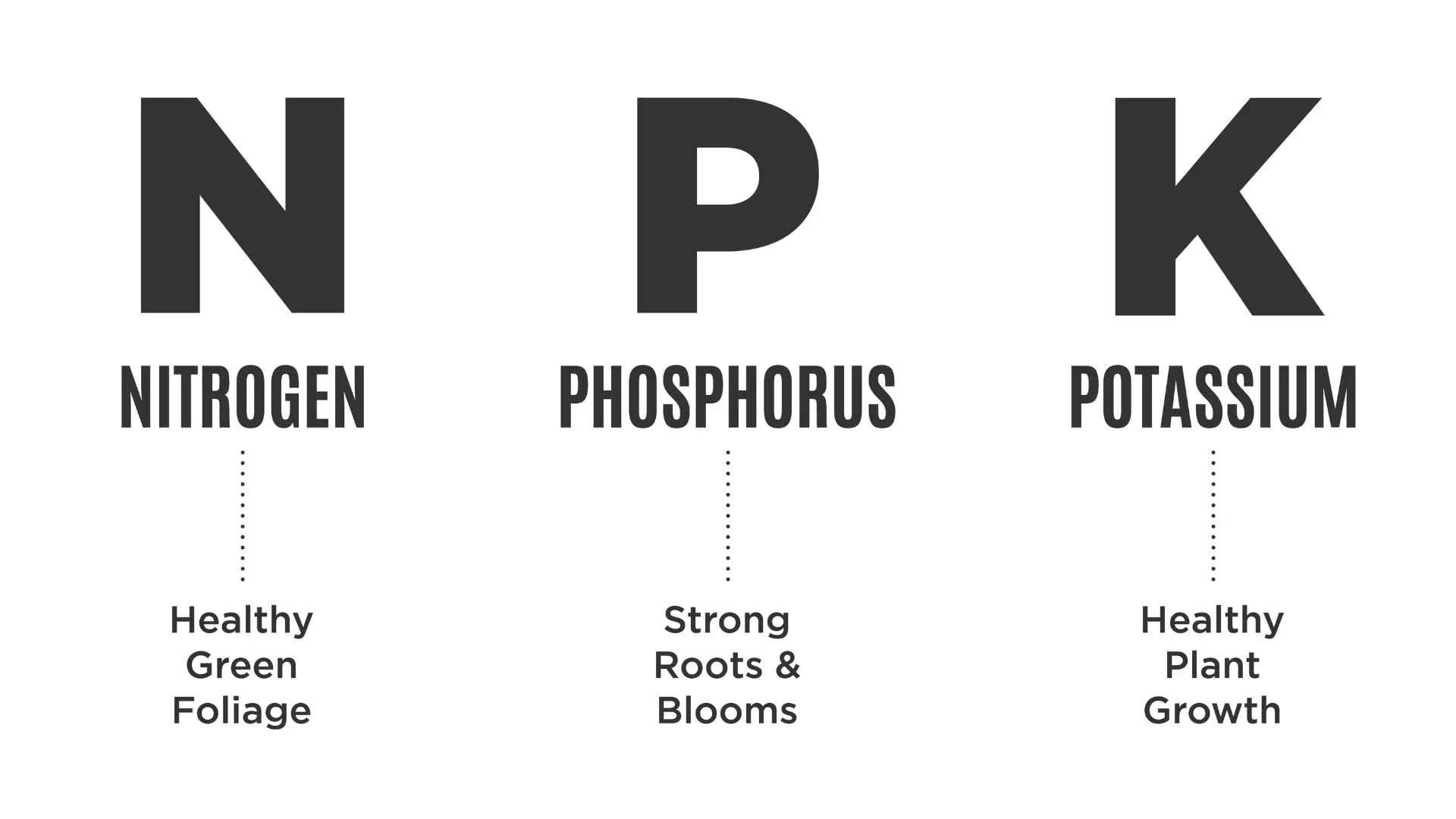
Macronutrients are the primary nutrients required by plants in relatively large quantities. The three macronutrients vital for cannabis plants are nitrogen (N), phosphorus (P), and potassium (K), collectively known as NPK.
Nitrogen (N): Nitrogen is essential for vegetative growth and is responsible for developing vibrant green foliage. It aids in producing chlorophyll, the pigment that enables plants to capture light energy for photosynthesis. Nitrogen also contributes to protein synthesis and overall plant vigour.
Phosphorus (P): Phosphorus plays a crucial role in root development, flowering, and fruiting of cannabis plants. It promotes strong root growth, enhances nutrient uptake, and supports energy transfer within the plant. Phosphorus is vital during the flowering stage, as it helps form essential compounds involved in bud formation and maturation.
Potassium (K): Potassium is involved in numerous plant processes, including photosynthesis, osmoregulation (the passage of liquid through a membrane), and enzyme activation. It also contributes to tugur, the water-based pressure that holds plants up, improves water and nutrient uptake, and enhances plant resistance to disease and stress. Potassium also regulates stomatal opening and closing, which affects water loss and carbon dioxide uptake.
Micronutrients
While macronutrients are required in larger quantities, cannabis plants also need micronutrients, albeit in smaller amounts. Some of the micronutrients are needed only in miniscule amounts, but that alone is enough to produce benefits. The table below highlights each nutrient and its efficacy in each area.
| Photosynthesis | Enzyme Activity | Root Development | Bud Development | Structure | Signalling | Uptake | |
| Nitrogen (N) | *** | *** | ** | * | *** | * | ** |
| Phosphorus (P) | * | ** | *** | *** | * | *** | *** |
| Potassium (K) | *** | *** | ** | *** | ** | ** | *** |
| Calcium (Ca) | ** | *** | *** | * | ** | *** | *** |
| Magnesium (Mg) | *** | *** | * | * | * | ** | ** |
| Iron (Fe) | *** | *** | *** | * | * | * | |
| Zinc (Zn) | * | *** | ** | ** | *** | * | |
| Copper (Cu) | * | *** | * | * | *** | * | |
| Manganese (Mn) | *** | *** | * | * | ** | * | ** |
| Boron (B) | * | *** | ** | * | *** | * | * |
| Molybdenum (Mo) | * | *** | * | * | ** | * | * |
Nutrient Damage – The Risk Of Overfeeding
While cannabis plants need nutrients, administering them correctly is a balancing act of sorts. That’s why it’s important to follow the feeding schedule carefully. If in doubt, use a slightly reduced dose and resist the temptation to add a little more in the hope of growing some super-plants!
What Is Nutrient Burn?
Nutrient burn typically occurs when a cultivator gets over-enthusiastic with nutrient delivery. Overfeeding nutrients – or mixing nutes too strongly – can lead to this condition, manifesting as visible damage such as yellowing at the tips of leaves. But it’s not limited to yellowing. Nutrient burn can also present as fluorescent-looking tips, tips that appear bent to 90 degrees, and deep red or purple stems and branches. There are various causes of nutrient burn in plants, including nutrient deprivation and natural Autumning. Specific light spectrum may cause the same effect.

When these symptoms spread across the plant, it’s a good indicator that your plants have nutrient burn. Your plant is sounding the alarm, and you need to take action. Stop feeding nutes and flush your growing medium with Ph-balanced water. When you return to using nutes, use a lower strength than recommended – perhaps around ¾ the dose.
Nutrients For Autoflowering Cultivars
Autoflowering cannabis cultivars have a shorter life cycle and different nutrient requirements than photoperiod plants. They typically benefit from a nutrient formula explicitly designed for autoflowers, which provides balanced nutrition throughout their growth cycle. These formulas often contain lower nitrogen levels and higher phosphorus and potassium levels to support flowering and bud development. The general consensus is that the shorter life cycle of autoflowers equates to a lesser demand for nutrients.
Methods Of Nutrient Delivery
Not all nutrients are created equal, and there are various ways to deliver nutes to your cannabis plant. We’ve highlighted some of these below.
Soil/Coco Coir: Nutrients can be mixed into the growing medium, such as soil or coco coir, before planting. This provides a slow-release nutrient source for the plants. Other can be mixed into the feed water and delivered daily or weekly depending on the regime. Some dry powders can be used as a top dressing also.
Hydroponics: Hydroponic systems allow for precise control over nutrient concentrations and pH levels. Nutrients are dissolved in the water, and plants receive nutrition through direct root uptake. Hydroponics actually covers a lot of techniques and isn’t really one thing over another. In most of these techniques, such as Nutrient Film Technique or Ebb and Flow, nutrients are delivered along with water. In an NFT setup, nutrients and water are provided via a constant stream to the roots, whereas and Ebb and Flow system provides and occasional flood of fresh oxygen and nutrient-rich water.
Drip Irrigation: Drip irrigation systems deliver nutrients directly to the roots in a controlled and efficient manner. This method ensures the even distribution of nutrients and minimizes waste.

Foliar Feeding: This method doesn’t replace soil nutrition, but rather serves as a handy way of supplementing nutrients to cannabis plants. It’s especially helpful in providing micronutrients such as magnesium, calcium, and zinc in a way that your plants can absorb them quickly. Foliar feeding has benefits over and above speedy uptake, including efficiency of delivery and avoidance of nutrient lockout – where too many nutrients build up and change the pH of the soil. It's important to avoid foliar feeding during flowering as this can wash off your precious trichomes, harm bud development, and even cause mold!
Additional Tip: Avoid foliar feeding in bright light as this can cause burning of the leaves. If foliar feeding outside, deliver during a shaded phase of daylight, and if doing so indoors, deliver just before light off.
Nutrients are the lifeblood of cannabis plants, supporting their growth, development, and overall health. By providing the right balance of macronutrients and micronutrients, cultivators can unlock the full potential of their cannabis crops. Understanding the specific nutrient requirements for each growth stage, following recommended feeding schedules, and employing appropriate delivery methods can result in vibrant foliage, robust bud development, and bountiful yields. So, invest in quality nutrients, feed your plants well, and watch your cannabis garden flourish.