


This article has been rewritten and posted here by the original author, Stewart Maxwell. He is an expert horticulturist based in Canada and has spent decades creating commercial cannabis crops and has served as the founding Cultivation Manager for Rubicon Organics. Stewart has provided facility design and documentation to launch several craft-scale cultivators into the regulated market in Canada. He has published many articles on cannabis physiology in journals and trade magazines. This article has been adapted, and the original can be found here. Make sure you follow Stewart on his website Elevated Botanist for expert cultivation advice!
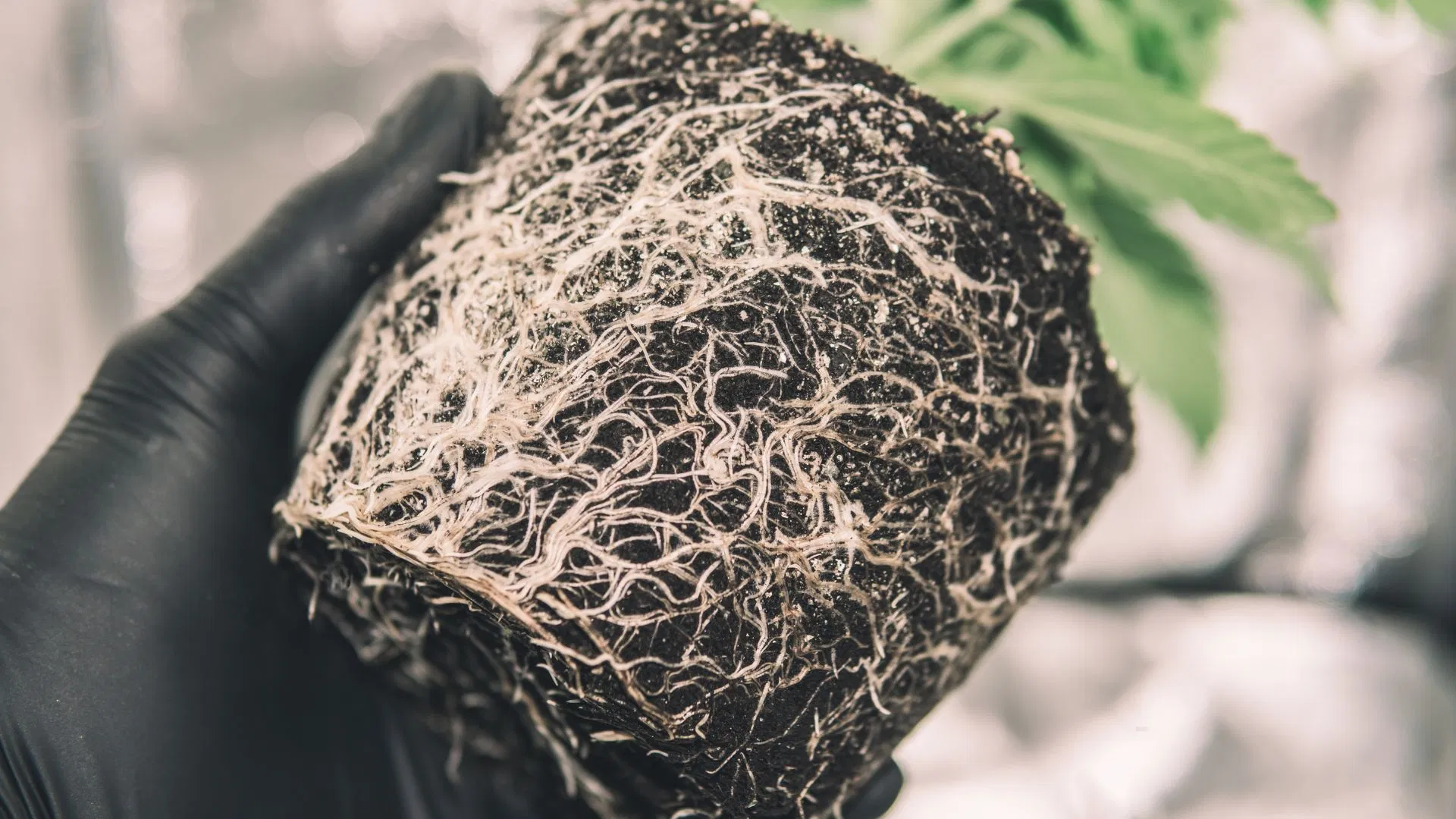
The roots of your plants are important, even though you might not be able to see them. They provide support and necessary resources for the plant to grow and survive. Roots also have relationships with microorganisms that can affect the plant's health. Understanding how roots interact with air, water, nutrients, and microorganisms can help improve the plant's health and growth.
The Rhizosphere
The rhizosphere is the area around a plant's roots. It includes the roots, the soil they are in, and all the living things found there. It is a very diverse area with a lot of different organisms living there, such as bacteria, fungi, worms, mites and insects.
All these organisms interact with each other by exchanging different chemicals such as nutrients, hormones, and organic compounds. This interaction can be competitive, cooperative or communicative.

Acquiring Nutrients
Roots are the main way that plants get nutrients from the soil. The amount of nutrients they can get depends on the size of their roots, the conditions of the environment and how they interact with microorganisms.
Microorganisms help plants get nutrients in different ways:
- Bacteria can change Nitrogen in the soil into a form that plants can use.
- Microbes can change Phosphorus in the soil so that plants can use it.
- Bacteria can help plants get more Potassium, which can lead to better crop growth.
- Fungi can break down rocks and make trace elements like Iron available for plants.
Mycorrhizae
Arbuscular mycorrhizae are a type of fungus that helps cannabis plants grow. The fungus and the plant help each other by working together. The fungus gets carbohydrates from the plant and the plant gets nutrients from the fungus. The fungus sends out thin threads called hyphae which grow into the roots of the plant and the soil.
This allows the plant to absorb more water and nutrients. In a healthy soil ecosystem, the hyphae of different types of fungus can connect different plants together, allowing them to share resources and communicate with each other. These thin hyphae can also reach places in the soil that the plant roots can't. Some mycorrhizae even release enzymes that can kill pests in the soil.
Suppressing Pathogens
Microorganisms can help protect plants from pests and diseases in several ways. They can:
- Compete with harmful microorganisms for resources and living space when conditions are favourable.
- Attack and kill pests such as nematodes, insects and other harmful microorganisms.
- Release chemicals that can inhibit the growth of pathogens.
- Stimulate the plant's own immunity through hormone signalling.

Bioprotectants
In commercial grows, you can’t use chemical pesticides and fungicides.
Bioprotectants are living organisms or their byproducts that can help protect cannabis plants from diseases. Mycorrhizal inoculants, a fungus type, have been found to be effective in controlling diseases in cannabis.
These organisms need to be in direct contact with the plant's roots and are applied when the plant is first transplanted. Inoculants that contain a variety of organisms have a better chance of being successful because they work together. Organic growers can also create living soils by using good quality compost, which contains many beneficial microorganisms.
Compost
Quality composts are full of nutrients and many different types of microorganisms. Compost can help make the soil better at holding and exchanging nutrients. One way to measure this is by looking at the Carbon to Nitrogen ratio.
Microorganisms need about 20 parts of Carbon for every 1 part Nitrogen. Compost with a ratio below 20 has enough Nitrogen for the microorganisms to use. Compost with a ratio above 30 is not as good. Compost should smell good; if it smells bad, it means that the conditions are not right and the microorganisms are not able to do their job properly.
Living Soil
Living soils are healthy and productive ecosystems for plants. They are made of compost which contains beneficial microorganisms, nutrients, humates, and other helpful materials. These soils have a good structure that allows the right balance of air and water, and the conditions are good for microorganisms to thrive.
Plants can change the soil conditions to help the microorganisms that they need the most. This is done by releasing special chemicals from the roots that provide nutrients and change the pH of the soil. Lab analysis can give information about the chemical makeup of these soils. The amounts of different nutrients are more important than the total amount of nutrients.

Soil Fertility
Compost can add a lot of nutrients to your potting soil, but cannabis plants need a lot of food. Microorganisms also need a variety of foods to stay healthy. Protein meals like kelp meal and alfalfa meal can be added to the soil. They are dried and sometimes fermented to make them easier for microorganisms.
Rock dust and minerals can also be added to the soil, but it takes a long time for the plants to be able to use them. These foods can be added to the potting soil and given to the plants at different times during their growth.
Organic liquid feeds are a quick way to give plants the nutrients they need, but they are also the most expensive option. It is important not to use them with an irrigation system because they can create a buildup of microorganisms in the system, which can cause problems.
Conventional Horticulture
In traditional gardening, rooting media are materials that provide a structure for plant roots to grow. Some examples include rockwool, coco coir, and soilless mixes. These materials do not provide nutrients, so nutrient salts are added to the irrigation water to feed the plants.
It's important to monitor the acidity (PH) of the nutrient solution because if it's too acidic, the plants may not be able to absorb the nutrients. While these systems can grow plants quickly and efficiently, they do not have many microorganisms. Adding microorganisms to the system can help to fill this gap and prevent pathogens from taking over.
Hydroponics
Cannabis plants grown in hydroponic systems can get a disease called root rot. This is when the roots turn slimy and discoloured. This can make the plants sick or even kill them. If water is shared between plants, it can spread the disease caused by Fusarium and Pythium species. These fungus and oomycete pathogens are hard to get rid of once they are in the growing area. Sometimes adding microorganisms to the water can help prevent the growth of algae and control the disease.
To control the disease, it is important to keep light out of the water and monitor the temperature and oxygen levels of the water. Cool water has more oxygen, but as the water gets warmer, it can't hold as much oxygen, making it harder for the plants to get oxygen and increasing the risk of disease.

Root Oxygen
Plants need oxygen to grow and be healthy. There are different materials that can be added to soil or soilless mixes to make sure that the roots have enough oxygen.
Peat moss is good at holding water and draining it, but it's acidic and can become difficult to re-wet when it dries out.
Coco coir is made from the fibres of coconut shells and is neutral in pH and good at holding water.
Perlite is a type of volcanic glass that is heated to make it expand and is used to aerate the soil. Other materials that can be used for aeration include vermiculite, pumice, and rice hulls. The amount of oxygen in the irrigation water also affects plant growth. In addition to controlling the water temperature, dissolved oxygen levels can be increased by using nanobubble water treatment technology.
Germination
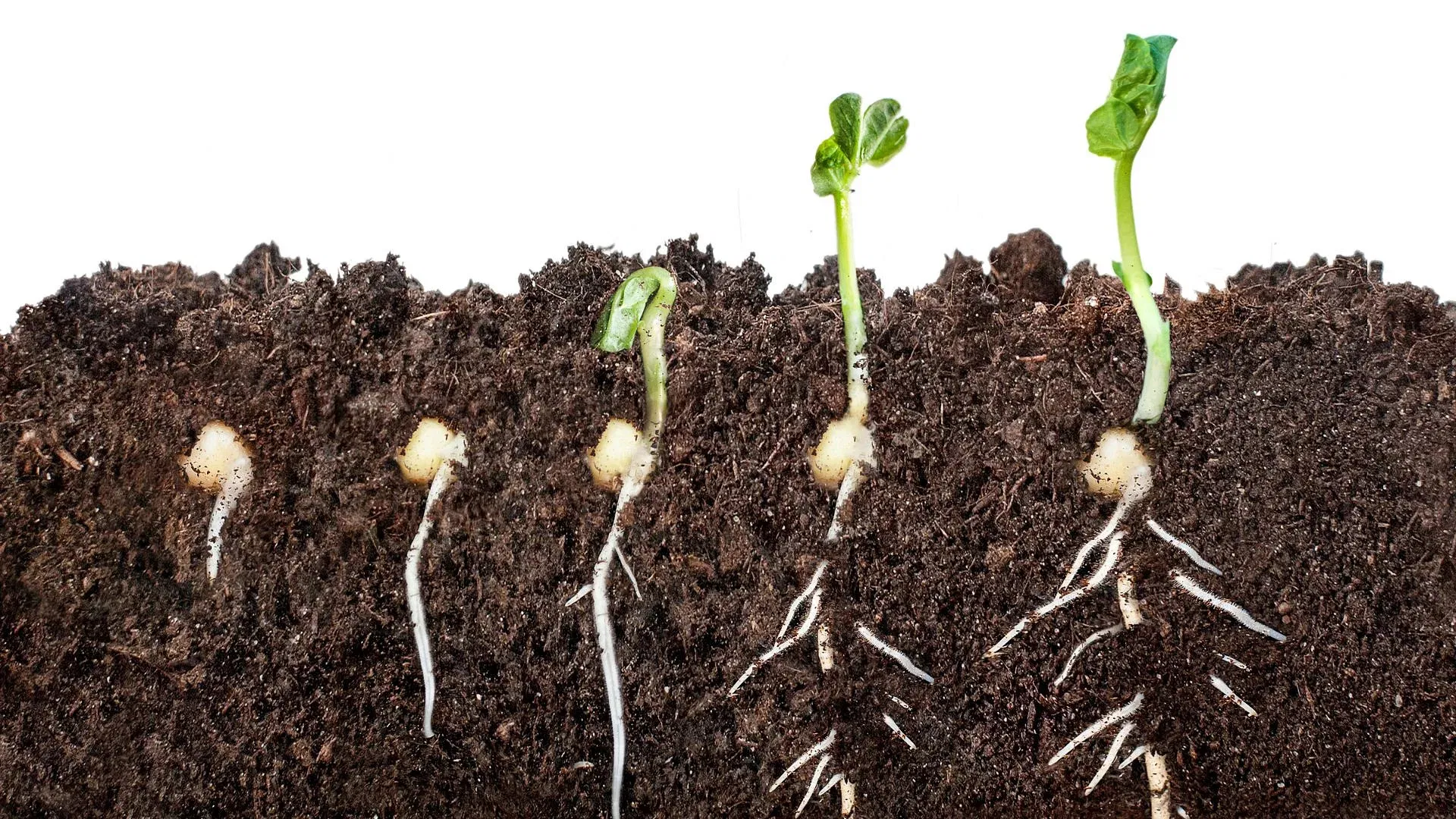
When a seed begins to grow, the first thing that comes out is the root.
The root grows down into the soil. The tip of the root is protected by a root cap which is constantly being replaced as the root moves through the soil. The root tip has different areas for cell division, elongation and specialization. The root meristem is the area closest to the tip where cells divide quickly. These cells then stretch out to make the root grow, and then they become different types of root cells within one centimetre of the tip.
The root has an outer layer of cells called the epidermis, which covers the root's inner parts responsible for transporting water and nutrients. The root cap and epidermal cells secrete a slime that helps the root move through the soil, helps it absorb nutrients, and helps keep the soil structure intact.
Cloning
Cannabis plants are often grown from cuttings (clones) instead of seeds. This process requires a specific humidity, temperature, and airflow to prevent disease. Clones and seedlings are particularly vulnerable to damping off disease in the early stages of growth. This disease is characterized by the plant collapsing at the soil line and can spread quickly in nurseries.
Damping off disease is caused by various fungi and oomycetes, such as Botrytis, Fusarium and Pythium species. These pathogens can work together to harm the plants and create conditions that support the disease. Certain microorganisms, such as Bacillus subtilis, Streptomyces lydicus, and Tricoderma harzianum, have been found to be effective in controlling damping off disease.
These bioprotectants can be applied to the rooting media as a drench to help protect the plants.
Beneficial Bios
The soil is home to a variety of small animals, such as microarthropods, nematodes, and insects at different life stages. Nematodes are a type of tiny worm, some of which can harm plant roots. One type of nematode called Steinernema feltiae can be used to control thrips and fungus gnat larvae.
These nematodes enter the pests and release bacteria that kill them. The nematodes then multiply inside the pest's body to complete their life cycle. Nematodes are usually applied to the irrigation water after passing through a sand filter.
Another type of mite called Hypoaspis mites can also be used to control thrips and fungus gnat larvae. They are spread on the soil surface. Root Aphids are a common and difficult pest in cannabis cultivation. Ants will often bring them to the plants to feed on the honeydew and Nitrogen. Metarhizium species of entomopathogenic (insect-killing) fungi are one of the few effective ways to control this pest.
Root Development
As the main root grows, other smaller roots start to grow out from it in response to signals from the root tip. These smaller roots will also grow more roots until the soil is filled with a network of roots.
Root hairs are tiny extensions of the epidermal cells that grow along roots, which increases the surface area to help absorb water and minerals. Using pots that allow air to circulate is recommended for all stages of plant growth because it allows the soil to dry out more between watering, which can improve root structure by cutting off the tips of the roots and encouraging more smaller roots to grow.
After transplanting, it's best to let the soil dry out as much as possible before watering again. This can take several days in organic soils. This will encourage the roots to spread out and help maintain a good balance of air and water in the soil. A strong root system helps small plants grow well when they are transplanted.

Water Balance
During photosynthesis, plants take in carbon dioxide and release oxygen and water vapour.
This process is called transpiration, and it pulls water through the plant. The plants can control this exchange by opening and closing small openings on the leaves called stomata, which are controlled by guard cells. Plants also force water upward through a process called root pressure, which relies on the movement of water across a concentration gradient, which is affected by the salt levels in the soil.
When the soil is dry and salty, the plant has to work harder to absorb water. Access to water is crucial for all living things, and plants have developed strong responses to signals of drought, such as reproducing more seeds or shedding leaves to conserve water.
These responses can also be used in crop management by intentionally allowing the soil to dry out more, which can direct the plant to reproduce or conserve water.
Efficient Irrigation
In traditional cultivation, irrigation is provided multiple times a day, and each time, about 20% of the water is drained to remove excess salt from the soil. In organic soil systems, too much irrigation water can wash away important nutrients and should be kept to a minimum. The irrigation schedule should be designed to provide even hydration without allowing the water to flow through the soil too quickly.
The first irrigation of the day should be brief, and as the day goes on, longer irrigation can be scheduled when the soil has absorbed water and expanded. Watering should occur in the morning whenever possible to allow the soil to dry out overnight and reduce humidity. Adding a layer of mulch on top of the soil can also improve irrigation dynamics.
When trying to dry out the soil, the plant should be close to wilting before watering again. The best way to determine how much the soil can dry out is to hold back water from a small number of plants until they start to droop and then weigh the pots.
In Conclusion
Soils can be tested to determine the quantity and types of microbes present, as well as their roles in the ecosystem. This is done by analyzing DNA, specific biomarkers, and other laboratory techniques.
However, the majority of soil microorganisms have not yet been studied, and it can be challenging to extract useful information about soil health from these tests. The most effective way to understand how different inputs in the soil will affect plant growth is through conducting plant growth experiments.