

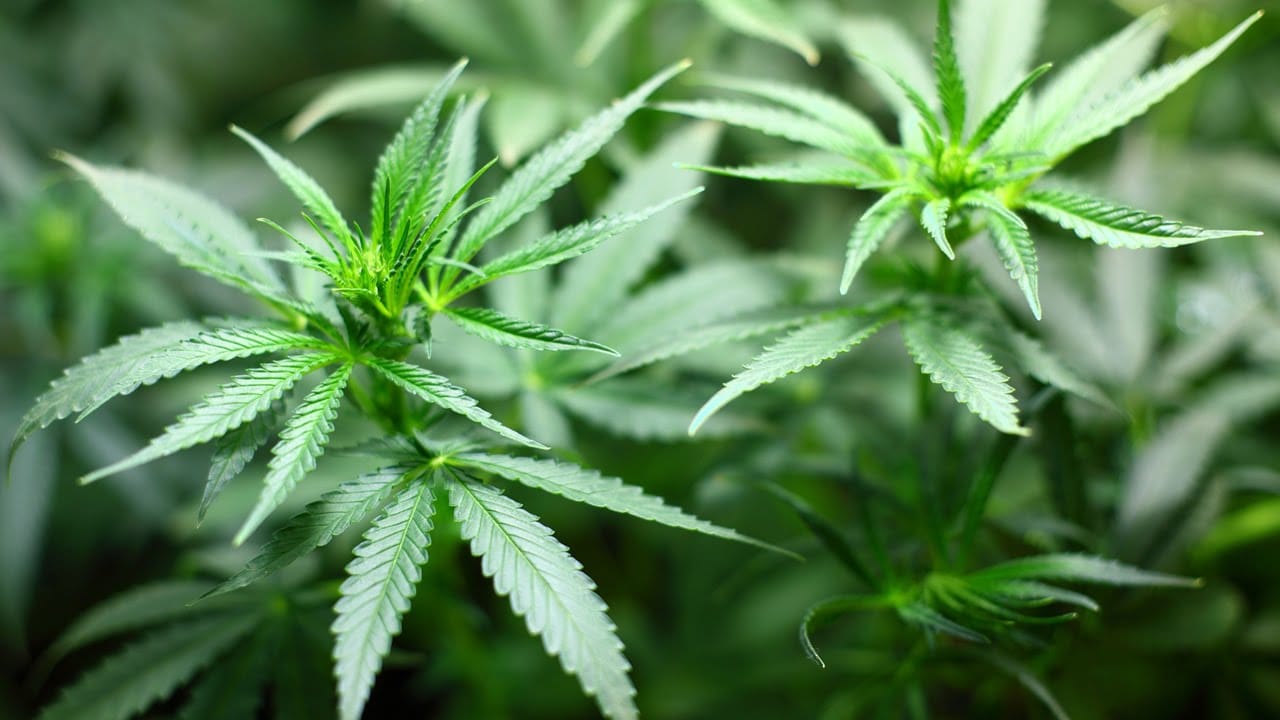
Growing cannabis plants indoors gives you a few advantages over outdoor growing. You can control the environment, for one. Temperature, airflow, and humidity can all be easily regulated using reasonably basic equipment, meaning you can create an optimal environment for your plants. But what other considerations should you look at for an indoor grow?
Here’s a list of 10 key points to help your indoor cannabis grow get off to a flyer:
1) Choosing a Space to Grow
Choosing a space to grow cannabis indoors is just as important as choosing the proper grow space outdoors. Your garden should be located in a discreet place (not the bedroom), with adequate room to both work, and house the equipment you'll need. Basements, attics, and closets are all great places. Once you have a few possibilities in mind, ensure they have access to electrical outlets. Plan for anything that might require a maintenance worker to visit your house.
Once you've selected your grow area, the next step is to prepare it. Make sure it's cleaned thoroughly, sanitised, and free from insectss. Paint the walls flat white., and, cover the floor of the plastic. This will help prevent water damage to flooring and carpets. You could also save yourself a lot of hard work by purchasing a grow tent, which can be erected anywhere and zipped shut. These tents have several advantages, such as reflective walls to help with light circulation, hanging points for your lights, ventilation holes for exhaust fans, and more.
2) Selecting Containers
Your plants must be grown in a pot or container. Large plastic pots work best. Fill the bottom inch with large gravel to help drainage. Although there are several options for the growing medium, such as hydroponics, we often recommend starting with soil if you're a beginner.

Fill the rest of your pot with high-quality potting soil with some sand mixed in - this helps reduce water retention. Buckets can also be used but drill drainage holes in the bottom. If your containers previously held other plants, they must be sterilized with bleach or alcohol.
3) Setting up Lights
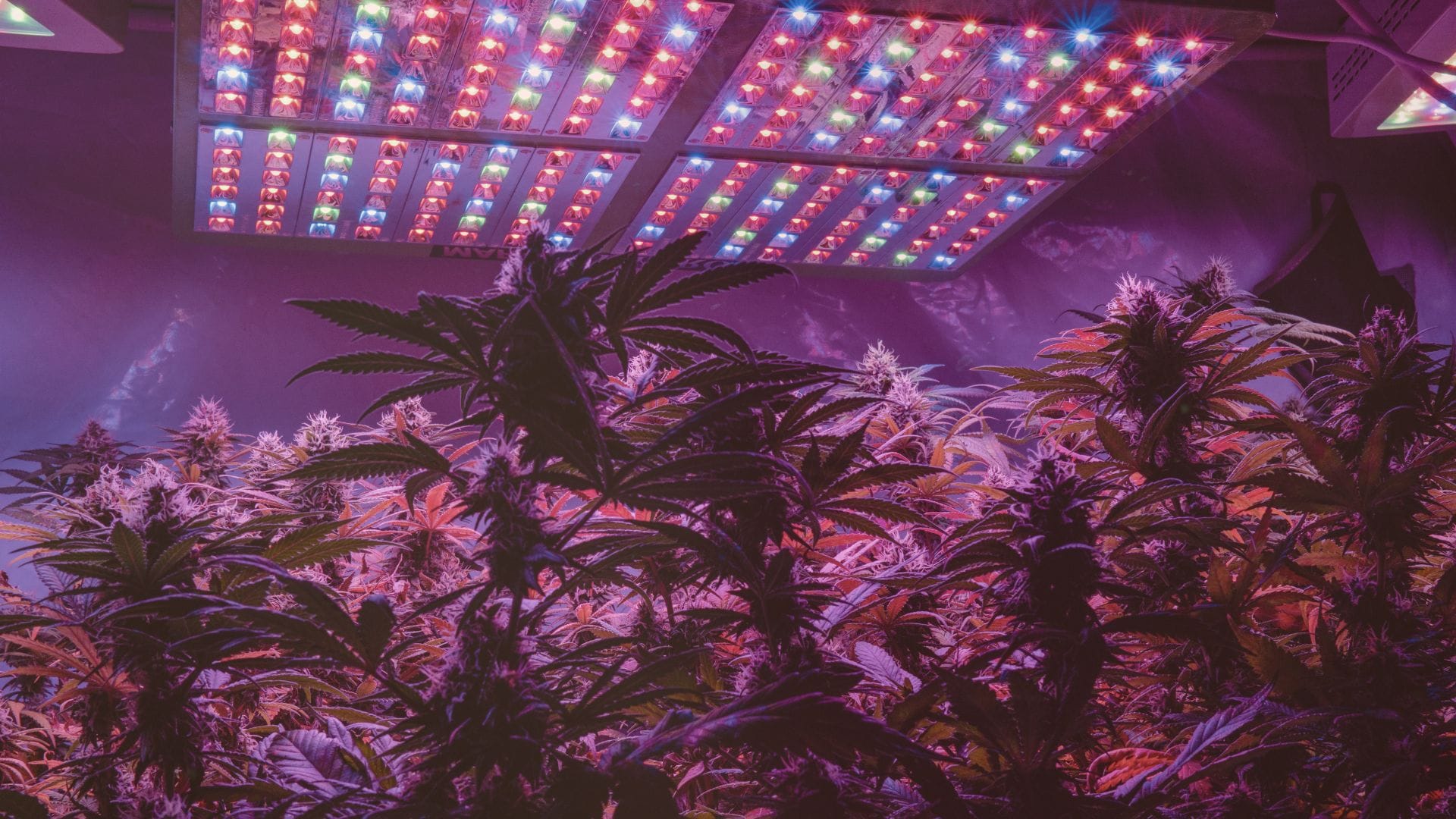
Since there's no sun indoors, you must provide plenty of artificial light. There are options available to the grower when it comes to grow lights: LED lights are cheap, efficient, and don’t put out much heat. Metal Halide, or MH bulbs, are more expensive but put out much more light than fluorescents. They also put out more heat, so ventilation is needed. MH bulbs also require a separate ballast to work. High-Pressure Sodium lamps, or HPS, put out as much light as MH lamps but with less heat. Ventilation and a separate ballast are also required.
LED Lights
Fluorescent LED lights are the cheapest for home growers. They run at about $2 a tube. They produce little heat, so ventilation may only be needed if the space is very small. The light spectrum put out by these lights is suitable for all stages of cannabis cultivation. Because fluorescent lights disperse light over a large area, they must be kept within three inches of the tops for the plants to receive enough light. This means you must mount the lights so they can be raised when necessary.
Metal Halide Lights
Metal halide lamps put out the most light. They also produce a lot of heat. A strong fan is needed to keep room temperatures down. MH lamps put out light mainly in the blue spectrum. Blue light is used best by the plant during vegetative growth. MH lights can also be used for flowering with no adverse effects. A separate ballast is required for these lights to work. They come in sizes from 40 to 1000W. One 1000W lamp will provide enough light in a closet to grow four plants.
High-Pressure Sodium Lights
HPS lights put out almost as much light as MH and with less heat. Good ventilation is still required, though. HPS lamps produce light in mostly the red and orange end of the spectrum. The plants use this light best when flowering. HPS lamps can also be used for vegetative growth with little slowdown in foliage production. HPS lamps require a separate ballast for operation. Some growers switch between MH and HPS depending on the plants' stage. MH is used in vegetative growth, and the light is changed to HPS once flowering begins. Most growers use fluorescents to start seedlings and root clones. The fluorescents are weaker than the MH and HPS lamps and therefore do not stress them too much. Choose whatever light is best suited for your situation. If you are growing in your attic, go with MH or HPS. If you're growing in the closet, then use fluorescents.
4) Encouraging Photosynthesis
There are factors other than the apparent amount of light that reaches the plants that affect the rate of photosynthesis. The grower can manipulate these to achieve a maximum speed of plant growth and larger yields in a shorter time.
Humidity
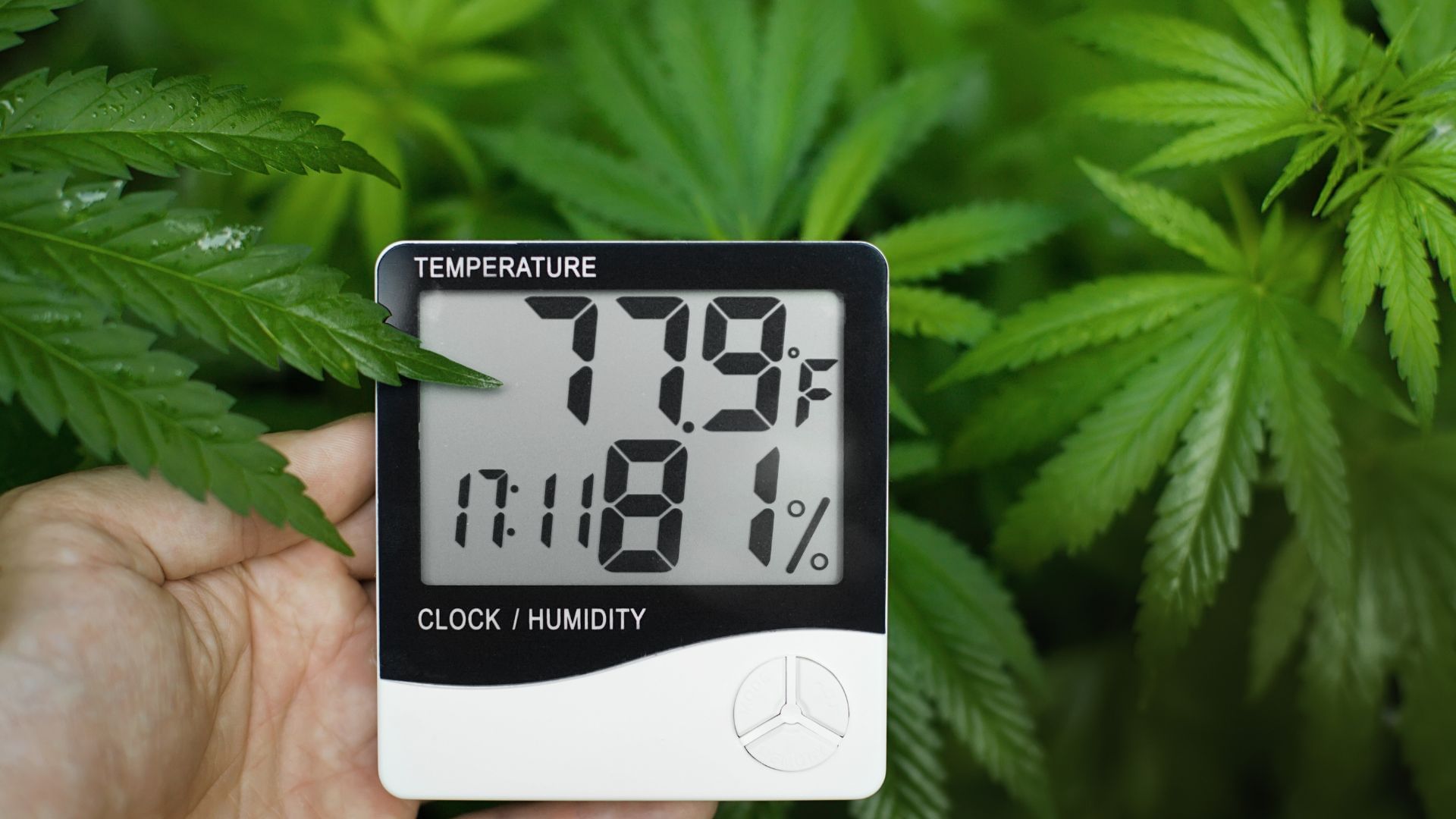
The humidity in the environment is the amount of water vapour present in the air. Most growers know that humidity above 85% increases the probability of the appearance of mold and bud rot. The humidity is also critical during germination, and afterward when the seedlings are extremely fragile. Humidity should be kept over 80% at this stage in the plant's life to prevent the soil from drying too fast. Experimentation has shown that a relative humidity of 65% to 80% increases the growth rate. Below this level, the plants develop extremely narrow and tissue-paper-thin leaves to prevent excess water loss. Above 80% relative humidity, the plant has trouble disposing of toxic chemicals through evaporation.
Temperature
Cannabis can survive temperatures from 32°F to over 100°F. Cannabis will grow best at 70 to 75° F day and night. Higher than 90 degrees F, the enzymes within the plant begin to break down, and photosynthesis is affected. The same is true for low temperatures.
Carbon Dioxide
Carbon dioxide is a gas essential for the light reactions in all plants that carry on photosynthesis. CO2 is absorbed through the leaves' stomatas and is combined with water and light energy to form glucose (used by the plant for energy) and oxygen (which is released). Supplementing CO2 to the existing amount in the air will speed up photosynthesis, and therefore, growth will occur faster. Experimentation has also shown that CO2 can help cannabis tolerate higher temperatures (up to 95°F) with little effect on the rate of photosynthesis.
Watering Cannabis
Although only a small portion of water absorbed by the plant is used in photosynthesis, a shortage of water affects the rate of photosynthesis. This happens because when the plant is low on water, the stomatas on the leaves close, preventing the release of waste gases and other toxic chemicals. This closure will severely slow down or even stop photosynthesis from occurring. Overwatering cannabis is very harmful to growth rate, so it’s essential for first-time growers, especially, to go slow with watering.
5) Training your Plants
Sea of Green, or SOG, is the theory of harvesting many small plants frequently instead of large plants less often. Plants are usually given 18 hours of light every 24 hours during the vegetative stage, then flipped to 12/12 after between four to six weeks. This triggers flowering sooner, meaning a faster turnaround. The SOG method only works with photoperiod cannabis plants, and should not be attempted with autoflowering strains. Using this setup, harvesting can take place more frequently.

6) Ventilation
Cannabis, like all other plants, puts out waste through the stomata on its leaves. Outdoors, wind, rain and sun are present to evaporate these toxins from the leaf surface. Indoors, the grower must create an environment. The best way to do this is with a fan of some kind. A regular cooling fan can be placed inside and left on if the grow room is large enough to create adequate air circulation. A fan controlled by a thermostat will also work well. These can be found at most electronics stores. If many plants are to be kept, a dehumidifier may be needed. If humidity levels are too high, the chances of mold will dramatically increase. A dehumidifier will cost a grower about $100, so it isn’t practical for a closet grower.
7) CO2 Supplementation
Some cannabis growers add C02 to their grow rooms to increase the growth rate. This has proved itself to be effective in some experiments. C02 supplementation also helps the plants withstand temperatures of up to 95 degrees without slowing growth. There have been complaints, however, that C02 supplementation during flowering reduces potency. Therefore, C02 should be stopped when the lights are turned on 12/12.
8) Managing Sex
Since you control the light cycle in an indoor operation, it is easy to sex the plants early and eliminate all the males. Turn the lights down to 12/12 when the plants are eight inches high. Use a magnifying glass to examine the flowers and eliminate all the males.
9) Beginning Flowering
If you’re growing autoflowering cannabis strains, they’ll begin flowering based on maturity rather than a change to lighting. When you want your photoperiod cannabis plants to transition from the vegetative stage and enter the flowering stage, turn the lights down to 12 hours light and 12 hours dark. Then, be patient and wait for flowering to complete.
10 Harvesting
It helps the drying process if you don’t water the week before harvest time. When you cut the plants, remove the large fan leaves and add them to your compost pile, as they are unusable for smoking. Place the buds on a drying rack, or hang them in a clean and dry environment with good airflow. The buds should be totally dry and ready to smoke in about two to three weeks.

Growing your own cannabis indoors is a fun and rewarding hobby that allows you to problem-solve and see the results. Indoor growers can surpass climate issues and produce harvests year-round without having to worry about the weather while being able to manipulate the hours of light their plants receive. These factors are why many growers cultivate indoors, bypassing the stress of unpredictable conditions and guaranteeing good harvests every time the correct steps are taken.
