
There are many ways of growing cannabis, and the type of nutrients you provide your plant with can determine a lot about your gardening style, which is, in large part, due to nutrient availability. Nutrient availability is precisely that: how available the nutrients are to your plants. In this article, we will explore various growing methods that rely on different types of nutrients. We will specifically explore their availability for your plant and discuss how we can maximise their availability.
What Are Plant Nutrients Made Of?
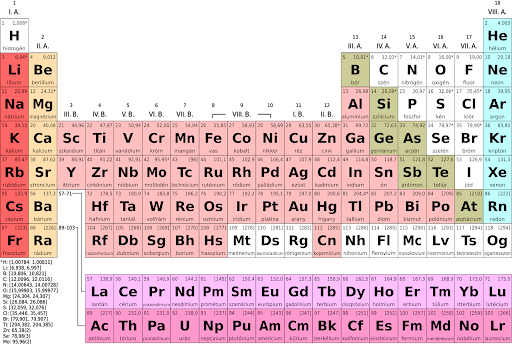
There are 21 elements known to be used by plants in various amounts for physiological processes like building cells, activating enzymes, synthesizing chlorophyll, directing terpene production, and every physiological process plants have. These elements are found in minerals derived from the atmosphere, rocks, plants, and animal byproducts, such as blood, feathers, bones, and manure. They are the building blocks of life, making up the world around us and within us. For these minerals to be used as nutrients, they must be available to the plant.
Why Nutrient Availability Matters?
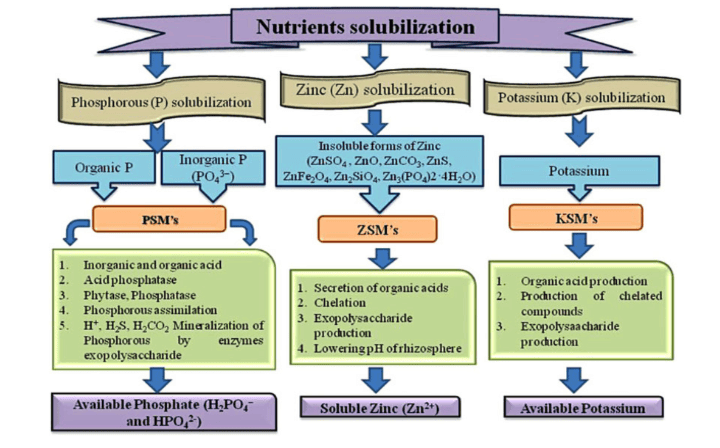
When you provide your plants with nutrients, they are not always immediately available to your plants. While several nutrients, especially salt-based or synthetic, have been chelated and are available, some are not. Many carbon-based and organic nutrients aren't available to your plant in their initial form. Instead, these nutrients need to be solubilized or chelated.
Chelated vs Solubilised: What Does it Mean?
Chelation and solubilization are chemical processes that make nutrients available to plants. Chelation occurs when a nutrient becomes bound to an organic molecule, preventing it from reacting with other compounds in the soil or solution to become “locked out.” Synthetic nutrients use chelating agents like iron EDTA, which may harm beneficial soil microorganisms. The most powerful natural chelating agent is fulvic acid. This natural compound is in decayed and stabilised organic matter like humus, peat, coal, and compost. Solubilization occurs when a solid nutrient is dissolved by enzymes, acids, or ph shifts and then becomes available within a solution, like water in your soil’s pore space. Both reactions influence the availability of nutrients to your plant, and understanding how we, as gardeners, can affect these chemical behaviours can help us maximize our fertilizer use.
See Also: How Do I Fix Nutrient Lockout In Cannabis Plants?
Factors That Influence Nutrient Availability
Several factors influence nutrient availability. While some of these factors, such as soil composition and texture cannot be changed by gardeners, others, like cation exchange capacity, soil organic matter, ph, and watering practices, can. By understanding the role these factors play in nutrient availability ,we can improve our availability without adding more fertilizer. In many scenarios, growers will find signs of deficiencies that are nutrient lockouts caused by one or more of these factors. Let’s explore these topics in more detail!
CEC - Cation Exchange Capacity
To better understand CEC, you must first know what a cation is. A cation is a positively charged ion, such as Potassium, Calcium, Magnesium, or Manganese, among other nutrients. All the molecules in the world have negative (electrons) and positive (protons) charges within their atoms. Elements will give up or borrow electrons to form bonds with other elements, creating compounds like minerals. For example, magnesium (Mg), with an atomic number of 12, will lose two electrons to form a Mg²⁺ cation. This positive charge allows it to bond with negatively charged elements like oxygen or sulfur, forming minerals such as magnesium sulfate. When these minerals break down in soil, the Mg²⁺ cation becomes available for plant uptake, playing a key role in photosynthesis as the central atom in chlorophyll.
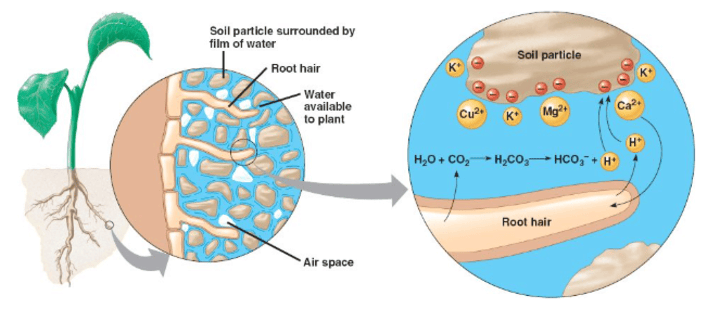
Cation exchange capacity (CEC) measures the soil's ability to hold onto and supply these positively charged nutrients—called cations, like magnesium (Mg²⁺). Soil particles, especially clay and organic matter, have negatively charged surfaces that attract and temporarily hold these nutrient cations. This prevents them from washing away with water and keeps them accessible to plant roots. A soil with a high CEC can store more nutrients and make them available over time, supporting healthier, more productive plants. Think of it as the soil’s “nutrient savings account.” To increase your soil’s cation exchange capacity, add organic matter, which enhances nutrient retention and improves overall nutrient availability for plants.
Soil Organic Matter
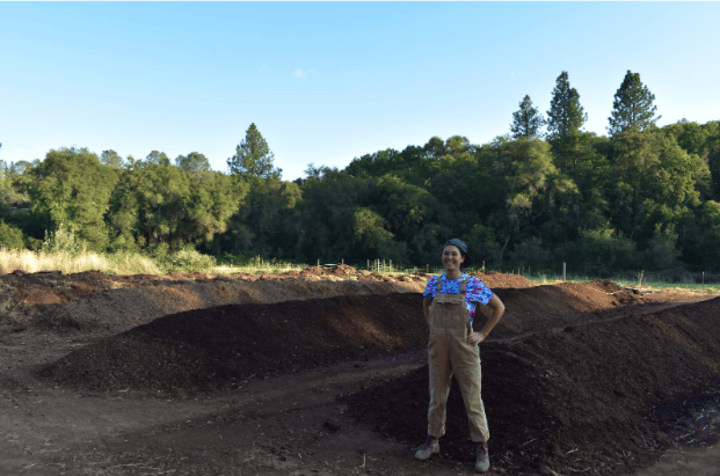
Soil organic matter calculates the organic or carbon base within your soil. It’s important to remember that this calculation is based on proper soil, the stuff found outside, not in a bag. Potting mix is manufactured and sold in a bag and is almost entirely made up of organic matter. Biochar is a great addition that increases CEC by providing porous carbon for nutrients to attach and microbes to make use of. Compost is another excellent addition to any soil or potting mix. It contributes organic matter that contains humates, the most potent natural chelating agents, and a diverse microbial community that solubilises nutrients. Remember that aged compost is better than fresh because of the ph levels. Bacterial slime raises pH while fungus lowers pH—the older the compost, the more fungi there are; the newer the compost, the more bacteria there are.
ph - Potential Hydrogen
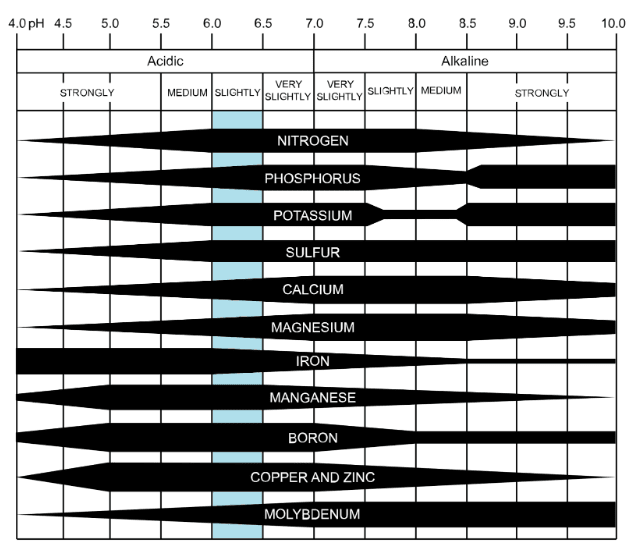
The ph of your soil contributes directly to your nutrient availability. ph measures the potential for hydrogen ions in a solution, indicating how acidic or alkaline that solution is. Hydroponic growers need to adjust the ph of their nutrient reservoirs because the fully chelated and solubilized nutrients are only available to plants within a specific ph range. While organic gardeners don’t necessarily adjust the ph of their water, the ph of their soil can influence their nutrient availability. You can perform a simple slurry test by combining distilled water and soil and using a ph pen to determine the ph of your soil medium. If it is above 7.5, consider adding some elemental sulfur to bring it down slowly, and if it is below 5.5, consider adding gypsum.
Watering Practices
Watering practices play an essential role in nutrient availability. Plants can only take up nutrients when dissolved in water, so consistent moisture is necessary for nutrient uptake. Overwatering can lead to leaching, where nutrients, especially mobile ones like nitrogen, potassium, and magnesium, are washed out of the root zone before the plant can use them. On the other hand, underwatering can cause salt buildup and nutrient lockout, making it difficult for roots to access the nutrients. The goal is to maintain steady soil moisture that supports microbial activity and keeps nutrients in solution, without saturating the soil.
How to Improve Nutrient Availability
Now that you understand the various factors that influence nutrient availability, you can improve your nutrient cycling by providing a balanced environment consisting of high CEC, rich organic matter, maintaining a ph of 6.0-7.0, and proper watering. Even when everything is within those parameters, there are other tweaks you can make to increase the rate at which your nutrients are cycled.
Since most organic amendments rely on chelation and solubilisation from microbial digestion and humates, you never really know when your nutrients are fully available to the plant. One of the most common concerns I hear from growers transitioning from hydroponics to living soil is a noticeable reduction in yield. This drop in yield is often due to nutrient lockout or an imbalance in one of the factors mentioned above, which can slow down nutrient cycling. Here are some tips and tricks to help you maximize your living soil yields:
Don’t Add More Nutrients
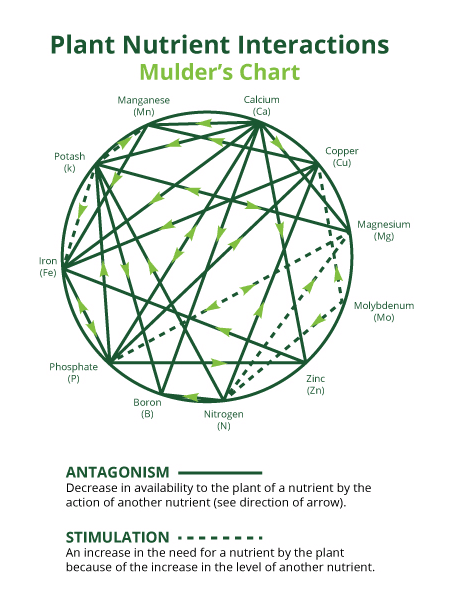
If you notice signs of a deficiency, resist the urge to add more nutrients right away. Start by checking your watering practices and ensuring your pH is within range, then follow up with a simple soil test. Many deficiencies are actually caused by nutrient lockout due to improper watering, pH imbalances, or an excess of certain minerals. This is especially common with cations, which compete for the same exchange sites in the soil. For example, if your soil contains more magnesium than calcium, the plant may have adequate calcium levels but still be unable to access it. Always confirm that your nutrients are balanced before adding anything new.
Add More Enzymes
Enzymes are remarkable molecules made up of amino acids that act as catalysts for chemical reactions, playing a vital role in the solubilization process. Microbes produce these enzymes to digest nutrients, transforming them.

Another excellent way to boost nutrient cycling is by planting a diverse mix of companion plants. These attract different microbial communities, each bringing their own unique enzymes, and you can really maximize your garden with companion planting. By chopping and dropping these companion plants to decompose beneath your cannabis canopy, you can enhance nutrient cycling naturally. Instead of reaching for more fertilizer, try incorporating malted barley, fulvic acid, and biochar to further accelerate the process.
Sprouted Seed Teas
Sprouted Seed Teas are a powerful way to harness enzymes and unlock the nutrients already present in your soil. Different recipes target specific enzymes and plant hormones, but my go-to is sprouted barley—also known as malted barley. It’s widely studied and valued in beer fermentation for its exceptionally high enzyme activity. Best of all, it’s easy to use: you can buy it pre-germinated and dried from your local brew shop. Simply grind it up and either top-dress your soil, brew it into a tea, or apply it as a root drench.
Simple Sprouted Seed Tea Recipe - 5 Gallon
- 3 TBSP Ground Malted Barley
- 1/8 TSP 200X Aloe Powder
- 1 TSP Yucca Root Extract
Mix ingredients together into dechlorinated water and add whatever nutrients you desire. Option to aerate, don’t exceed 12 hours to avoid fermentation.
Solubilise, Chelate, and Improve Plant Health with ImmuniTea
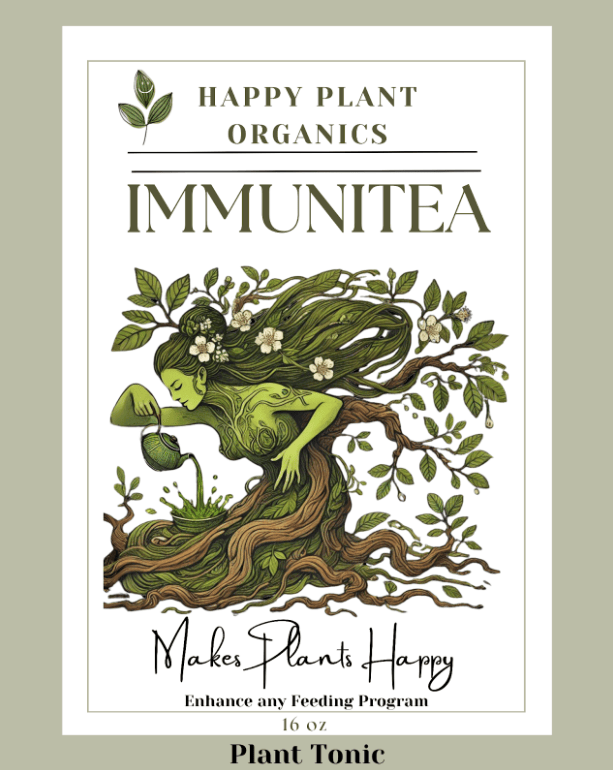
To harness the power of malted barley, try “Immunitea,” a prepackaged sprouted seed tea in a bag chocked full of goodies like malted barley, insect frass, biochar, humate, aloe, yucca, and bacillus blend. I created this product to accelerate the nutrient cycling process within my living soil beds, reducing fertiliser use while focusing on increasing your plants' immune system.
Read Also: A Healthy Living Soil Guide
Conclusion
Understanding nutrient availability is the missing link for many growers transitioning into organic or living soil systems. It's not just about what you feed your plants—it's about whether they can access it. By focusing on soil biology, proper watering, balanced minerals, and tools like enzymes and humates, you can unlock the full potential of your soil without over-fertilizing. Whether you're chasing flavor, potency, or yield, nutrient availability will always be the foundation of healthy, resilient cannabis.