

Auto May is here at Seedsman.com. Explore limited-time offers on autoflowering seeds and discover fast, resilient genetics built to fit real life. Visit our promotions page and grow your next run with ease.
Most problems in an autoflower grow don't start in the tent or garden. They start before anything's even planted. Strain choice sets the tone for everything that follows. Some autoflowers stay compact and predictable, almost easy to forget about in the best possible way. Others stretch more than expected, drink more than expected, and ask for a slighty different kind of attention. Not necessarily difficult. Just different.
When people look up how to grow autoflowering cannabis, they're usually thinking about technique. How to feed autoflowers, lighting, training techniques, how to grow autoflowers faster - the dos and the don'ts of growing autoflowers. But the more experienced a grower becomes, the more they realise the early decision matters just as much - and sometimes more. When you choose an autoflowering strain, you're not just choosing a plant. You're choosing how that plant is likely to behave for the next eight to twelve weeks.
That behaviour sets the tempo of the entire grow.
How To Grow Autoflowering Cannabis By Understanding Your Own Setup First
Before choosing a strain, it's a good idea to assess your grow space and setup. Experienced growers often find that strain selection becomes easier once they stop asking "What's the best autoflower?" and instead ask:
- How much vertical space do I have?
- How stable is my environment day to day
- How often can I realistically check in on the plants?
- Am I looking for speed, simplicity, or experimentation?
Answering these questions tends to narrow the field naturally, and will lead growers to find autoflower strains that complement their setup as well as their style. That doesn't mean you have to forgo other features like terpene profile or cannabinoid content - there's plenty of options once you've determined what will work in your setup.
How To Grow Autoflowering Cannabis: Start With The Right Genetics
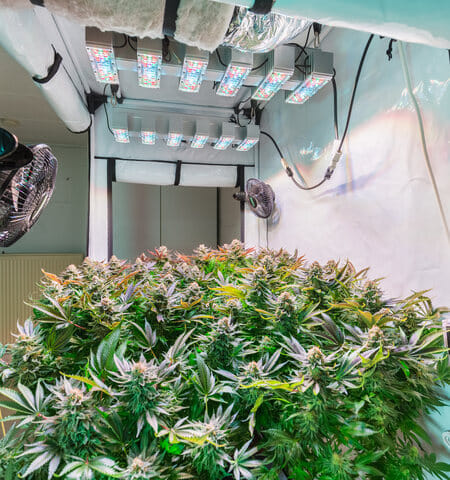
When growers refine how to grow autoflowering cannabis over time, strain selection tends to become less about labels and more about behaviour. Experienced growers often look at three things before anything else:
- How much space the plant is likely to need
- How quickly it completes its cycle
- How sensitive it tends to be under variation
These aren't strict rules. They're more like early signals. Autoflowers don't offer a long correction window. If a plant stretches too much in a tight space, that decision echoes through the rest of the cycle. If it demands more attention than your routine allows, small inconsistencies become more noticable.
Indica, Sativa, and Hybrid: What Changes In Practice
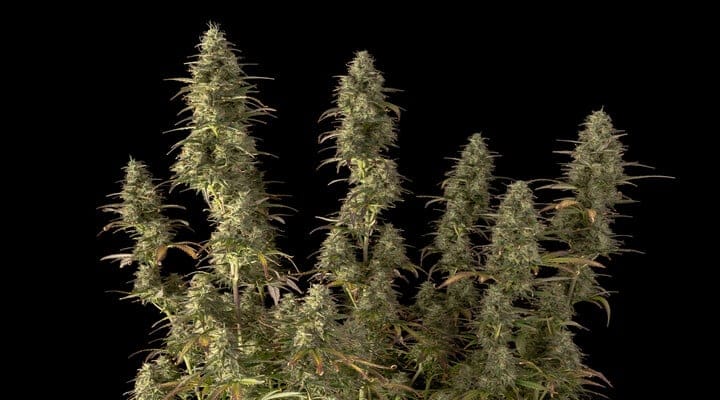
The labels still matter, but not in the textbook way they're often presented. In practice, indica-leaning autoflowers tend to stay lower and build denser structure. They're easier to manage in small tents or discreet spaces. Sativa-leaning plants often stretch more, sometimes quite noticeably, and can feel as if they're always reaching for a bit more room. Hybrid autoflowers sit somewhere in the middle, but the term "balanced" doesn't always equate to "predictable."
Many growers learning how to grow autoflowering cannabis for the first time notice that behaviour matters more than category labels.
How this plays out in practice
- Indica-leaning autos often feel easier in restricted spaces but can become dense if airflow isn't considered
- Sativa-leaning autos may require earlier awareness of height and structure
- Hybrids tend to offer balance, though sometimes with less predictability
When considering how to grow autoflowering cannabis in a controlled space, it's usually the stretch profile - not potency or yield claims - that shapes the experience most. It's less about strain identity and more about how the plant occupies space over time. That's something that is much easier to understand with the experience of a few grows under your belt.
Matching Strain to Space, Time, and Attention
As growers refine how to grow autoflowers, strain selection often becomes a question of environment rather than preference. A plant doesn't just exist in isolation. It develops inside a container, or in the ground, under a fixed light, within a fixed a timeframe. When those conditions align with the plant's natural behaviour, the grow tends to feel smoother. When they don't, more of the cycle is spent adjusting rather than observing.
Experienced growers often find that strain choice becomes clearer when viewed through constraints.
Space
- Limited height setups tend to favour compact, predictable genetics
- Taller autos can still work, but often require earlier awareness of stretch patterns
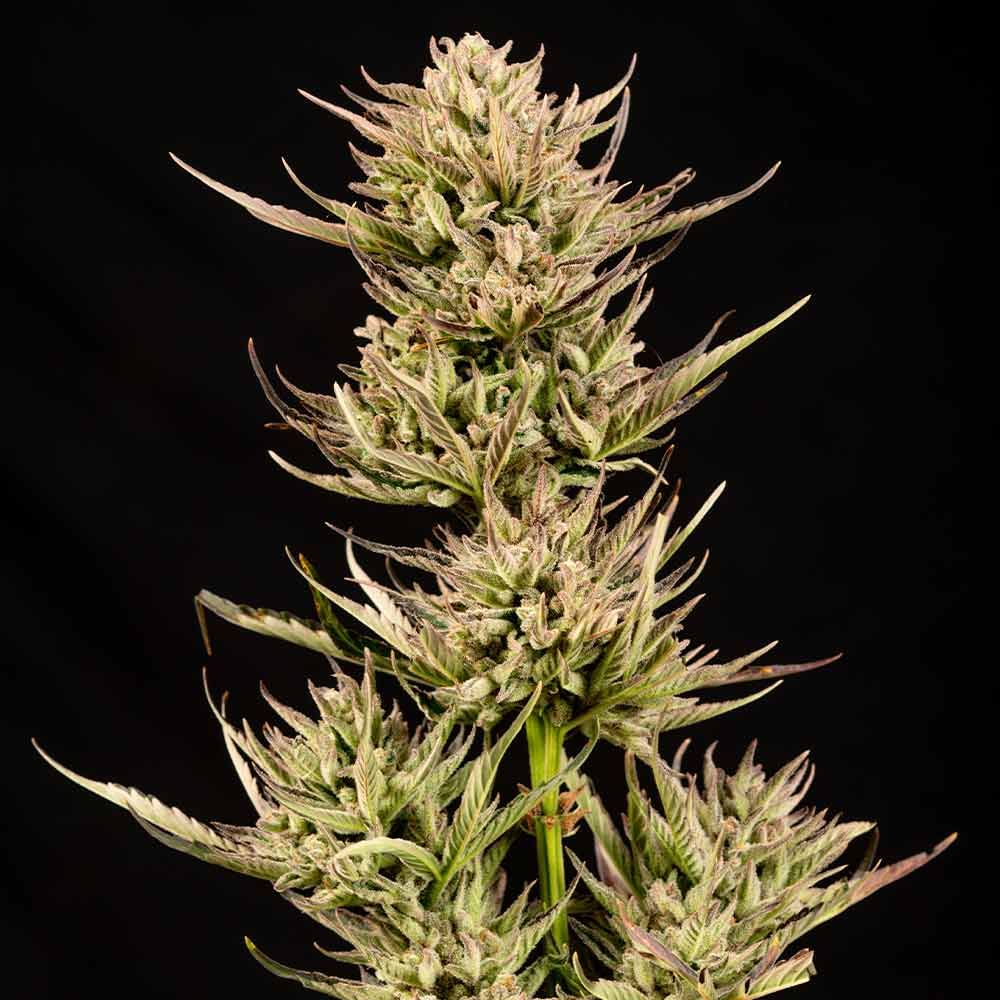
- Many compact autoflowers stay somehwere around 60-100cm indoors, although environment and container size still influence final height. More expressive sativa-leaning autos can easily exceed a metre indoors under strong lighting if left untrained.
Time
- Shorter cycle genetics (usually indica or indica-dominant) tend to suit tighter grow windows
- Longer flowering autos (usually sativa and sativa-dominant) may express more complexity but require patience through later stages
Attention
- Low-intervention routines often align better with stable, forgiving strains
- More hands-on growers may enjoy responsive or expressive genetics
There's a kind of honesty in matching strain to space. It removes a lot of second-guessing later on. And that's really what learning how to grow autoflowering cannabis becomes over time - removing friction before it appears.
How To Grow Autoflowering Cannabis That Fits Your Environment
Over time, many growers shift how they think about cultivation. Instead of asking how to control every variable, they start noticing which plants settle into the environment naturally. This is where strain choice often becomes more intuitive.
A well-matched autoflower doesn't remove effort. It reduces struggle. Feeding feels more predictable, and the stretch feels more manageable. Even better, growers find that adjustments become less frequent. Not because the plant is easier, but because it's less reactive to mismatch.
When learning how to grow autoflowering cannabis across different environments, many growers find that stability in genetics makes observation easier. You see the plant more clearly when you're not constantly correcting it.
Reading Breeder Descriptions Without Overthinking Them
Strain descriptions are undoubtedly helpful when choosing, but experienced growers usually treat them as direction rather than definition. Terms like "easy," "high yield," or "fast-flowering" describe tendencies, not guaranteed outcomes. Autoflowers can express differently depending on light intensity, feeding approach, and environmental consistency.
As growers refine how to grow autoflowering cannabis, they often place more weight on observed grow reports than descriptions on seed packs - even though they can be handy.
Common Strain Selection Mistakes
Choosing purely based on THC percentage is one of the most common mistakes newcomers make. It places all emphasis one one desired outcome, but misses nuance like structure, timing, and environmental fit. Another is overlooking height potential, especially in limited spaces. A plant that doubles in size during stretch can change the entire dynamic of a small grow, so it's useful to research a little deeper when choosing strains.

There's also the assumption that all autoflowers behave uniformly, which can lead to mismatched expectations when two plants in the same space express differently. Some are fast and tidy, and some take longer to settle. Some definitely respond better to training than others.
As experience builds, strain selection becomes less about discovery and more about recognition. Growers begin to notice which plants feel steady from week to week. They observe which ones respond gently to feeding changes and which ones seem to move in rhythm with their environment rather than resisting it. This is often where confidence in how to grow autoflowering cannabis becomes less technical and more intuitive.
Choosing The Right Strain: Closing Thoughts
Learning how to grow autoflowering cannabis often shifts over time, from learning and implementing growing techniques to understanding how the plant behaves and responds. Strain choice sits quietly at the beginning of that process. It doesn't determine everything, but it does tend to shape the tone of the grow in ways that become obvious once the cycle begins.
Experienced growers often describe it less as selection and more as alignment. A plant that fits the space, the timing, and the level of attention available tends to feel more natural to work with. Not necessarily easier - just more in sync. And when that happens, the rest of the grow tends to settle into something closer to rhythm than effort.
