
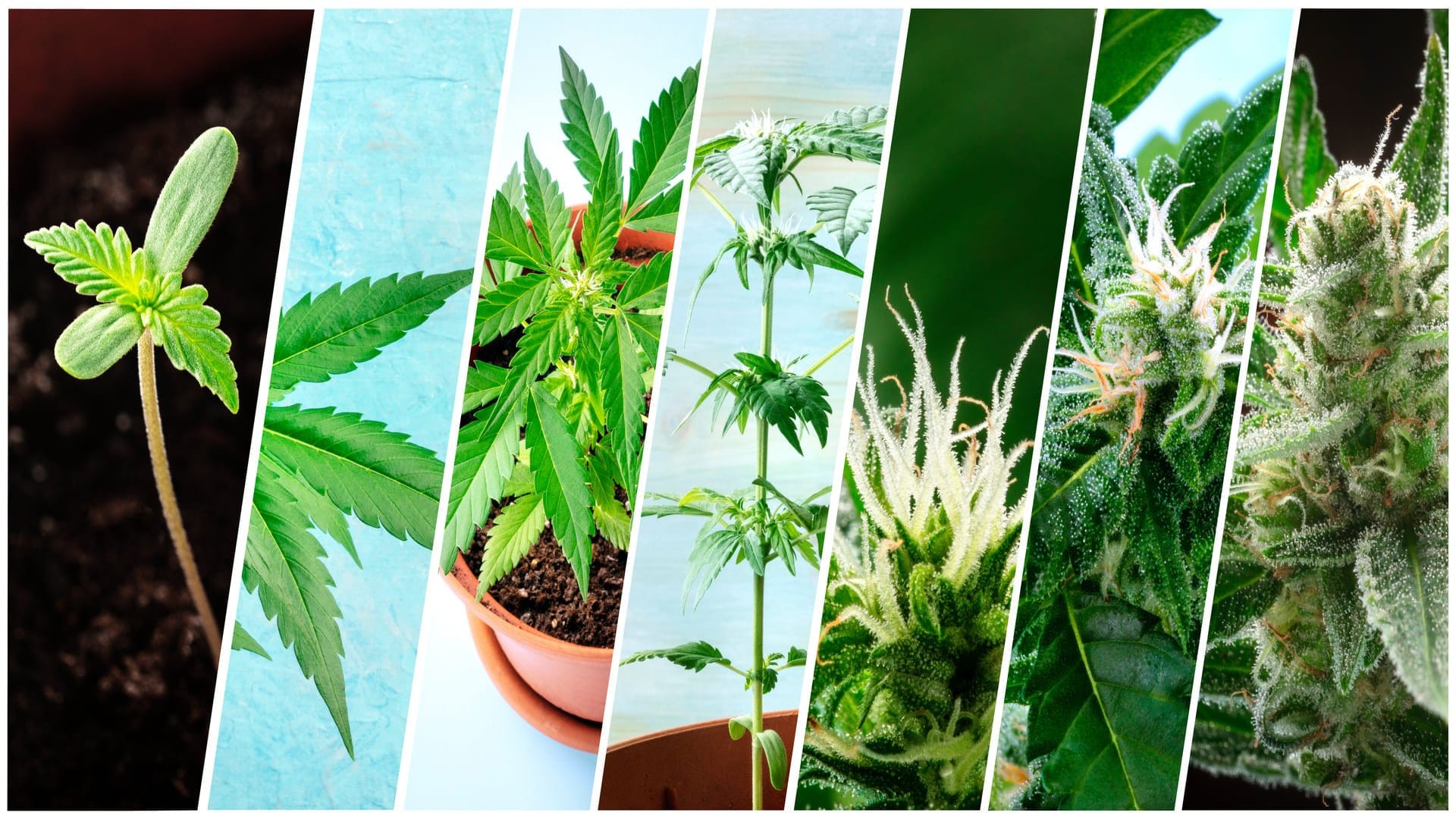

For dedicated growers, the cannabis plant represents more than just a crop. It’s a cycle of life, chemistry, patience, and precision. But too many beginners jump into cultivation thinking it’s as simple as “plant seed, water, wait, smoke.” In reality, cannabis grows in distinct stages, and understanding each of the stages of growing weed is the difference between an average harvest and a high-quality yield that’s potent, flavorful, and therapeutic.
Cannabis doesn’t grow in a straight line. Like all living organisms, it follows a life cycle, progressing through specific developmental phases – each with its own biological processes, needs, and quirks. These phases aren’t just labels; they represent radically different behaviors in the plant. What works in one stage of growing weed could harm the plant in another. That’s why growers who understand this progression – who learn to read their weed leaves - tend to produce bigger, better, and more effective buds.

This article has been designed to walk you through each developmental milestone of a photoperiod cannabis plant, from the moment the seed cracks open to the final step before harvest. We’ll break down what’s happening biologically and chemically in the plant, what you need to observe, and how best to respond as the grower. Think of it like raising a child – you wouldn’t treat a toddler the same way you’d treat a teenager, and cannabis is no different. Each of the stages of growing weed demands something different from you. With this understanding, you can unlock the full potential of your cannabis plants.
Stages of Growing Weed: Germination
What’s happening biologically
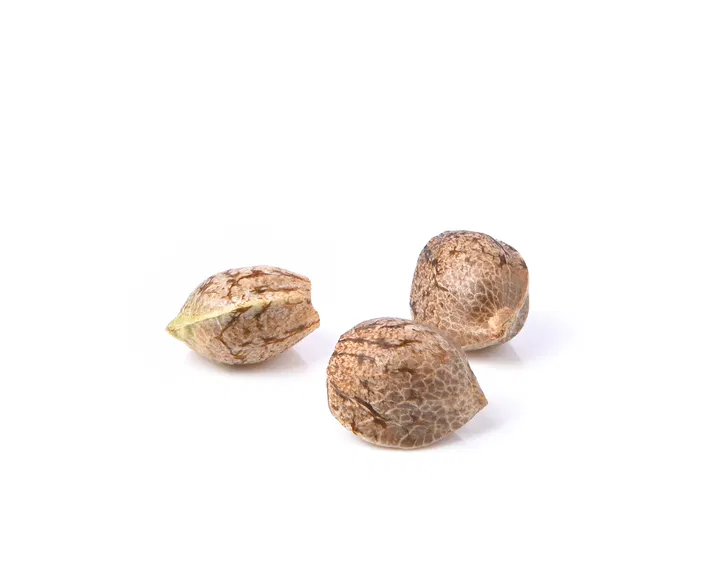
The life of your cannabis plant begins in darkness. Germination is the first stage of growing weed, and is triggered when water penetrates the seed’s hard outer shell, activating enzymes that break down stored starches into sugars to fuel initial growth. The embryonic root (taproot) emerges first, anchoring into your medium, followed by the cotyledons – those first tiny leaves.
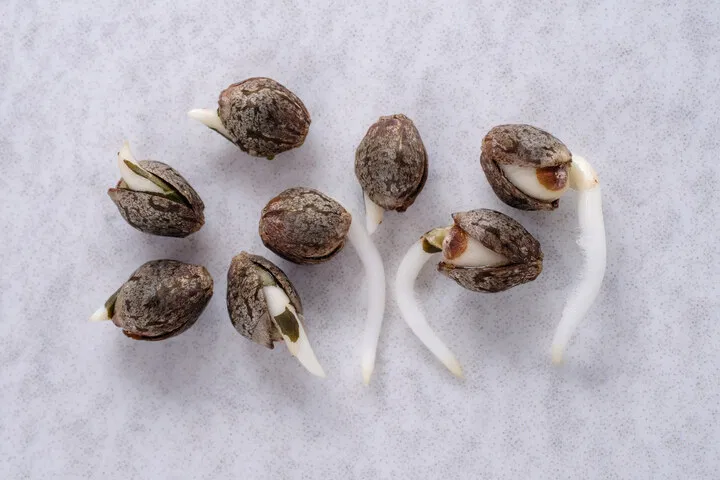
This early stage of growing weed is critical because it sets the foundation for everything that follows. If germination fails or is mishandled, your grow is over before it starts. The seed must be viable, handled delicately, and exposed to the right combination of warmth and moisture.
Scientific Insight
This process is governed by imbibition, where dry seeds absorb water rapidly, triggering metabolic processes. Studies in seed physiology show that hormonal shifts (especially gibberellins) signal the start of cell elongation and division [1].
Grower Tips
Use a moist paper towel in a dark, warm space, or plant weed seeds directly by placing them into pre-soaked soil. Ideal temperature ranges between 22-26°C. At this point, light isn’t necessary until the cotyledons break through the soil surface.
Once the taproot is visible, it’s time to move the seed into its growing medium. Handle with great care using sterilized tweezers. Avoid overhandling or exposing the root to light and air for too long, which can cause stress or damage.
Further Reading: How To Germinate Cannabis Seeds
Stages of Growing Weed: The Seedling Stage
What’s happening biologically:
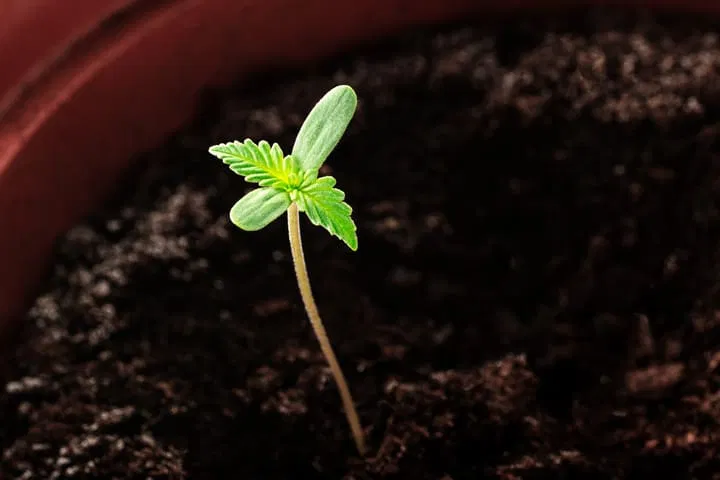
Once the cotyledons open, the plant begins its first breath of photosynthesis. These baby leaves provide just enough energy to grow the first set of “true” leaves – recognizable by their jagged, serrated edges. Behind the scenes, roots are rapidly establishing a network, preparing to anchor the plant and absorb nutrients efficiently.
Further Reading: 6 Tips To Understand The Cannabis Root Zone

During this stage, the seedling is incredibly delicate. A misstep in watering, lighting, or nutrient balance can cause stunted growth or death.
Why it matters
This is perhaps the most vulnerable step in the stages of growing weed. Your plant is essentially a newborn – soft-stemmed, prone to overwatering, and very sensitive to environmental stress. Think of the seedling like a baby bird testing its wings. It’s not ready to fly yet, but it’s getting there.
Grower tips
Provide 18-24 hours of gentle, low-intensity light per day (such as CFLs or dimmed LEDs). High humidity – around 65-70% RH – helps prevent drying out. Water sparingly using a spray bottle or small amounts, ensuring the roots aren’t waterlogged. Overwatering is the #1 seedling killer. Learning how to fix cannabis overwatering is a skill worth mastering.
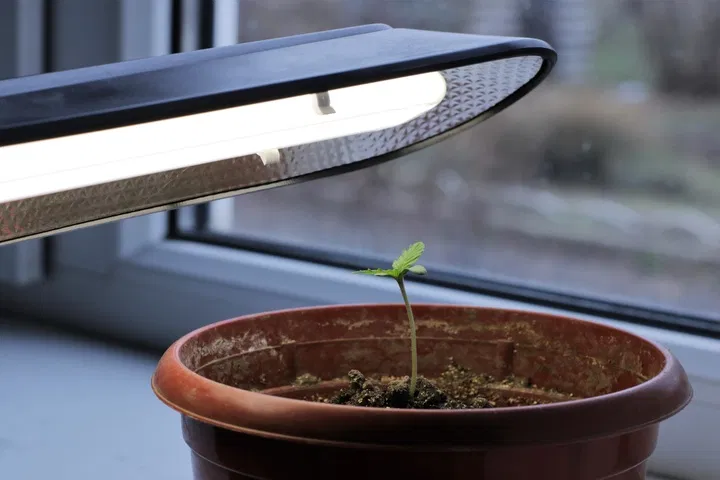
Avoid feeding nutrients at this stage of growing weed unless you’re in an inert medium like coco coir. In soil, most mixes provide everything a seedling needs in its first two weeks.
Further Reading: 3 Steps To Master The Seedling Stage
Stages of Growing Weed: The Vegetative Stage

What’s happening biologically
Now the magic starts. The plant’s focus shifts from survival to structure. It’s like adolescence: growth spurts, strengthening limbs, and energy galore. Leaves fan out to collect more light. Stems thicken to hold future buds. Roots dig deeper and wider, absorbing water and nutrients at a faster pace. Essentially, at this stage of growing weed, your plant starts packing on green mass, preparing to become a bud-bearing bad-ass.
Further Reading: Common Vegetative Stage Problems And How To Fix Them
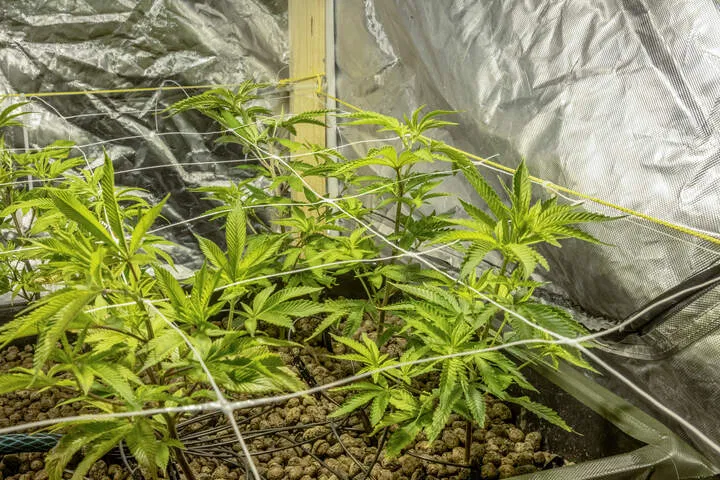
This is the stage where your plant builds itself into a high-performance machine – capable of photosynthesizing massive energy to fuel flowering later on.
Scientific inisght
Vegetative growth is driven by auxins and cytokinins, which influence apical dominance and lateral branching. Light-dependent hormones regulate the rate of leaf expansion and chloroplast development [2].
Grower tips
Provide your plants with strong, consistent lighting – ideally 18 hours on, 6 hours off. Outdoors in South Africa, plants in the vegetative stage love full sun and warmth. Indoors, use full-spectrum LEDs or metal halide bulbs.
Feed with a high-nitrogen nutrient formula, like 3-1-2 NPK. Nitrogen fuels chlorophyll production and leaf development. Maintain temperatures between 24-28°C, and reduce humidity slightly to around 55-65% RH.
Training techniques like topping, low-stress training, or Scrogging can begin in the vegetative stage of growing weed. This improves light penetration and prepares the plant for maximum yield later on.
Further Reading: Introduction To Cannabis Plant Training Techniques
Stages of Growing Weed: Pre-Flowering (7-14 Days)

What’s happening biologically
As the days shorten, photoperiod cannabis plants sense a shift in the seasons. This initiates the transition from vegetative growth to reproductive development – i.e., bud production. Internodal stretching slows, and the plant begins forming tiny bracts and pistils – or pollen sacs if it’s male.
Further Reading:Early Sign Of Male Cannabis Plants
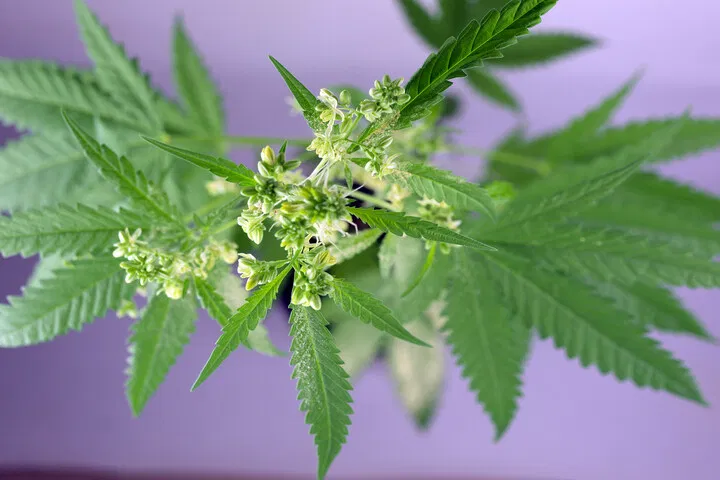
This short phase is a pas-de-bourret in the stages of growing weed – a transitional step, but a (hormonal) gearshift to something altogether more impressive. It’s subtle at first, but within days, you’ll notice clear changes in growth patterns and the appearance of pre-flowers at the nodes.
Scientific insight
Photoperiodism is regulated by the phytochrome system. Cannabis is a short-day plant, meaning it initiates flowering when exposed to longer nights. Hormonal changes (notably a drop in gibberellins and rise in florigen) initiate reproductive development [3].
Grower tips
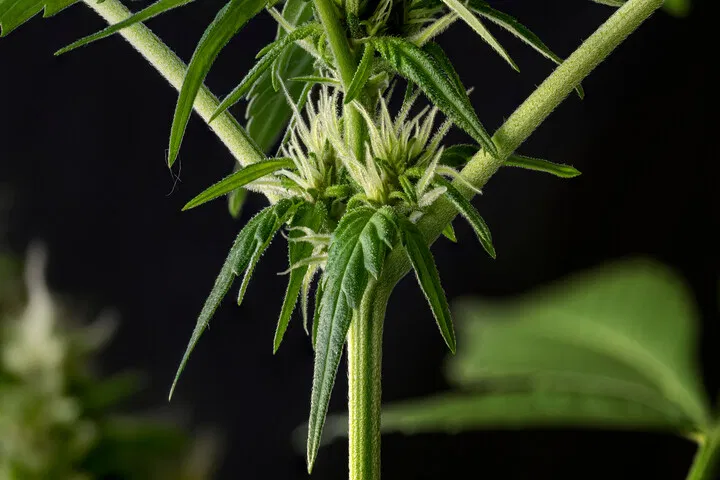
Indoor growers must reduce light to a 12/12 schedule. Outdoor plants will naturally enter pre-flowering around late summer (February-March in South Africa).
Begin feeding bloom nutrients, which are lower in nitrogen and higher in phosphorus and potassium. The plant now prepares to build flowers, not leaves.
Identify and remove male plants early if you’re aiming for sinsemilla (seedless) buds. Look for white hairs (female) or round sacs (male) at the nodes.
Further Reading: Transitioning Nutrients From Vegetative To Flowering Phase
Stages of Growing Weed: The Stretch (2-3 Weeks)

What’s happening biologically
As flowering initiates, the plant undergoes one last explosive growth spurt – known as “the stretch”. Stem and branch growth can double or triple, especially in sativa-dominant strains. This allows the plant to spread out and catch as much light as possible before locking in its final shape.
Scientific insight
The stretch is driven by gibberellic acid (GA3), which promotes rapid elongation at the shoot tips. Cell division slows, but cell elongation speeds up, resulting in visibly faster vertical growth [4].
Grower tips
This is your last chance to train. Use LST, supercropping, or trellis nets to control the canopy. Stretchy plants can overshadow each other, blocking light penetration and diminishing yields.
Maintain strong light intenstiy to limit leggy growth. Start full bloom feeding here – aim for NPK ratios like 1-3-2 or 2-4-4.
Sativa-heavy strains tend to stretch more aggressively than indica-dominant cannabis strains, so plan accordingly when setting up your grow space.
Stages of Growing Weed: The Flowering Stage (6-10 weeks)
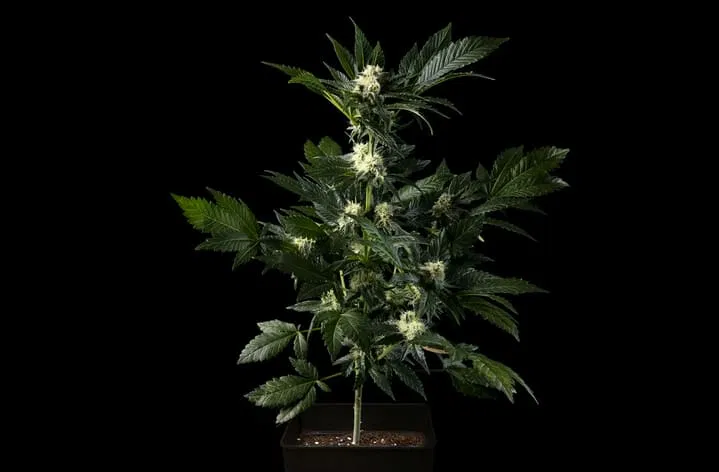
Now we’re getting to the business end of things, and each visit to tend your plants brings new excitement as you see those beautiful, bountiful buds start to develop. This is it – the grand show. Flower sites swell with pistils, resin gland multiply, and buds become dense, aromatic, and sticky. Trichomes (tiny glandular structures) fill with cannabinoids and terpenes. It’s like christmas, and there are presents all around the tree.
Scientific insight
Cannabinoid synthesis occurs in the trichomes, which contain glandular cells converting CGBA into THCA, CBDA, and other compounds through enzymatic reactions [5].
Further Reading:Cannabinoids: From ABC To THC
Grower tips
Feed with full bloom nutrients. Maintain low nitrogen, high phosphorus and potassium to support flower growth and trichome production. Reduce humidity to 40-50% to prevent bud rot. Ensure good airflow around buds. Monitor closely for pests, mold, or deficiencies.
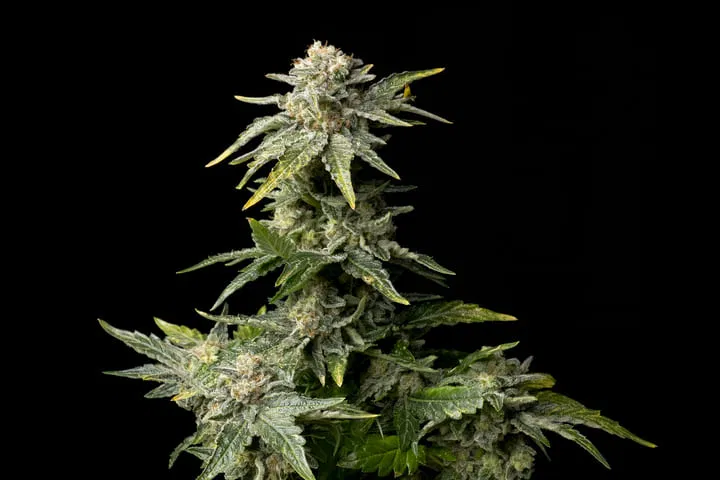
Support heavy branches with stakes or netting – those buds are adding weight to the plant’s limbs, and that extra support can be vital. Some plants may need pruning of lower growth to direct energy toward the canopy.
Further Reading:Top Tips To Master Cannabis Flowering From Jorge Cervantes
Stages of Growing Weed: Ripening
What’s happening biologically
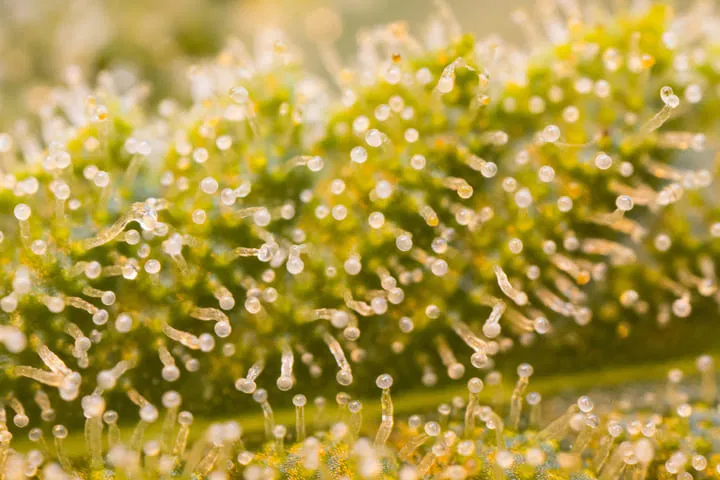
As your plant nears the end of its life, trichomes reach peak potency and begin oxidizing. Pistils darken, and the plant’s energy shifts from growth to maturation. This is when flavor, aroma, and potency are finalized.
Scientific insight
THCA degrades to CBN, and terpene profiles shift as volatile compounds break down with time [6].
Grower tips
Some cultivators swear by flushing, where you soak your soil in plain water to remove nutrient salts, improving flavor and burn quality.
Further Reading:Flushing Cannabis Plants: Is It Really Necessary?
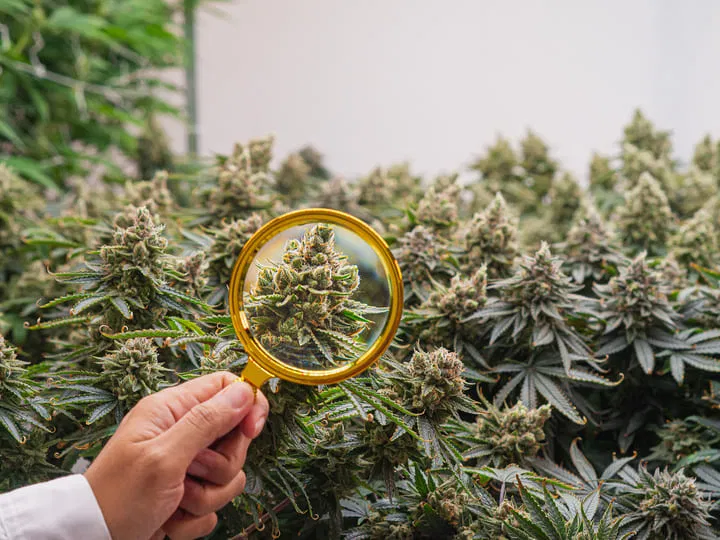
Inspect trichomes with a loupe or magnifying glass. Cloudy trichomes indicate peak THC. A few amber trichomes mean the cannabinoids are ripening – ideal for those who prefer sedative effects.
Cut down light to 10 hours a day in the final week to simulate late autumn conditions and encourage ripening. Keep humidity low to prevent mold in dense buds.
Further Reading:Using Trichomes To Determine Potency And Harvest Time
Stages of Growing Weed: Final Thoughts
Understanding the stages of growing weed, as well as what to do do in each stage, is crucial. Each stage of growing weed demands a shift in how you nurture, feed, and observe your plant. When you learn to work with the plant rather than against it, it will reward you handsomely.
It makes no difference whether you’re growing for recreation or relief – understanding the life cycle gives you an edge. The better you understand what your plant is doing and why, the more control you have over your outcomes.
Happy Growing!
-------------------------------------------------------------------
References:
[1] Nonogaki, H., et al. (2013). Seed germination—emerging mechanisms and new hypotheses. South African Journal of Botany.
[2] Taiz, L., & Zeiger, E. (2010). Plant Physiology.
[3] Song, Y.H. et al. (2017). Photoperiodic flowering: time measurement mechanisms in leaves. Plant & Cell Physiology.
[4] Thomas, S.G. (2017). Gibberellin metabolism and signaling. Annual Review of Plant Biology.
[5] Livingston, S.J. et al. (2021). Cannabis glandular trichomes: a cellular metabolite factory. Frontiers in Plant Science.
[6] Trofin, I.G. et al. (2015). Cannabis potency: degradation of active ingredients in cannabis during storage. Journal of Chromatography.