


Growing a $5000 Plant in a 16oz Cup – Top Tips to Take the Trophy!
Cannabis is such a versatile and adaptable plant that you can pretty much grow it in any way you want. From those who grow gigantic 3-meter monsters to those who do bonsai-style bambinos, the possibilities are seemingly limitless. Seedsman has teamed up with Athena & Pro Mix, AC Infinity and Bud Trainer to bring a unique new grow-off skill competition. You can read all about the competition here and the official rules are here. The prizes for the Global grow cup include cash, incredible cultivation equipment from the sponsors, and top-quality genetics and killer merch from your best friends at Seedsman.
The interesting limiting factor is that the cannabis plant has to be grown in a 16oz cup (a little less than a half-litre pot), offering the growers the chance to show off their skills. How the growers can manipulate the plant to produce the $5000 prize-winning specimen will be massively insightful, with so many things to consider. Here are some tips for growing the most prize-worthy plant in a small pot!
Strain Selection Auto vs Photo
The competition offers growers the chance to grow from a selection of autoflowering or photoperiod plants. The decision on which category to use is entirely up to the grower and their preference. Both types offer advantages; autoflowers mature as they grow and can reach their potential quickly and efficiently, while photoperiod plants can be manipulated to a higher degree to try and get the most out of them. The competition rules state you should plant your seed or clone between June 1st and June 30th and harvest by October 31st. This gives growers almost 22 weeks to execute their perfect pocket-size grow! Photoperiod plants such as Tangerine Snow F1 Fast and Ice Dream Cake offer fast and bountiful growth and killer cannabinoid and terpene yields, making them exciting choices for the competition. Bud structure and the ability to manipulate plant growth are two reasons why either of these strains might be a good bet to take the top prize.

On the other hand, Pineapple OG Auto and Sour Diesel Auto are two of the fastest high-yielding plants in the offering. If allowed to grow to their full potential, it would be interesting to see how these autos compare to the photoperiods, which have the advantage of a prolonged veggie stage. Being in such a small container for the roots, overdoing the veggie period could end in disaster for photos, whilst autos, which traditionally don’t like their roots to be disturbed, could be optimized for the smaller size more readily. It may also come down to what experience the grower has which they will decide to grow. It is hard to imagine that a photoperiod won’t win this because they can be vegetated for a larger biomass before starting to flower. However, it's undoubtedly true that some cultivators can grow huge autos, so seeing which category comes out on top in such a small container will be exciting. As said, over-vegetating a plant in a small container could lead to disaster down the home stretch, so bigger and longer isn’t the be-all and end-all in this restricted pot size.
Outdoor VS Indoor
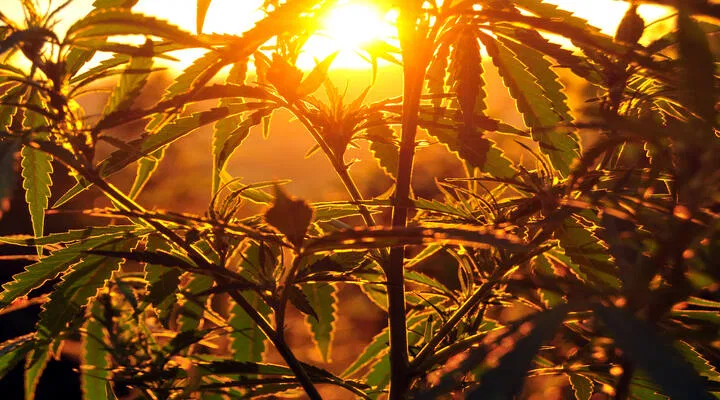
Growers can choose to use the unlimited natural resources of the great outdoors or the comfort of a controlled indoor environment. Outdoor vs indoor will be argued until the end of time. In terms of “Which do you prefer?” this could be split even further into the categories “Which do you prefer to grow” and “Which do you prefer to smoke?”. For the sake of the competition, it will be interesting to see how these two categories compare, as usually, the advantage to outdoor growing is that the roots have a more extensive area to stretch out into. In contrast, indoor growers are generally slightly more restricted in root mass area. However, as both choices will have a 16oz cup to grow from, this levels the playing field a little more in favor of indoor – as they are generally used to a more limited root mass. With that said, the sun is a great equalizer, and no matter what any lighting company claims, they have not bested the sun's spectral quality, intensity and range. This, perhaps, puts the outdoor guys a little ahead, depending on the geographic location. Unexpected weather can ruin an otherwise good grow, so the sun comes at a cost in many places. But if all else is equal, the main two dials the grower will have to work with are feeding/watering, and training techniques.
Feeding and Watering
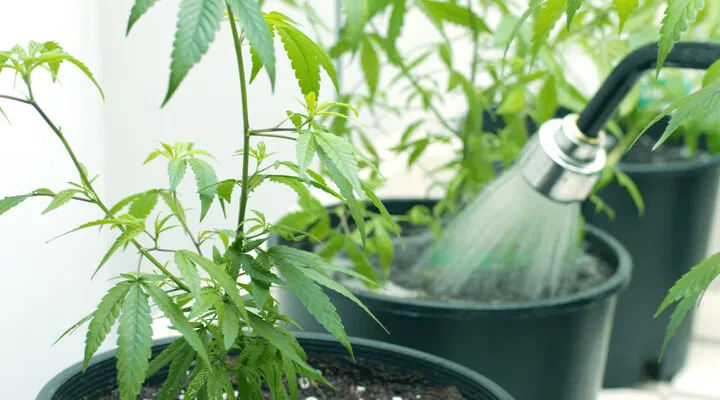
One of the areas of cannabis cultivation that is consistently overlooked is the watering schedule. Frequencies of watering, amount of water per shot, time of day, and the level of pot drying before the next watering are all variables that, when dialled in, can result in a monster of a plant. This will be even more compounded in a 16 oz cup, where the root mass will indeed dominate the cup’s ratio of roots to media. Keeping the plant growing above the media whilst restricting the roots will be key to this competition. Feeding is also critical here, as getting the optimal level of feed to the plant without overdoing it, and providing the best watering schedule will be paramount to the winner's success. In this case, the grower must almost force-feed the plant so that the roots are not searching and stretching for either water or nutrients. This is how a plant in a smaller pot can perform big. High levels of nutrients with the EC pushed to the max for that plant, combined with a good watering schedule to ensure no excess salt builds up and that the plant never wants for water, are the things to watch.
Training Techniques
Training techniques are well-known among growers for their significant impact on a plant's structure, size, yield, and even potency. These techniques range from high-stress methods that completely reshape the plant by prolonging the vegetative phase to more passive approaches, like the "leave it alone and let it grow method". Both strategies can yield impressive results when appropriately applied in the right setting. However, in a small 16 oz cup, it is hard to imagine the leave-it-alone method will outperform those grown by experts in plant training techniques. One of the judging criteria is based on how well the plant has been trained, which should tell entrants everything they need to know about the end of the scale they should aim for. If using photoperiod plants, executing a double topping and lower third pruning is the minimum recommended for this competition.
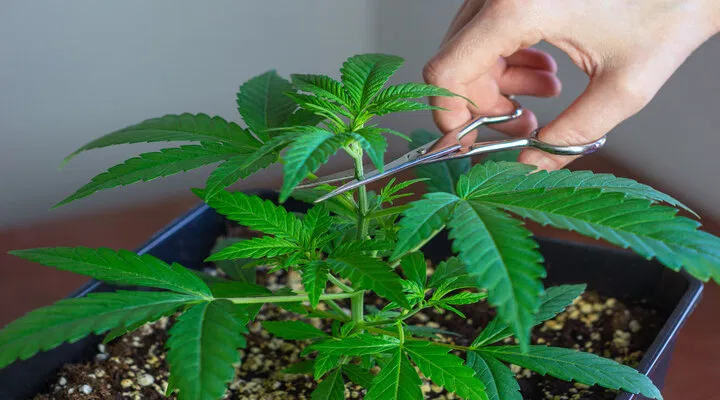
Each grower usually has their own refined skills in plant training, but be advised, don’t stray too far from your comfort zone if you have no experience in specific techniques. This is a competition; as such, entrants are up against some of the best growers. The best advice is to stick to what you know and do it to the best of your ability; this is the way to get ahead in this competition. No doubt some highly skilled individuals out there will buck the trends of their traditions and produce a monster – this is why this competition is so exciting—a chance to compare and contrast different approaches.
As the bud structure, quality of buds, and number of inferior to superior buds are measured, sacrificing the undergrowth of the plants is a must. Some of the genetic choices for this competition naturally produce continuous large colas, and if manipulated correctly, this could be the secret to success.
Root Management
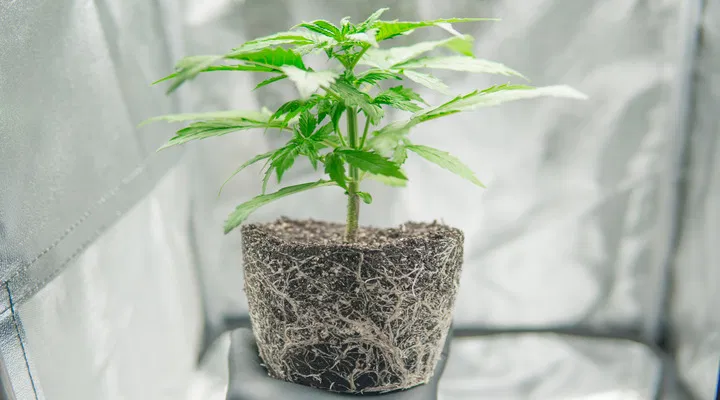
As mentioned above, managing the root systems in a small area, such as the 16 oz container, will be challenging. Root health is also a measured outcome of this competition, and if they are mistreated and turn brown, growers will be scored down. The key to healthy roots is all about water-to-air ratio, temperature balance (which is not easy in a small container), and availability of essential nutrients. One quick note on the media itself: since such a small container can only carry so much volume, using a soil-only approach is not recommended. If the competition was just as big a plant as you can grow outdoors, then soil all the way! However, the choice of media for this competition must be carefully considered with watering and nutrient delivery in mind. Once you've chosen your media, make sure you have a good buffer against the temperature of the environment. The roots will likely get warmer in a smaller container than the plant would like. Think of using a hole in the dirt to place your container or using a larger container to shelter the 16 oz’er as highly recommended to help buffer the temperature. Remember, though, that the roots cannot spill out, so if using this type of temperature control, the container must be easily and regularly removed from the hole to ensure no roots extend beyond the container.
Conclusion
Successfully growing a $5000 cannabis plant in a 16oz cup will rely on a tight plan and execution. By choosing the right type of genetic, autoflowering or photoperiod, a grower can optimize their approach. A crucial part of this process is the precise control of feeding and watering. The correct regimes must be finely tuned to meet the plant's needs without overwhelming the limited root space. Optimal nutrient delivery and a well-timed watering schedule are paramount to support healthy growth without causing nutrient excess or deficiency. Training techniques such as topping and pruning are essential to optimize the outcomes, which can significantly impact yield and overall plant health. Careful attention to these details will enhance the plant's ability to thrive in a competitive setting and maximize its potential yield and quality, which is crucial for clinching the top prize in this challenging grow-off competition.