

The age-old query, "What's the difference between indica and sativa?" is still perhaps the one most persistently asked by newcomers to cannabis. To simplify things, we’ll use this article as a brief guide to demystify the key nuances between these two distinct cannabis varieties, from their geographic origins to their physiological traits, growing habits, and effects.
For a deeper and much more comprehensive overview of Indica and Sativa historically, this superb article is highly recommended.
Indica Vs Sativa – An Important Caveat
While it’s true there are some apparent differences between the two, it’s important to recognize that in the modern arena, many strains of cannabis are hybrids and, as such, may display characteristics of both indica and sativa at the same time. But when it comes to pure indica and pure sativa, there are things that set the two apart, making identification relatively simple.
It’s important to be aware that cannabis can be classified into three different types: Cannabis Indica, Cannabis Sativa, and Cannabis Ruderalis. Ruderalis – a wild species of cannabis found growing in Russia and a vital component of autoflowering cannabis strains, was the last classification to be awarded, over 150 years after Indica and Sativa. We’ll cover Ruderalis later, but let’s take the magnifying glass to Indica and Sativa for now.
Cannabis Indica
Geographic Origins: Indica strains trace their roots to the mountainous regions of Afghanistan, Pakistan, and India. These plants evolved to thrive in cooler temperatures and shorter growing seasons by finishing faster, hence shorter flowering times, adapting to the challenging conditions and harsher climates of their native habitats.
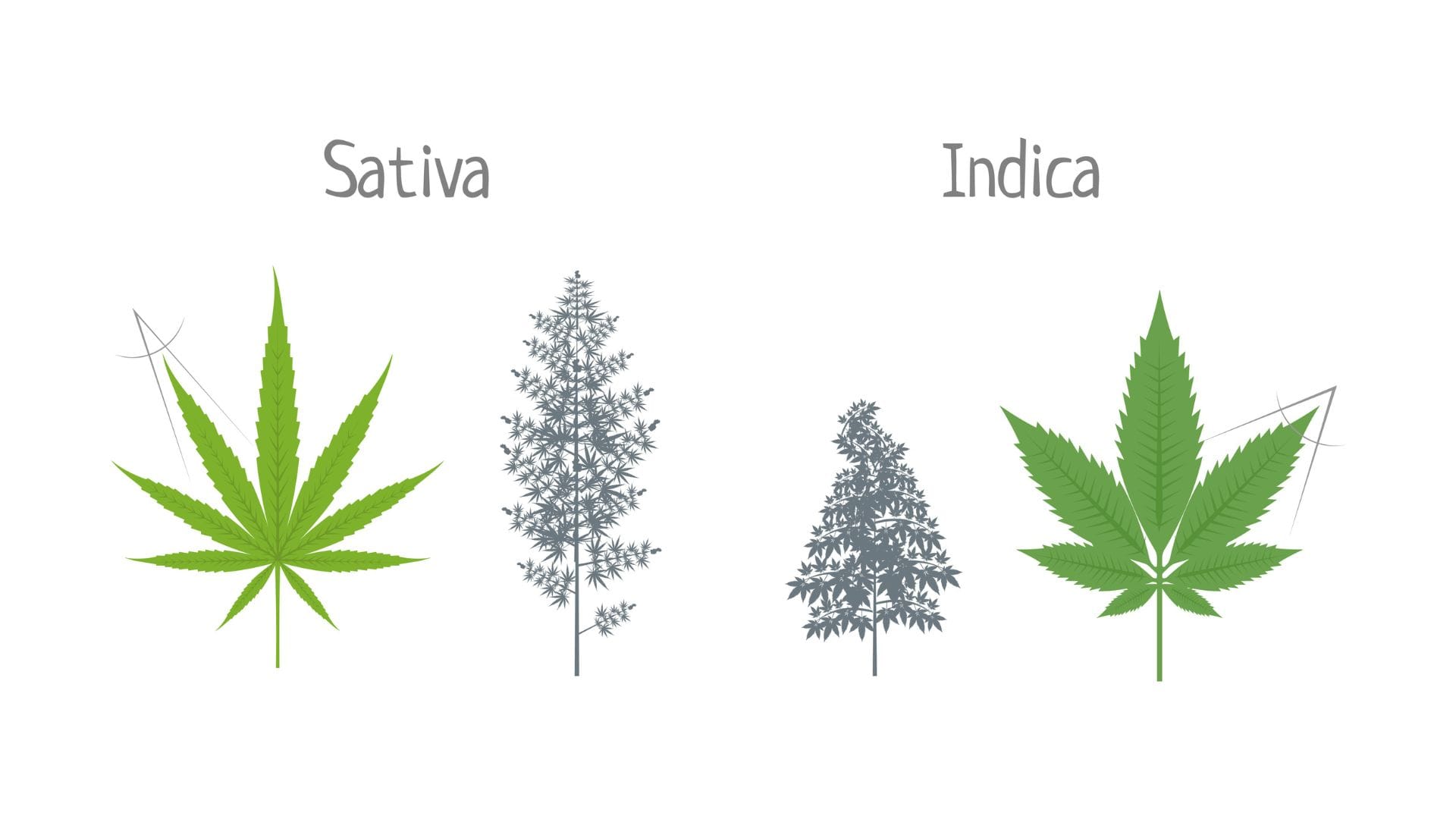
Physiology and Leaf Structure: The appearance of a cannabis plant will ordinarily provide some clues as to which species it is. For example, Indica plants are usually characterized by their compact stature and bushy appearance. These plants are often described as having a conical or Christmas-tree shape. The fan leaves of an Indica tend to be broad. The leaves are typically dark green and possess a distinct, deep-seated structure. This adaptation allows them to absorb light efficiently in their natural, often shaded, environments.


Growing Habits and Mold Resistance: Indica strains tend to be more resilient against molds due to their dense structure, which reduces airflow. However, this density can also pose challenges, hindering proper ventilation. Cultivators must carefully manage humidity levels to prevent mold growth, especially during flowering.
Cultivation Characteristics: Indicas are favored for their shorter flowering times, making them a preferred choice for indoor cultivation. They are known for their manageable height, making them suitable for discreet or confined spaces. Additionally, Indicas are well-suited for hydroponic systems, thriving in controlled environments.
Nutrient Requirements and Weather Tolerance: Indicas generally have modest nutrient requirements and can tolerate cooler temperatures. They are well-adapted to climates with short summers and early frosts. However, these plants may be less forgiving of nutrient imbalances and often require vigilant cultivation practices.
Common Effects: Indica strains are renowned for their relaxing effects. Users often experience a soothing body high coupled with a profound sedative effect, making Indicas ideal for nighttime use. The calming effects of indicas have earned them a reputation for aiding in relaxation, stress relief, and sleep. Medically speaking, Indica cannabis strains can be used to treat numerous conditions and are popular in chronic pain relief and helping with insomnia. However, these vary depending on the terpene profile and cannabinoid content of the individual strain.
Cannabis Sativa
Geographic Origins: Sativa strains originate from warmer climates, with their roots in equatorial regions like Southeast Asia, Central America, and Africa. These plants have adapted to longer growing seasons, abundant sunlight, and higher temperatures. Their height, greater internodal spacing, and airier, wispier buds make it easier for them to survive in higher humidity.
Physiology and Leaf Structure: Sativa plants are characterized by their towering height and slender stature. The leaf structure of a Sativa is likely to be longer, with spindly fingers. The leaves are typically a little lighter in color and have a more scattered arrangement, allowing them to capture sunlight in their native open environments effectively.
Growing Habits and Challenges: Sativas require more patience during cultivation, as they often have longer flowering times than indicas. Their towering height can pose challenges, especially for indoor growers with limited vertical space. Sativas are prone to immense stretching, and managing their size is crucial for successful cultivation. This can be achieved through various techniques, such as topping. They are commonly grown outdoors in sunnier climates like California, where they can stretch to impressive heights.
Cultivation Characteristics: Sativas flourish in outdoor settings with ample sunlight, making them well-suited for regions with a tropical or subtropical climate. Their tendency to thrive in open spaces makes them less ideal for indoor cultivation unless growers can accommodate their height and extended flowering times.
Nutrient Requirements and Weather Tolerance: Sativas generally have higher nutrient requirements, reflecting their robust growth. They prefer warmer temperatures and can tolerate high humidity levels due to their more open structure and lighter, airier buds. Growers should be mindful of providing adequate support for the plants' height in the form of stakes or similar and maintaining optimal conditions for their prolonged flowering period.

Common Effects: Sativa strains are renowned for their energizing and uplifting effects. Users often experience a cerebral head high that sparks creativity and promotes sociability. Sativas are preferred for daytime use, as they tend to enhance focus and motivation without inducing the type of sedation an Indica cannabis would provide. Medically, sativa or sativa-dominant strains are popular in dispensaries with those suffering from mood-related issues such as anxiety and depression.
An Important Note On Effects
Despite a near-unanimous consensus from the pot-puffing community that Indicas bear relaxing effects and Sativas are the go-to for uplifting effects, some members of the cannabis scientific community have cast doubt on whether the type of cannabis guarantees different effects. Dr Ethan Russo, one of the world’s foremost cannabis writers and researchers and Director of Research and Development for the International Cannabis and Cannabinoids Institute, suggests that the labels ‘Indica’ and ‘Sativa’ tell us little about the chemicals in the plant and as such, cannot accurately predict the effects of cannabis. There’s truth to this, of course, as the entourage effect of terpenes in cannabis, along with the THC content, will undoubtedly have a bearing on the psychoactive effects and therapeutic effects of specific strains.
The Rise Of Hybrid Strains
Cannabis has come a long way in a reasonably short time, with modern breeding techniques driving change and innovation. Due to crossbreeding, hybrid strains have become increasingly prevalent. Most cannabis varieties available today are hybrids, combining elements of both Indica and Sativa plants. While some hybrids may display a dominant influence of one variety, different strains will often exhibit a blend of characteristics from both, offering diverse effects, flavors, and aromas.

Conclusion
Understanding the differences between Indica and Sativa varieties is crucial for selecting a cannabis strain that aligns with individual preferences and needs. Whether seeking relaxation or an energy boost, the diverse world of cannabis has something to offer for everyone. As you navigate this green landscape, it's really cool to appreciate each strain's unique traits and enjoy the rich tapestry of effects they provide. Cheers to the diverse and fascinating world of cannabis!