
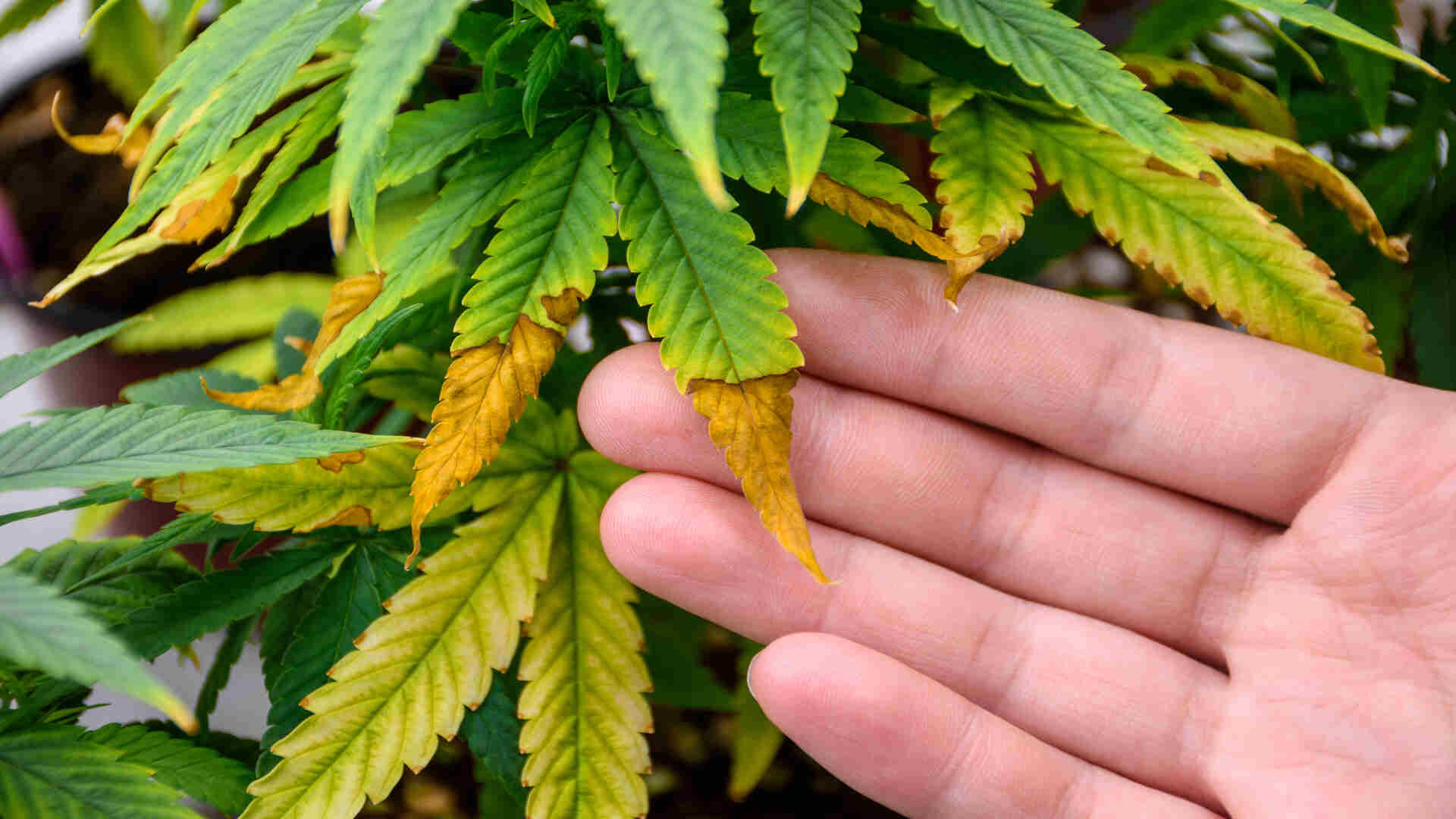

Noticing issues with your cannabis leaves? Identifying the cause of cannabis leaf problems like yellowing, browning, curling, or wilting is essential for saving your plants. This guide covers common issues and their solutions to help you maintain a healthy crop.
Key Takeaways
- Identifying symptoms like yellowing, browning, wilting, and curling of cannabis leaves is crucial for diagnosing plant health issues early on.
- Nutrient deficiencies and environmental stressors, such as overwatering and light exposure, can lead to common leaf problems in cannabis, so maintaining balanced nutrients and optimal conditions is essential.
- Regular inspections and monitoring for pests and diseases, along with practicing proper watering and pH management, are key preventive measures to ensure healthy cannabis crops.
Identifying Common Cannabis Leaf Problems

A close-up of a cannabis plant showing various leaf problems
Before cannabis leaves serve as reliable indicators of a plant's health, recognizing their symptoms as early as possible allows for timely action to prevent further damage. Common symptoms that cannabis leaves may exhibit include yellowing, browning, wilting, curling, and spots.
After: Common symptoms that cannabis leaves may exhibit include:
- Yellowing
- Browning
- Wilting
- Curling
- Spots
Recognizing these symptoms allows for timely action to prevent further damage.
Regular inspection for abnormalities is essential for cannabis growers. Identifying specific signs displayed by the leaves is the first step in diagnosing issues. Common symptoms and their indications of plant health are discussed below.
Yellowing Leaves
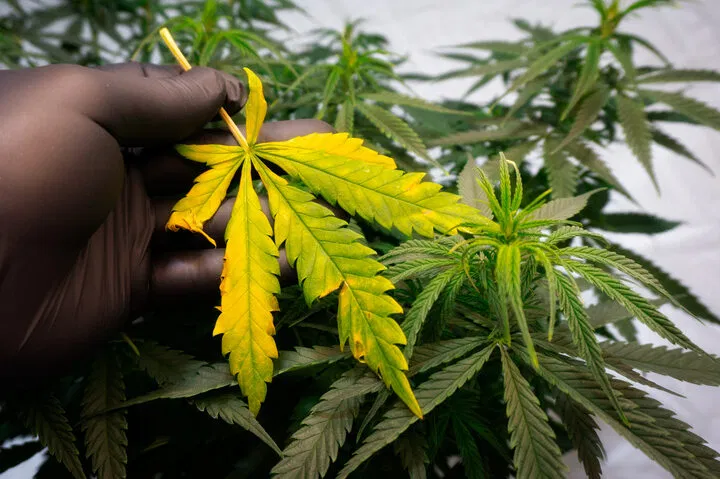
The emergence of yellow leaves on cannabis plants is frequently a sign of various potential issues, such as nutrient deficiencies or exposure to environmental stress. For example, when experiencing nitrogen deficiency, the older lower leaves often turn yellow first. In contrast, with iron deficiencies, there’s typically a pattern of yellowing between the veins primarily seen in younger foliage. Additional signs like drooping and shedding leaves might also point towards an issue known as nutrient lockout.
A lack of potassium may manifest through discoloration occurring between leaf margins while inviting rust-colored spots around these edges too. Diagnosing this problem can be challenging because many nutrient deficiencies share similar symptoms that lead to leaf discoloration. It’s crucial to assess both individual leaves and overall plant structure thoroughly for accurate diagnosis.
Plants impacted by diseases or pest infestations could likewise present with yellow foliage. A meticulous examination covering every part of each leaf alongside other segments is essential for detecting invaders like pests or disease agents. Damage from pests such as leaf miners can cause misshapen foliage which impacts yield adversely—a foliar spray applied early sometimes offers relief though addressing the primary source remains imperative for lasting recovery.
Quick recognition and management are key in halting progressive severe yellowing that ultimately hampers yield output significantly—successful cultivation and health maintenance within a cannabis garden depend heavily upon continuous scrutiny along with swift measures taken at any distress signals’ onset.
Brown or Crispy Leaf Tips
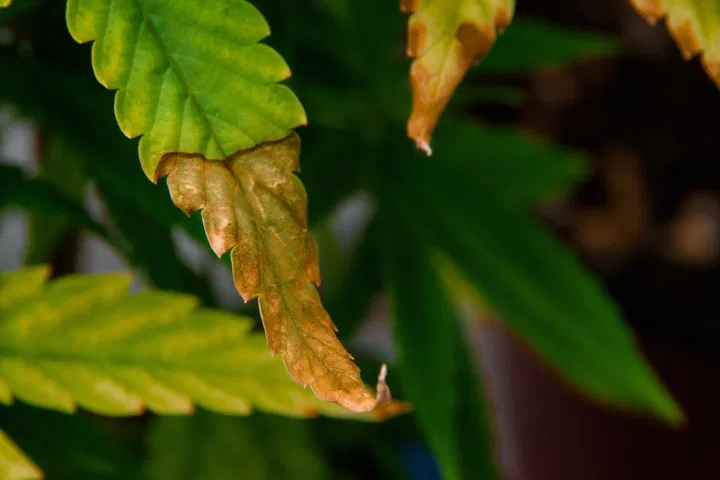
Crispy or browned leaf tips on cannabis plants often indicate nutrient burn, typically resulting from too much fertilizer. Such over-fertilization can cause the leaves’ edges to appear brown and brittle, hindering their growth. To address this issue, refrain from fertilizing and rinse the growing medium with water that has a balanced pH level.
A potassium shortage might manifest in similar ways by producing burnt-looking edges on foliage. Other environmental factors like excessive heat or insufficient humidity could also lead to comparable symptoms that negatively impact the plant’s well-being and development. Pinpointing the precise problem is essential for implementing proper corrective measures.
Maintaining healthy foliage free of crispiness or browning involves careful management of nutrients and creating an ideal environment for your plants. Regularly inspect each part of the plant structure along with every individual leaf for signs indicating stress issues so you can promptly fine-tune your cultivation methods as needed.
Wilting Leaves

Wilting leaves are often a symptom of trouble in cannabis plants and signify that immediate attention is needed to address potential problems. The sagging and drooping of leaves frequently stem from overwatering, while insufficient watering can lead to their becoming brittle, dry, and possibly cracked. These conditions could significantly hinder the plant’s health and its ability to take up nutrients.
To avoid wilting leaves, those cultivating cannabis must adhere to an appropriate irrigation schedule. Utilizing tools like moisture meters allows growers to accurately assess when it’s time for watering, ensuring the plants get enough water and make sure a little excess drains out containers. Optimal times for watering are early morning and the plant will use most of the water during the day. Or water late in the day if substrate does not stay too wet.
Vigilant observation along with adaptation in how one waters based on what the plant demands can stave off wilting leaves while encouraging robust growth. Close scrutiny should be given not only to individual leaves but also overall plant structure for any indicators of distress so that swift remedial measures may be taken.
Leaf Curling
Cannabis plants may exhibit a taco-like leaf curling as a defense mechanism against heat stress. When subjected to overly high temperatures, the foliage bends upwards in an attempt to minimize their exposure to sunlight. To alleviate this issue and avoid curled leaves, one could move light fixtures further away and enhance air circulation around the plants.
An imbalance in pH within the growing medium is another prevalent factor contributing to leaf curling. Deviations from ideal pH values can hinder nutrient uptake by cannabis plants, prompting physical signs such as curled leaves. Continuous monitoring and adjusting soil or solution pH ensures that conditions remain favorable for vigorous plant growth.
Spots on Leaves
The appearance of spots on cannabis leaves can be symptomatic of several problems, such as deficiencies in nutrients or diseases and pests. Coppery, brownish, or yellowish spots, particularly on the upper leaves, typically suggest a deficiency in calcium. Examining the pH levels within the growing medium is an effective method to confirm if there’s a lack of calcium. To rectify this issue, one should use a fertilizer enriched with not only calcium but also magnesium and iron.
Similarly, infestations from pests like spider mites are another cause for spotting on leaves. Conducting regular checks and implementing proper control tactics are essential for preventing and addressing these complications. Utilization of foliar sprays and introducing predators that are beneficial insects offer sound strategies for managing pest outbreaks effectively.
Leaf Damage and Discoloration
Nutrient Deficiencies Affecting Cannabis Leaves
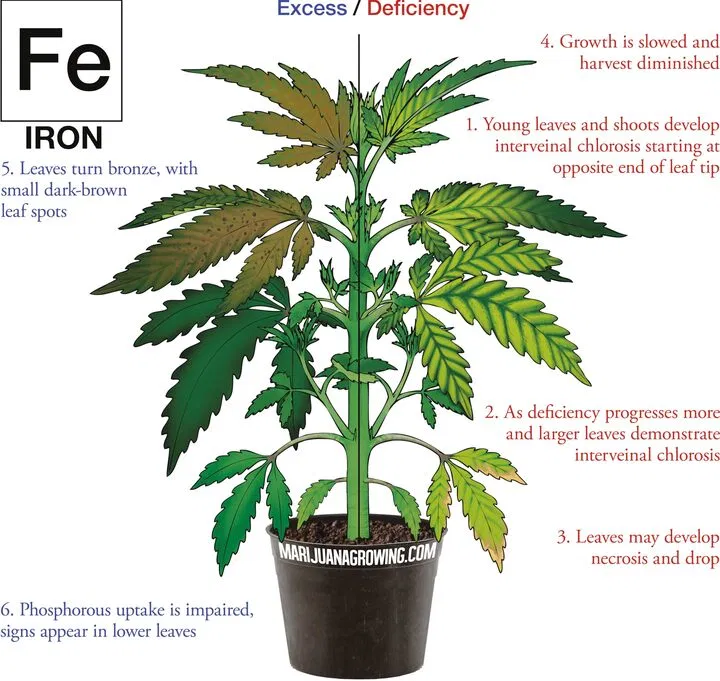
Cannabis growers often encounter nutrient deficiencies, which can cause problems such as leaves turning yellow, growth being stunted, and the development of necrotic spots. Prompt detection and correction of these deficiencies are vital for ensuring the well-being of the plants and a fruitful yield. This segment will delve into some prevalent nutrient shortages that affect cannabis leaves along with their respective treatments.
One common issue is calcium deficiency, which becomes evident when coppery brown or yellow blotches appear on the new upper leaves. This mineral is crucial for cellular formation and overall plant growth. A magnesium shortage may lead to chlorosis in lower foliage, commonly due to an excess of potassium or exposure to cold acidic soils. Meanwhile, manganese-deficient plants display a mottling pattern on fading leaves coupled with dark spots that intensify over time.
A condition where leaf veins remain green while areas between them turn yellow suggests iron deficiency—an urgent problem requiring swift intervention to prevent rapid progression. A Boron shortfall rarely occurs, but might reveal itself through discoloration and malformation in matured foliage before progressing into serious developmental complications—a scenario possibly exacerbated by insufficient iron levels.
Zinc scarcity similarly triggers leaf color along with potential delays in plant maturation without timely treatment. When sulfur is lacking, there’s also noticeable fading in vegetation accompanied at times by hardening stems—both indicative signs pointing toward profound nutritional dilemmas within the plant system.
Avoid most common micronutrient deficiencies (Iron, Magnesium and Zinc) and others too by adding Fritted Trace Elements (FTE) to your substrate or use "complete" fertilisers that contain all trace elements. Note: FTE is easy to over-apply.
Nitrogen Deficiency
A nitrogen deficiency is commonly the most frequent nutrient shortfall found in growing cannabis, often indicated by a yellowing progression beginning with the older foliage and advancing upwards. When plants are in their vegetative phase, this deficiency can be identified through paleness of leaves coupled with retarded growth. It can usually be corrected by fine-tuning nutritional inputs. A more severe nitrogen shortage will cause an obvious discoloration of leaves from their extremities inward.

Signs of lacking nitrogen include a pale green to yellow hue on the lower leaves, inhibiting the development of the plant structure, followed ultimately by leaf shedding. The symptoms start off as lightening and then move into yellowing particularly on aged foliage which eventually leads to either dead or dropped leaves if unaddressed. Administering fertilizers that are high in nitrogen content early enough supports both robust overall growth and plant vitality.
Phosphorus Deficiency
Although it’s rare in cannabis cultivation, phosphorus deficiency is often incorrectly identified because its symptoms closely resemble those of other nutrient deficiencies. Signs to watch for are the presence of purple stems, leaves taking on a bluish-green tint, and dead spots forming on them. A key initial indicator that your plants might be lacking phosphorus is when you notice a purplish color appearing in the stalks.
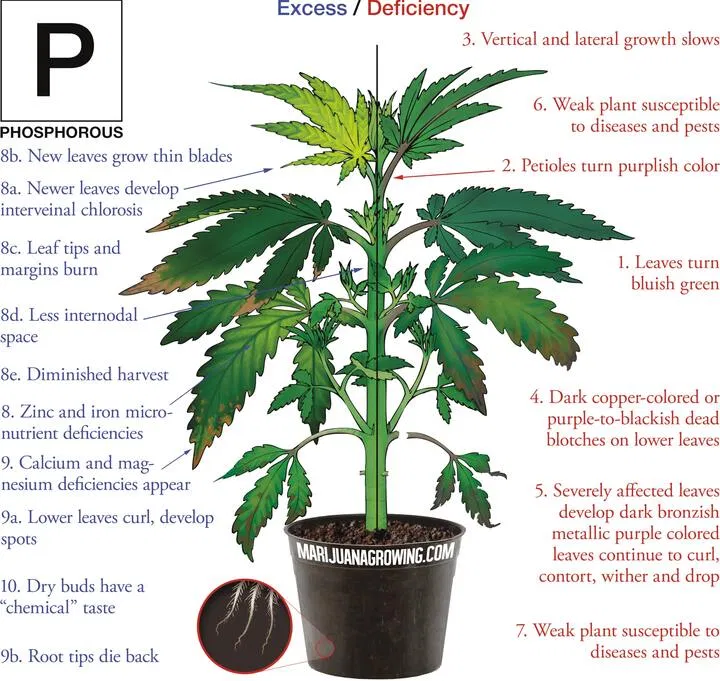
To address this issue effectively, leach the growing medium thoroughly with pure water and then introduce fertilizers high in phosphorus content. It’s also crucial to ensure that pH levels within the grow medium are properly balanced to facilitate optimal uptake of phosphorus along with other vital nutrients by your plants.
Potassium Deficiency
A deficiency in potassium is detrimental to the health and development of cannabis plants, leading to foliage damage. The indications of this issue are scorching at the leaf tips and edges, a yellow hue between the veins of leaves, along with rusty-brown, parched margins. Potassium deficiencies typically arise more often within indoor cannabis gardens compared to greenhouses and are somewhat regularly encountered outdoors.
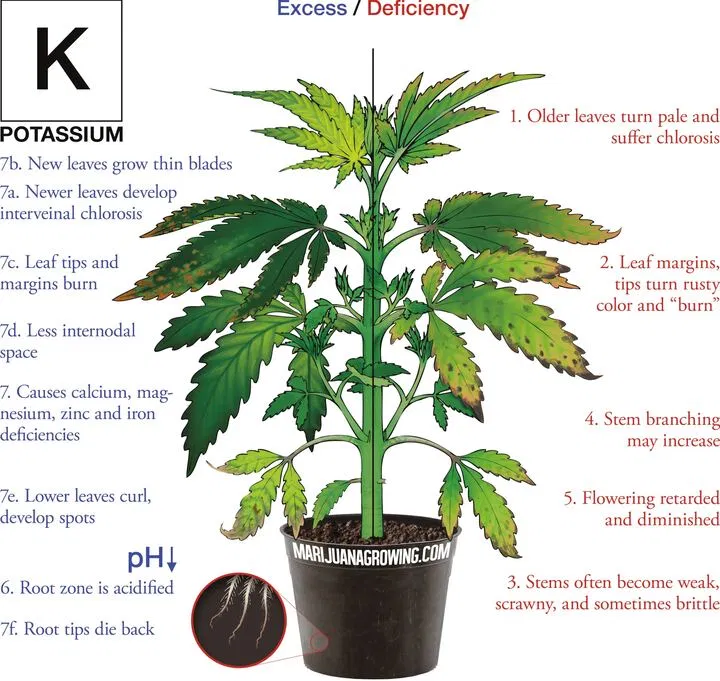
The lack of sufficient potassium manifests as discoloration on the outer parts of new leaves – including their fringes and tips – turning them a rusty brown shade accompanied by dehydration and leaf curling. Early intervention through modifying the nutrient solution while ensuring that pH levels remain optimal can aid in preserving overall plant vitality and progression.
Environmental Stressors Impacting Cannabis Leaf Health
Climatic conditions such as moisture levels, ambient temperature, and illumination significantly affect the well-being of cannabis plant foliage. Here are essential considerations.
- Elevated humidity paired with reduced air circulation can foster mold-related issues.
- It’s essential to keep humidity low during the bloom phase to avert bud decay.
- Spider mites flourish in conditions that are both warm and lacking in moisture, leading to infestations and foliage damage.
Grasping these elements enables more effective oversight of your cannabis plants’ health.
Foliage complications often originate from specific environmental or nutritional imbalances that differ across each stage of growth. Addressing these aspects can prevent typical leaf problems and promote robust growth.
Light Stress
Light stress in cannabis plants can cause yellowing leaves, rust spots, and burnt leaf tips. Symptoms usually appear first at the top of the plant, where light intensity is greatest. Excessive lighting power or incorrect light height can lead to light burn, resulting in yellow top leaves and leaf curling.
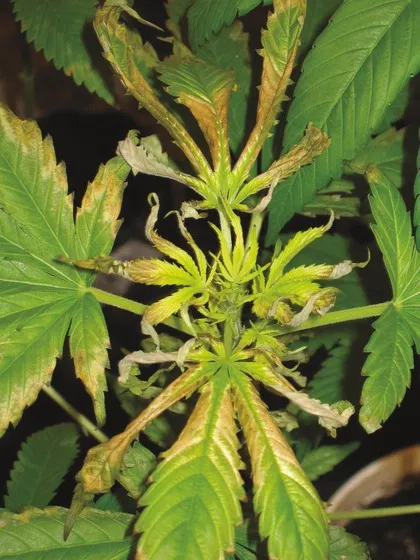
Light burn from a HID bulb
To remedy light stress, growers can lower the light intensity or move lights further away from the plants. Balancing light exposure helps maintain cannabis plant health and prevent light stress symptoms.
Temperature and Humidity
Heat stress or improper temperature and humidity can cause leaves to curl or droop. Heat stress in cannabis plants is often caused by high temperatures. Intense grow lights can also contribute to this issue. When temperatures drop below 59 °F (15 °C), cannabis leaves can curl, yellow, and develop white patches.
Humidity levels that are too low or too high can lead to yellowing, discoloration, and leaf curling. Proper climate control, ventilation, and adjusting light distance prevent heat stress and maintain healthy cannabis plants.
Overwatering and Underwatering
Excessive watering may lead to droopy leaves, which can be confused with the signs of various nutrient shortages. When cannabis plants are given too much water, they might display inhibited growth, apparent nutritional deficits, and fragile foliage. Employing a moisture meter is the best way to ensure proper soil moisture.
Establishing a regular watering routine aids in averting both overwatering and underwatering to maintain prime plant health. Optimal times for irrigating cannabis plants include early mornings or evenings.
Pests and Diseases Targeting Cannabis Leaves
The cultivation of cannabis plants can be heavily impacted by the onslaught of pests and diseases, resulting in a range of foliage issues and diminished harvests. Aphids, spider mites, thrips, and whiteflies are among the usual culprits that inflict significant harm on these crops. Fungal ailments such as those caused by Botrytis , along with viral infections, can critically affect the plant's health, which leads to subpar quality and reduced yields.
Employing neem oil as part of an effective pest management strategy is common practice alongside introducing predatory mites or utilizing biological pesticides. Conducting frequent inspections for potential pest presence coupled with deploying monitoring tools significantly improves early detection capabilities thereby preventing widespread infestation across cannabis crops.
Spider Mites
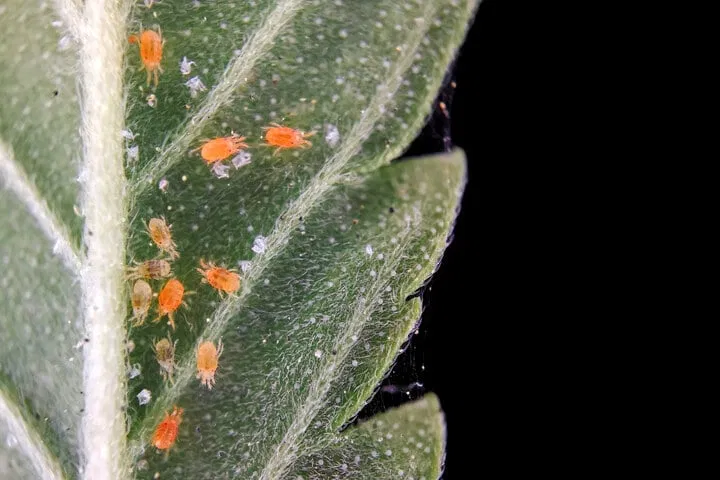
Tiny spider mites pose a significant threat to cannabis plants, draining the foliage of vital nutrients. The presence of these pests is indicated by clusters of small, pale speckles or dots on plant leaves. Advanced signs include subtle webbing and a bronzed appearance on the affected leaves. Due to their rapid reproduction rates, spider mite populations can escalate quickly if left unchecked.
To combat these invasive pests, employing biological control agents like Neoseiulus californicus and Phytoseiulus persimilis proves effective. These predatory mites specifically prey on the two-spotted spider mite (Tetranychus urticae), aiding in controlling and keeping their numbers at bay.
Aphids
Another frequent pest known to induce wilting and a yellowish hue in the foliage of cannabis plants is aphids. Among the significant types are the Cotton aphid, Potato aphid, Green peach aphid, Cannabis aphid, and Rice root aphid. These insects compromise cannabis plants by promoting stunted growth and misshapen leaves while also spreading viral illnesses.
To combat an outbreak of these pests on your plants, you can spray down afflicted areas with water or apply a concoction of neem oil blended with soapy water. Alternatively, releasing beneficial predators like ladybugs into your garden can help control their numbers. Keeping serious harm at bay from these invaders necessitates consistent vigilance as well as swift measures when needed.
Gray Mold
Gray mold (Botrytis Cinera), can turn leaves and buds hairy, dark and moldy. Overwatering, high humidity, and low airflow are common causes of mold on cannabis plants. Symptoms include hairlike mold that can turn slimy, indicating a severe infestation.
To treat mold, mist the affected areas with a mold-eliminating spray and check humidity and airflow. Upgrading the ventilation and fan system helps prevent powdery mildew. Removing infected plant material regularly helps control the spread of gray mold.
Diagnosing and Treating Leaf Problems in Different Growth Stages
It is essential to identify and address issues to ensure the wellbeing of cannabis plants. Each growth stage brings its own set of complications, which, when recognized, can be dealt with swiftly.
In this segment, we delve into prevalent problems associated with leaf stems across the seedling, vegetative, and flowering periods of cannabis cultivation as well as their respective solutions.
Seedling Stage
During the seedling stage, overwatering is common. Weak stems are the first sign of overwatering. Avoid soggy soil. Seedlings can be susceptible to nutrient deficiencies and excesses. Ensure seedlings receive balanced nutrients to prevent deficiencies and promote healthy growth.
Light burn results from excess light (hot) exposure. Symptoms include yellowing leaves near the light source and crispy tips due to excessive heat. To remedy light burn, adjust the light height and reduce exposure time.
Vegetative Stage
During the vegetative phase, cannabis plants can experience stunted growth due to pathogens including Hop latent viroid (HLVd) and Beet curly top virus. Symptoms often include distorted leaves, drooping, and a yellowing of foliage. Chlorosis is particularly telling. It begins with leaf margins turning yellow and can be a sign of either nutrient shortfalls or pathogenic invasions.
To combat these problems, applying fertilizers high in nitrogen along with providing proper water and light schedules are essential. These steps are for fast growth in cannabis plants while guarding against infections by pathogens during the vegetative stage.
Flowering Stage
During the flowering stage, bud mold (Botrytis Cinera) can pose a significant problem, frequently caused by high humidity levels and inadequate air movement. Look for discoloured flowers and wilting leaves. Dig into buds to find source of cold. Increasing air circulation around plants can decrease the of bud rot, promoting heavier buds.
Maintaining low humidity levels especially at night and ensuring proper ventilation is crucial throughout the flowering phase to guard against bud rot as well as other mood-related issues.
Preventive Measures for Healthy Cannabis Leaves
It is essential to implement preventative strategies to preserve the health of cannabis leaves and avoid typical leaf issues. The vitality of cannabis foliage and its overall growth are greatly affected by environmental conditions such as humidity, temperature, lighting, and water access.
The following segment will discuss fundamental preventive techniques that are necessary for cultivating robust cannabis crops.
Proper Watering Techniques
Correct watering practices help you avoid issues with foliage and ensure the overall health of cannabis plants. The rule of thumb is to irrigate containers when the soil is dry about an inch below the surface. Excessive watering could result in root rot, stemming from disease-causing organisms living in oversaturated soils or tainted feeding solutions. Containers that provide ample drainage can help prevent soggy soil.
A regular irrigation schedule, and letting up to 10% runoff water, keeps plants happy and healthy.
Maintaining Optimal pH Levels
Maintaining the correct pH balance is essential for ensuring that nutrients are readily available to cannabis plants and to promote their general well-being. The recommended pH level for a cannabis plant’s in hydroponics is 5.5-6.5, with an optimal range of about 6 to 6.5 necessary for soil-grown plants. When the pH climbs too high or drops too low, essential nutrients become difficult or impossible for the plants to absorb.
Test the pH regularly to ensure that this vital pH range stays consistent in a cannabis cultivation environment. An electronic pH meter is much more convenient and results are easier to read than reagent test kits.
Regular Scouting and Monitoring
Integrated pest management for cannabis growers is heavily dependent on consistent scouting activities. Successful pest management hinges upon diligent monitoring, including simple visual examination, hand-held microscope, traps or even remote sensors and analysing digital images. Sticky traps serve a dual purpose. They not only ensnare pests, but also assist in determining which species are present.
Conducting regular checks to spot pests and diseases at an early stage greatly improves the likelihood of curbing infestations and averting extensive harm to cannabis crops.
Summary
Ensuring the vitality of cannabis leaves is crucial for achieving a fruitful yield. Recognizing and tackling issues such as nutrient deficiencies, controlling environmental factors, and safeguarding against pests and diseases are all important steps in fostering robust plant growth. Swift identification and immediate intervention are essential to averting significant harm to the cannabis crop.
Adopting preventative strategies like correct irrigation practices, sustaining ideal pH balances, and continuous observation can aid in upholding plant well-being while staving off typical leaf complications. Adhering to the advice outlined in this guide will enable cannabis growers to cultivate stronger plants with more vigor leading to an abundant harvest.
Frequently Asked Questions
What do overwatered cannabis leaves look like?
Overwatered cannabis leaves look droopy and limp, lacking the firmness they normally have. This happens because the excess water makes them too heavy for the plant to support.
What are the symptoms of cannabis leaf disease?
If you’re noticing dry, brown tips and edges on your cannabis leaves that are curling or twisting, that’s a sign of disease.
As it worsens, look out for necrotic spots and leaf drop, which indicate a serious issue.
What causes yellow leaves in cannabis plants?
Yellow leaves in cannabis plants are often a sign of nutrient deficiencies, especially nitrogen or iron, along with environmental issues like improper watering or light exposure.
It’s essential to check these factors to keep your plant healthy!
What are the signs of spider mite infestation on cannabis leaves?
If you notice tiny light-colored speckles, faint webbing, or bronzing on your cannabis leaves, you might be dealing with spider mites.
Keep an eye out for these signs to catch the problem early!
How can I maintain optimal pH levels for cannabis growth?
To keep your cannabis thriving, regularly test the pH of your soil and water, aiming for a range of 5.5 to 6.5.
This ensures optimal nutrient absorption and healthy growth.