The health and vigor of cannabis plants is essential for executing the 'golden ticket' of cultivation… that is, the perfect grow. One of the most common and visually striking issues that cannabis growers encounter is the appearance of spots, specks and dots on cannabis leaves. These can collectively be called lesions and can range in size, shape, frequency and color. They can be indicative of a variety of underlying problems affecting your plants. Understanding what these lesions are, and more importantly, what causes them is crucial for producing quality cannabis products. Here, we explore the issue in a slightly unusual way by discussing the ambiguity, especially in real-world applications, rather than what is perfect in a textbook example. This is a comprehensive guide, so get comfortable, and don't forget to bookmark this page for future reference!
Whether you're a novice grower or a seasoned expert, this knowledge can help you mitigate, limit and even reverse issues that cause symptoms like spots on leaves. It's worth highlighting that nutrient deficiency symptoms, much like those associated with pests and diseases, can evolve. This evolution encompasses changes in appearance, variations in severity, and the specific plant tissues affected.
Spot The Spots On That Pot!
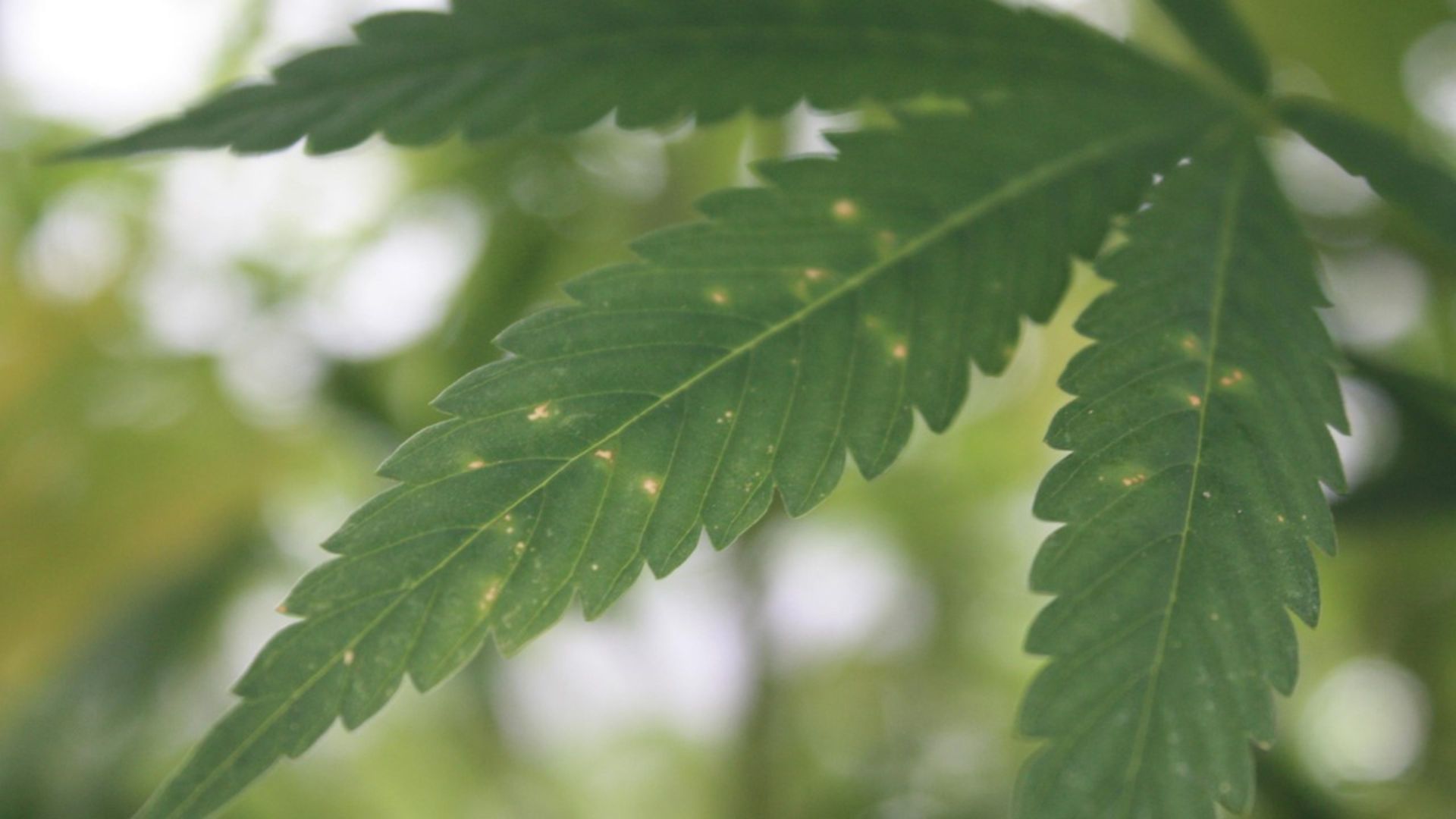
The lesions on a leaf are significant for identifying the cause of the issue. Not only can they vary in their frequency of occurrence, but also in their appearance, which can significantly differ in several ways. For example, in terms of size, these lesions can range from pinprick size to covering entire leaves, and this difference could even be the same issue but at different stages. Whether tiny or large, the size can be the first clue of what you are dealing with, as the variance in size often plays a crucial role in the early detection and monitoring of the plant's health.
Additionally, the shape of these lesions is another variable. They can be circular, which might suggest a particular issue, or they may take a more irregular form, indicating a different cause. The coloration of these lesions further adds to their diagnostic complexity, as they can display a spectrum of colors including yellow, brown, black, orange, purple and sometimes even white or grey. Each hue and pattern can be a vital clue about the plant's condition, although deciphering these signs accurately requires some experience and knowledge. As mentioned, the frequency of these lesions also varies widely; some plants may show only a few isolated spots, whereas others might have leaves extensively covered with these markings. These are all valuable clues to what the causative agent is.
These variations make lesions a critical indicator of plant health assessment in cannabis cultivation.
So Many Crossover Symptoms
Troubleshooting problems with cannabis plants based on leaf symptoms can be challenging, mainly due to the subtle differences and apparent similarities in symptoms caused by various stressors. For inexperienced growers, this crossover of symptoms can lead to confusion and misdiagnosis. A classic example is the symptom of 'yellowing', for instance. This is a common sign in several conditions like nutrient deficiencies (nitrogen, magnesium, iron), pest infestations, and over-watering. However, the key to differentiating lies in observing other signs, for example, the pattern and progression of yellowing. Take nitrogen deficiency, for instance. It typically starts with yellowing at the lower leaves, whereas iron deficiency shows yellowing on newer, upper leaves.
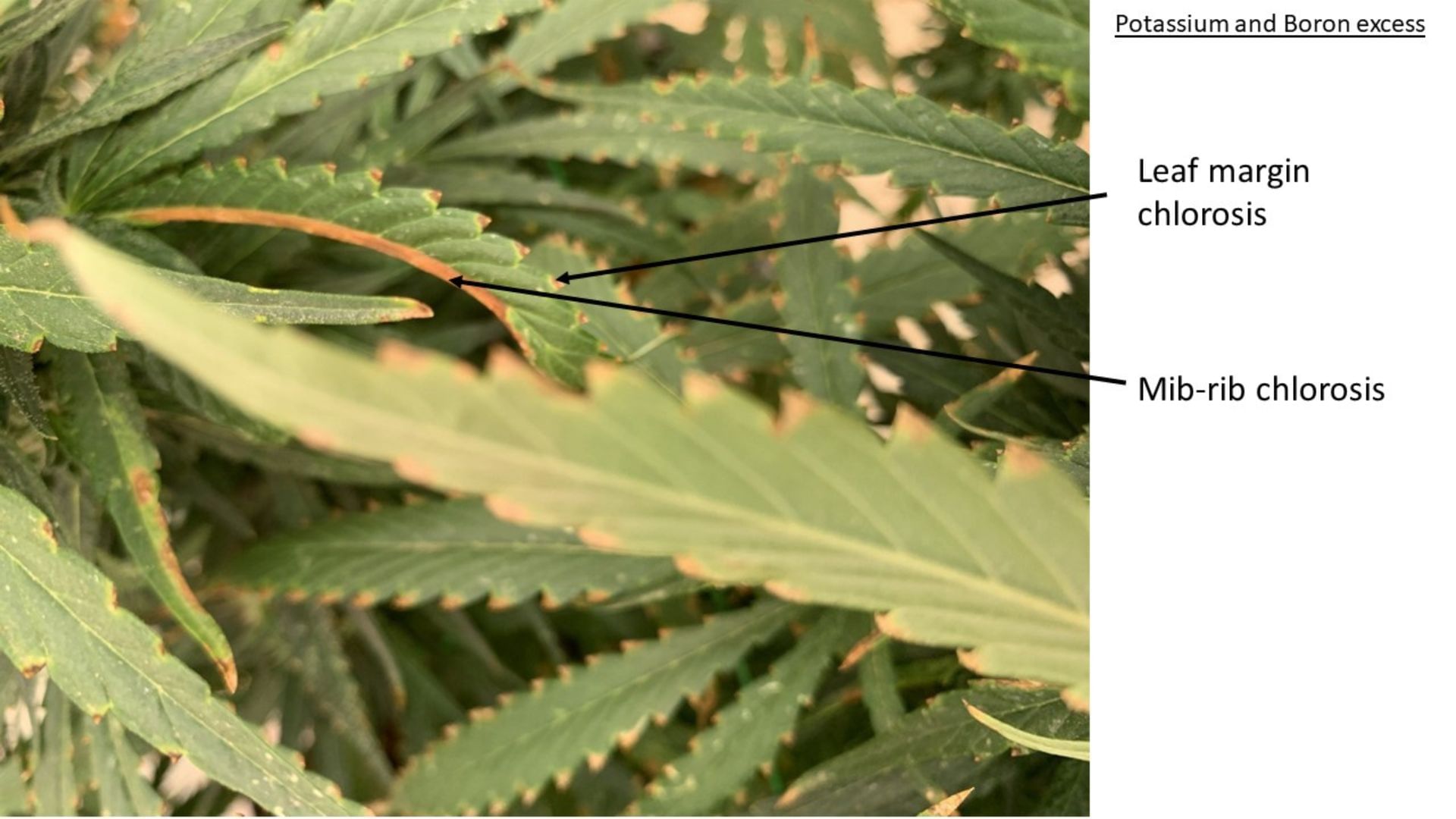
Similarly, overwatering leads to a more uniform yellowing, often coupled with drooping. So, if you have yellowing on the leaves, note what is happening exactly and where. Yellowing is generally caused by the loss of chlorophyll, a pigment crucial for harvesting light for photosynthesis. Therefore, this symptom can and will appear in the majority of cases where chlorosis occurs. Chlorosis in plants often occurs as a result of the plant's physiological adjustments in response to various stressors. This can include reallocating resources to more vital functions or parts when under stress, leading to a reduction in chlorophyll production in certain leaves. Hence, the ubiquitous nature of yellowing as a symptom across a wide range of stress conditions.
Necrotic spots are another symptom that manifests across various problems. These dead, brown, or burnt-looking spots can indicate nutrient excesses, fungal infections, or pest damage. The distinction often lies in the accompanying symptoms and the location of spots on the plant. Nutrient excess (often called nutrient burn) usually starts at the tips and edges of the leaves, whereas fungal infections might show a pattern of spots. Necrotic spots caused by fungal infections might have a distinct pattern or texture, like concentric rings or a powdery or fuzzy appearance. Small, water-soaked spots that gradually turn brown or black and might be surrounded by a yellow halo are generally caused by bacterial infections, such as bacterial leaf spot. Randomly distributed dry, brown, or black spots are caused by environmental stressors like extreme temperatures or very high light intensity. Bear in mind that a combination of stressors can cause a combination of symptoms; this makes it increasingly difficult to analyze the leaf.
Programmed Cell Death
The hypersensitive response is a plant mechanism that results in a coordinated 'cell death'. It is a complex and fascinating part of plant immune response that can lead to the formation of necrotic spots on leaves. This response is an intentional and controlled process where a plant "sacrifices" certain cells to combat the spread of pathogens. When a pathogen invades, the plant detects this threat and triggers localized cell death around the site of infection. This strategy acts like a quarantine measure at a microscopic level, aimed at containing the pathogen's need for living tissue to spread, limiting the infection area and preventing its spread throughout the plant.
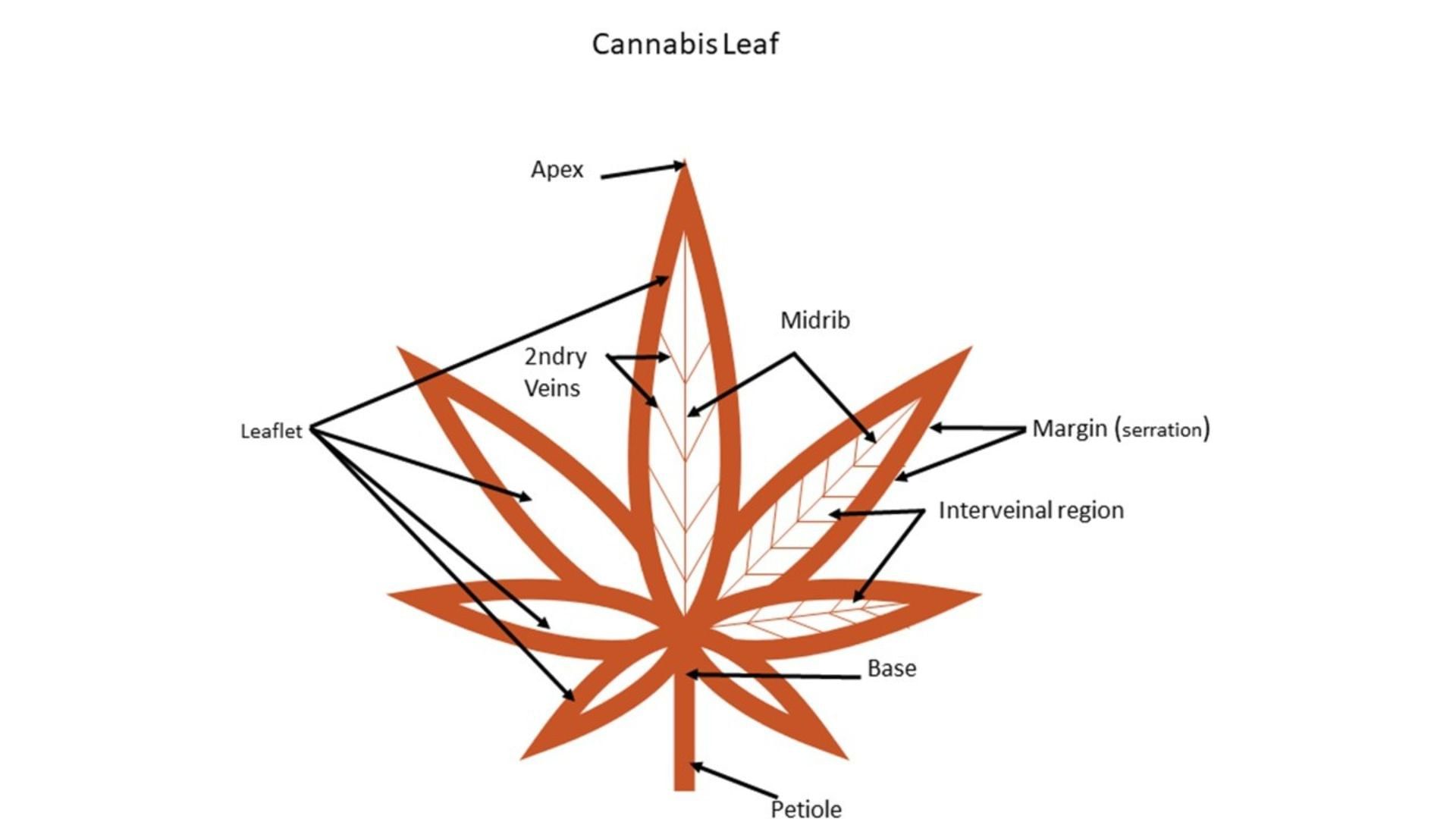
The appearance of necrotic spots due to this hypersensitive response can be pretty distinctive. Typically, these spots represent the areas where the plant cells have died, often at the site of infection. They are often small and well-defined, indicative of the plant's effort to localize and limit the damage. This is in contrast to more widespread necrosis, which might occur due to other stressors or diseases that affect larger areas of tissue and often multiple leaves.
The benefit of the hypersensitive response is significant. By isolating and dealing with the pathogen in a confined space, the plant effectively limits the overall impact of the infection. This ability to isolate and respond to pathogenic threats is critical to a plant's immune system. It shows an advanced level of biological defense, allowing the rest of the plant to continue thriving despite the localized damage. Such responses are key to the survival and resilience of plants in the face of various biological threats.
Identifying The Problem
One of the best approaches for inexperienced growers is to document the plant's conditions and changes thoroughly. Keeping a growth journal with notes on watering, feeding, light exposure, and any plant environment changes can be invaluable. Additionally, understanding the life cycle of the cannabis plant and the typical nutrient needs at each stage can provide important context for interpreting symptoms. It's also beneficial to consult with more experienced growers or seek advice from reputable sources. Often, the integration of observational skills with a solid understanding of cannabis botany and environmental factors can lead to more accurate diagnoses and healthier plants. While the similarities in symptoms can be misleading, careful observation, understanding the context, and seeking experienced guidance can significantly aid in correctly identifying and addressing issues with cannabis plants.
Issues With Nutrients
One area that has received relatively limited attention in academic research pertains to nutrient levels within the different tissues of the growing cannabis plant. While many crop plants have undergone comprehensive analyses to ascertain precise nutrient content at each life cycle stage, often down to specific tissues, this is not comprehensively documented in cannabis. Although there exists a methodology that can be applied for cannabis tissue analysis, it has been done mainly in varieties classed as hemp. Modern times have increased the amount of analysis, and results are varied. Identifying nutrient issues is difficult for many reasons, and some varieties might respond differently from others partly due to the plant's genetics, i.e., internal stress response mechanisms. The following information uses a wide brush approach for general breakdown of symptoms on leaves caused by nutrient imbalance:
Nutrient Deficiency Leaf Symptoms
Nitrogen Deficiency: Yellowing of lower leaves at the tips creates a characteristic "V"-shaped pattern on the leaf edges.
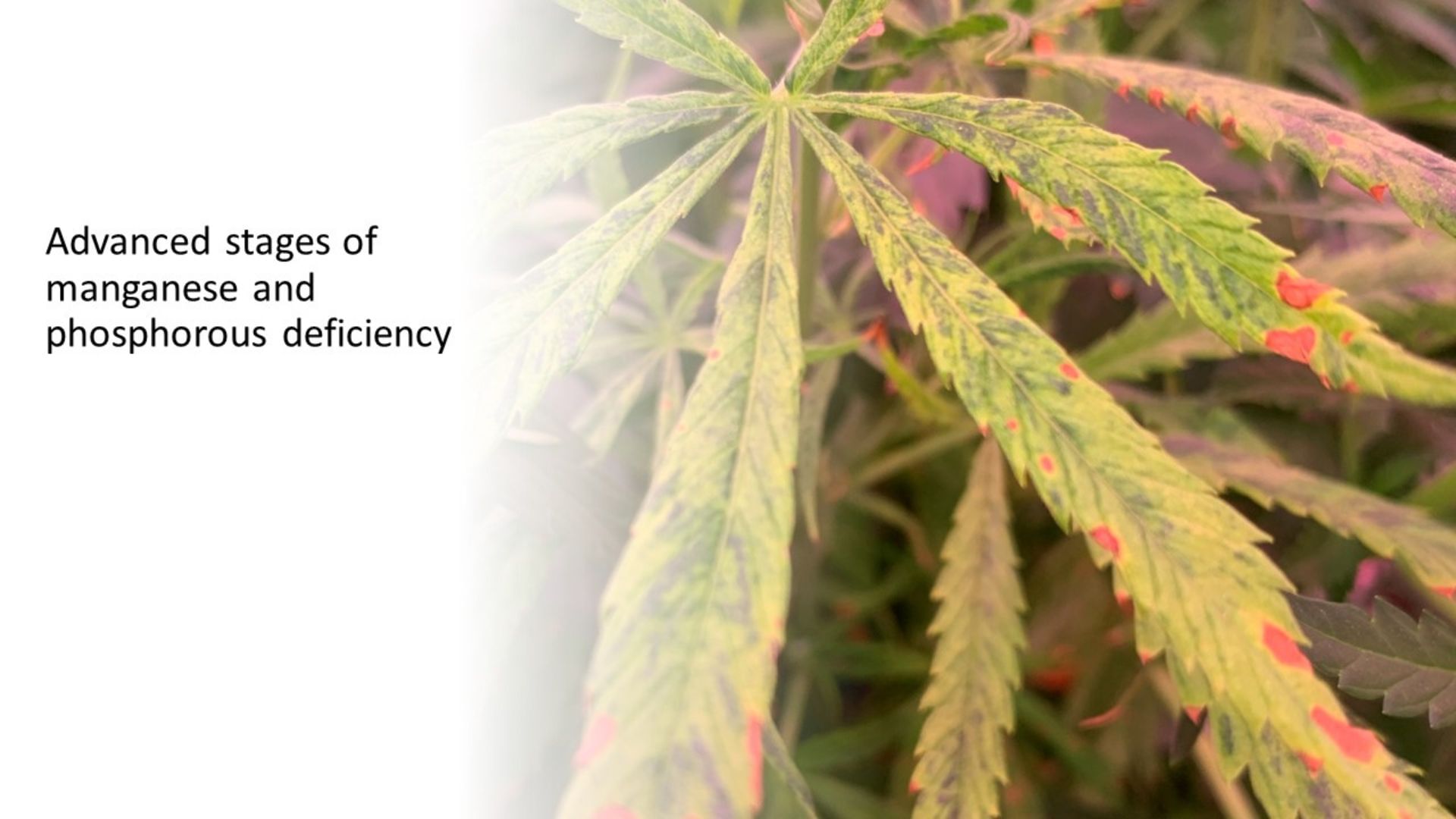
Phosphorus Deficiency: Dark green leaves with a purplish tint, stunted growth, and dark purple spots.
Potassium Deficiency: Yellowing and browning of leaf edges, followed by necrotic spots.
Magnesium Deficiency: Interveinal chlorosis (yellowing) starting from the leaf edges, while veins remain green.
Manganese Deficiency: Yellowing of the interveinal regions on upper leaves and crosshatch patterning, progressing to brown spots on leaf margins in advanced stages.
Boron Deficiency: Early stunted growth and unusual shapes in new leaves, progressing to curled margins and necrotic browning, leading to dying growth tips and significantly reduced biomass.
Copper Deficiency: Chlorosis and yellowing at the leaflet base, followed by narrowing basal leaflets, distortion, necrosis on margins, and downward curling of leaflet edges, leading to significant biomass loss.
Iron Deficiency: Starts lighter green, predominantly on the growing tips and new leaves, mainly affecting the upper foliage, yellowing in the interveinal regions of the upper half of the plant.
Nutrient Excess Leaf Symptoms
Nitrogen Excess: Dark green, lush foliage, with leaves curling downward and tips turning brown.
Phosphorus Excess: Dark green leaves, often with burnt leaf tips, especially in older leaves and reduced overall growth.
Potassium Excess: Dark green leaves with yellowing or burning at the leaf margins.
Magnesium Excess: Reduction in calcium uptake, resulting in symptoms like leaf tip burn, leaf curling or cupping, and interveinal chlorosis, particularly in the older leaves.
Manganese Excess: Darker green foliage and may cause iron deficiency symptoms due to antagonistic interactions, often visible as interveinal chlorosis.
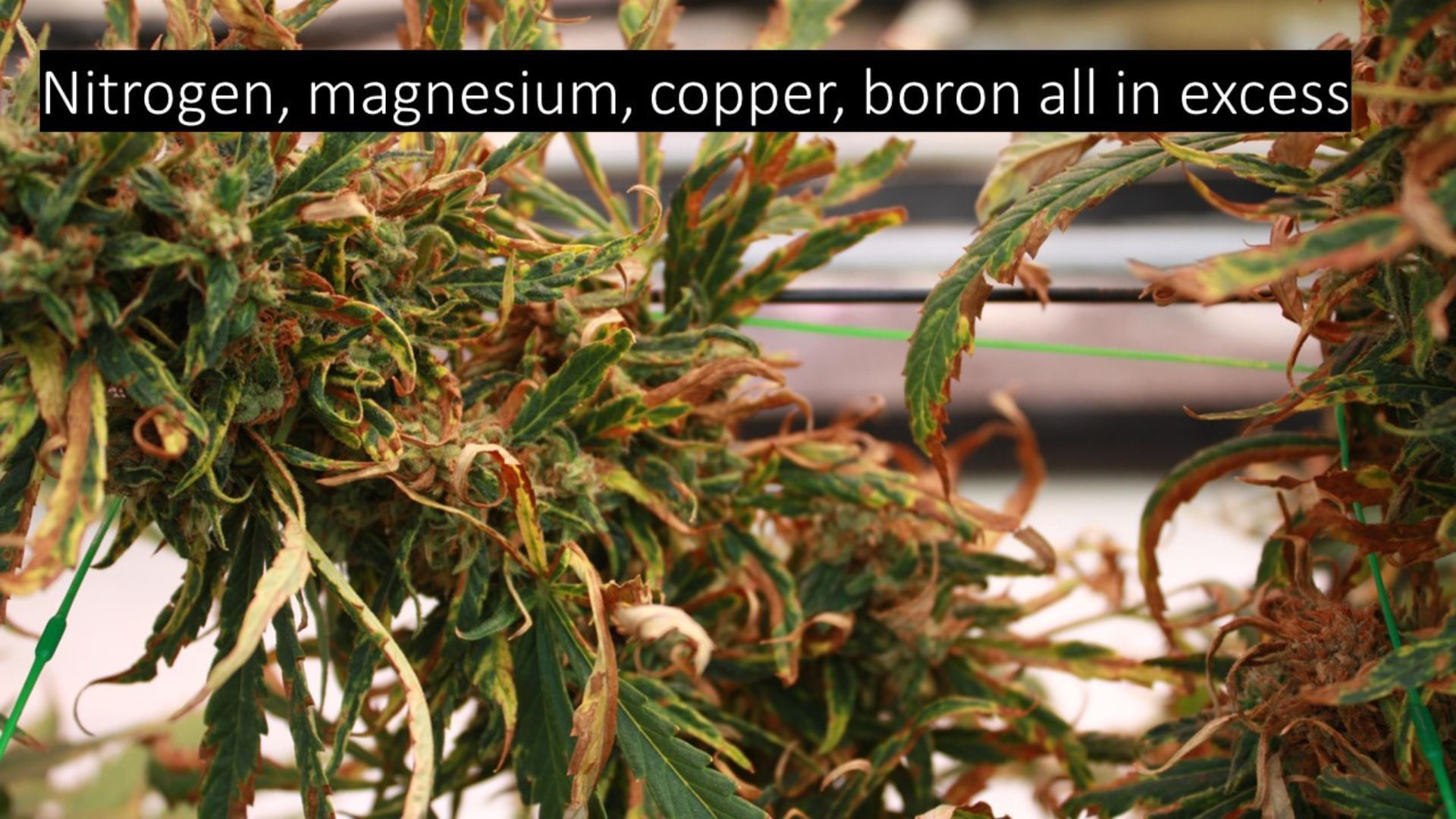
Boron Excess: Leaf burn, especially at leaf tips and margins, and overall yellowing or browning of foliage.
Copper Excess: Dark green leaves and stunted growth, potential for leaf wilting and necrosis, especially at the leaf tips and edges.
Iron Excess: Bronze or brownish discoloration on leaves, along with stunted growth, and in severe cases, it can lead to root damage and chlorosis due to nutrient imbalances.
Issues With Pests
Pests pose a significant challenge in cannabis cultivation, leading to a range of distinctive symptoms that can severely impact plant health and yield. General good practice is to maintain high cleaning and disinfecting throughout the grow. It is advisable to employ sticky traps regardless of issues, as both can stop pests getting hold in the grow area, and help the cultivator know what's in there! In addition, maintaining optimal plant conditions often results in non-optimal conditions for pests; although exceptions exist, it is essential to maintain good environmental parameters. Pests will occur if best practices are not maintained; depending on your local area, some might be more prevalent than others. Not mixing outdoor gardening work with indoor is also advisable. How pests can affect leaves gives clues to identifying the instigator.
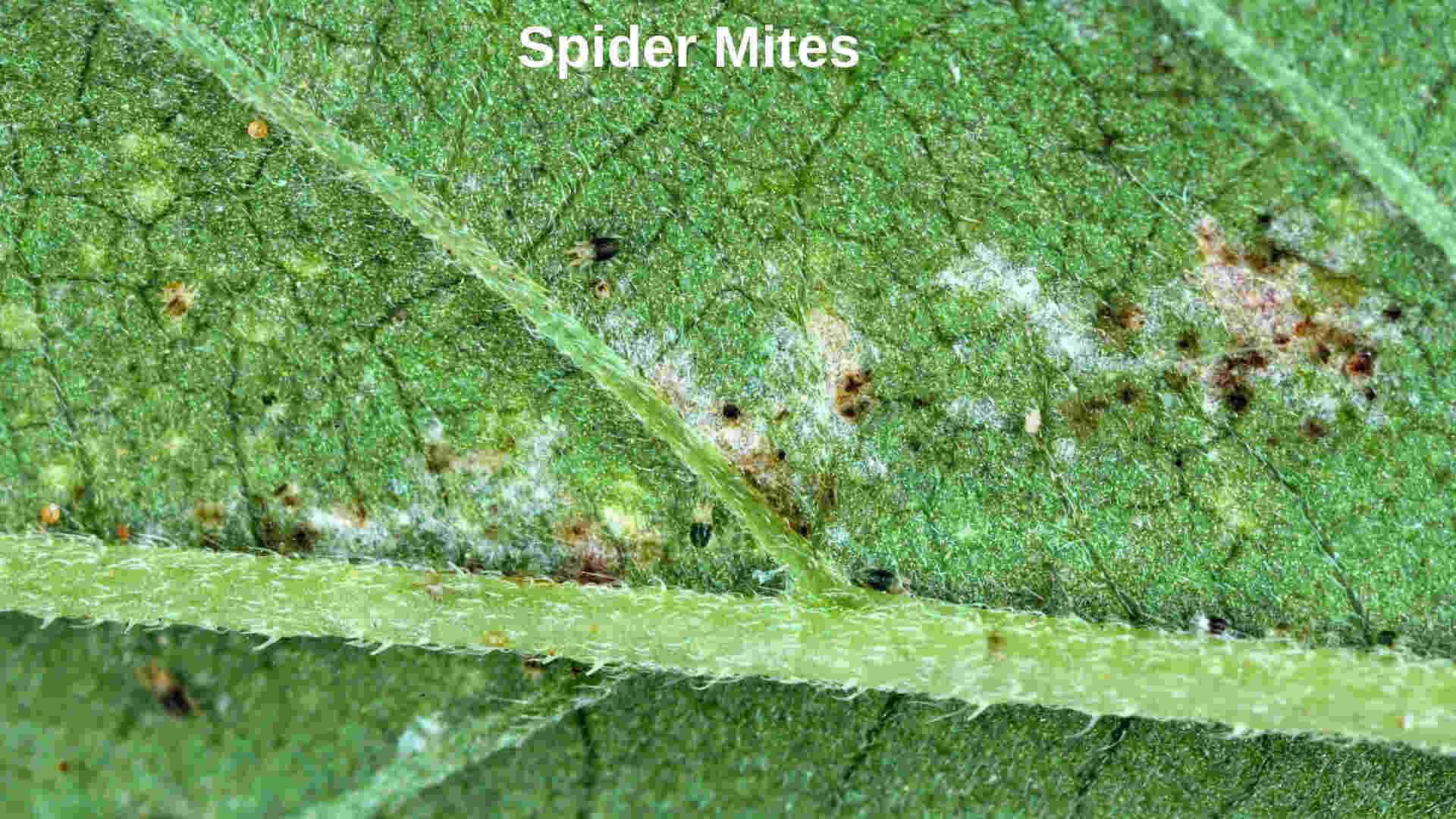
Spider mites are among the most common pests. They are a notorious problem, creating tiny yellow or white spots on leaves that eventually turn bronze or brown, accompanied by telltale webbing. Spider mites can be treated in a number of ways, but it can be hard to prevent recurring issues. Predators are key for reducing pest headcount, and finding the correct predator is best done at a local level, but consider covering both larvae and adult stages for the problem pest as the best way to eradicate the issues.
Aphids, another common pest, can be treated with the common predator, the ladybug! This is a handy solution, especially for outdoor grows, and having a healthy ladybug population will help control the aphids. Signs of having aphids on leaves include yellowing and curling. They can leave a sticky residue known as honeydew on the foliage and cause distorted growth. Physically removing them, often hiding on the underside of leaves, and using predators is an excellent way to cut them out.
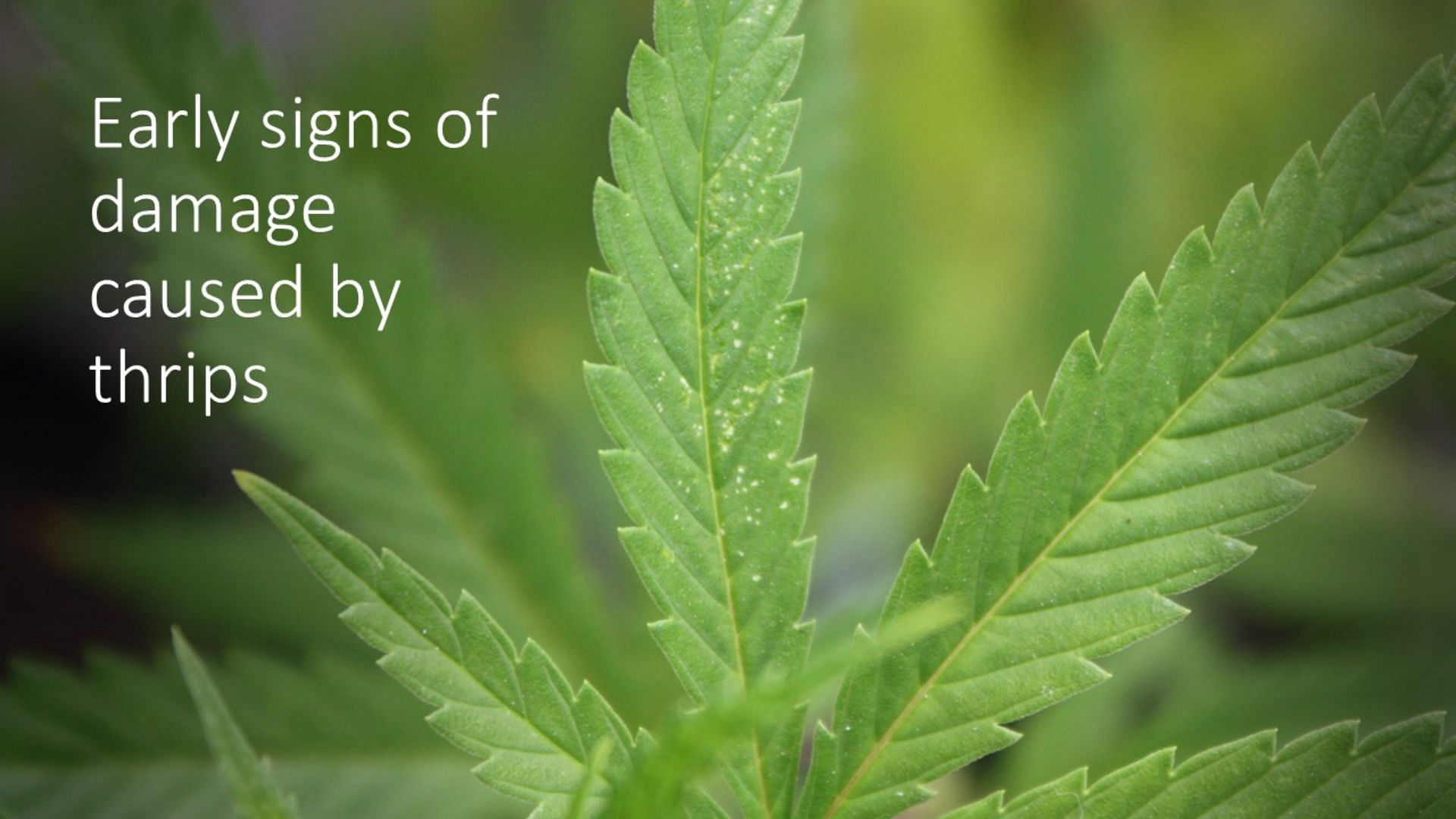
Thrips are another difficult-to-shift pest which are also, unfortunately, very common. These 1mm long critters are identifiable by silver/grey or bronze/tan/yellow specks or streaks on leaves, along with their small darker-coloured droppings (black dots). Predatory mite species like Neoseiulus Cucumeris and Amblyseius Swirskii are effective against thrips larvae, whereas pirate bugs work on adults.
Fungus gnat infestation will result in small, dark spots or lesions on the leaves, often accompanied by yellowing or wilting. Common to house plants, overwatering is a key to their survival. However, using larvae-consuming nematodes combined with controlled pot drying will help combat these.
Issues With Disease
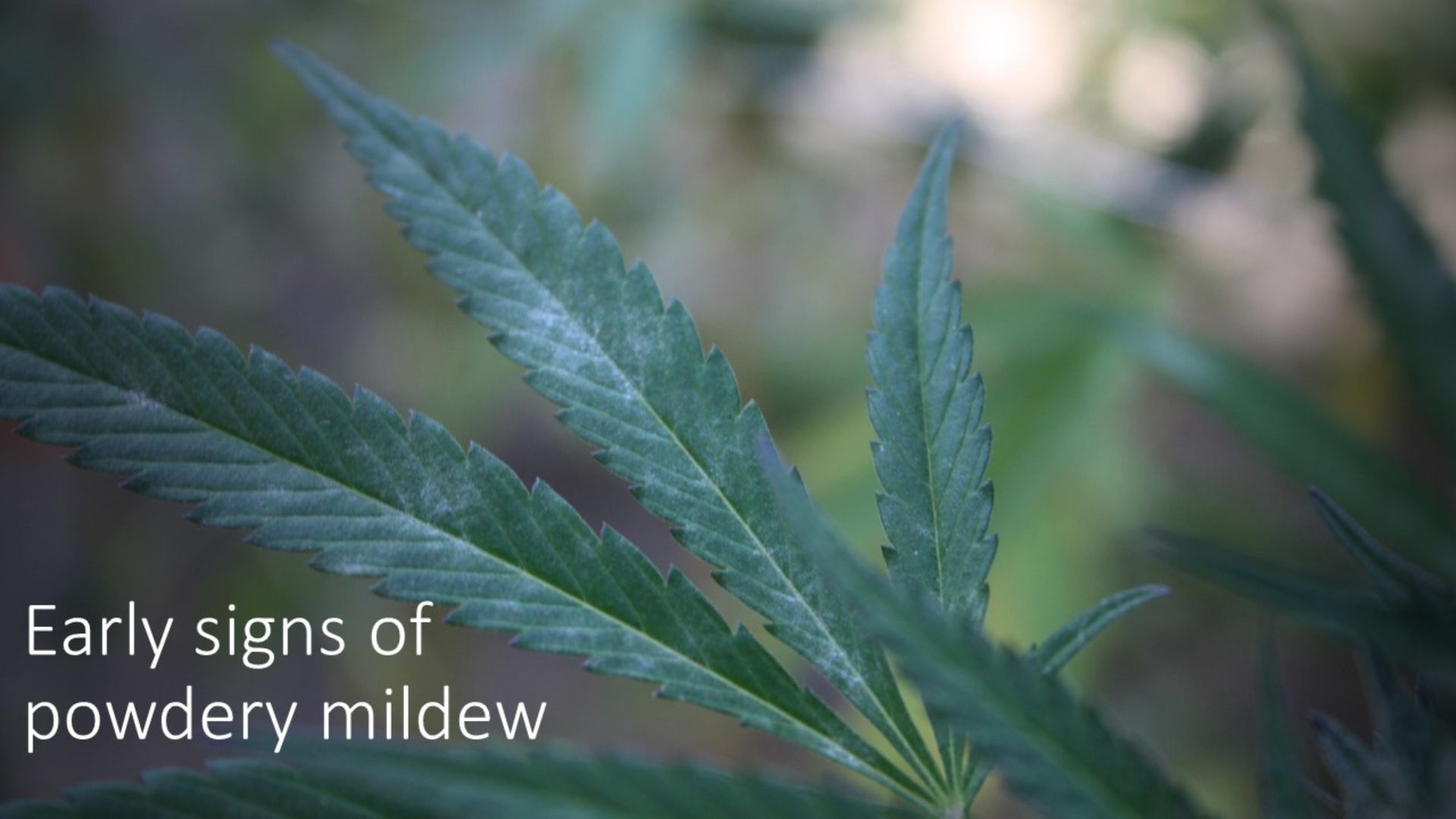
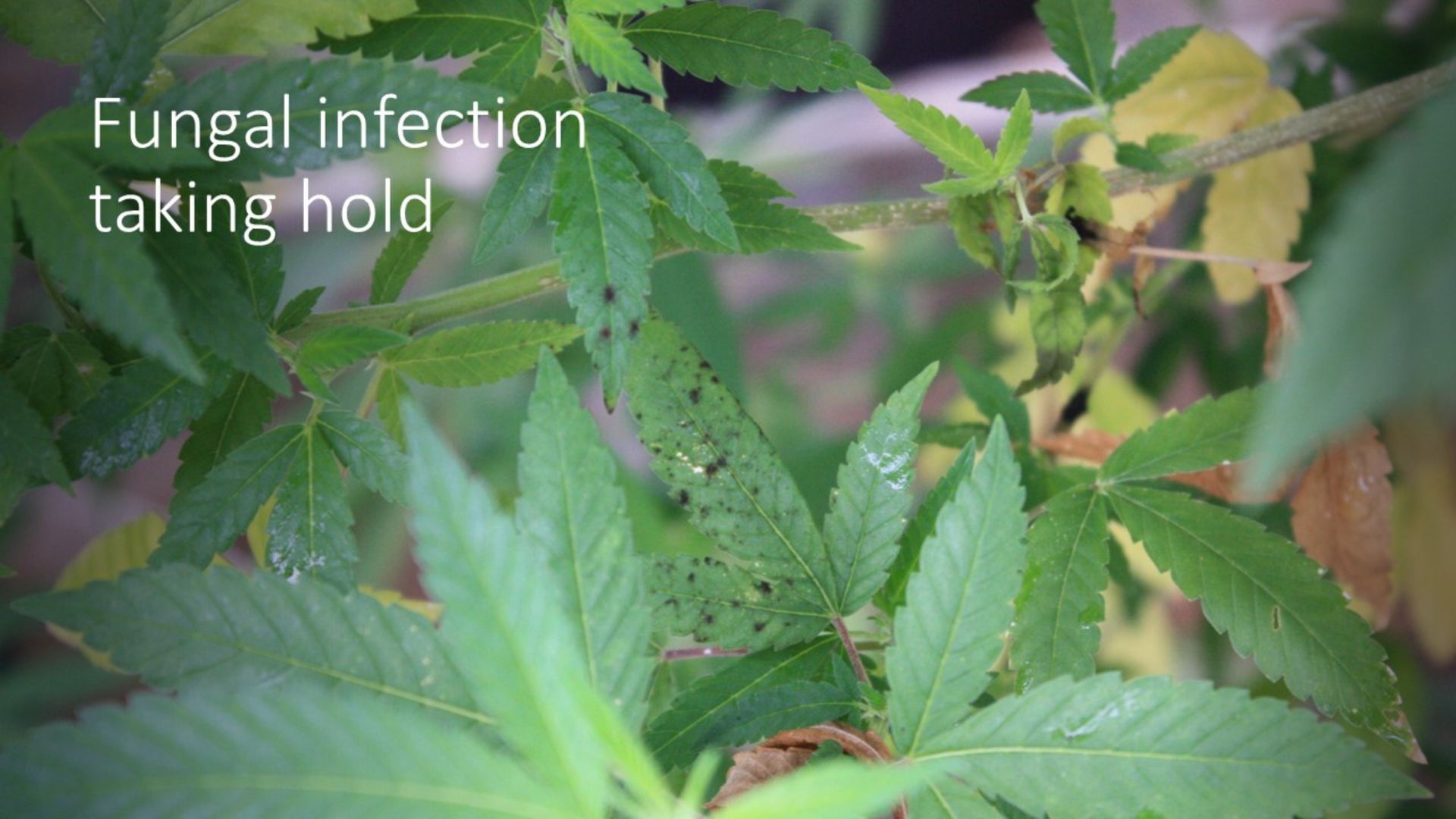
Disease issues in cannabis cause severe symptoms that can significantly impact plant health. The main issue with infectious microbes is the distinction in symptoms, which can cause the grower to second-guess their diagnosis. Some pathogens, like powdery mildew, leave a distinct white or grey powdery-looking coating on leaves, often accompanied by curling or distortion and white/grey spots. This is easier to identify than treat! Other infectious agents produce more similar symptoms, such as Septoria, Alternaria, and Cercospora species, which can cause leaf spot diseases, evident through circular or irregularly shaped brown or black spots on the leaves. Separating these is not easy without molecular tools.
Grey mold, caused by Botrytis Cinerea, is usually identified easily. It is characterized by brownish-grey spots or patches with a fuzzy appearance on leaves. It can make inflorescence (bud) tissue look brown, sometimes only on the inside, and can affect drying and growing plants. It's said it can even add a sweet taste to the flower if not identified and accidentally inhaled! Bacterial infections also pose a threat, with pathogens of the species Pseudomonas causing very distinct water-soaked or greasy spots that eventually turn dark (often black) in the centre, with a yellow halo on the edge. Similarly, Xanthomonas species create angular, water-soaked lesions that turn yellow or brown and have a more slimy-looking texture.
Beyond this, viral infections can also lead to various leaf symptoms that further complicate disease management and diagnosis in cannabis cultivation. The diversity and severity of these diseases highlight the importance of early detection, like surveying the leaves, which is key to maintaining plant health and productivity. Poor air circulation can also create an environment conducive to fungal infections, with stagnant air contributing to overall plant stress and disease susceptibility. These environmental factors are a big problem in cannabis cultivation.
Environmental Stress
Most issues in grow areas are caused by environmental stress and can often be caused by mismanagement or lack of knowing what is happening in the grow area. Without proper monitoring of the environment, it's almost like being blind to many causative issues. Conditions such as irregular temperature, high or low humidity, improper light intensity, and even watering practices and air circulation all impact plant health, which is evident on the plant leaves.
High temperatures can cause leaf wilting, yellowing, or burning, especially noticeable at the top or edges of the plant, indicating heat stress. Low humidity, however, often leads to dry, brown spots on leaves, coupled with leaf curling or wilting as plants struggle to retain moisture; secondary effects like excess nutrients may be caused by low humidity. Excessive light intensity, resulting in light burn or bleaching of leaves, is seen as white or yellow spots or patches, a sign of overexposure to intense lighting. A general lightening of the green colour is an early indicator. Watering protocols also demand careful attention. Overwatering can lead to yellowing, wilting, or drooping leaves while underwatering manifests as wilting, dryness, and leaf curling. The wilting is common to both and can be devastating if not appropriately diagnosed.

Conclusion
Identifying the cause of leaf symptoms can be a daunting task. With so much crossover of symptoms and the potential for more than one cause, it is sometimes difficult for even the most experienced eyes to know what they are looking at. For writing, it is nice and easy to group things and separate the effects, but in reality, one problem often causes another, and the main symptoms can even mask the main cause. However, a simple and pragmatic approach will help determine the cause. Look at each symptom individually, list the possible causes and move on to the following symptom. This way, you can build a picture of all the potential possibilities causing the plants to look sick, usually resulting in one or two causative agents at the end. Good sanitation and cleanliness are essential, and if that and environmental parameters are well maintained, most problems can be avoided.