

Cannabis cultivation and cannabis breeding represent a diverse and everchanging complex field. By combining intricate botanical knowledge with advanced genetic principles, the cannabis breeders of today stand on the precipice of a new genetic era. The cannabis industry is advantaged by a deep understanding of the plant's biology, its environmental needs, and the genetic intricacies that dictate its numerous phenotypic expressions. Understanding how a gene leads to a trait can be very complex, even given the numerous levels of control at the DNA, RNA, and protein levels. However, imagine if there were 4 (tetraploid) or 6 (hexaploid) copies of every gene, or if put another way, multiple copies of the entire genome exist within a single cell. This is a world of polyploids. To understand the idea of polyploids, we must understand a fundamental biological process that accounts not only for why siblings are different but also for how it is possible to inherit half of each of your parent's DNA. That process is called meiosis. Before getting into the specifics of triploids, first we should clarify what a polyploid is and its significance.
Counting Chros (Chromosomes)
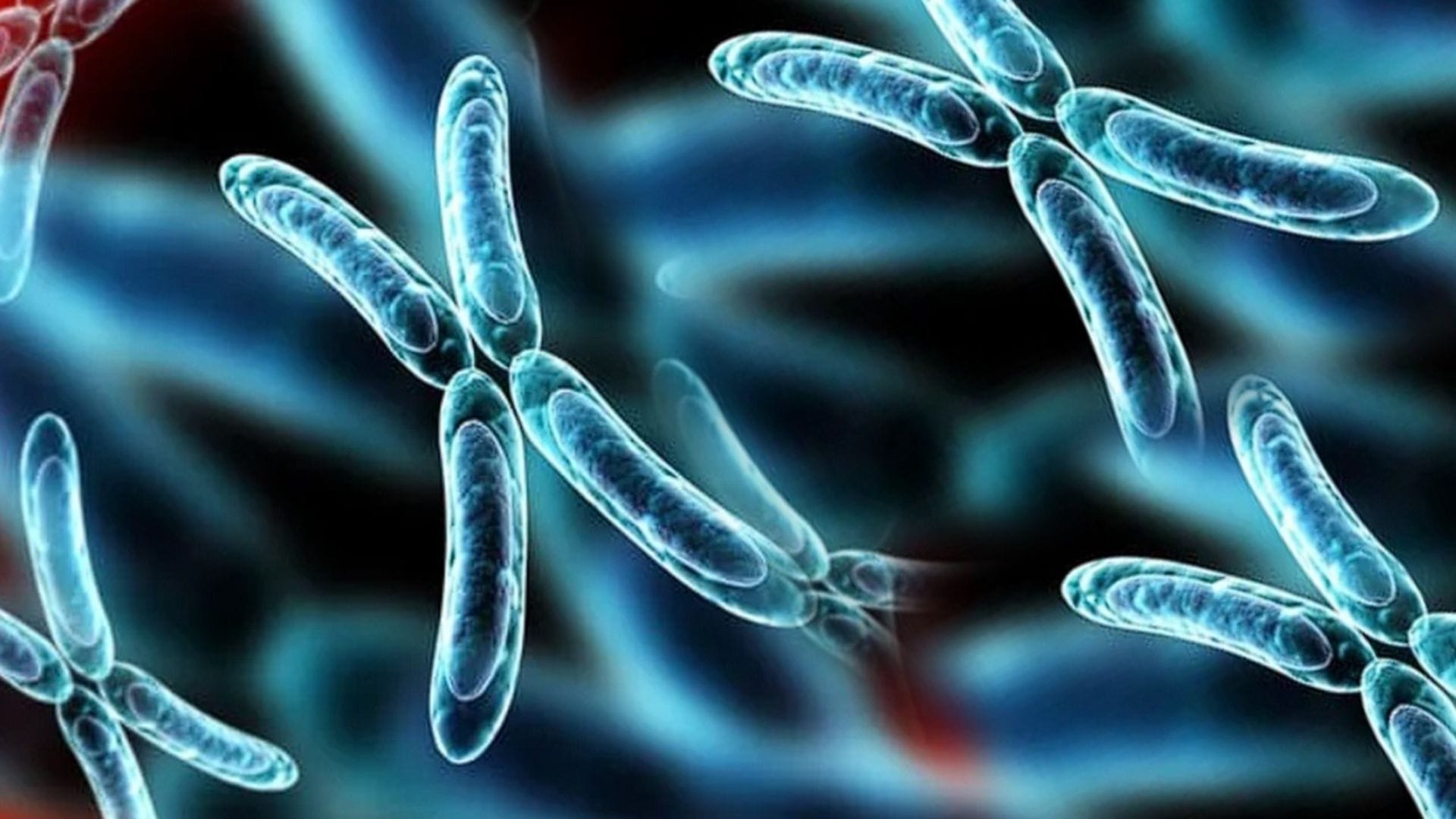
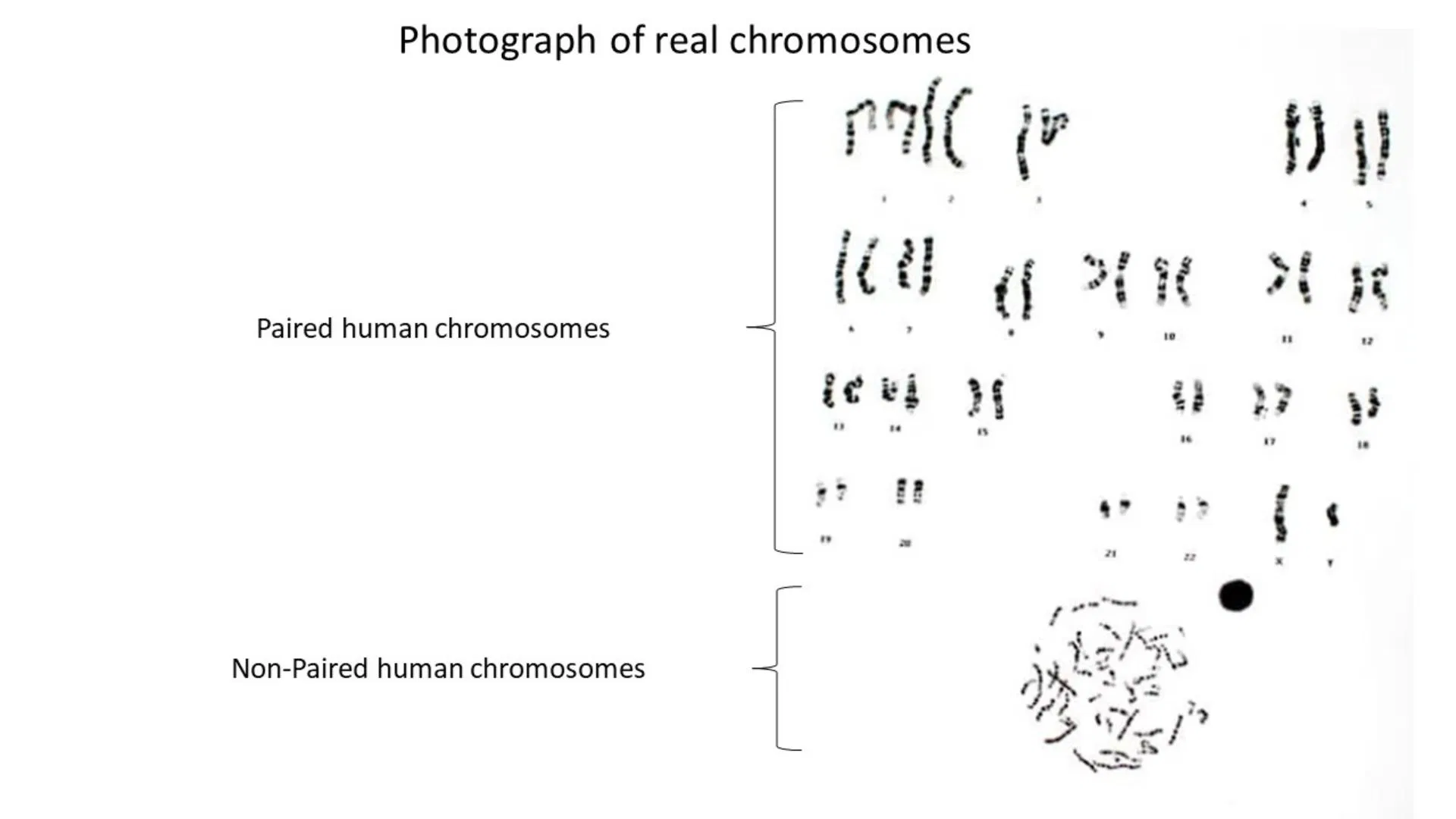
The genome of most higher organisms is organized into chromosomes. Chromosomes are temporary structures that form prior to a cell dividing. A chromosome carries a significant segment of an organism's entire genome/DNA. This means in cannabis, for example, there are 10 chromosome pairs, so the genome is divided over these 10 chromosome pairs. In both humans and cannabis, for instance, there are two sets of chromosomes, typically thought of as one set from each parent (though this is somewhat simplified). Cannabis, with its 10 pairs of chromosomes, is an example of a diploid organism, hence the ‘pair’. But there are examples of organisms with only one set, called haploids (hap – sounds a bit like half!).
These terms, such as 'diploid', ‘triploid’ and ‘tetraploid’, are crucial for understanding the genetic makeup of cannabis seeds. Diploid cannabis has essentially two (di) complete sets of chromosomes, or genomes, with triploid having three (tri) and tetraploid having four (tetra) sets. Organisms with more than one set of chromosomes are called polyploids (poly = many). So, a haploid has one set of chromosomes, a diploid has two sets, and a triploid has three sets. This pattern continues, with some organisms like strawberries being octoploid, possessing eight sets of chromosomes.

Understanding Polyploids
Having multiple sets of chromosomes is a huge evolutionary advantage as it allows organisms to withstand more random mutations which could leave a crucial gene damaged or nonfunctional. For example, if a diploid organism has a mutation that causes a malfunction in for instance, a metabolic process, then the other version of that gene could kick in to rescue the phenotype, resulting in a normal metabolic function. Although it is not always this straightforward, the example provides a way in which naturally occurring polyploids many outcompete their non-polyploid counterparts. This is then also the case if the organism has more sets of genomes higher up the ‘ploidy’ count. As we will learn soon, the number of chromosomes is crucial for reproduction, as generally incompatible chromosome numbers cannot successfully reproduce. i.e. you cannot usually take a diploid and cross with a triploid. This brings us to one of the main reasons lots of crop plants like soybean, bananas etc have been bred for polyploidy, as it can cause infertility in the offspring. This is also a way to make ‘seedless’ versions of things like grapes and oranges. This is a huge advantage for crops where pollination can interrupt the over all quality of the yield. In cannabis this is very pronounced as triploids cannot undergo cross-pollination with a diploid plant, rendering it seedless! Seedless cannabis is usually a result of female cannabis plants left unpollinated. Taken a step further, for years now breeders have developed feminised seed lines to limit the amount of male plants produced, this is, in part to prevent unwanted pollination. However, companies like Humboldt Seed Company out of California, have already produced seedless triploids for sale! An exciting step forward in cannabis breeding.
When 2 Becomes 1, But First 2 Becomes 4!
In cannabis genetics, growers and breeders can produce unique cultivars with desirable traits by selecting said traits in each generation. One way to take this to the next level is through the development of triploid cannabis plants. Unlike their diploid counterparts, triploid plants with their three chromosome sets can have several potential benefits. As previously mentioned, triploid cannabis is often sterile, resulting in seedless buds that are more appealing to consumers. The creation of triploid cannabis involves manipulating the plant's genetics to produce an extra set of chromosomes. This can be achieved through various breeding techniques, usually using a tetraploid intermediatory plant with double the normal amount of chromosomes. This can often produce offspring with an increased capacity for cannabinoids such as THC and CBD. It can increase the concentration of terpenes, improve yield and stress resistance, and even invoke morphological changes such as the composition of certain tissues.
For cannabis growers, the advantages of cultivating triploid plants go beyond producing seedless and potent THC-laden buds. These plants can also exhibit greater light-harvesting capabilities through leaf shape changes, increased chlorophyll concentrations and even greater biomass, all of which can potentially lead to higher yields. Moreover, the complex interplay between the plant's genetics and its environment can result in a unique expression of traits, making each polyploid cultivar more likely to be a novel addition to the market. To understand the process of how to make a polypoid plant, we must understand the process of meiosis. This is a process that enables sexual reproduction, through cell division and chromosome replication, the result is what is known in biology as gametes, i.e. sperm and eggs cells in humans, pollen and ovule in plants. Meiosis is a specialised form of cell division, which unlike mitosis (the regular type of cell replication, i.e. for growth injury repair etc), ends with haploid cells, i.e. only one set of chromosomes.
Meiosis – Reproductive, Cell Division
Meiosis represents an essential biological mechanism that is integral to the reproductive cycle of all higher life, including of course cannabis plants. This is the process that results in the formation of pollen grains and ovules, with each being haploid cells. This specialised form of cell division is important for the diversity of the species, ensuring the emergence of a variety of progeny that encapsulate a genetic distinction, whilst being derived from the same two parental plants. Meiosis unfolds over two successive stages of cellular division, resulting in 4 new cells each with half the chromosome number, i.e. haploid (see diagram). This process also enables a randomizer element, called genetic recombination.
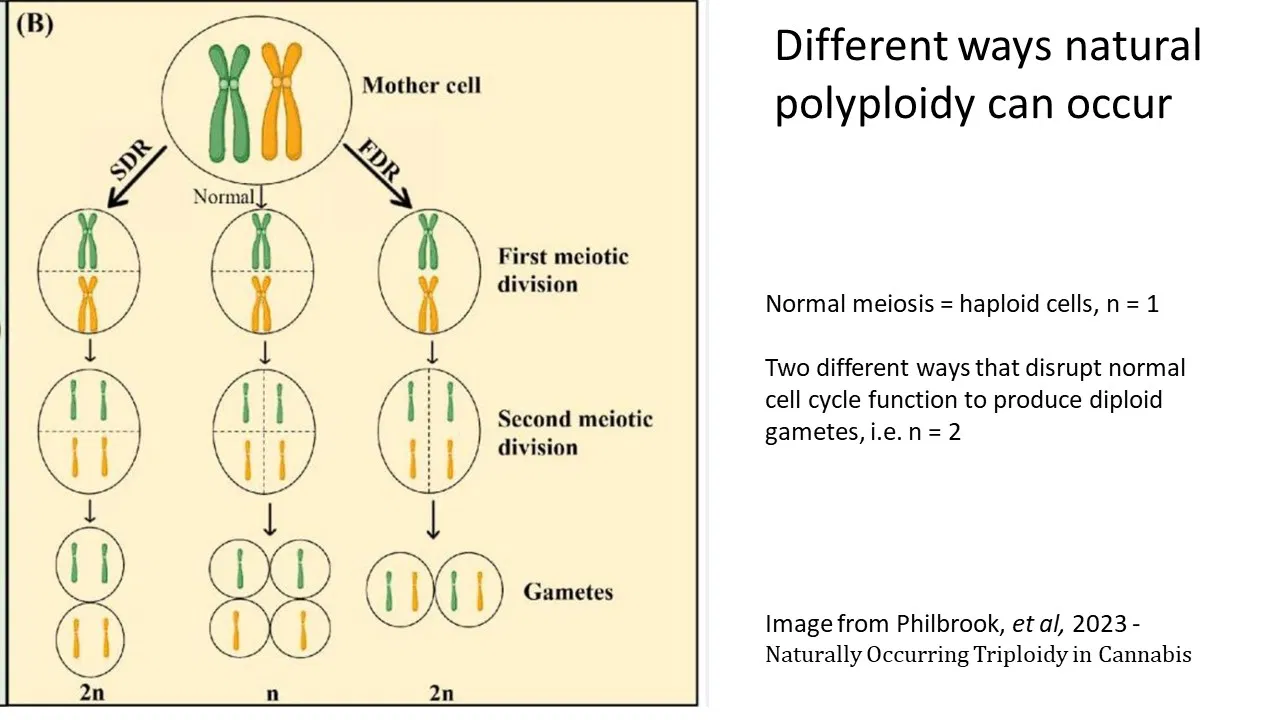
This genetic recombination significantly contributes to the individualism observed in cannabis phenotypes. It introduces new combinations of genes, which can result in varying expressions of traits and phenotypic expressions. This genetic diversity is not only vital for the adaptation and survival of cannabis populations in the wild but is also harnessed by breeders to enhance and stabilize desired traits in cultivated lines. The ability to produce unique phenotypes through meiosis and genetic recombination displays the vast array of cannabis varieties available, each with its own set of specific attributes. This shuffling of genetic material is crucial, as it confers each resultant gamete with a distinctive genetic composition distinct from the progenitor cell and its fellow gametes. Thus, these cells possess a haploid chromosome count, which is exactly half that found in standard cells. The significance of meiosis in cannabis cultivation is underscored by its role in enabling the subsequent restoration of the diploid chromosome number upon fertilization, leading to the development of genetically diverse and potentially more robust offspring. It is this very system that scientists and breeders manipulate to produce triploids.
How To Make A Triploid
One method to produce a triploid cannabis plant is crossing a diploid plant with a tetraploid plant. The first step involves creating a tetraploid plant. This can be achieved by treating a diploid plant with colchicine, a chemical that disrupts cell division. Colchicine interferes with the formation of spindle fibres, which are crucial for separating chromosomes during cell division. As a result, instead of evenly dividing, the cell's chromosomes are not separated, leading to a cell with double the original number of chromosomes due to the division impairment caused by colchicine. This treatment can be done on mature cells, actively dividing (somatic cells), which then need to be turned into a tissue culture-type callus to regenerate the new tetraploid plant. Or, if treating the cannabis seeds directly, this process can act on the developing embryo, resulting in a plant developing tetraploid seeds. This step does not usually produce triploid seeds directly.
Treating plants with colchicine during meiosis can also result in polyploid gametes. For example, if a diploid plant's germ cells (which undergo meiosis to produce gametes) are treated with colchicine, the resulting gametes might be diploid instead of haploid. When such a diploid gamete is involved in fertilization, it can contribute to the creation of polyploid offspring. This is not an easy technique and is very hard to time correctly to have viable tetraploid gametes.
The next step involves crossing this tetraploid plant with a regular diploid cannabis plant. The offspring from this cross will inherit three sets of chromosomes, making them triploid. This technique requires careful handling and expertise in plant breeding and genetics, often resulting in limited viable cells.
Naturally Occurring Cannabis Triploids Genetics
One of the most interesting things in genetics and biology in general is the natural occurrence of polyploids. Without chemical or genetic manipulation, it is possible for gametes to contain multiple copies of the genome through natural mutations and other phenomena. One example is of the cultivar MAC1; Richard Philbrook and colleagues recently produced this paper, Naturally Occurring Triploidy in Cannabis - PMC (nih.gov), which identified MAC1 as a naturally occurring triploid. They also showed a higher likelihood of polyploidy in self-fertilized plants and that, in general, 1 in every 200 plants may be natural polyploids.
Conclusion
The cannabis industry, and more particularly the area of cannabis seeds, is potentially entering a new era, and the use of advanced breeding is to be expected. For example, autoflowering plants, with their short life cycle and light-independent flowering ability, could be improved significantly under polyploid manipulation. An increase in THC levels, improved biomass, and even quicker flowering, are all possible by cannabis breeders just now to improve autoflowering plants; however, as a tetraploid or triploid, these traits could be significantly improved in a single generation, thus providing not only a shorter route for breeding efforts but by increasing what was capable from essentially the same set of genes. Cannabis production, and within that, cannabinoid content has the potential to find a new ceiling with polyploids, which could be a game-changer. This applies not only to the world of seed production but also to the broader field of cannabis, including industrial hemp.