
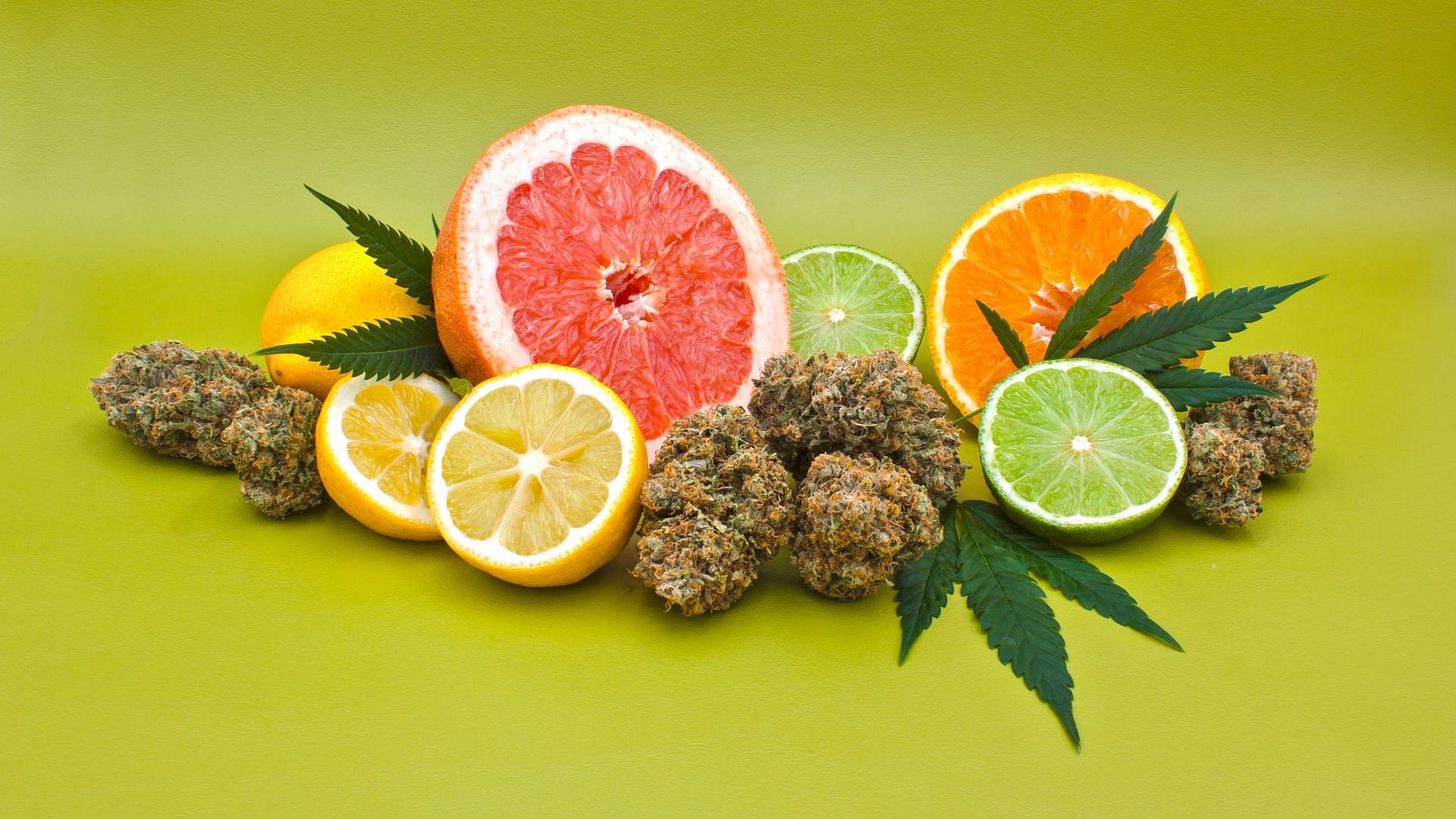

Recently published studies have challenged the long-held belief that THC content is the primary indicator of cannabis quality. The studies suggests that the crucial role of aroma and flavor governs the consumer's perception of quality. This groundbreaking study reveals that this preference cannot be determined by terpenes alone, which are typically credited for the scent and flavor of cannabis. Instead, a complex array of phytochemicals, including esters, sterols, ketones, and other aromatic compounds, play a significant role in shaping the scent profile of cannabis. The study examines findings from cannabis competitions where volunteers' feedback emphasized the importance of aroma over THC potency in determining the appeal of cannabis flowers.
Contrary to popular belief, high levels of THC were not correlated with increased negative effects like dry mouth or appetite changes, nor did they solely dictate the quality perception of cannabis. This revelation suggests a paradigm shift in how cannabis quality should be assessed, moving away from THC levels to a more holistic understanding of the plant's aromatic properties. The study proposes that lower or medium levels of THC combined with rich aromatic profiles could be more desirable, especially for casual users. This nuanced perspective on cannabis quality emphasizes the complexity of its appeal, going beyond cannabinoids to include a broader spectrum of aromatic compounds. A comprehensive breakdown is provided IN THIS ARTICLE. Here, we look at other chemicals' different influences and provide a quantification system. Get the calculators - no - get the supercomputer booked! This is gonna get maths-y!
A Longstanding Over-Inflated View Of Terpene Profile
The long-held belief that terpenes account entirely for the aromatic and flavor profile of cannabis is slowly diminishing, as evidence shows the importance of other phytochemicals. This aligns with a growing understanding of plant science regarding plant aroma and flavour complexity. This complexity is not unique to cannabis and can be examined in the context of other plant species. However, in the cannabis world, both by medical and recreational distributors in the appropriate areas, all the emphasis is placed on measuring cannabinoids and terpenes only.


A good photo will go a long way to convince consumers that the plant they want is represented in the picture. Color, chunkiness and trichome coverage are also important factors, but when it comes to data, cannabinoids and terpenes completely dominate the information provided by the supplier. Even within these two classes of phytochemicals, hundreds of compounds can be found. Most times, however, THC, CBD and then the most abundant three terpenes are often what is provided for the consumer to make their choice. It has been reported that products with the same THC and CBD levels and the same dominant terpenes come out very differently from the user's experience perspective. This leaves a gaping question: what is fuelling the difference between these otherwise identical choices?
Terpenes are indeed major contributors to the aroma and taste of many plants, including cannabis. They are a large and diverse class of organic compounds produced by a variety of plants, often theorized to act in defence against herbivores, to aid pollination, and even communication/signalling. Much has been written about terpenes, but little is actually known about their effects on the biology of humans. Other Phytochemicals important for aroma and flavour include esters, aldehydes, ketones, flavonoids, tannins, and sulfur-containing compounds. As shown in this 2022 study, researchers found at least 84 different compounds in the essential oil of a hemp variety, with representatives of these classes present.
Whilst it should also be noted terpenes and cannabinoids are abundant in trichomes, not all of the mentioned chemicals are found in these specialized compartments. Generally, these phytochemicals will have different abundances in different tissues. Compartmentalization is essential for proper plant function; this is why the different ratios are found in different tissue types, thus adding another layer of complexity. Here is a quick breakdown of where some of these compounds occur in other plants, fruits and vegetables.
Happy Esters!
Known for their sweet, fruity aromas, esters are commonly found in flowers and fruits. In wine grapes, for instance, esters contribute significantly to the fruity notes.
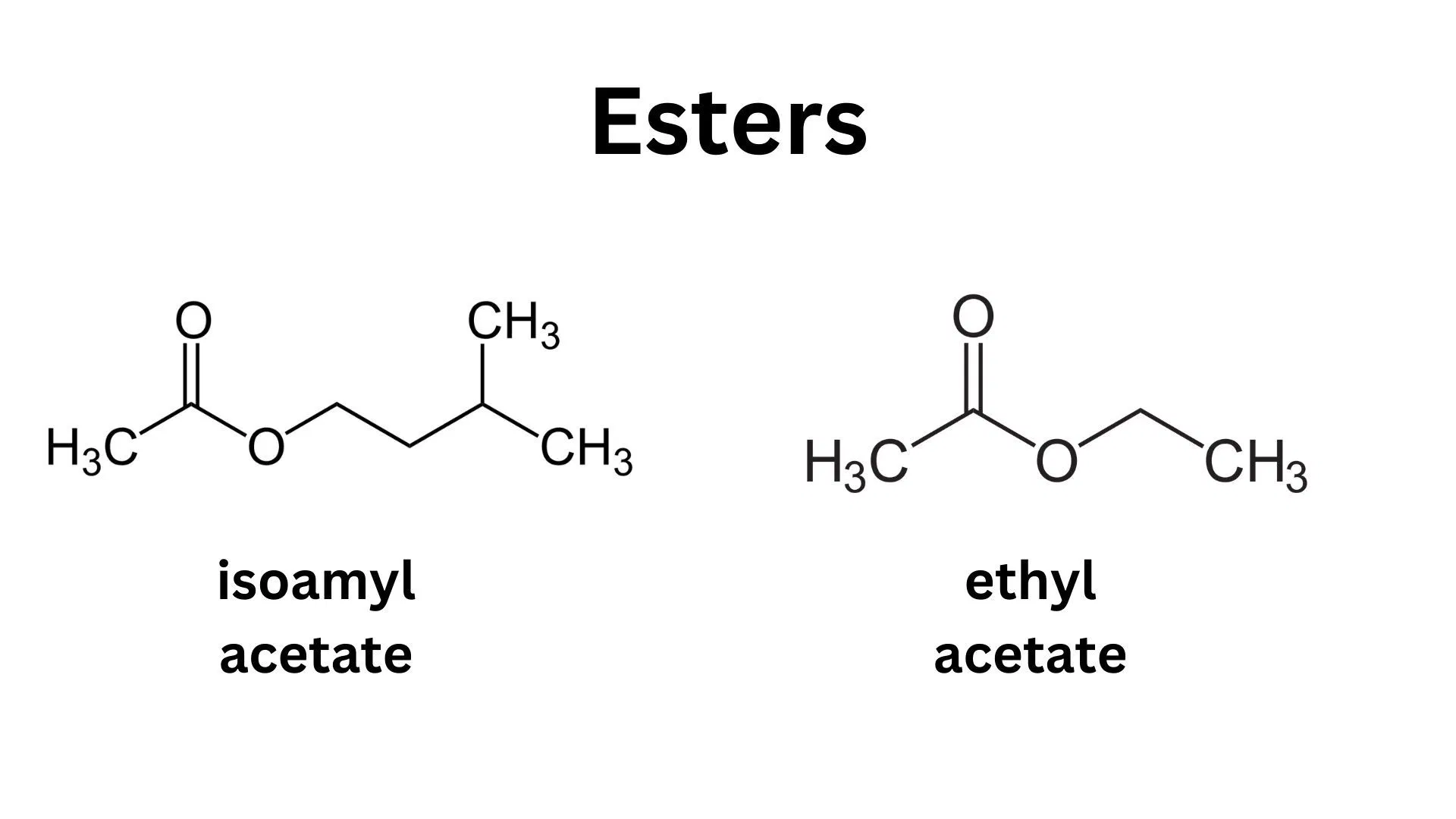
Some plants are particularly noted for their high levels of esters, which contribute significantly to their distinctive scents and tastes. Bananas, especially very ripe bananas, are rich in an ester called isoamyl acetate, helping provide the characteristic sweet and fruity smell. They increase over the ripening stage and have a distinct and unique aroma. Esters are also part of the signature of apple varieties, producing a range of esters contributing floral and fruity notes to their range of unique aromatic profiles.
Aldehyde Here, You Can Hide There!
Aldehydes such as nonanal and octanal contribute to the citrusy fragrance in oranges and are also found in essential oils used in perfume making. Hexanal, on the other hand, is reminiscent of cut grass but can be used in the food industry in combination with other compounds to produce fruit-like flavors.
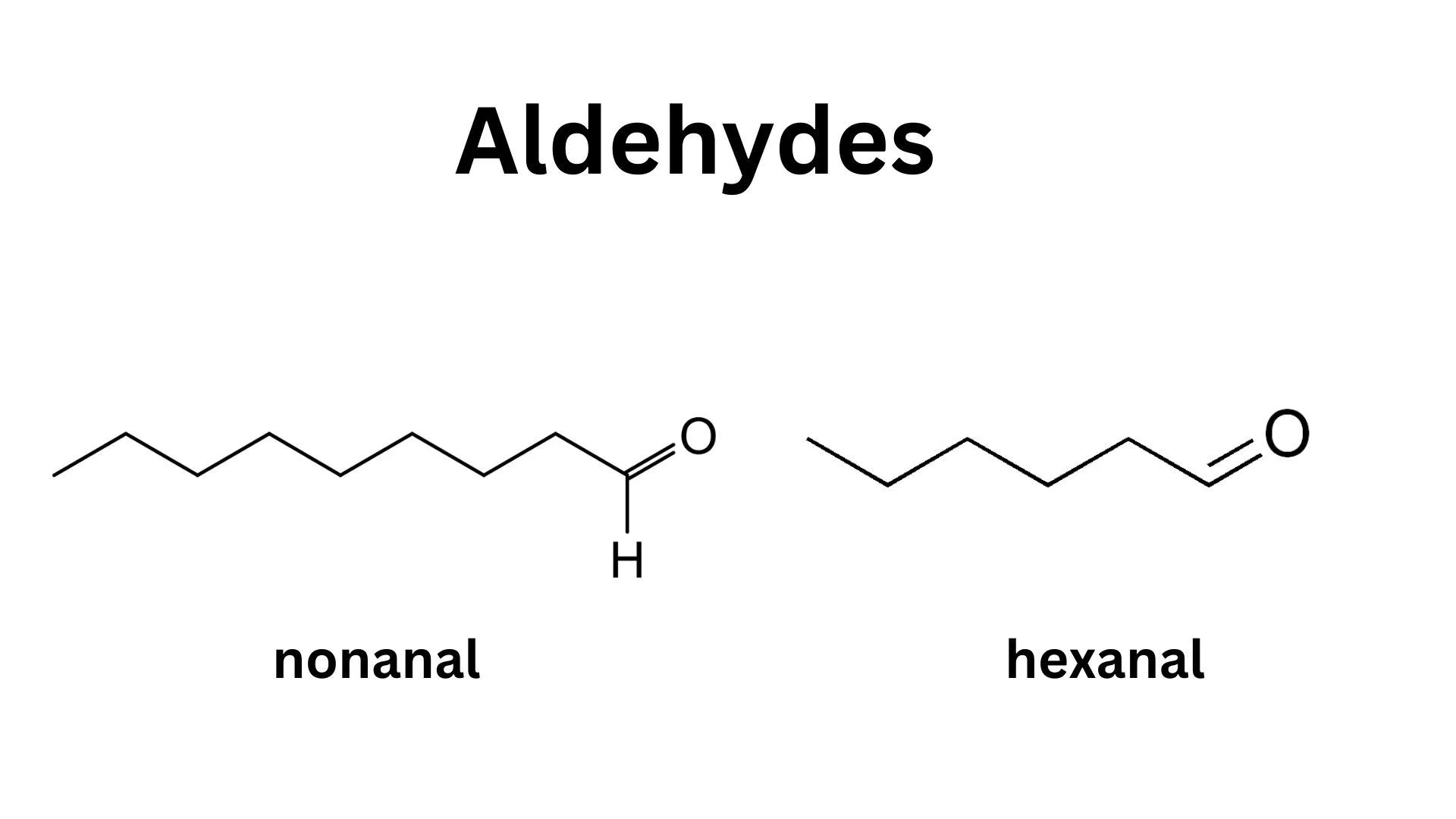
These examples show the range of tastes and smells possible for a single group of compounds.
Ketones
These compounds can impart flavors ranging from citrusy to buttery. For example, ketones contribute to the complex range of smells making coffee so revered. Myrcenone and verbenone are both musky/woody in scent and are found in cannabis and various other plants.

Like all the examples listed, most plants contain at least some of the members of each class mentioned, but hundreds of often distinct compounds exist in each class.
Flavonoids, Tannins (Phenolic Compounds) And Sulfur-Containing Compounds
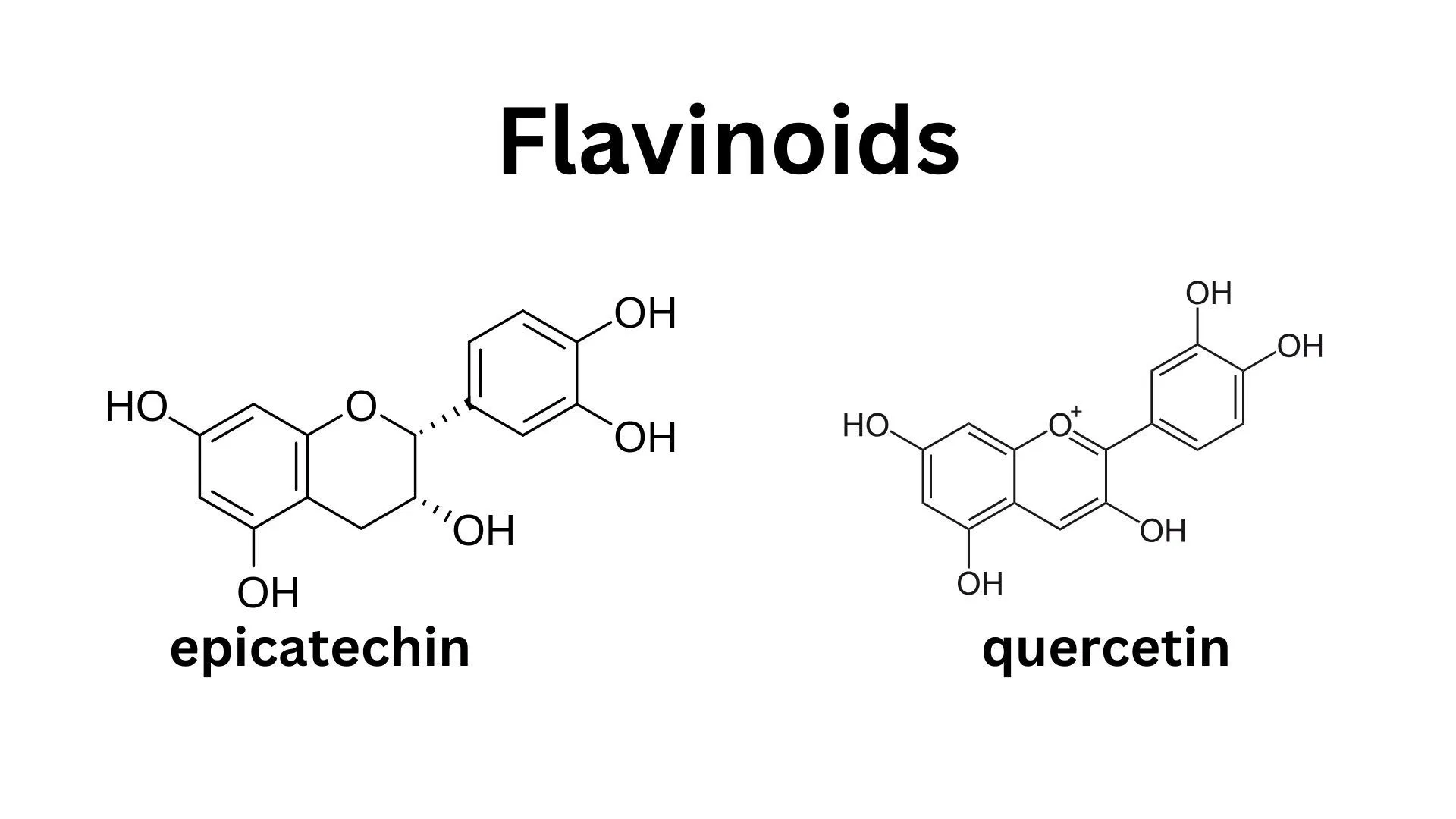
A key contributor in the taste profile of tea and wine, epicatechin is an example of what contributes to bitterness in tea. Anthocyanins and flavonols, such as quercetin, are common flavonoids in wine, providing pigmentation to the mix as well as taste and smell. Both adding color and contributing to aroma could be viewed as a two-for-one!
Cannabis plants can release polyphenolic compounds like many others, including sulfur-containing compounds as a result of a pathogen attack. These compounds' individual roles in the immune response are only partly understood. Found in garlic and onions, Sulfur-Containing Compounds are responsible for their distinctive pungent aromas; examples of these include dimethyl sulfide, sulfoxide and allin.
Each of the above classes of compounds contains hundreds of members, and high numbers are often found within one species. Include terpenes and terpenoids to that list, in addition to the cannabinoids themselves, and you start to get a picture of how many individual variations of these you could get in a cannabis plant!
The Math Part!
Quantifying the exact contribution of these compounds to the overall aroma and flavour profile is challenging. This is due to the synergistic effects where different compounds interact to create a complex bouquet. Advanced analytical techniques like chromatography-mass spectrometry and HPLC are often used to analyze these complex mixtures. Even just looking at terpenes, many tested cannabis samples show very similar terpene profiles, whilst they can actually smell and taste very different. So what accounts for this high level of variation? To understand this, we need to simplify the math.
If, for the sake of argument, we reduce each taste-and-smell-contributing compound class to only eight classes, and say of any class there are only 100 compounds possible, and we say each is either only on or off. We would have 10,828,567,056,280,801 possible combinations! An astonishing number, and remember, this is the simplified version! The number represents flavors ranging from onion to strawberry or GMO to Bananaberry! Here's how the number is so big: If each class has 100 members, and each member can be either "on" or "off", that equals 100(∧8) (100 to the power 8). However, there's another state to consider for each class: where all members are "off." This means each class actually has 101 possible states (100 individual members plus the state where all are off).
So, for eight classes, the total number of combinations is calculated as the number of states per class raised to the power of the number of classes. The equation is:
Total Combinations = 101(∧8)
Which equals, 101 x 101 x101 x 101 x 101 x 101 x 101 x 101
Which equals 10,828,567,056,280,801
That's ten trillion, eight hundred twenty-eight billion, five hundred sixty-seven million, fifty-six thousand, two hundred eighty-one!
We know there are more than 100 members of most of those classes of compounds, and we know that far from on or off, they could range from trace to dominant in terms of concentration. Then multiply that by the different strengths certain compounds have over others, which elicit a similar taste response, and you soon see why saying your flavor comes from a single or even combination of terpenes seems unrealistic. It must also be noted that not all combinations will be unique in how they please the senses. In fact, if 10 trillion is correct, we can reasonably expect trillions of crossovers, resulting in a much more finite range. The limiting factor becomes the senses rather than the ratios of phytochemicals.

Conclusion
The complex, diverse subject of cannabis aroma and flavor has recently seen a profound shift in understanding what truly defines the appeal and quality of cannabis. The traditional focus on terpenes and THC content, while significant, is now just part of a much broader and intricate picture. This complexity of aroma and flavor in cannabis reflects nature's broader palette, as seen in the wide variety of fruits, flowers, and other plants. Each compound class contributes to a distinct sensory profile, whether esters in bananas and apples, aldehydes in citrus fruits, or ketones in coffee. In cannabis, this implies that the interplay of these diverse compounds is responsible for the nuances in aroma and flavor beyond what terpenes and cannabinoids can offer alone.
Given this complexity, the idea of categorizing and valuing cannabis based solely on THC levels and a limited terpene profile appears overly simplistic. A more encompassing approach considering the full spectrum of aromatic and flavorful compounds will likely provide a more accurate and richer understanding of cannabis quality.

Although very hard to quantify at the descriptive level, perhaps something AI could eventually aid, taking complex analytical details and predicting a flavor and smell type. Currently, it is something that seems impossible, given the variations possible. However, this could lead to a more nuanced and sophisticated categorization of cannabis products, influencing how breeders and growers select plants and consumers select products.