If you're looking for a sustainable way to grow larger, healthier cannabis plants while reducing irrigation and improving soil fertility, hugelkultur may be the perfect solution. Hugelkultur, a traditional German gardening technique meaning "hill culture" or "mound culture," transforms woody debris and organic waste into a long-lasting, self-fertilizing growing system. In this article, we’ll explore the benefits of growing cannabis in hugelkultur beds and how you can build one yourself.
For cannabis cultivators, hugelkultur beds offer several unique advantages. As buried logs, branches, and organic matter slowly decompose, they create a thriving ecosystem of fungi, bacteria, earthworms, and other beneficial soil organisms. This process improves soil structure, increases nutrient cycling, enhances water retention, and promotes healthier root development, all critical factors for producing vigorous cannabis plants with exceptional terpene and cannabinoid profiles.
Unlike conventional raised beds, which require frequent watering and fertilization, hugelkultur beds act like giant underground sponges. The woody material absorbs rainfall and irrigation water, slowly releasing moisture back into the root zone throughout the growing season. For outdoor cannabis growers, this can dramatically reduce water requirements while helping plants withstand periods of drought and summer heat.
Related Article:How To Water Cannabis Plants Using Rainwater
Additional benefits of growing cannabis in hugelkultur beds include:
Improved water retention and drought resilience
Increased microbial and fungal activity
Long-term nutrient release from decomposing organic matter
Enhanced soil aeration and root growth
Carbon sequestration and improved soil health
Reduced need for irrigation and fertilizers
Productive use of fallen trees, branches, and woody debris
Greater sustainability and regenerative land stewardship
Whether you're building a homestead garden, establishing a living soil cannabis bed, or implementing permaculture principles on your property, hugelkultur offers an effective way to grow thriving cannabis plants while improving your land year after year.
How to Build a Hugel Kultur Mound
Building a hugelkultur bed can be done in several different ways. Traditionally, a trench is dug into the ground, and the woody debris is placed in it. However, many people have successfully built their mounds directly on the ground or enclosed within a raised bed. These mounds can be made on terraces that contour hillsides to help improve erosion or in areas prone to flooding to enhance land that may otherwise not be ideal for gardening.
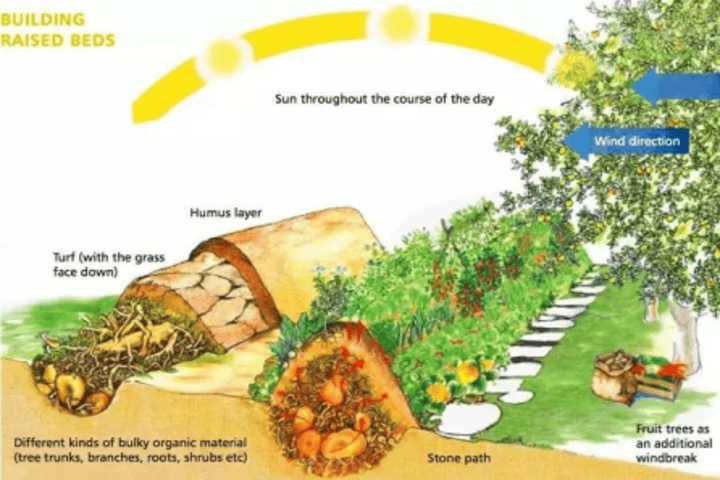
It’s important to remember that certain types of wood should not be used; they are black walnut, cherry, locust, and cedar. These kinds of woods are known to be toxic to plants and animals or take a very long time to decompose. It should also be noted that although all of the images you find of these mounds online depict the logs laying flush, you should consider angling your logs in different directions to optimize moisture-holding capabilities.
When placing your logs, consider the xylem and phloem, which translocate nutrients and water within plants like straws. These straws will hold water in your buried logs, and the more quickly they can be filled, the more efficient they will be at storing it. Some logs may be placed facing upward to catch rainfall from above. Other logs can be laid on their sides where you notice water flows, like downhill. So while the images look nice and tidy, you should really keep your logs pointing in all directions.
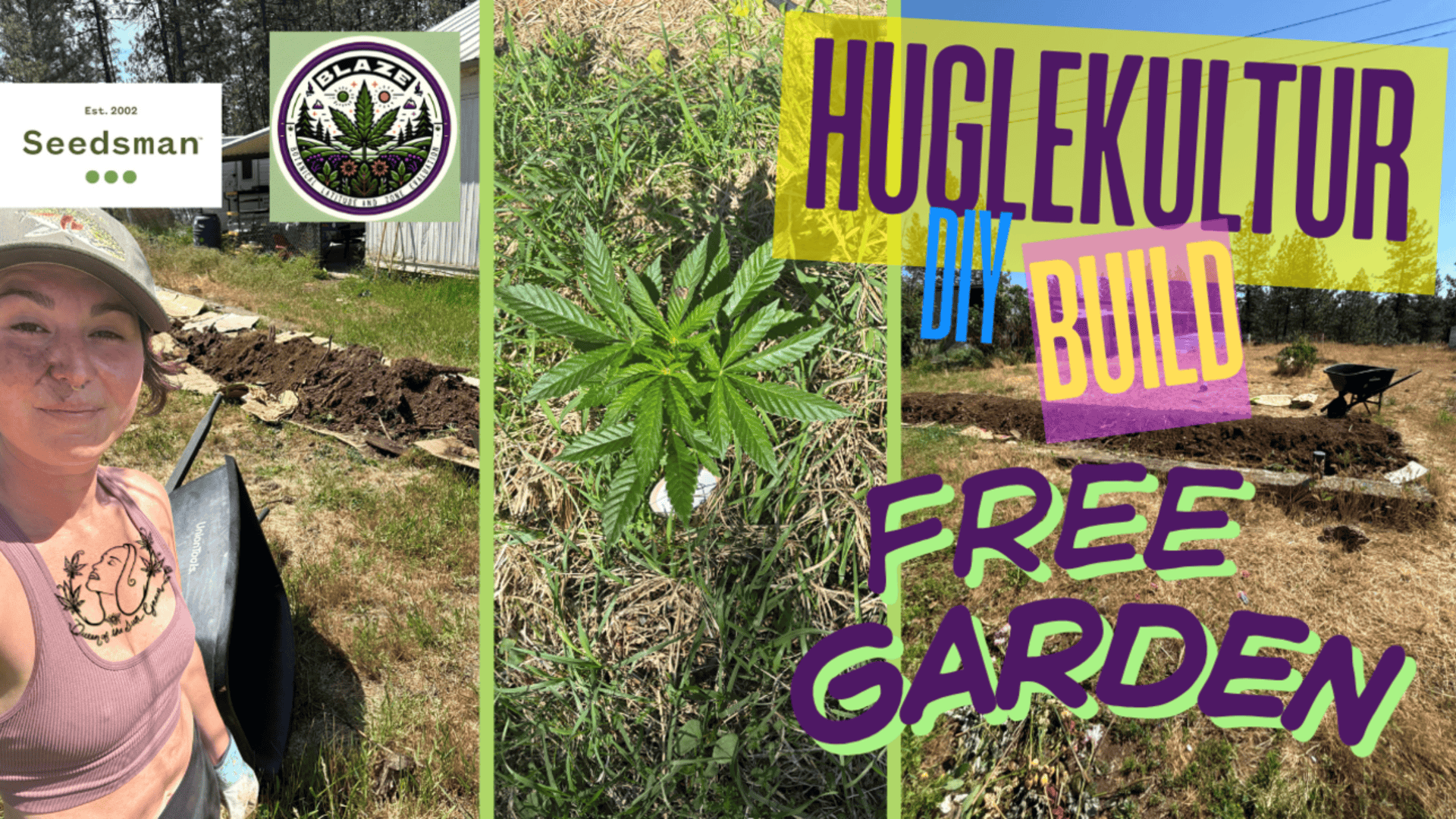
Check out my recent video I Built a Hugelkultur Garden Bed for FREE (Using Only Recycled Materials)
Wood Decomposition & Nitrogen
Another consideration is the age of the wood being used, and whether it will rob your soil of nitrogen. If it is freshly cut, it will absorb nitrogen during its first year in the ground, as nitrogen is needed for decomposition. If using fresh wood, add lots of nitrogen-rich materials like fresh cut grass or manure and plant clover and legume species that fix atmospheric nitrogen into the soil, or other plants with low nitrogen requirements. When using older, decaying logs, you can produce anything you want without worrying about low nitrogen levels.
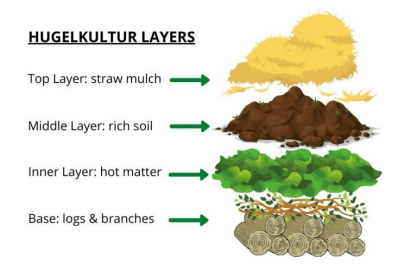
Begin your pile by laying down the largest pieces of wood first and then covering them with limbs, sticks, wood chips, and leaves. The optimal height for these beds is a minimum of 2-3 feet, but feel free to make them as large as you want. The bigger they are, the longer they will last. It is reported that most of these beds will have completely broken down after 6-8 years. This will vary depending on the type of wood used, the size of the logs, the amount of moisture they encounter, and the organisms present.
Carbon Sequestration
By building a hugelkultur bed, you are actively sequestering carbon in the soil by burying logs rather than burning them. You are also creating unique habitats for soil-dwelling critters, large and small. You will have abundant carbon-feeding microorganisms, such as fungi, which will attract more nematodes, and you may even encounter wood rats and groundhogs. While they may eat some of your plants, this is okay; they are improving your soil tilth, aerating the soil and helping break down the logs, contributing to healthier soils.
Sometimes we must remember that we are sharing this planet with all beings. It is not just ours alone to rule and conquer, but to share and tend to. As these organisms break down your logs, they unlock nutrients, providing your plants with nutrients without having to fertilize them.

Once you have a large pile of woody debris, you can begin covering it with varying stages of organic matter, such as a compost pile. This will provide a plentiful array of nutrients just waiting to be broken down by microorganisms, providing your plants with a stable nutrient source. Food scraps, weeds that have not gone to seed, untreated grass clippings, animal bedding, and aged manure* and compost are welcome on this pile.
Finishing Your Hugel Kultur Mounds
After you have built up your pile sufficiently, you will want to cover it with soil; this is why digging a trench is the traditional method for building these beds. When you dig a trench, you can use the soil dug up to cover your mound. If you did not dig a trench, you would want to bring your soil from elsewhere. This could be purchased bulk soil from a soil yard, or if you are building swales or a pond elsewhere on your property, you could use that. You want enough soil to cover the entire pile well enough that water will not wash it away, exposing the materials beneath. Luckily, you will only need to water your mounds occasionally, as they reduce water use significantly.

Remember those xylems and phloems we talked about? As they fill up with water, they turn those logs, branches, and sticks into sponges that slowly release water, continuously watering your plants without picking up a hose. The more logs you have, the more water your mounds can store and the less often you will need to water them.
Depending on your average rainfall, you may never have to water these beds, eliminating the need for irrigation. Since these mounds are on a slope, any water applied to them will wash away the soil covering the mounds. This means you will want to get these covered with plants as soon as possible.
Related Article:Optimize Your Garden With Irrigation
Once my mounds were built, I covered them with a chicken forage blend of various ryes, clovers, and buckwheat. I also threw in fenugreek, daikon radish, zinnias, and dill seeds before covering with straw. At the base of the mounds, I planted a variety of squash and melon seeds like cantaloupe, watermelon, birdhouse gourds, butternut squash, sugar pie pumpkins, and zucchini. These plants will help stabilize the mound and provide food and habitat for beneficial organisms. Once the plants are large and well developed, I may let my chickens out to scratch in the grass and contribute more nutrients in their waste. Be careful allowing your chickens free range, as they will scratch down to the soil if the plants aren't well developed with deep roots.
Covering Your Hugelkultur Mounds with Plants
Planting your hugelkultur mound immediately after construction is one of the most important steps in its success. Establishing vegetation quickly helps reduce erosion, retain moisture, accelerate the decomposition of woody materials, increase microbial diversity, and create a thriving ecosystem from the start. The goal is to cover as much bare soil as possible while building layers of beneficial plants that support one another.
When selecting plants, focus on a diverse mixture of nitrogen fixers, pollinator plants, dynamic accumulators, herbs, vegetables, and native perennials. Diversity above ground creates diversity below ground, resulting in healthier soil and more resilient plants.
Nitrogen-Fixing Plants
These plants help offset the nitrogen tie-up that can occur as fresh wood begins to decompose.
Hairy vetch
Lupine
Fava beans
Field peas
Cowpeas
Alfalfa
Crimson clover
White clover
Dynamic Accumulators
These plants develop deep roots that mine nutrients from lower soil layers and make them available to surrounding plants.
Comfrey
Yarrow
Dandelion
Chicory
Pollinator and Beneficial Insect Plants
These species attract pollinators and predatory insects, helping create a balanced garden ecosystem.
Calendula
Borage
Dill
Fennel
Cilantro
Milkweed
Buckwheat
Bee balm
Culinary and Medicinal Herbs
These herbs provide harvestable yields while supporting biodiversity and beneficial insects.
Lemon balm
Thyme
Oregano
Sage
Chamomile
Lavender
Companion Plants for Cannabis
Many of these plants help attract beneficial insects, improve soil health, or create a more diverse rhizosphere around cannabis plants.
Basil
Calendula
Yarrow
Dill
Cilantro
Borage
Clover
Comfrey
Plant densely and think in layers. Combine tall plants with medium-height species and low-growing ground covers to maximize photosynthesis and protect the soil surface. Shade-tolerant plants can be tucked beneath larger plants while sprawling species fill open spaces. Nature rarely leaves bare soil exposed, and your hugelkultur mound will perform best when every available niche is occupied by living roots.
Related Artilce: Beyond Buds:Maximizing Your Garden With Companion Planting

Check out this Sour Diesel plant from the 2026 BLAZE Project!
Conclusion
Have fun and experiment with plants you can enjoy in your food, in a bouquet, or simply as an addition to the landscape. Cannabis does exceptionally well in these mounds and can create excellent shade for plants such as basil, which is known to increase terpene production, and kale, a tasty addition to Italian sausage and white bean soup. These mounds will become beautiful additions to any landscape, and while they may be a bit of work at first, they are straightforward to manage and maintain for years to come with minimal effort.
I hope this encourages you to try building your huglekultur mounds. Remember, you will be storing carbon in the soil, improving its health by increasing its organic matter and creating a habitat for soil organisms, providing long-lasting nutrients for your plants in a water-storing sponge that will maintain itself. This is an excellent way to steward your land and has been incorporated into many permaculture gardens worldwide, so build one on your land next.