

The cannabis industry has emerged from the shadows to become an important asset for both medical and recreational users around the world. With legalization movements gaining traction globally and the medical/health benefits of cannabis being increasingly recognized, the market for this great plant is expanding at an unprecedented pace. As it evolves, so does the need for meticulous product scrutiny to ensure consumers are provided with products that have understandable metrics informing them of what’s inside.
As the industry continues its rapid evolution, ensuring product consistency, safety, and transparency becomes increasingly crucial. One of the primary instruments to guarantee these attributes is the Certificate of Analysis (COA). COAs are certificates that primarily tell the cannabinoid levels in cannabis products, usually by converting the amount of cannabinoids into a percentage. These play an indispensable role in documenting potential potency and flavor profiles, establishing them as a cornerstone of the modern cannabis industry.
Consumer expectations are on the rise. With a broader acceptance and understanding of cannabis, people are no longer willing to settle for anything less than premium quality. This means products should not only deliver the promised therapeutic effects but also be free from harmful contaminants. Ensuring consistency so that consumers get the same experience every time they use a product.

Enter The Certificate Of Analysis (COA)
Amidst these rising demands, the COA has emerged as an essential tool. It's basically a massive, itemised check list, providing an in-depth look into the cannabinoid and terpene profile. By quantifying and listing the levels of various cannabinoids and terpenes present in a product, such as THC, a COA gives both producers and consumers a clear understanding of the product's chemical makeup, and therefore potency.
Why Use A COA?
Understanding Flower Assessment vs. Variety Assessment
A COA (Certificate of Analysis) is predominantly issued for the sale of cannabis flowers. In this context, a 'grow-out' is evaluated for its cannabinoid content, which is then reflected in the COA. The value of this cannabinoid content often directly influences the flower's market price. However, it's essential to note that cannabis plants are not uniform throughout; their cannabinoid content can vary between different parts of the plant. Typically, the apical bud is tested for cannabinoid content, with the resulting data presented on the COA. Consequently, non-apical buds often have a slightly lower cannabinoid concentration, which may lead to marginally skewed data on the COA. While specific cultivation techniques can enhance the consistency of cannabinoid distribution, the inherent nature of the plant means it matures at varying rates. As a result, the lower, often shaded sections of the plant might exhibit reduced cannabinoid levels.
Although the majority of seed banks don’t have COAs on their varieties, they are still useful when buying seeds. Many seedbanks show THC percentage and make claims about potency, however, these are not back-up by COAs. Not only do COA’s provide a guide to the plants full genetic potential but it also acts to authenticate the producer. This way customers know what they are buying and can see it authenticated. Although seeds are individuals and therefore can have different levels of variation in a pack, the COA is there to show what a variety is capable of. The other crucial aspect to consider is, who generated the COA for a particular variety? It may have been derived from a plant nurtured by an expert grower with years, if not decades, of experience. This means the COA might not showcase a typical representation of that variety but rather its maximal genetic potential. Recognizing this distinction — between the average cannabinoid yield of a variety and its utmost capability — is pivotal when relying on COAs for variety assessment. Nevertheless, a COA is a good milestone for what to aim for, allowing growers to tweak their systems to get closer to the full genetic potential of the variety, as was demonstrated by the COA.
How To Read a COA
Usually, a very handy calculation and summary is provided by the lab to ensure that vital information is communicated. For example, it might say Cannabinoids: THC 23%, CBD 1.2%, Major Terpenes: 1.2% Myrcene, 0.9% Pinene, 0.5% Limonene.
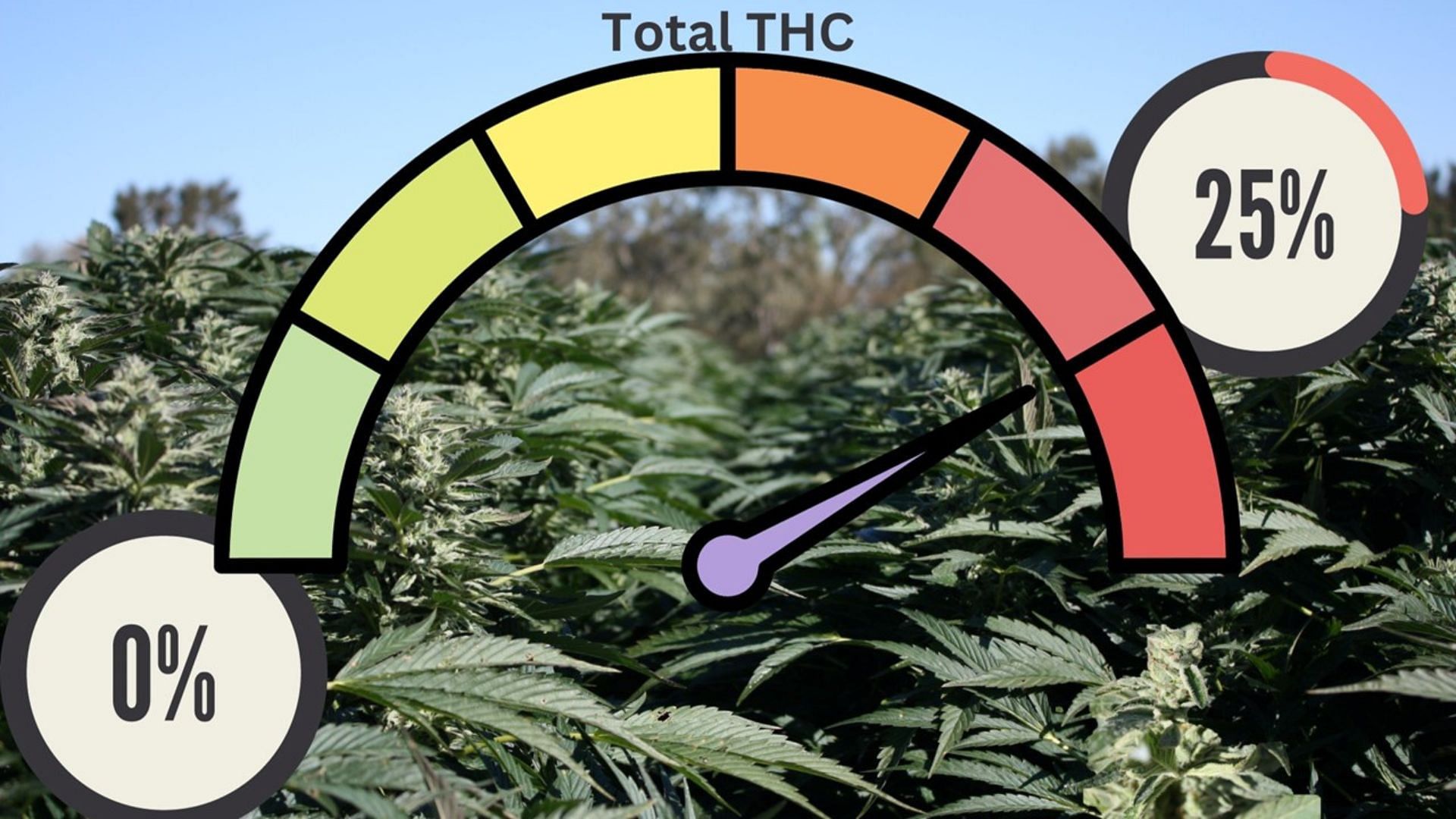
This gives a clear idea of potency, high at 23% THC, although roughly a 23:1 ratio, means it can be potentially potent but with over 1% CBD, it wouldn’t necessarily have the strongest psychoactive effect. Generally, THC dominant plants are graded as follows: 10-15% THC is considered low, 15-20% medium, 20-25% high, over 25% very high.
Whilst the 3 major terpenes give an idea of total terpene content in this example (over 2.6%), usually anything above 1% is good and over 3% is fantastic. Whilst highlighting which terpenes dominate the profile gives users an indication of some of the other characteristics, such as aroma, flavour and in some cases, even effect.
However, the raw data is usually provided too, and gives you a reading, usually in milligrams per gram (mg/g). A reading such as 23mg/g means for every gram of bud, there is 23mg (0.023g) of that cannabinoid or terpene. However, since the plant produces THCa and not much THC, the chemical analysis usually involves a conversion for decarboxylation of THCa to THC. Both THCa and THC are usually present but THC usually only in tiny amounts, so if the testing method itself doesn’t convert (decarboxylate) the THCA, then this is the usual formula applied to calculate total THC: Total THC = (THCa x 0.877) + delta9 THC.

Advantages of Certificates of Analysis (COA)
Consumers and healthcare professionals alike are given a sense of confidence when they can access the detailed chemical composition of cannabis products. COAs provide this window into product content, allowing consumers to make informed choices based on potency, flavor, and other factors such as contaminants. Whether they be pesticides, heavy metals, or microbes, unwanted substances can pose significant risks to consumer health. COAs often encompass a comprehensive assessment of these potential contaminants, ensuring products are safe for consumption. This not only safeguards public health but also aids in establishing the credibility of cannabis producers, including with the regulators. With the increasing regulation of cannabis across jurisdictions, COAs ensure that products adhere to local and international standards. They serve as evidence that a product contains permissible levels of THC, for instance, or adheres to stipulated standards of purity and safety.
For producers, COAs offer valuable insights into the cannabinoid and terpene profiles of their crops. This information can be used to refine cultivation and extraction methods, ensuring consistent product quality and enabling the development of targeted products for specific therapeutic applications. This can also aid in R&D to further understand which combinations of phytochemicals are important for specific reasons. For many consumers, especially those new to cannabis, understanding product content can be a challenge. COAs can play an educative role, helping consumers understand the intricacies of cannabinoid profiles, and guiding them to products that best suit their needs. Many unscrupulous seedbanks will make hyped claims about THC numbers to dupe customers into shady purchases, COA’s can help protect customers, and if in doubt, ask for the COA.
Challenges and Considerations of COAs
While the advantages of COAs are plentiful, the current landscape of cannabis testing isn't without its challenges. One emerging concern is the potential bias towards labs that provide inflated cannabinoid results. As higher potency often translates to higher market value, labs reporting elevated levels might receive more business, potentially undermining the accuracy and trustworthiness of COAs. Moreover, our understanding of cannabis's full range of compounds is still evolving. While major cannabinoids like THC and CBD are regularly featured in COAs, many minor cannabinoids, terpenes, and flavonoids might escape detection due to current testing limitations. These compounds can significantly contribute to the therapeutic efficacy of cannabis products, a phenomenon often termed the "entourage effect.".
Some evidence has been provided that other lesser known cannabinoids such as THCP, provided by the plant in tiny amounts, are reported to be at least 30 times more potent than THC. This means that meaningful doses can be close to the detectable levels of current test methods, thus potentially not even identified. Eventually, these compounds will be recognised and included, but for now, if it’s not tested for, its not written in the COA!

Pro’s and Con’s of COA’s
Pro’s List for COAs:
- Quality Assurance: COAs provide an in-depth analysis of the chemotype (chemical profile), ensuring that the product meets specific quality standards.
- Consumer Trust: With a transparent COA, consumers can be confident in the product's authenticity, potency, and safety.
- Regulatory Compliance: Having a COA can be essential for products to be allowed on the market.
- Informed Decisions: COAs can guide producers in refining cultivation and post-harvest processes, ensuring consistent, high product quality.
- Transparency: By detailing the levels of cannabinoids, terpenes and contaminants, a COA ensures that consumers are aware of what they are consuming.
- Safety: COAs can highlight the presence of harmful contaminants, ensuring that products on the market are free from substances that might pose health risks.
Cons List For COAs:
- Lab Inconsistencies: Not all labs have the same testing standards or methodologies, which can lead to discrepancies in results.
- Potential Bias: Labs that consistently produce higher potency results might get more business, leading to potential favoritism or skewed results.
- Limited Scope: Current COA methodologies might not detect all the potent chemicals in cannabis, potentially missing some vital components.
- Added Costs: Conducting tests for COAs can add to the production cost, which might be passed on to the consumer.
- False Assurance: A COA is only as good as the lab that produces it. If a lab's standards or ethics are compromised, it could give consumers a false sense of security.
Seedsman - Attempting To Stay Ahead!
Seedsman has consistently led the seedbank industry with its innovative offerings. They were among the first to introduce Autoflowering strains, as well as strains rich in CBD, CBG, THCv, and CBDv. Beyond their diverse product range, Seedsman is elevating industry transparency by striving to provide Certificates of Analysis for as many of their strains as possible. And instead of relying on a single laboratory, Seedsman engages multiple labs across various jurisdictions. This multi-lab strategy not only enhances the credibility of their tests but also ensures a higher level of transparency, as it minimizes potential biases and discrepancies that might arise from using a single source.
Shop For Strains with Certificates of Analysis Now
As a leader in setting benchmarks for quality and transparency in the cannabis industry, Seedsman is pleased to announce the launch of an innovative feature designed to enhance our customers' experience. This new function allows users to effortlessly search for cannabis strains accompanied by a comprehensive Certificate of Analysis.
To access this feature, we invite you to follow this link to our lab report filter. Here, you will find a curated selection of products, each with a detailed Certificate of Analysis. This certificate provides an at-a-glance view of crucial information, such as the terpene profile, cannabinoid levels, and performance data of each strain. We encourage you to explore this tool to make informed decisions about your cannabis selections.

Conclusion
The key to navigating the challenges of the COA lies in continuous refinement and standardization of testing methodologies. Investing in research to uncover the full spectrum of cannabis compounds and improving detection methods will ensure COAs remain comprehensive and reflective of a product's true composition. Furthermore, the introduction of third-party audits and blind sample testing can counteract potential biases in lab results. By ensuring labs adhere to a standardized testing protocol and face regular scrutiny, the industry can safeguard the integrity of COAs.
Certificates of Analysis are signposts of transparency, safety, and consistency in the cannabis world which had previously depended on visual and olfactory senses (AKA bag appeal). While there are challenges to navigate, the foundational role COAs play in ensuring consumer safety and product integrity is undeniable. By continually refining testing methods and introducing stringent regulatory oversight, COAs will remain an integral tool in the burgeoning world of cannabis.


