
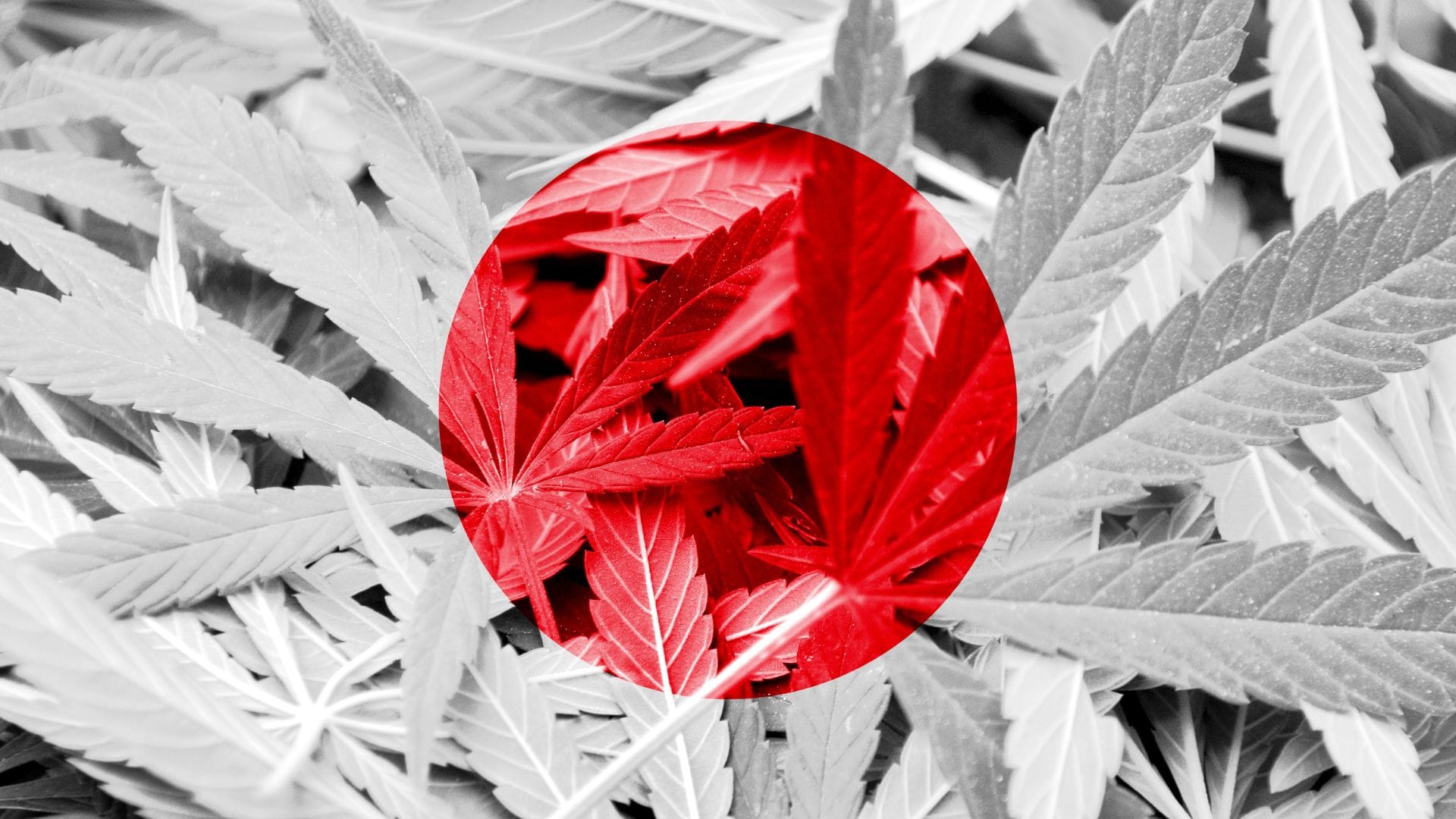

The earliest evidence for the human use of cannabis comes from Japan. In this article we will look at the history of cannabis use in Japan, from antiquity until modern times.
Early Use of Cannabis in Japan
The earliest evidence in the world for the cannabis plant comes from north-eastern China and Europe, from around 12,000 years ago, after the last great Ice Age. Even though cannabis may possibly have been used at that time for fibre, food, medicine or intoxication, no supporting evidence has so far been found by archaeologists for human use before around 8500 BCE.
The main term for cannabis in Japanese is taima, which in the Kanji script (used in Japan and China) means 'big fibre plant'. As the term taima is close to dà má, the Mandarin Chinese term for the cannabis plant, it seems probable that cannabis first came to Japan from China.
The period of Japanese culture known as 'Jōmon' dates from around 8000 BCE to 300 BCE. The several tribes comprising Jōmon culture, who were spread throughout Japan, were hunter-gatherers and early agriculturalists. The earliest definitive evidence for the use of cannabis by humans comes from Jōmon culture on Okinoshima, an island off the south-western coast of Japan. Cannabis seeds embedded in pottery found there have been dated to 8200 BCE.[i] Cannabis was used throughout the Jōmon era to make matting, baskets, clothing, fishing nets and strong rope for pulling heavy objects.[ii]


Continuous Cultivation of Hemp
After the Jōmon era, cannabis continued to be cultivated widely throughout Japan. Although all fibre remains in the Yayoi era (3rd cent BCE–3rd cent CE) are of cannabis, in the Nara era (710–794 CE), the fibre plant ramie (a species of flowering nettle) became more popular, though cannabis continued to be cultivated. Between the 12th and 16th centuries, cannabis was cultivated in most regions of Japan. However, between the end of the 16th century and the end of the 19th century, cotton production replaced hemp in many places, though cannabis continued to be harvested for nets, ropes, the thread for straw floor mats (tatami), mosquito nets, paper production, bow strings, sandal straps and summer clothes.
The major growing areas were Yamato (near Nara), Omi (near Osaka) and Echigo (near Niigata). Around 1850, wood pulp began to replace hemp for paper production. During World War 2, Japanese hemp production increased for the manufacture of uniforms, ropes and parachute cords.[I]
Traditional Uses of Hemp
Besides the practical uses mentioned above, hemp was also used in several other contexts of Japanese culture. Traditionally, Japanese coins (yen), which have a hole in the middle, were strung on a string of hemp. A baby's umbilical cord used to be tied with a string of hemp.
Cannabis has also long been entwined within the Shinto religion of Japan: it is used for the bell ropes in shrines, the ropes at the shrines' entrances, and the curtains. In the 8th-century book of Japanese mythology, Kojiki, hemp is one of two types of cloth offered to the gods. Cannabis and mulberry used to be offered to the village boundary deities (kami) for protection. Between the 9th and 16th centuries, charms containing cannabis (known as oshi) were distributed by Shinto priests. The charms were to be kept on a special mantlepiece at home. Until the end of the Edo era (1600–1868), a betrothal present representing a couple's long union, known as shiraga ('grey hair'), was made of hemp.[i] An ancient custom in Japan, which persists in some places, is to burn cannabis stalks (ograra) to welcome back the souls of the dead.[ii]
Hemp Clothing
In the 13th and 14th centuries, cloth made from cannabis fibre, known as aratae ('god cloth'), used to be presented at imperial enthronement ceremonies. After a break of 583 years, 'god cloth' was again presented at the enthronement ceremonies for Yoshihito (Emperor Taisho) in 1915, for Hirohito (Emperor Showa) in 1928, and for Akahito (Emperor Heisei) in 1990.[i]
The special status of cannabis cloth was also apparent in the hemp suit (kamishimo) of the samurai, the hereditary, military nobles who held office from the 12th century until their abolition in 1876. Clothes for Shinto priests and the imperial family are still made from hemp.

Modern Legacies of the Japanese Hemp Industry
Besides the term taima—used to refer to cannabis in Japanese—another common term for cannabis is asa, which broadly translates as 'hemp', though asa may also refer to other plants used for fibre, such as flax. However, the main meaning of asa is 'hemp'. Throughout Japan there are numerous towns and villages with 'asa' in the name, indicating that the place used to be a centre of hemp production. These include Miasa ('beautiful hemp') in Nagano Prefecture, Oasayama ('cannabis mountain') in Nakatado County, Asa in Kagawa Prefecture, and many more. Some common Japanese family names, such as 'Asagi', 'Aa' and 'Touma' are derived from ancestors who worked in the hemp industry.[i]
Production Centres and Licences
On 10th July 1948, when the USA was still in control of the administration of Japan, the Cannabis Control Law was passed. This law prohibited nearly all kinds of uses of cannabis, including medical applications, even though cannabis had been used for 1,000 years for a variety of medical conditions and had previously been included in Japanese pharmacopoeias, the first of which was published in 1886. The law was passed at the height of the frenzy in the USA about 'reefer madness' and the violence (wrongly) associated with cannabis inebriation. In Japan, cannabis is still widely believed to be an addictive drug that causes violence and insanity.
Nevertheless, licences were issued for hemp production for specific purposes. In 1950, 4,000 hectares were used for hemp production; by 1996, only 12.4 hectares were cultivated. In 1992, 102 licences were issued for purposes such as for ropes at Shinto shrines, strings for bows, drums, kites and high-quality clogs, belts for sumō wrestlers, and for imperial clothes.[i]
Cannabis also still features in traditional Japanese cuisine. A popular condiment is a seven-spice mix known as shichimi (seven-flavours) tōgarashi (chilli pepper); one of the ingredients is hemp seed.[ii]
Hemp Growing Regions
The main hemp growing area in Japan is in Tochigi Prefecture, around 50 km north of Tokyo, where 90% of Japanese hemp is grown. Even though farmers are required to grow hemp from particular seeds (known as the tochigishiro strain) that yield low-psychoactivity cannabis, this kind of hemp nevertheless contains an average of 3.9% THC;[i] so it could get you high. Some hemp is also officially grown in Tokushima Prefecture, in the south of Japan, and in Shikogu, which is adjacent. In Agatsuma, a town in Gunma Prefecture, also around fifty km north of Tokyo, young people are now learning about hemp cultivation.
Hokkaido Island
Early in the Meiji era (1867–1912), concerned that the northern Japanese island of Hokkaido (a large island in north Japan) was vulnerable to invasion by Russia, the Japanese government established the Hokkaido Colonization Office in 1869, to increase the population of the island. Around thirty factories were started, and one of the main crops cultivated was cannabis.[i]
Cannabis still grows wild and abundantly in Hokkaido, and although psychoactively quite weak (average 3.4% THC),[ii] since the 1970s there has been annually a small, steady influx of cannabis enthusiasts who go there to harvest wild weed. In season time, in October, the police occasionally bust people with suitcases or car boots full of weed. In 1996, 1.62 million wild cannabis plants growing there were destroyed by the police.[iii] Again, in 2003, 1.47 million wild cannabis plants were destroyed.[iv]

Cannabis Inebriation and Penalties
There are a few references in samurai poems, from 1600–1868, to hemp cannabis; and occasional anecdotes may be found in literature from that time in which eating cannabis made people confused.[i] However, there is little in the historical record of Japan, apart from a few stories, to indicate that cannabis was ever generally used as an inebriant. This situation changed in the 1960s.
The first known application of the Cannabis Control Law was in 1967, when a bunch of 'alternative' folks were busted for growing weed at Shinshu, in Nagano Prefecture in central Japan. As in Europe, North America and other places, the hippie movement also swept through Japan from the 1960s to the 1980s. The hippies embraced environmental causes and the use of cannabis and LSD; some identified with the ancient Jōmon culture, when cannabis was an important and widely used crop.[ii] Pon (Yamada Kaiya), a prominent counter-cultural figure in Japan who died in 2010, wrote an autobiography, I am a Hippie (Ai amu hippī: Nihon no hippī mūbumento '60–'90), detailing the history of the hippie movement in Japan. Pon was highly articulate in assessing the significance and politics of cannabis.[iii]
However, since the introduction of prohibition in 1948, penalties in Japan remain some of the harshest in the world, where simple possession of cannabis can lead to five years in prison, while cultivation and trafficking can result in a ten-year sentence and a 3 million yen fine. As a consequence, Japan probably has the most expensive hashish in the world, where 1 gram can cost USD $100. Many prominent actors, musicians, sportsmen and others have been sentenced for smoking cannabis. Paul McCartney was famously arrested in 1980 for 219 gms, but after just eight days in prison he was deported.
In 1972, 853 people were arrested for cannabis violations; 2,063 people were prosecuted in 2005, 2,423 in 2006, 4,570 in 2019, rising to 5,034 in 2020. A survey in 2019 indicated that 1.8% of Japanese people had tried cannabis at least once in the past year, which is well below the percentage in most countries.[I]
Modern Reform Movements
Over the decades, there have been various attempts by individuals and organisations to change the cannabis laws in Japan, but with no success so far. In 1999, the Japanese Association for Medical Marijuana (JAMM) was founded to campaign for the legalisation of medical weed.[i] In 2013, CBD was legalised, and now there are many drinks, oils and edibles on sale, though the market is still relatively small. Cosmetics containing CBD are particularly popular.[ii]
However, the government remains firmly opposed to legalizing cannabis generally, even though prominent figures, such as Akie Abe (the wife of former prime minister Shinzo Abe), have spoken in support of the legalisation of medical cannabis. In 2021, a Japanese Ministry of Health report on cannabis only recommended permission for clinical trials of cannabis-derived medicines, such as Epidiolex. So, for the time being, Japan remains well behind many other countries when it comes to appreciating the potential benefits of all forms of cannabis for society.
References
Andrews, William (2020). 'A short history of the Japanese hippy movement'. Wordpress, 17th Nov.
https://throwoutyourbooks.wordpress.com/2020/11/17/short-history-japanese-hippie-movement/
The "Hemp in Japan" Library.
http://www.japanhemp.org/en/hemplib1.htm
MasterClass (2023). 'Shichimi Togarashi Recipe: How to Make Japanese Seven Spice'. MasterClass.com, 5th January.
https://www.masterclass.com/articles/shichimi-togarashi-recipe
Melchy, Yaxkin (2021). 'The Ancestors of a New Society: The Tribes (Buzoku) and their Journey through the Misunderstandings of the Japanese Countercultural Scene'. IAFOR Journal of Cultural Studies, vol. 6, issue 1, pp. 69–86.
https://iafor.org/archives/journals/iafor-journal-of-cultural-studies/10.22492.ijcs.6.1.04.pdf
Nendick, Michael (2001). 'Group campaigns to make cannabis a legal medicine'. Tokyo: Japanese Association for Medical Marijuana (JAMM).
http://www.japanhemp.org/en/jamm.htm
Nendick, Michael (trans. Kayoko Ishihara) (2002). Cannabis in Japan (unpublished manuscript with primary sources in Japanese).
Samorini, Giorgio (2019). ‘The oldest archaeological data evidencing the relationship
of Homo sapiens with psychoactive plants: A worldwide overview’. Journal
of Psychedelic Studies, vol. 3, no. 2, pp. 63–80.
https://akjournals.com/view/journals/2054/3/2/article-p63.xml
Wihlander, Beatrice (2022). 'Legalizing Cannabis in Japan may accelerate CBD market growth, fighting taboos'. Nutrition Insight, 18th August.
https://www.nutritioninsight.com/news/legalizing-cannabis-in-japan-may-accelerate-cbd-market-growth-contradicting-taboos.html
Wikipedia (2022). 'Cannabis in Japan'.
https://en.wikipedia.org/wiki/Cannabis_in_Japan
[1] Samorini (2019:68).
[1] Nendick (2002:8).
[1] Nendick (2002:10–11).
[1] Nendick (2002:13).
[1] Nendick (2002:37).
[1] Nendick (2002:31).
[1] Nendick (2002:3–6).
[1] Nendick (2002:15).
[1] MasterClass (2023).
[1] Nendick (2002:55).
[1] Nendick (2002:13).
[1] Nendick (2002:85),
[1] Nendick (2002:73).
[1] Wikipedia (2023:4).
[1] Nendick (2002:22–23).
[1] Andrews (2020); Melchy (2021).
[1] The "Hemp in Japan" library (1995).
[1] Wikipedia (2023:3–6).
[1] Nendick (2001).
[1] Wihlander (2022).