


Co-authored by Jorge Cervantes and Dr. Gary Yates
INTRODUCTION
In the vast world of cannabis cultivation, understanding the plant's essence – its genetic makeup – is paramount. This article, "Unraveling the Genomic Secrets of Cannabis: A Deep Dive into the World of Cannabinoids," provides an enlightening journey into the heart of the cannabis plant, focusing on the genes responsible for its unique and revered phytochemical properties. The main topics covered include a recap of cannabis and cannabinoids, a detailed look into the genes behind the magic of cannabinoid production, the implications of these genetic findings for the future of cannabis, and the potential for genetic optimization in cannabis cultivation.
The importance of this article cannot be overstated. With the increasing global interest in cannabis for recreational and medicinal purposes, understanding its genetic intricacies is crucial. The study by Peter A. Innes and Daniela Vergara, which this article delves into, offers invaluable insights into the genes responsible for cannabinoid production. These findings not only deepen our appreciation for the complexity of the cannabis plant but also open up exciting possibilities for its cultivation and use. For growers, this could mean the potential to breed strains with enhanced cannabinoid production. For medical users, it could pave the way for strains tailored to specific therapeutic needs. And for every cannabis enthusiast, it offers a deeper understanding and appreciation of the plant's versatility and potential.
The authors of this article, Jorge Cervantes and Dr. Gary Yates, bring a wealth of knowledge and expertise to the table. Jorge Cervantes, with his 40 years of experience in cannabis cultivation, emphasizes the importance of understanding the scientific principles and fundamentals of cannabis cultivation. His vast body of work, including "The Cannabis Encyclopedia," is a testament to his commitment to organic growing practices, sustainable cultivation, and fostering a community of informed growers. With his solid academic background in Genetics and Plant Science, Dr. Gary Yates offers a unique perspective on the therapeutic potential of the cannabis plant. His dedication to understanding the unique biological and medicinal properties of cannabis, combined with his commercial acumen, makes him a leading voice in the field.
In conclusion, this article is a collaborative effort between two giants in the field of cannabis. Their combined expertise offers readers a comprehensive and insightful look into the genetic secrets of cannabis. As the cannabis industry continues to evolve, it is essential to heed the guidance of experts like Cervantes and Dr. Yates, ensuring that we move forward with knowledge, responsibility, and a deep appreciation for this remarkable plant.
A Deep Dive Into The World Of Cannabinoids
Hello, fellow growers and cannabis enthusiasts!
Today, we're going on a journey into the core of the cannabis plant – its very genetic centre and the genes that create that unique formulation of phytochemicals revered by so many. A fascinating study by Peter A. Innes and Daniela Vergara has given us a closer look at the critical genes responsible for cannabinoid production. These are the compounds that give our beloved plant its spectacular properties, including its medicinal value and the recreational effects we all love and appreciate.
Cannabis and Cannabinoids: A Quick Recap
Before we dive into the study, let's take a moment to brush up on the key principles. As you know, the cannabis plant produces a variety of compounds known as cannabinoids. The most well-known among these are THC (tetrahydrocannabinol), which is responsible for the 'high' we associate with cannabis, and CBD (cannabidiol), which is often used for its potential health benefits. But did you know that the plant produces these compounds through a complex biosynthesis process, involving several critical enzymes?
The Genes Behind the Magic: A Closer Look
Innes and Vergara's study focused on the genes coding for three key enzymes in this process: Olivetol Synthase (OLS), Olivetolic Acid Cyclase (OAC), and Cannabigerolic Acid Synthase (CBGAS). These enzymes are responsible for creating the precursor molecules that are later transformed into cannabinoids like THC and CBD. Although this pathway has been known for some time, some aspects of how it translates into the amount of cannabinoids has remained elusive.
Just like the vast number of cannabis varieties that we can cultivate, thanks to the seemingly infinite combinations of their characteristics, the genetic makeup of cannabis plants shows a remarkable amount of variation. This variation extends to the genes responsible for cannabinoid production.
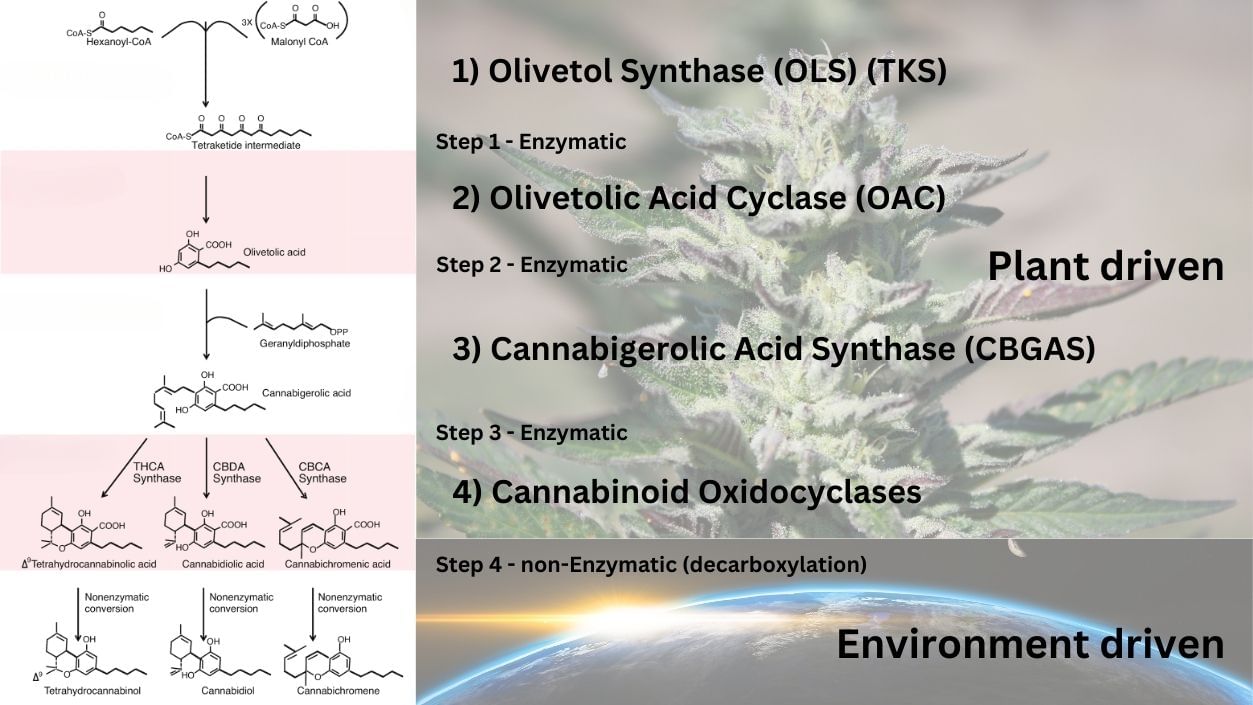
The researchers discovered that these genes varied in their copy number - in other words, some plants have more copies of these genes than others. Additionally, they confirmed that OLS, OAC, CBGAS, and the Cannabinoid Oxidocyclases (the enzymes that help produce THC and CBD) are located on separate chromosomes. But, interestingly, similar versions of these genes (known as homologs) are found close to each other.
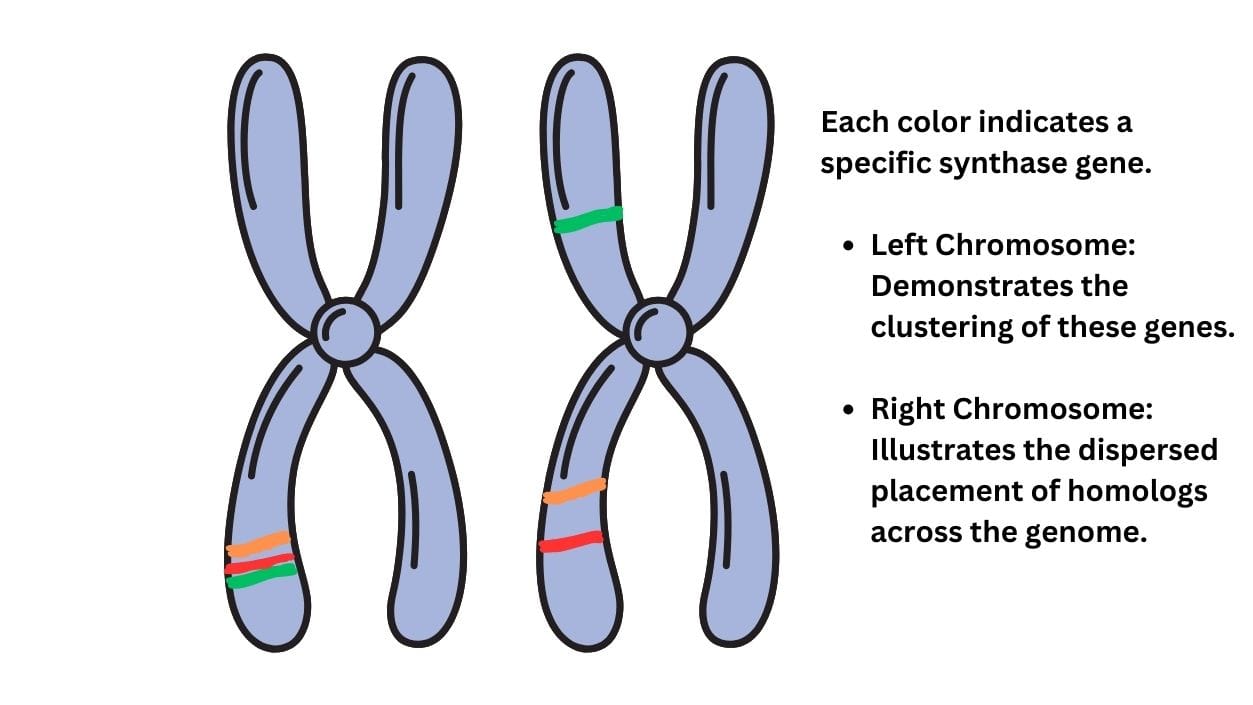
This implies a multiple-step regulation, which can partly explain how the cannabis plant is so varied in its chemical outputs. This idea is further compounded by the study's findings that each of these genes can also be read in various ways due to the large number of exons (sections of DNA code that make up the gene), leading to further variation.
In addition, the presence of CBGAS on the X chromosome (female plant specific) explains the dose difference between cannabinoids on male vs. female plants.
This study's findings are significant, giving us valuable insight into the genomic identity and variation of cannabinoid biosynthesis genes. This could be crucial for understanding the origin and evolution of this pathway, which is of considerable economic, social, and medicinal value.
What This Means for Cannabis
Let's translate this science into what it means for growers and cannabis enthusiasts.
Understanding the genetic workings of cannabinoid production allows us to grasp the enormous potential within our beloved cannabis plant. By identifying the genes responsible for the production of cannabinoids, scientists are one step closer to developing tools that could optimize these processes. If including more or less copies of essential genes can positively impact THC production, for example, breeding programs can be set up to target that.
For us growers, this could mean the possibility of breeding plants with enhanced cannabinoid production. Imagine being able to grow a strain of Cannabis sativa that produces even more of the cannabinoids you want - whether that's THC for a potent high or CBD for its potential health benefits.
For medical cannabis users, this could pave the way for strains tailored to specific therapeutic needs. Just as we already know the benefits of different strains – like how Cannabis sativa often gives an energetic, cerebral effect, while Cannabis indica might offer a more relaxing experience – this genetic knowledge could allow for even more targeted effects simply by having more or less copies of the same gene.
And for everyone who loves cannabis, understanding the genetics behind this plant can only deepen our appreciation for its complexity and versatility.
The Future of Cannabis Genetics
This study is just the beginning. As research into cannabis genetics continues to unfold, we'll discover even more about this incredible plant. Who knows what other secrets lie within its genome? The deeper we look, the deeper the levels get!
The potential for genetic optimization doesn't stop at cannabinoids. As we've seen with the vast variety of Cannabis sativa, indica, and ruderalis, each with their unique characteristics, the genetic diversity of this plant is astonishing.
The work of researchers like Innes and Vergara illuminates the path forward. As they explore the genetic landscape of cannabis, they open up new possibilities for understanding, cultivating, and enjoying this remarkable plant.
In the words of the researchers, this study provides "valuable insight on the genomic identity and variation of cannabinoid biosynthesis genes that will benefit future research on the origin and evolution of this pathway."
But for us, it’s even more than that. It's a testament to the fantastic complexity of the cannabis plant and a promise of exciting things to come in the world of cannabis cultivation and use.
As we continue to learn and grow together in this ever-evolving field, always remember that each plant, each variety, and each strain carries within it a story – a story written in the language of genes, and expressed in the beauty of its flowers and the potency of its cannabinoids.
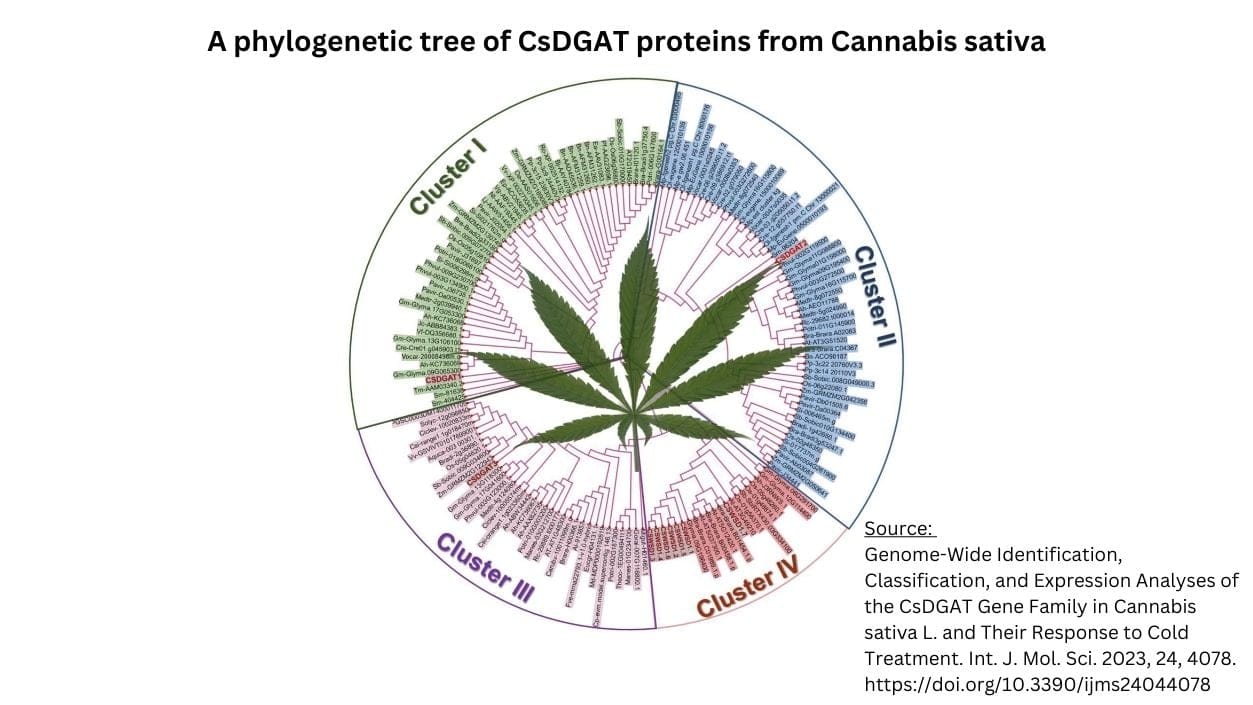
Below is a "family tree" (phylogenetic tree) representing a gene crucial to cannabinoid biosynthesis. This gene family is highly sensitive to environmental changes. Cold stress, for instance, triggers expression variations across the plant by impacting the genome. This accounts for the vast differences observed during the plant's growth.
So, the next time you tend to your plants, or enjoy the fruits of your labor, take a moment to appreciate the incredible genetic journey that has brought us to this point. Because, as this study shows, the world of cannabis is as deep and fascinating as it is green.
Happy growing, everyone!
__________________________________________________________________
References:
1. de Meijer, E. P. M., Bagatta, M., Carboni, A., Crucitti, P., Moliterni, V. M. C., Ranalli, P., & Mandolino, G. (2003). The inheritance of chemical phenotype in Cannabis sativa L. Genetics, 163(1), 335-346 - This study investigates the inheritance of chemical phenotypes in Cannabis sativa plants, focusing on the genetic mechanisms responsible to produce cannabidiol (CBD) and delta-9-tetrahydrocannabinol (THC).
2. de Meijer, E. P. M., Bagatta, M., Carboni, A., Crucitti, P., Moliterni, V. M. C., Ranalli, P., & Mandolino, G. (2005). The inheritance of chemical phenotype in Cannabis sativa L. (II): Cannabigerol predominant plants. Euphytica, 145(1-2), 189-198 - This paper aims to clarify the genetic mechanism responsible for the accumulation of cannabigerol (CBG) in specific phenotypes of Cannabis sativa L.
3. Innes, P. A., & Vergara, D. (2022). Genomic description of critical upstream cannabinoid biosynthesis genes. BioRxiv. This study provides valuable insights into the genomic identity and variation of cannabinoid biosynthesis genes, which are crucial for understanding the origin and evolution of this pathway.
4. Van Velzen, R., Schranz, M. E. (2020). Origin and Evolution of the Cannabinoid Oxidocyclase Gene Family. Genome Biology and Evolution. This research uncovers variations in multiple genes encoding the final steps in cannabinoid biosynthesis and discusses their origin, evolution, and phylogenetic relationships.
5. Tahir, M. N., Shahbazi, F., Rondeau-Gagné, S., & Trant, J. F. (2021). The biosynthesis of the cannabinoids. Journal of Cannabis Research. This review surveys the biosynthesis and biochemistry of cannabinoids, providing a thorough understanding of their production, which is required to engineer strains with specific cannabinoid profiles.
6. Cervantes, J., Yates, G., & Meyer, S. (2023). EPISODE 184: Understanding Cannabis Seeds with Jorge Cervantes, Dr. Gary Yates, & Stefan Meyer - YouTube. - In this video, the authors discuss their research and findings on cannabis genetics and its potential breeding and cultivation applications.


