

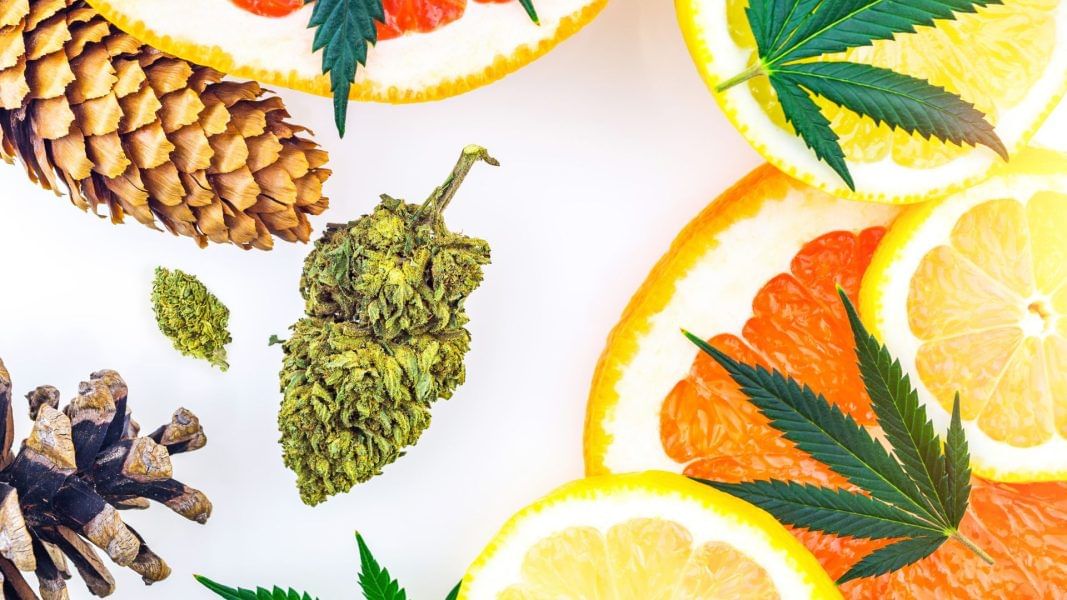
When reading up on cannabis or cannabis strains, you may have encountered the term ‘terpenes’.
But what are terpenes, exactly?
Terpenes Explained
Terpenes are chemicals found in all plants. They provide, in some cases, distinct aromas and flavors. The same terpenes can be found in multiple plant species and are not generally exclusive to the cannabis plant. These rich and aromatic compounds are part of a broader network of influencing factors responsible for giving cannabis its distinct smells and flavors – but are also believed by some to carry medicinal benefits. If you’ve ever wondered why the mint plant smells minty, or lemons smell lemony, the answer is simple – terpenes.
The same goes for all those delicious-smelling strains of cannabis. From fruity scents to rich pine aromas, the not-so-humble terpene is partly responsible for those familiar smells.

Terpenes are best described as essential oils, which would help explain their prevalence in the plant kingdom and their ability to influence taste and smell. Cannabis contains more than 150 terpenes, although many are only present in tiny amounts, making their aromas much harder to detect than the more prominent terpenes.
In cannabis, terpenes hold a variety of essential functions that work together to make up the overall magic of the plant. Anecdotal evidence would suggest terpenes can boost mood, along with several other practical therapeutic effects that have proven beneficial in relieving medical ailments.
Terpenes are found in the trichomes of the cannabis flowers of the cannabis plant. These sticky, hair-like protrusions, also known as resin glands, produce those all-important terpenes.
The magical powers of terpenes are not limited to flavors, and aromas. Terpenes can offer the plant protection against pests and attract beneficial creatures that can help spread pollen.
Key Terpenes Found in Cannabis Include:
Beta-caryophyllene (Bayta-carry-off-ileen)
Identifiable by the spicy or peppery aroma and taste it may lend to your cannabis. Beta-caryophyllene is present in other plants, including cloves, oregano, and black pepper.

Scientific evidence suggests this terpene may ease conditions marked by inflammation. Beta-caryophyllene is unique among the terpenes found in cannabis in that it’s the only one known to function like a cannabinoid. It can bind to the CB2 receptors in the human endocannabinoid system to act as an anti-inflammatory. Thanks to its unique aroma, beta-caryophyllene is pretty easy to detect in a cannabis strain. Its presence means that strain will likely provide a degree of stress relief or prove helpful in combating anxiety.
Recent studies have shown promise in identifying beta-caryophyllene potential as an anti-depressant, antioxidant, and a possible treatment for inflammable bowel disease. Additional studies currently taking place hope to determine whether this miraculous terpene could even reduce gene stress, making it a powerful tool for increasing longevity.
Myrcene (Mir-seen)
Thought to be the most abundant terpene in modern cannabis strains, myrcene is identifiable by a similar spicy, peppery aroma to beta-caryophyllene. Myrcene is found in other plants, including thyme, mango, and lemongrass. This terpene offers unique benefits to the human body, with relaxation believed to be the most common.
In addition to being the most common terpene in modern cannabis, there’s likely to be a higher concentration of myrcene than any other terpene in your plants.

You would look for a strain high in myrcene if you’re struggling with sleep. Myrcene-dominant lemongrass, for example, has been used to make sleep-aiding teas and potions in some cultures for many years, although scientific studies have been slow to back up this claim. Similarly, myrcene has been used to relieve stress and pain in some cultures. A 1990 study conducted by scientists in Brazil claimed myrcene reduces pain by increasing the body’s opioid chemical production, but this claim has been subject to debate.
Linalool (Lin-ah-lool)
Linalool is one of the most abundant terpenes in nature, in over 200 plants. Linalool is so common in nature that most people – regardless of cannabis use – consume it steadily throughout the year due to its prevalence in common foods and spices.
Linalool is identifiable by its lavender-like scent and, like lavender, is thought to have relaxative and mood-enhancing effects.
While many cannabis strains contain linalool, it’s typically only present in smaller amounts. Strains containing linalool are generally suitable for mental and physical relaxation and will offer sedative effects. Medically speaking, strains with higher concentrations of linalool are thought to be helpful in stimulating appetite and promoting sleep. Linalool is also said to hold anti-convulsant properties.

Linalool is one of the more interesting terpenes from a medical standpoint, and its list of reported benefits is extensive. A 2010 study found that among its more fascinating capabilities is limiting the destructive effects of stress on the immune system. This is aided by linalool limiting the shift in white blood cells, decreasing the number of harmful lymphocytes, and increasing neutrophils.
One of linalool’s most exciting properties is the recent discovery of its potential as a treatment for Alzheimer’s Disease. Although currently irreversible, Alzheimer’s disease is known to occur due to a progressive buildup of plaques in the brain that cause inflammation and brain function impairment. A 2016 study on mice found linalool to reverse behavioral problems and cognitive impairments associated with Alzheimer’s Disease. While much further study is required in this area, it’s undoubtedly an exciting and encouraging breakthrough that merits additional investigation.
Limonene (Lim-on-een)
As you might guess from its name, limonene is the terpene responsible for giving lemon its signature scent. As such, if you find yourself with a cannabis strain rich in citrus scent or flavors, you can be sure that strain is high in concentrations of limonene terpene.
Limonene has made its way into all manner of products and is responsible for providing a pleasant and refreshing fruity scent in everything from beauty products to household cleaning products.

One of the most desirable effects of limonene is its ability to produce a feeling of uplifting euphoria when it comes into contact with our olfactory senses.
Other attributes of limonene include stress relief and antibacterial properties – although clinical studies on the effects of limonene are limited and often include much greater doses than you’d find in cannabis. Promising studies have indicated limonene’s effectiveness in slowing the growth of skin and mammary tumors in lab rodents. Additional studies pointed to promising results in causing tumor cell death in lung and brain cancers. While further research is required, what is known is that much higher doses of this terpene are necessary to have these potentially cancer-busting effects.
Beta-pinene (Bayta-pin-een)
This terpene is found in lower concentrations in ginger, nutmeg, rosemary, and sage. Beta-pinene is thought to carry antibacterial properties and is identifiable by its strong pine aroma.
Pinene is the most abundant terpene in nature and one of the most well-studied and well-understood terpenes. Due to its sheer prevalence in the natural world, pinene is divided into two derivatives – alpha-pinene and beta-pinene. Beta-pinene has an array of therapeutic effects. Research has shown this terpene effectively treats various conditions, including inflammation, respiratory conditions such as asthma, and even short-term memory impairment.

One study has hinted at beta-pinene’s usefulness as an anti-microbial agent, which may help control some harmful organisms’ growth.
Humulene (Hew-mew-leen)
It may come as a surprise, but cannabis and beer have more in common than their ability to make a party fun. Both contain humulene, an aromatic terpene responsible for earthy, woody scents.
Humulene has been used for centuries in Eastern medicine and is thought to provide anti-inflammatory and antibacterial benefits. It can be found in many therapeutic essential oils.
If your cannabis strain has aromatic notes of earthy, woody, spice, or floral scents, it’s a good indication that there is a presence of humulene in your strain. However, although humulene is present in many cannabis strains, it is usually in much smaller quantities than other terpenes.

Humulene shares a chemical formula with another terpene, beta-caryophyllene, but the two have different chemical structures.
Humulene’s unique smell plays an important defensive role in the life cycle of the cannabis plant. Before harvest, it can serve to prevent fungal infections while also fending off unwanted pests.
How do Terpenes Compare to THC and CBD?
Most cannabis users are fairly clued up regarding the subject of cannabinoids. It’s well-known that THC and CBD, the two primary compounds in the cannabis plant, are responsible for the psychoactive and therapeutic effects of the plant.
However, there remains a misconception in some minds that terpenes are cannabinoids.
This is not the case, except for beta-caryophyllene, which binds to CB2 receptors in the human endocannabinoid system. Terpenes act upon other receptor systems in the body, such as those that bind serotonin and dopamine, influencing how cannabis can affect the individual.
Some misconstrue terpenes to be partly responsible for the aroma and flavor of any given cannabis strain. While this is the case, terpenes offer much more than these two simple properties. This works via a phenomenon known as the entourage effect. Put simply; the entourage effect is all the active ingredients of the cannabis plant working together as a team. While each component brings a specific role to the table, when these ingredients work in unison, they can either enhance or diminish particular effects of your strain.
If you have ever noticed marked differences in two similar strains of cannabis, this will likely be the result of the entourage effect. Take two indicas with similar THC content and even similar genetics. These two strains may provide very different outcomes upon use – perhaps one causes debilitating couch-lock, whereas the other provides an uplifting buzz. This is primarily due to the different terpene profiles of each strain.
Maximizing Terpene Benefits
With so much on offer due to the sheer number of terpenes found in cannabis, you may wonder if some methods and practices allow you to get the most from your plant’s terpenes. When growing cannabis plants, there are tricks and techniques you can employ to maximize terpene production.
A good nutrient schedule offering the right nutrients at the right times is key to ensuring your plants’ terpene profiles blossom as they should. This means a nutrient schedule that promotes sugar carbohydrates during the flowering stage when energy is vital. Like humans, plants require carbohydrates to provide them with the energy they need to maximize output. Carbohydrates are especially required around the time of bud production, and providing your plants with sufficient nutrients at this time goes some way to developing a great terpene profile.

Growing your plants in soil can also provide a rich terpene profile for your cannabis plants. This is because an organic medium can help with nutrient uptake. The result is a cannabis plant with arguably richer flavors, greater aromas, and a more well-developed array of terpenes.
Your choice of lighting can also have an impact on terpene production. Cannabis grown outdoors can often have a superior aroma and taste, partly due to the broad spectrum of light afforded by the sun. If you grow your cannabis indoors, it’s therefore in your best interests to choose lighting with a broad spectrum of light to ensure your plants get all they need to encourage those terpenes to develop to the best of their potential.
Training techniques can play a part in terpene production, too. If your plants become overly bushy and go untreated, this can affect the amount of light getting to the lower reaches of the plant. The result? A lesser terpene profile due to a lack of suitable light. Pruning, screen of green and even sea of green can all go some way to improve the amount of light getting to the lower and inner areas of your plants. Remember, though, that not all strains respond the same way to these techniques, so research your chosen strain before carrying out any plant training techniques.
10 Cannabis Strains High in Terpene Production
With cannabis cultivation, choosing the right genetics is the first step in determining a satisfactory outcome.
If you want to grow plants with rich terpene profiles, choose strains that offer the best range or combination of terpenes. The 10 strains selected below have been done so due to their noted and tested terpene levels.
Seedsman recommends the following strains for superb terpene production:
Blue Dream – Mycerene
Both the scent and taste of Blue Dream have a light lemon-citrus quality with berry and Haze notes and a suggestion of Madeira fortified wine. THC content is high, accompanied by low CBD levels. The result is a fine, uplifting, cerebral effect, mentally stimulating and long-lasting while also being comfortable and relaxing.

Blue Dream is exceptionally high in mycerene and alpha-pinene, a mono-terpene with many therapeutic and medicinal benefits. Including acting as an anti-inflammatory (helpful in treating arthritis, Crohn’s Disease, and multiple sclerosis); helping with bronchodilation; it is highly resistant to MRSA and having anti-bacterial solid properties.
Add Blue Dream to your basket today.
Northern Lights Auto – Beta-Caryophyllene
The scent and taste of Northern Lights Auto are fruity and sweet with earthy pine and sweet ‘n’ sour plum jam coming to the fore.

THC levels are very high at 23% with a mere 0.5% CBD, ensuring the effect is one of mental relaxation coupled with a strong body effect.
Add this classic to your collection.
Sour Diesel – Limonene and Mycerene
Sour Diesel is basically a New York Power Diesel back-crossed with one of its ancestors – the mouth-watering Sour Diesel. This is a light-green plant with phenos ranging from medium to tall in height.

Potency is very high with a sharp citrus, pepper tang, and Nirvana’s Sour Diesel creates a happy, euphoric and uplifting high that is sure to impress even experienced smokers and vapers with its stimulating, cerebral high.
Do-Si-Dos Auto – Linalool
Do-Si-Dos Auto is an excellent novice growers’ strain that was created by crossing the photo-period version of Do-Si-Dos with Cookies Auto. It is a compact strain with a short life-cycle and which is indica-dominant (60% indica, 35% sativa and 5% ruderalis).

Do-Si-Dos buds have a sweet citrus flavour with some earthy notes when dried. THC levels are around 20% and CBD production is low. Together the terpenes and cannabinoids produce a very stoned feeling, relaxing and calming – ideal for a relaxing evening.
Buy this excellent RQS strain here.
Bruce Banger – Mycerene
With powerfully euphoric effects, unrivalled flavours and dense nugs that pack a real punch, it is no wonder that Bruce Banger variety is one of the most popular in the world today.

A sativa dominant strain with sharp diesel aromas, Bruce Banger is appropriate for daytime use; once the initial hit of power disappears, the user is left with a creative buzz that can last for hours.
Add Bruce Banger to your basket here.
White Widow -Humulene
White Widow is one of the best-known, and still one of the most potent, cannabis strains in the world with an aroma of Skunk and with spicy, herbal notes.

White Widow is designed for the utmost potency rather than any complex flavour profile although the smoke is very smooth and satisfying. The initial hit comes on fast and strong, which can leave anyone but the most experienced canna-seur needing to sit down, but this then slowly evolves into a very relaxing high ideal for enjoying music.
If you haven’t yet, get your own White Widow seeds today.
OG Kush Auto – Beta-pinene
OG Kush Auto is a perfect strain for those looking to cultivate in a smaller space, an indica dominant plant whose maximum height reaches a little over a metre tall.

OG Kush has a veritable feast of aromas and flavours, ranging from the sour citrus of many Kush varieties, to a distinct and unique peppery taste which will surprise and excite even the most knowledgeable cannabis connoisseur.
Royal Cookies Auto – Humulene
Royal Cookies Auto is the new autoflowering version of Royal Cookies. With 20% ruderalis genetics added to the 60% indica and 20%sativa this is a great strain to grow either in a SOG indoors or outdoors in the summer sun.

The scent of biscuits and a minty after-taste leave the consumer in little doubt as to the provenance of these buds. With a whopping 18% THC and extremely low CBD the effect of these dense, resinous buds is both euphoric and relaxing at the same time.
Wedding Cake – Humulene
Barney’s version of Wedding Cake reflects a more indica-dominant interpretation of this modern classic cannabis strain. In order to accomplish this the breeders took the original Pink Cookies plant (a.k.a. Wedding Cake) from Seed Junky Genetics and developed it further.

Wedding Cake exudes sweet ‘n’ sour earthy scents with distinct vanilla and old-school Skunky undertones. Its 24% THC delivers creative, uplifting and euphoric relaxation which is sure to go down a treat.
Bubba Kush – Beta-pinene
One of the most consistently popular strains in the United States, Bubba Kush has gained recognition for its sedating effects. A truly dominant Indica in almost every way, Bubba Kush is somewhat squat in stature but offers large leaves and a unique, packed bud structure whose shades and tones are rainbow-like in their hue range.

Like most Bubba Kush strains, aromas of intense, sweet hash and spice are present. Due to its strong sedative effects, this strain is certainly not an option for daytime use but can assist in treating several medical conditions.
Add Bubba Kush to your basket here.
