


Auto May is here at Seedsman.com. Explore limited-time offers on autoflowering seeds and discover fast, resilient genetics built to fit real life. Visit our promotions page and grow your next run with ease.
Since its introduction over twenty years ago, Autoflowering cannabis has undoubtedly changed the way people grow. Faster harvests, simpler routines, compact plants, and generally reliable results have helped make autoflowers one of the most popular choices for modern growers. They've become a perfect solution for people balancing cultivation with busy lives, limited space, or unpredictable weather.
But despite their rise in popularity, autoflowers still generate plenty of questions. Are autoflowers easier to grow? Are autoflowers less potent? Can you top autoflowers? And what exactly does "autoflowering" mean, exactly?
At Seedsman, we hear these questions and more from growers at every level of experience. So we've set out to answer the most frequently asked questions around autoflowering cannabis clearly, honestly, and without the myths, It doesn't matter whether you're planning your first run or refining your approach after years of cultivation. Understanding how autoflowers work can help you get more from your grow room.
FAQ 1: What Are Autoflowering Cannabis Seeds?
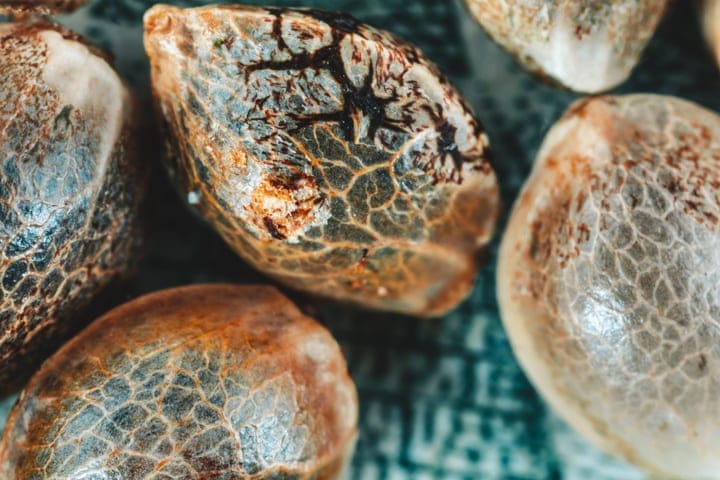
Autoflowering cannabis seeds produce plants that shift from the vegetative to the flowering stage automatically based on the age of the plant. Traditional photoperiod cannabis plants need an adjustment to the light cycle (the introduction of 12 hours of darkness) to promotoe flowering. Autoflowering cannabis plants transition into bloom - bud production - after just a few weeks of growth.
This characteristic comes from Cannabis ruderalis, a hardy and sturdy cannabis subspecies that evolved in regions with short summers and long daylight hours. Cannabis breeders combined ruderalis genetics with photoperiod cannabis to create autoflowering cannabis strains that maintain strong cannabinoid profiles while keeping the shorter life cycle and great resilience ruderalis is known for.
Today's autoflowers have come a long way from the early generations that first appeared years ago. Early adopters loved the shortened life cycle required to produce buds, but there were some perceived drawbacks:
- Lower potency
- Lesser terpene production
- Very low yield potential
- Resin Content
These, and in some cases even llesser flavor complexity, were all deemed to be huge drawbacks when compared to what was achievable with photoperiod cannabis. Skilled and curious breeders took note, and many modern autoflowering cannabis strains now compete directly with photoperiod cultivars in both quality and performance.
FAQ 2: What Does Autoflowering Mean?
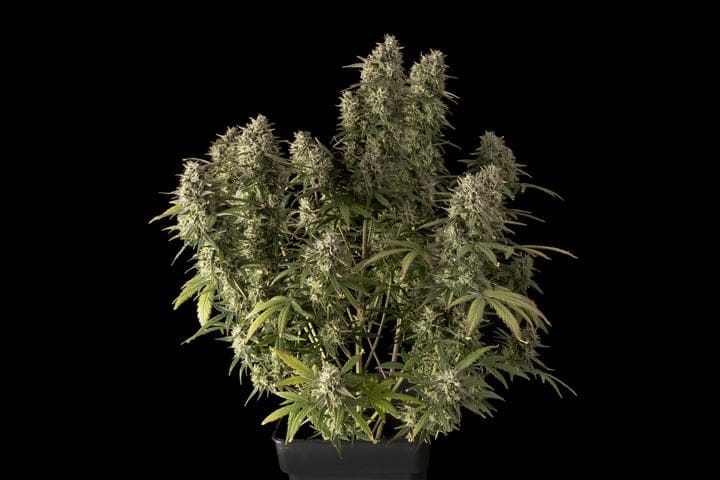
The term "autoflowering" refers to a cannabis plant's ability to begin producing buds according to age instead of needing an adjustment in the light received. In photoperiod cannabis strains, indoor growers typically switch from an 18-hour light cycle to 12 hours of light, 12 hours of darkness to initiate bud production. Outdoors, photoperiod cannabis begins flowering naturally as summer transitions to fall and the daylight hours become shorter.
Autos work differently.
Most autoflowering plants begin flowering after roughly 3-5 weeks of vegetative growth regardless of how much light they receive. This means they can remain under long daylight hours from seed to harvest and still finish their lifecycle successfully. This changes the growing experience in several ways:
- Outdoor growers can harvest earlier in the season
- Multiple harvests are possible during warmer months
- Light leaks become less problematic for indoor growers
But autoflowering doesn't simply mean "easier." It means the plant operates on a fixed biological timeline - and the trade-off is that once flowering begins, there's less time for the plant to recover from stress.
That's why understanding autoflowers matters. Their speed is one of their greatest strengths - but it also rewards growers who water, feed, and set the environment consistently.
Related Article:Autoflowering vs Photoperiod Cannabis: Which One Is For Me?
FAQ 3: Do You Grow Autoflowers Differently?
Yes. Although the fundamentals remain the same, autoflowering cannabis benefits from a slightly different approach than photoperiod plants. Their quick growth and shorter lifecycle mean a shorter window to shape the plant, correct problems, or recover from stress. Because of this, gentle, consistent cultivations usually produces the best results.
Here's some key differences:
Pot Size Matters Early
Many experienced autoflower cultivators start autos in their final pot to avoid transplant shock. That's not to say you can't transplant autos - but since the lifecycle is short, losing several days to recovering from transplant can impact yields.
Training Should Be Less Agressive
Low-stress training autos is preferred, because it improves canopy exposure without heavily stressing the plant. High-stress training can work in experienced hands - for example, growers certainly can top autoflowers - but this again means recovery time becomes necessary, and timing becomes critical.
Feeding Means A Lighter Touch
Autoflowers can be very sensitive to overfeeding, particularly in the early stages of life. For this reason, many growers introduce nutes conservatively and make small adjustments gradually as the plant matures.
Related Article:How To Feed Autoflowers: Working With The Plant, Not Against It
FAQ 4: How Much Light Do Autoflowers Need?
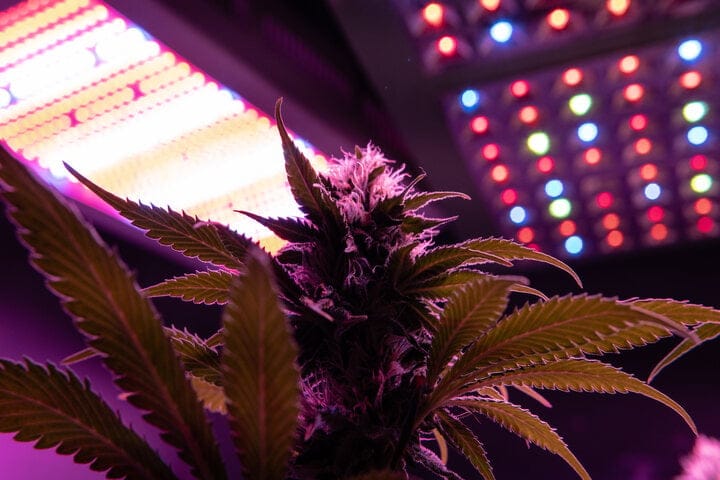
Autoflowering cannabis plants thrive under strong, consistent light. Since they don't rely on darkness to trigger flowering, growers have far more flexibility when choosing hours of light for autoflowering cannabis.
Many indoor growers run autos under:
- 18/6 (18 hours of light, 6 hours dark)
- 20/4
- Even 24 hours of continuous light in some cases
The goal is to maximize photosynthesis during the plant's short lifespan.
LED grow lights have become especially popular for autoflower cultivation because they provide:
- Efficient energy use
- Lower heat output
- Strong full-spectrum performance
- Better environmental control in small spaces
Outdoors, autos generally perform best during the brightest months of the year, and the short lifecycle allows growers in cooler climates to harvest before Fall weather becomes a problem.
One of the biggest benefits of autoflowers is their flexibility. Because flowering isn't controlled by daylight length, growers can experiment with staggered planting times and continuous harvest cycles far more easily than with photoperiod genetics.
FAQ 5: How Long Do Autoflowers Take To Grow?
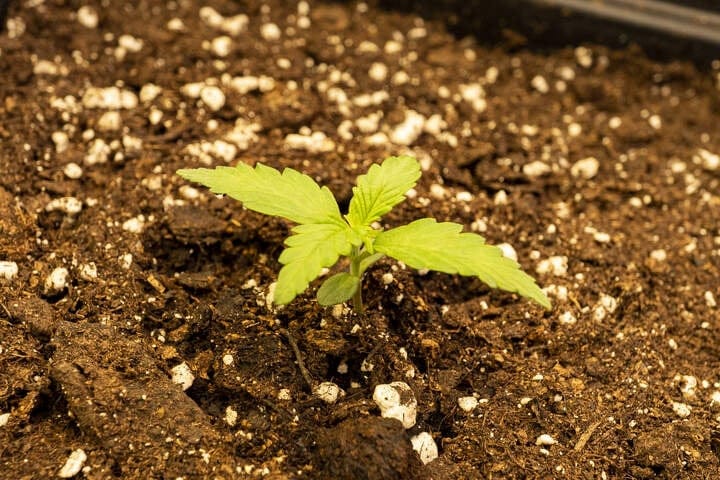
One of the main reasons for choosing autoflowers is their speed. The typical lifecycle of an autoflowering plant - from seed to harvest - is between 8 and 12 weeks, although exact timing depends on genetics, environment, and growing style.
Some particularly fast autoflowering strains can finish even fasteR, while larger modern autoflowers bred for bigger yields may take slightly longer to finish,
A typical autoflower timeline often looks like this:
Weeks 1-2
Seedling establishment and root development
Weeks 3-5
Rapid vegetative growth
Weeks 6-8
Flowering starts automatically
Weeks 7-10+
Bud development and ripening
FAQ 6: Can You Top Autoflowering Cannabis Plants?
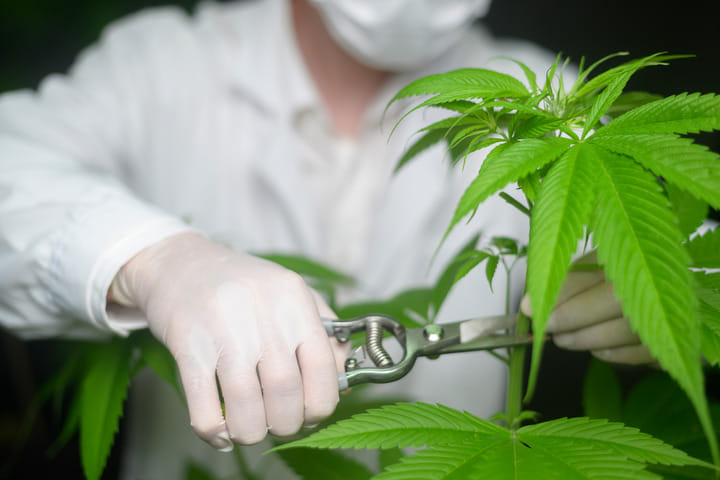
Yes - autoflowers can be topped, but success here depends on timing, plant health, and grower experience. Topping involves removing the main growing tip to encourage multiple colas and a bushier structure. When topping a photoperiod cannabis plant, growers have plenty of recovery time before flowering begins. But autos operate on a much tighter schedule. Since flowering starts automatically, any stress during early growth can potentially reduce overall development if the plant doesn't recover quickly enough.
That's why many growers opt for low-stress trainng instead. However, topping can still work well under the following circumstances:
- If the plant has healthy, vigorous genetics
- In a strong, stable environment
- Enjoys fast early growth
- Topping is performed early and timed right
The key is avoiding unneccessary recovery delays. Some modern autos are robust enough to handle topping well, especially under strong lighting and with optimal feeding. Others respond better to gentler methods.
For newer growers, low-stress training is usually the safer option because it improves light penetration without significantly slowing plant growth.
The growing community is often split on the subject of topping autoflowering cannabis plants, but there's no universal rule. "Should you top autoflowering cannabis plants?" is a more important question.
FAQ 7: Can You Clone Autoflowering Cannabis Plants?
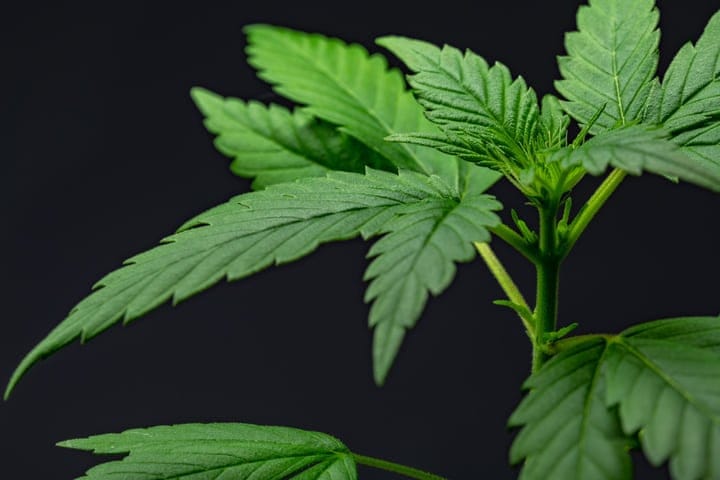
Technically, yes. But in practial terms, cloning autoflowers rarely makes sense. A clone is genetically identical to a mother plant, but with autoflowers, the biological clock keeps ticking regardless of when the cutting is taken. That means a clone taken from a three-week-old autoflower remains biologically three weeks old.
Instead of restarting growth from the beginning, the clone continues toward flowering on the same timeline. This creates several limitations:
- Minimal time for root development
- Very small final plant size
- Reduced yields
- Lower efficiency compared to starting from seed
Photoperiod plants are just much more suitable for cloning because growers can keep mother plants in a vegetative state indefinitely. Thta said, experimentation remains part of cannabis culture. Some growers still clone autos for learning purposes or small-scale breeding projects. But for productive cultivation, starting autos directly from seed almost always delivers stronger results.
Related Article:Can Autoflowers Be Cloned? Your Comprehensive Guide
FAQ 8: Are Autoflowers Less Potent?

This is one of the oldest autoflower myths - and one that modern genetics have largely destroyed. Early autoflowering cannabis strains sometimes lacked potency, flavor, and resin production when compared to their photoperiod counterparts. But breeding has evolved beautifully over recent years.
Today, modern autoflowering genetics produce cannabinoid levels and terpene profiles fully capable of competing with photoperiod strains. In fact, breeders now routinely develop autoflowers featuring:
- High THC percentages
- Complex terpene expression
- Dense resin coverage
- Stonger extract potential
- Premium flavor profiles
The potency of any given cannabis strain depends on multiple factors including genetics, cultivation quality, harvest timing, and drying and curing practices. A well-grown autoflower can absolutely compete with a photoperiod plant in delivering powerful effects and exceptional flavor.
What has changed most is breeder focus. Modern autoflowering cannabis programs no longer prioritize speed alone. Stability, terpene preservation, potency, and structure have all become major breeding goals.
For many modern growers, the question is no longer whether autoflowering cannabis strains are good enough. It's whether the speed, convenience, and flexibility they offer make them the right fit for the way they want to grow.
Increasingly, the answer is yes.
Final Thoughts: Why Autoflowering Cannabis Strains Continue To Grow In Popularity
Autoflowering cannabis has come a long way from its early reputation. What was once viewed as a niche option has evolved into a serious cultivation choice for growers around the world. Speed and simplicity play a role. But so does lifestyle.
For many people, autolfowers make cannabis cultivation feel more approachable. Less rigid, less demanding, and easier to fit into a busy schedule without sacrificing quality or the experience at the end.
As breeding continues to improve, the gap between autoflowering cannabis and photoperiod strains keeps narrowing in ways that woud have seemed unlikely just a few years ago. Autos provide a fast-moving, rewarding way to stay connected to the process from seed to harvest.
Explore the latest autoflowering genetics and discover what fits your grow style at Seedsman.com
