
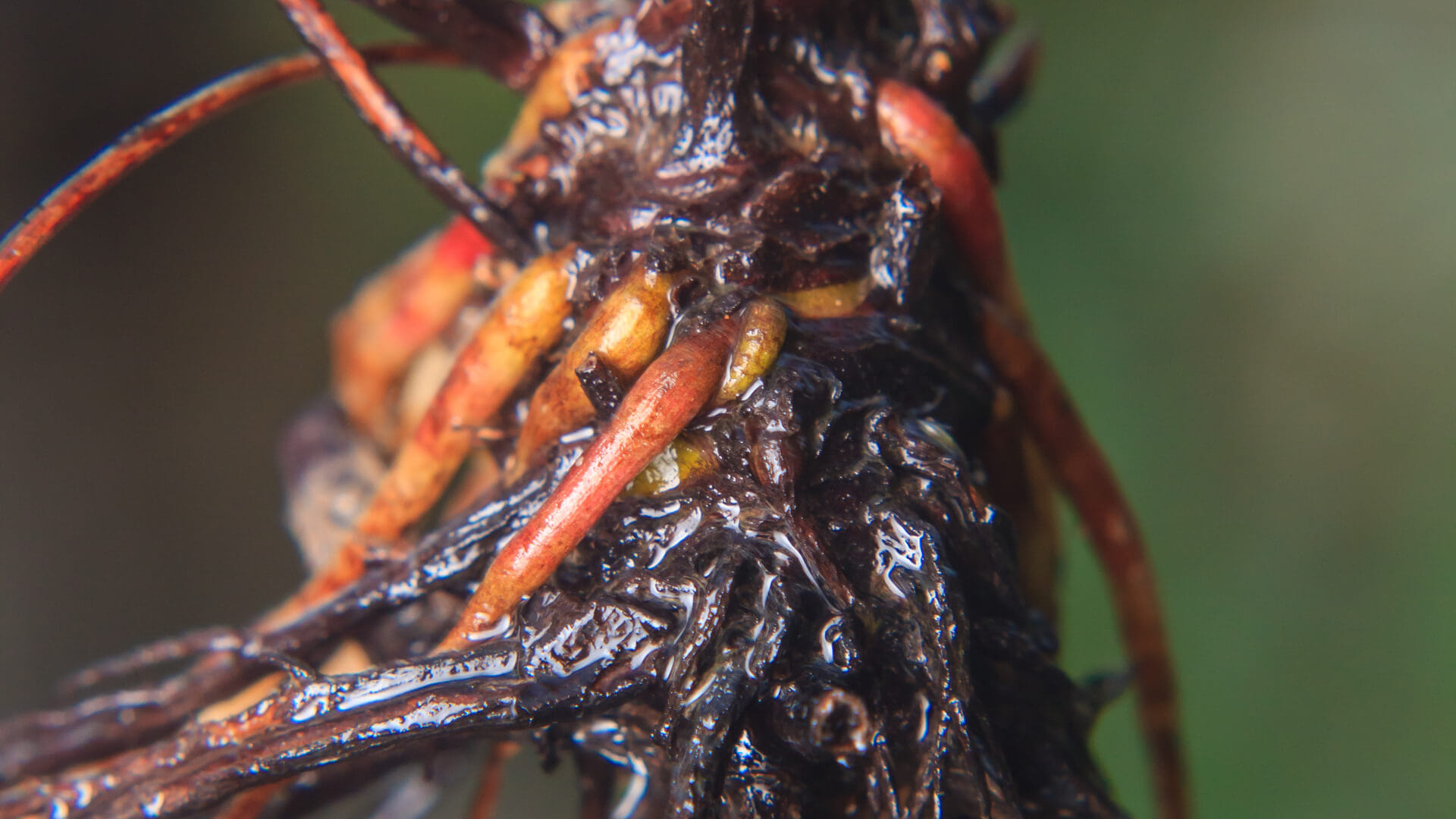
Cannabis Root Rot: How To Identify, Prevent, and Treat The Issue
Key Takeaways:
- Cannabis root rot is not a single disease but a condition caused by several soil-borne pathogens and poor root zone conditions.
- Overwatering, poor drainage, and a lack of oxygen around the roots create the perfect environment for root problems to develop.
- Early symptoms often appear above grouond, including yellowing leaves, slow growth, and wilting, but the real damage begins below the surface.
- Healthy roots are the foundation of a healthy cannabis plant. Prvenetion is far easier than tryin got recuse a plant with severe root damage.
- Good hygiene, balanced watering practices, and maintaining a healthy growing environment are the best defences against root rot.
We continue our series on problematic pathogens with a look at one of the absolute worst things a grower can find - the dreaded cannabis root rot.
Cannabis Root Rot: What is it?
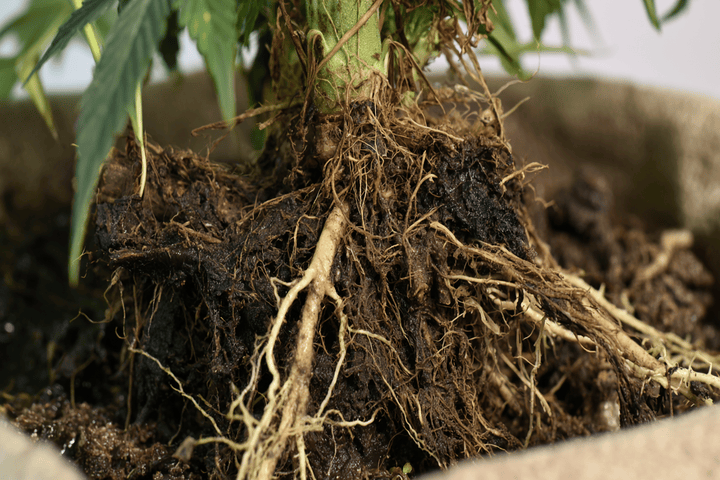
Cannabis root rot is arguably a grower’s worst nightmare, and another of our fungal foes, but with the ability to take down entire crops at record speed. Unlike many issues that announce themselves clearly, root rot often develops silently. By the time the first visible symptoms appear above the surface, the damage below ground may already be significant, turning the joy of growing cannabis into something of a nightmare.
For cannabis growers, understanding the science of cannabis root health is key to growing better plants. The root system anchors the plant, absorbs water and nutrients, and forms an important relationship with beneficial micororganisms in the growing medium. When those roots begin to decay, the entire plan quickly starts to suffer.
Cannabis root rot is not caused by one single organism. Instead, it's a general term used to describe the deterioration of plant roots caused by a range of pathogens and unfavorable growing conditions. The common cultprits behind root rot include water molds such as Pythium and Phytophthora, as well as fungi including Rhizoctonia species. These organisms thrive when growing conditions create stress around the root zone, particularly when excess moisture reduces the oxygen available to the roots.
What Causes Cannabis Root Rot?
Although pathogens play a major role, cannabis root rot rarely appears without the right conditios. A healthy root system can often resist many potential threats, but a stressed root system becomes vulnerable quickly.
The most common cause of canabis root rot include:
Overwatering
Cannabis roots need water of course, but they also need oxygen. When the growing media is saturated for too long, air spaces between particles become filled with water. This reduces oxygen availability, creating an environment where harmful organisms can multiply.
A common mistake among beginner growers is assuming that more water means faster growth. In reality, constantly wet roots can quickly become damaged, limiting the plant's ability to absorb the very resources it neeeds. This ultimately leads to the demise of a plant, so learning how to fix cannabis overwatering is essential.
Poor Drainage
Growing media that drains poorly can trap moisture around the roots. Heavy soils, blocked drainage holes, or unsuitable containers can all contribute to stagnant conditions.
Using an appropriate growing medium and ensuring excess water can escape freely are simple but effective ways to reduce risk.
Warm, Wet Conditions
Many root pathogens thrive in warm, humid environments. Maintaining suitable temperature and humidity levels is important throughout the growing cycle, not only to protect foliage but also to support a healthy root environment.
Contaminated Growing Media and Equipment
Root pathogens can be introduced through contaminated soill, reused growing containers, tools, or infected plant material. Good hygiene practices are therefore essential, especially for growers who maintain multiple plants or run repeated growing cycles.
What Does Cannabis Root Rot look like?
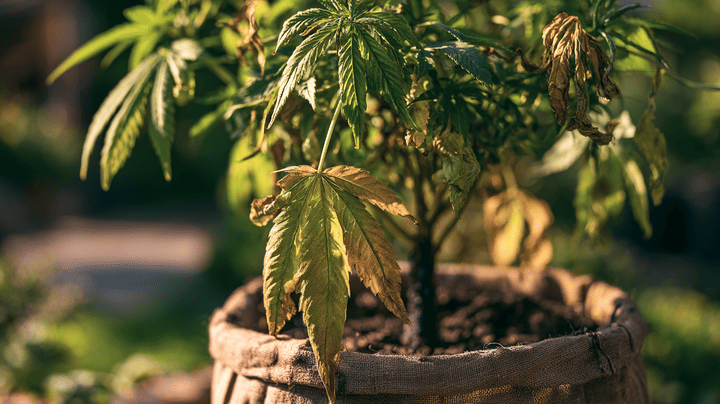
Root rot symptoms present as similar to other conditions, but plants typically show signs of weakness and nutrient deficiency. Be on the lookout for the following:
- Yellowing/browning of leaves, followed by wilting
- Slow or stunted growth
- Wilting despite adeqaute moisture in the growing medium
- Poor nutrient uptake
- Reduced vigor and overall plant decline
The most reliable way to diagnose root rot is to inspect the roots themselves. Healthy cannabis roots are generally firm and light in color. Roots affected by rot may appear:
- Dark brown, grey, or black
- Soft and mushy rather than firm
- Easy to pull apart
- Accompanied by a foul smell
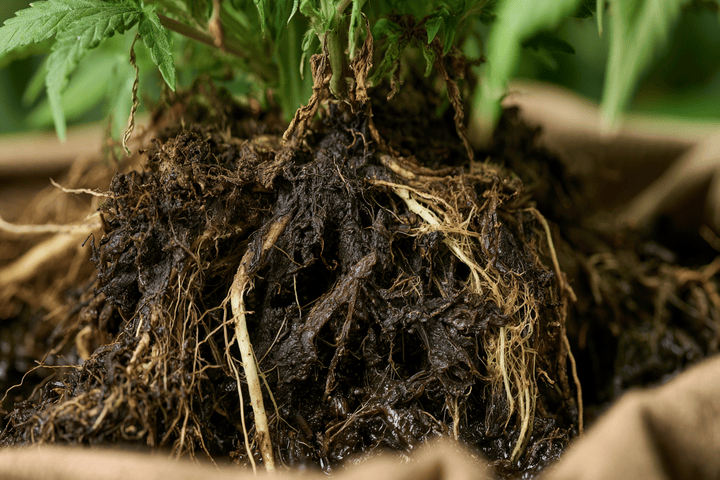
In advanced cases of cannabis root rot, the damage may spread into the lower stem, weakening the plant and making recovery even more difficult.
What Does Cannabis Root Rot Do to Plants?
The damage caused by cannabis root rot begins below the surface, but its effects soon become impossible to ignore. A heathy root system provides the plant with access to water, minerals, and nutrients while supporting strong growth. When roots begin to decay, those vital connections are interrupted.
As more roots become damaged, the plant's ability to absorb water and nutrients becomes compromised. This can create symptoms that look similar to nutrient deficiencies, even when nutrients are present in the growing medium.
A plant suffering with root rot may look hungry, weak, or dehydrated because its damaged root system can no longer perform its role effectively. Growth slows, leaves may become discolored, and the plant can eventually wilt and collapse if the underlying problem isn't addressed.
in severe cases, root damage can become irreverisble. Once the majority of the root system has decayed, the plant may be left without enough healthy tissue to recover.
How To Treat Cannabis Root Rot
Root root is one of those problems where early action can make the difference between recovery and losing a plant. The first step is to identify and correct the cause.
Reduce Excess Moisture
If the growing medium is saturated, allow it to dry to an appropriate level (so, not completely parched) before watering again. Avoid the temptation to continue watering a struggling plant - drooping leaves don't always mean a plant needs more water.
Related Article:Why Are My Cannabis Leaves Drooping?
Check the moisture level deeper in the container rather than relying on the surface appearance.
Inspect The Root System
Carefully remove the plant from its container if possible and inspect the roots. Healthy roots should feel firm. Damaged roots are usually soft, discolored, and may have a rotten smell.
Remove badly affected roots by using sterilized tools, and take care not to spread contamination via contact. In mild cases of cannabis root root, improving the growing conditions may allow the remaining healthy roots to recover and continue supporting the plant.
Improve Drainage And Oxygen Availability
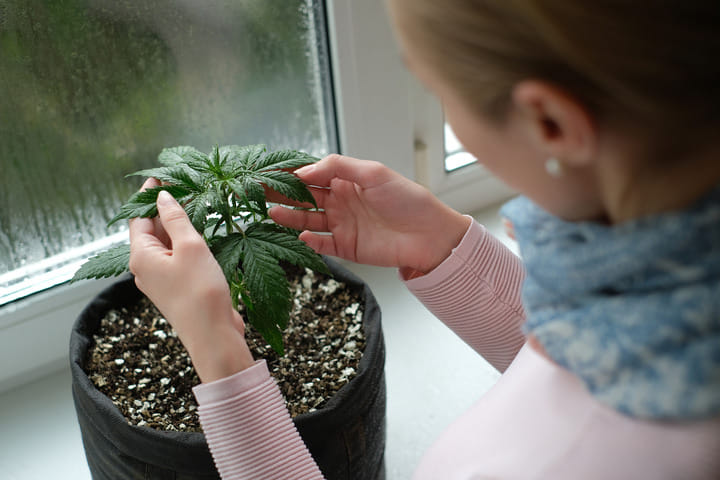
A root system needs to have access to oxygen. Improving drainage, using a well aerated growing medium, and avoiding compacted soil can all help create a healthier environment.
Some growers use amendments such as perlite to improve the structure of their growing medium and prevent water from remaining trapped around the roots.
Consider Beneficial Microorganisms
Benficial microbes are extremely useful in maintaining a healthy root environment. Mycorrhizal fungi form relationships with plant roots, while certain beneficial bacteria can outcompete harmful organisms and support overall root health.
Beneficial microorganisms are not a cure for advanced root rot. They are best viewed as part of a wider prevention strategy rather than a rescue treatment.
How To Prevent Cannabis Root Rot
The best treatment for cannabis root rot is preventing it from developing in the first place. A strong root environment gives cannabis plants their best chance of resisting problems.
Avoid Overwatering
This is perhaps the single most important rule. Allow the growing medium to dry slightly between waterings, but avoid prolonged periods where the roots are completely dry. The best watering schedule isn't time-based; it depends on container size, growing medium, plant size, temperature, and airflow.
Use Suitable Pots
Pots should allow excess water to drain freely. Containers without adequate drainage create an environment where roots remain consistently wet.
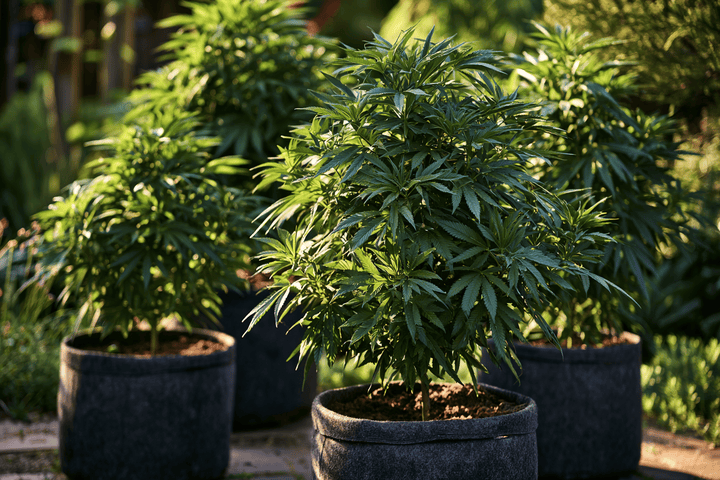
Some growers prefer fabric pots because they allow better airflow around the root zone, although good watering practices remain essential regardless of container type.
Related Article:A Pot For Your Pot: The Best Cannabis Growing Containers
Practice Good Hygiene
Always make sure containers, tools, and equipment are clean before use, and never transfer contaminated material between plants.
If a plant does develop severe root rot, remove it quickly and carefully, disposing of infected material rather than adding it to compost where the pathogens may survive. Use an appropriate disinfectant after handling infected plants.
Maintain A Healthy Root Zone
Healthy plants are better equipped to deal with stress. Keep suitable pH levels, avoid excessive nutrients and provide adequate airflow to create a stronger root environment.
Cannabis Root Rot: Conclusion
Cannabis root rot is one of the most destructive problems a grower can face, but it doesn't have to be inevitable. With sensible watering practices, good hygiene, and a healthy root envronment, growers can dramatically reduce the chnaces of it taking hold.
Remember, the warning signs often appear below the surface long before the plant shows them above ground, so sstaying observant is the best defense. A little prevention today is far easier tthan trying to rescue a plant tomorrow.
Look after the roots, and they'll return the favor when its time to fill your jars.
Cannabis Root Rot FAQs
Is root rot caused by overwatering?
Overwatering does not directly cause cannabis root rot, but it creates the conditions where root pathogens can thrive. Constantly saturated growing media reduces oxygen around the roots and weakens the plant’s natural defences.
Can a cannabis plant recover from root rot?
It depends on the severity. Plants with minor root damage may recover after the cause is corrected and healthy roots remain. Plants with extensive root decay are much less likely to survive.
Are brown cannabis roots always a sign of root rot?
Not necessarily. Roots can naturally vary in colour depending on the growing medium and conditions. Healthy roots should generally feel firm, while rotten roots are typically soft, damaged, and may smell unpleasant.
Does adding more nutrients help a cannabis root rot?
Usually not. Root damage prevents the plant from absorbing nutrients effectively, meaning adding more fertiliser may increase stress rather than solve the problem. Fixing the root environment should always come first.
Can root rot spread between cannabis plants?
Yes. Some root pathogens can move through shared growing media, water systems, tools, and contaminated equipment. Good hygiene and removing severely affected plants can help prevent further spread.
---------------------------------------------------------
References
Diseases of Plants Caused by Pythium Species, H. D. Van der Plaats-Niterink, 1981.
https://www.cabidigitallibrary.org/doi/book/10.1079/9780851985143.0000
Phytophthora: Plant Pathology and Disease Management, Erwin, D. C. & Ribeiro, O. K., 1996.
https://apsjournals.apsnet.org/doi/book/10.1094/9780890542125
The Rhizosphere: Biochemistry and Organic Substances at the Soil-Plant Interface, Pinton, R., Varanini, Z. & Nannipieri, P., 2007.
The Nature and Practice of Biological Control of Plant Pathogens, Cook, R. J. & Baker, K. F., 1983.