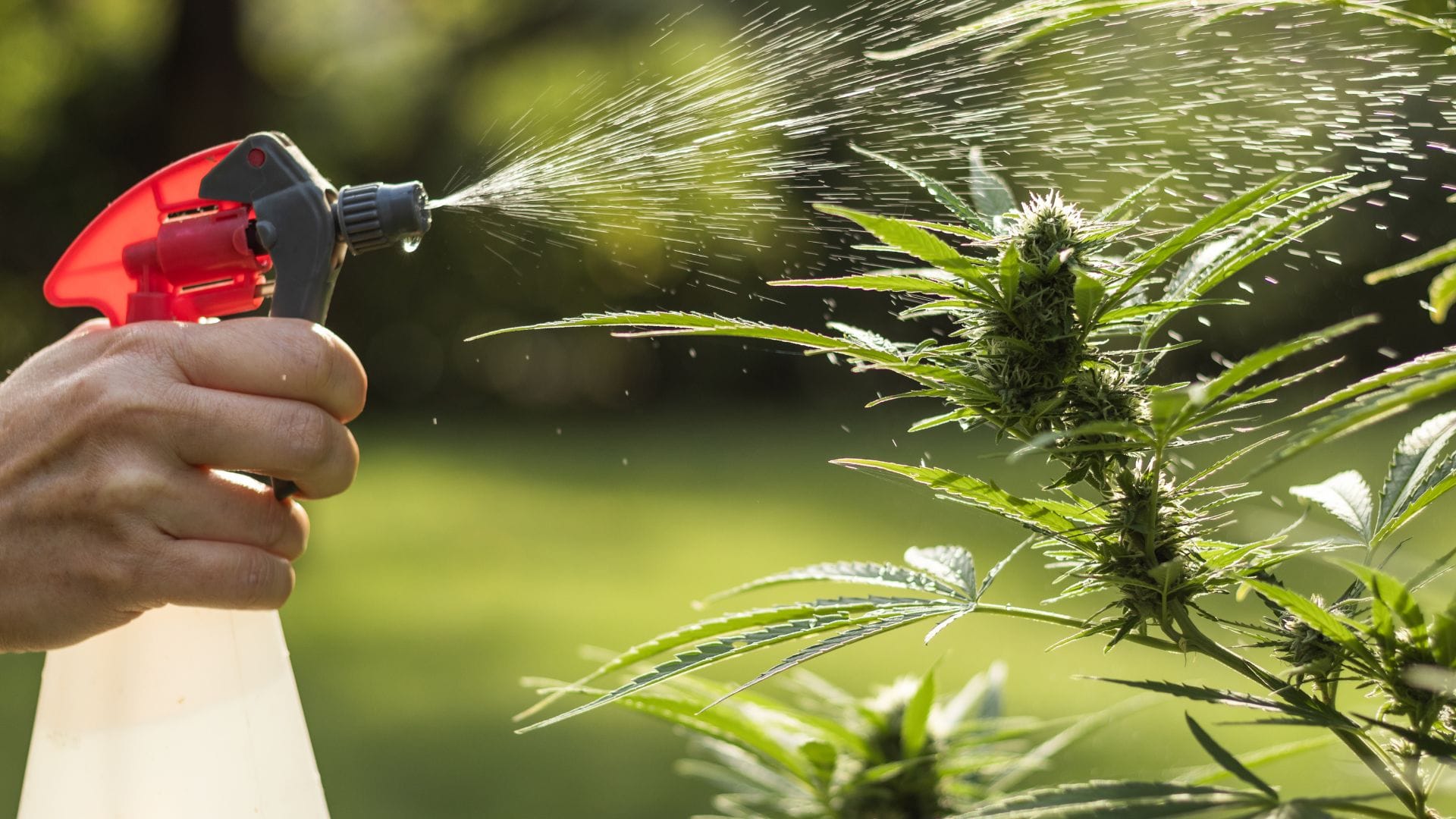

The practice of flushing cannabis plants has become a standard tactic for many growers, although its benefits are by no means universally accepted. In theory, flushing is supposed to rid a plant of excess and unwanted minerals, thereby improving its smoothness and taste, yet not everyone is convinced that it really works.
Frustratingly, there have been no proper studies conducted to determine once and for all whether flushing is truly necessary, although you’ll still find that the majority of cannabis growers flush their plants shortly before harvesting.
What We Mean When We Talk About Flushing Cannabis
Like all plants, cannabis requires a varied mineral diet in order to grow, which is why cultivators feed their plants with all sorts of different concoctions. Typically, these solutions will add ingredients like nitrogen, potassium, calcium and other vital minerals to the soil, which can then be taken up by the plant's roots and used in cellular processes.
However, it’s thought that these salts have a negative impact on the quality of the harvested bud, making it harder to burn and harsher on the lungs while also giving it a somewhat chemical flavour. For this reason, cultivators often try to flush as many of these minerals as possible out of their plants immediately before harvesting, ensuring that their final product isn’t full of foul-tasting salts.
Despite its name, flushing does not involve the use of a toilet and is, in fact, a very simple process. Essentially, it entails excessively irrigating cannabis plants using just water to wash any remaining minerals out of the growing medium. This effectively starves a plant, causing it to start feeding off its internal reserves of minerals, which then become depleted.
The trick, however, is timing the flush so that a plant uses up all its stored minerals exactly when it needs to be harvested. Starting a flush too early could leave a plant undernourished during a vital period of its flowering phase while starting too late won’t leave enough time to wash out all those minerals.
When To Flush Cannabis
The exact moment to start flushing cannabis plants will depend on the growing medium that you are using. Using soil is typically advised to begin flushing about two weeks before harvest time. So if you’re growing a cultivar with an eight-week flowering stage, you’ll want to eliminate those nutrients from the end of the sixth week. When in doubt, be sure to keep an eye on your plant's trichomes. Once the first few begin to turn from clear to milky you know that you’re entering the final period of flowering, which means it’s time to start your flush.
However, not all soils are equal, and heavy loams or clays can be harder to rinse than sandy soils. For this reason, heavier soils might require a longer flush, with up to three weeks being necessary in some cases.
Plants that are grown in coco coir, meanwhile, generally only need to be flushed in the final week before harvesting. This difference is due to the varying ways nutrients are bound and made available to the roots in different growing mediums.

How To Flush Cannabis
Flushing involves using water to dissolve the minerals in the growing medium to wash them away. For this reason, it’s a good idea to use water that is slightly warm – generally between 22 and 25 degrees Celsius – and with a pH of between 5.8 and 6.5, as this will increase the solubility of these salts.
The act of flushing couldn’t be simpler – you just water the pot in which your plant is growing until it is saturated, let the water drain away, and then repeat about ten to 15 minutes later. You shouldn’t add any nutrients to the water like you may have been doing up until this point.
It’s also worth using a TDS (total dissolved solids) metre to ascertain the concentration of dissolved minerals that are in your water. After an initial flush, the TDS of your run-off water will likely be much higher than the clean water you are irrigating. It may take a few flushes, but you should soon see the TDS of your run-off drop to a level that is similar to your input water, indicating that the growing medium is now more or less free of dissolved minerals.
A further hallmark of a successful flush is yellow leaves, particularly towards the bottom of a plant. This occurs when a plant isn’t getting enough nutrients from the soil, so it diverts its stored minerals to the top of the plant, where the new growth is occurring and where the flowers are ripening.
Another thing to remember is that hydroponic cannabis growers must employ a different yet equally simple flushing technique. All that is needed is to drain the system and replace it with pH-balanced water without any added nutrients. Such a flush is typically only required for about three or four days before harvesting.
Is Flushing Cannabis Really Necessary?
As previously mentioned, most cultivators choose to flush their plants because doing so is thought to improve their flavour and burnability. However, some growers choose not to flush to not deprive their plants of vital nutrients that are required throughout the flowering phase.
On top of that, no thorough investigation has even been conducted to determine the true of efficacy of flushing. That said, two small-scale studies have been carried out in the last few years, both of which concluded that flushing has no effect on the mineral content of harvested bud.
The first of these – a Master’s dissertation produced by a student at the University of Guelph’s School of Environmental Sciences – concluded that “flushing was found to be ineffective in removing any significant amount of nutrient from the bud.”[i]
The second study was carried out by RX Green Technologies in 2019 and compared the chemical composition of weed that had been flushed for seven, ten and 14 days with another sample that had not been flushed at all. Results indicated equal concentrations of THC, terpenes and minerals in all four samples, which came as something of a surprise to some. However, a bigger shock came when a group of cannabis industry professionals was invited to taste the cannabis used in the study without being told which sample was which. Somewhat unexpectedly, the unflushed cannabis was rated as having the best flavour.[ii]
With all that in mind, it really is impossible to say for sure whether flushing is necessary or not, and while many cultivators continue to swear by it, each individual will ultimately have to make up their own mind about the effectiveness of the practice.
Related Post
[i] Stemeroff J. Irrigation management strategies for medical cannabis in controlled environments (Doctoral dissertation). - https://atrium.lib.uoguelph.ca/xmlui/handle/10214/12125
[ii] https://www.rxgreentechnologies.com/wp-content/uploads/2019/11/FlushingTimes_TrialReport.pdf