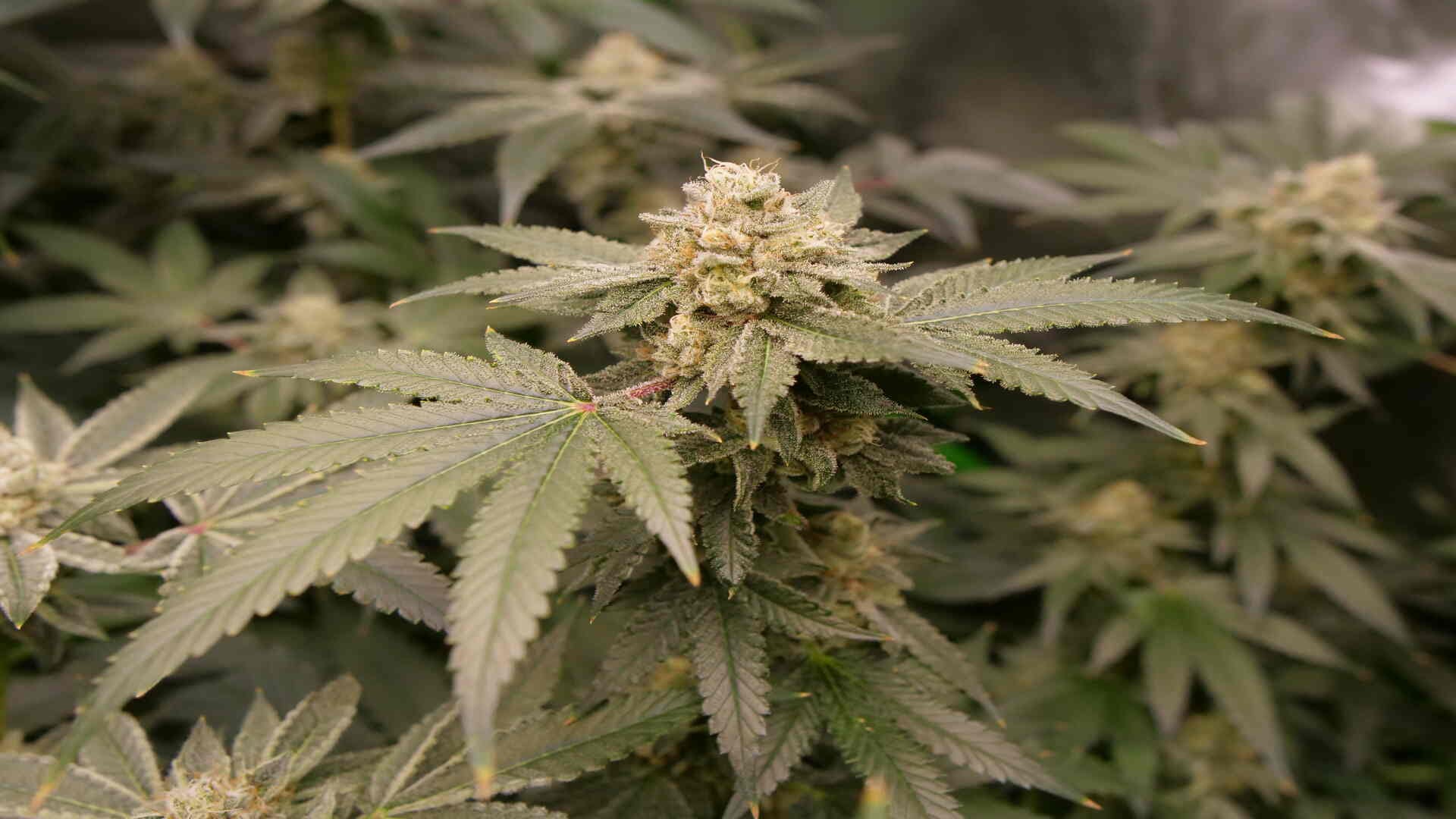
If you’ve ever searched online for what weed plants look like, you’ve probably seen a wide range of images—some showing tiny sprouts just emerging from the soil, others displaying bushy green plants, and still others featuring mature cannabis plants covered in dense, resinous buds.
Further Reading:How To Grow Buds For Maximum Resin Production
This variation can be confusing for beginners because cannabis plants don’t simply get larger as they grow—they also change dramatically in structure, leaf shape, and overall appearance throughout their life cycle. As the plant matures, its biological processes reshape its leaf patterns, alter hormone balance, and shift its focus from growth to reproduction.
Understanding what weed plants look like growing at each stage of development helps you identify healthy plants, detect potential problems early, and better understand what’s happening beneath the soil surface. From germination to harvest, cannabis plants undergo several distinct phases, each with its own visual characteristics.
Stage 1: Germination
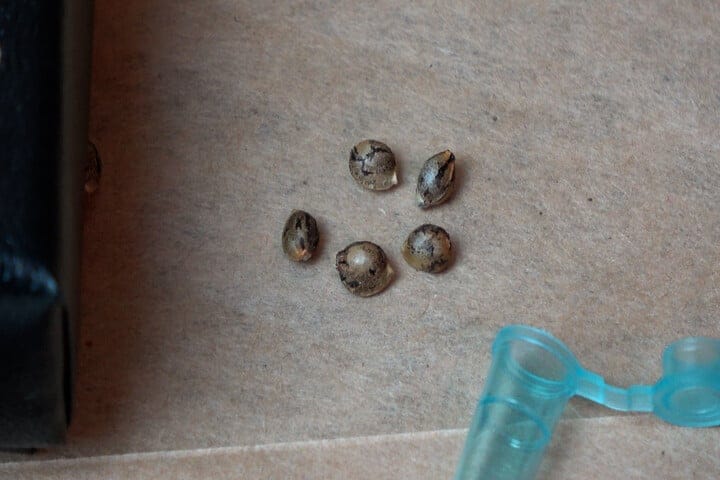
Before you see any green leaves or stems, the most important activity happens underground. Every cannabis plant begins as a seed, typically small, oval-shaped, and greenish-brown with darker stripes or mottling.
Although seeds may appear lifeless, they are actually packed with stored nutrients and genetic instructions. Once exposed to moisture, the seed begins absorbing water and activates internal enzymes. These enzymes convert stored starches into sugars that fuel the plant’s first stages of growth. As this process begins, the outer shell softens and eventually cracks open.
The first structure to emerge is the taproot, a thin white root that grows downward in response to gravity. This root anchors the plant in the growing medium and begins absorbing water and minerals needed for development.
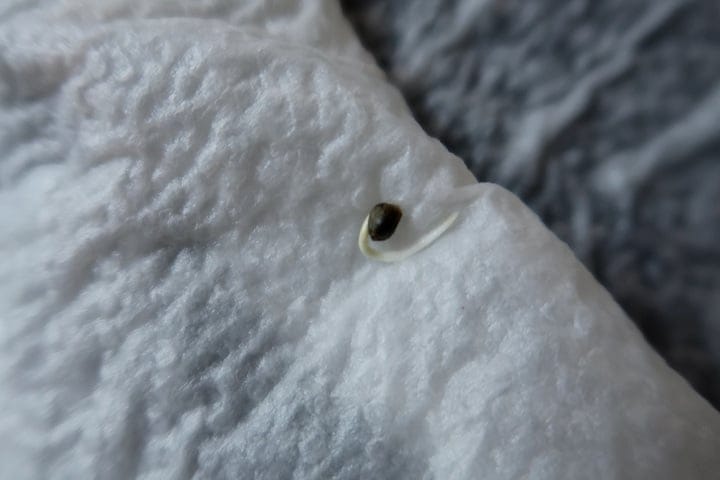
If you are germinating seeds outside of soil, the taproot will be the first visible sign of life. If the seed is planted directly in soil, the first thing you will see above the surface will be the young seedling emerging shortly afterward.
During germination, cannabis plants typically appear as a cracked seed shell with a bright white taproot extending downward and a curved shoot preparing to push upward toward the surface.
Further Reading:The Ultimate Guide To Germinating Cannabis Seeds
Stage 2: The Seedling Stage
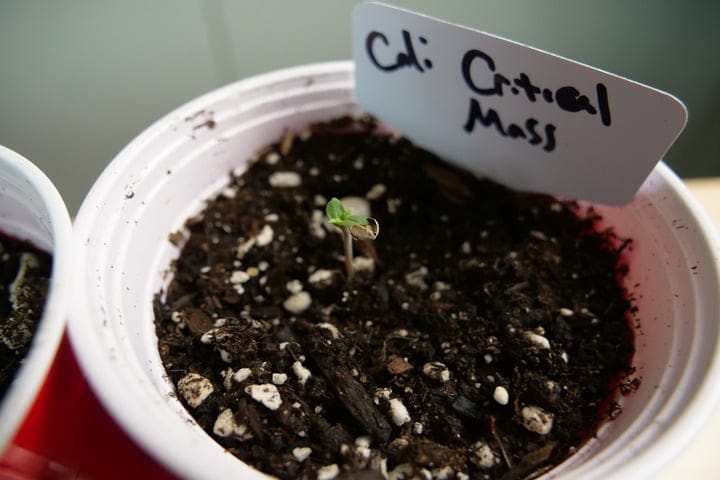
The seedling stage is when the cannabis plant truly begins to look like a plant. As the shoot breaks through the soil, the first leaves—called cotyledons—appear.
Cotyledons are small, rounded leaves that look very different from the classic serrated cannabis leaves most people recognize. Their main purpose is to provide stored nutrients to the young plant while the root system continues developing below the soil.
Further Reading:The Science of Cannabis Root Health: Tips For Vigorous Plants
Within a few days, the plant begins producing its first true leaves, which feature the serrated edges typical of cannabis plants. Early leaf sets usually contain only one or three blades, but as the plant grows, additional leaf sets appear with more blades—often five, seven, or even nine.
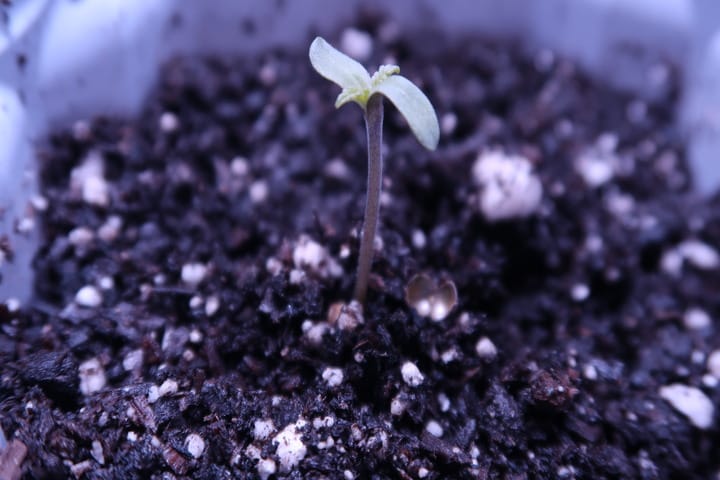
At this stage, several important biological processes are occurring. Root hairs multiply rapidly to increase nutrient uptake, chlorophyll production increases to deepen the plant’s green coloration, and vertical growth begins accelerating.
When people ask what do weed plants look like growing, the seedling stage is where the plant first resembles the familiar cannabis shape—small, bright green, with a thin but strengthening stem and symmetrical leaf growth.
Further Reading:3 Steps To Master The Cannabis Seedling Stage
Stage 3: Vegetative Growth
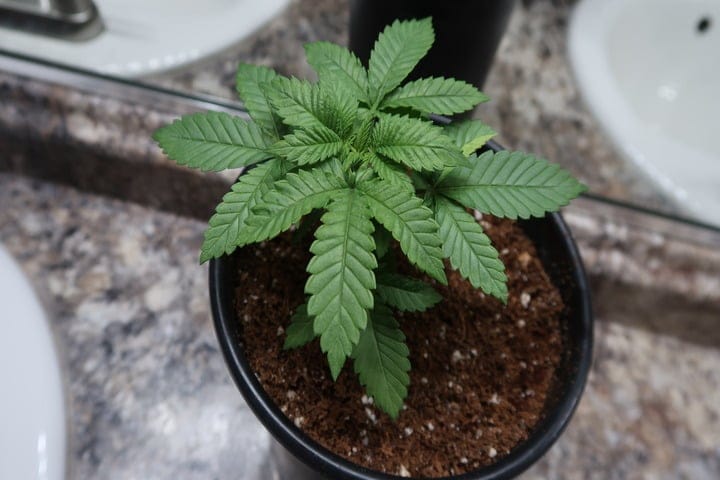
The vegetative stage is defined by rapid structural expansion. During this phase, cannabis plants focus on building the framework that will eventually support heavy buds later in life.
Leaves grow larger and more complex, with additional blades forming on each new set. The fan leaves spread outward to capture more light, while internodes—the spaces between branch points—develop along the stem, creating sites for future branching.
In simple terms, the vegetative stage is when the plant builds its infrastructure. The expanding canopy acts like a solar panel, capturing as much light as possible to fuel continued growth.
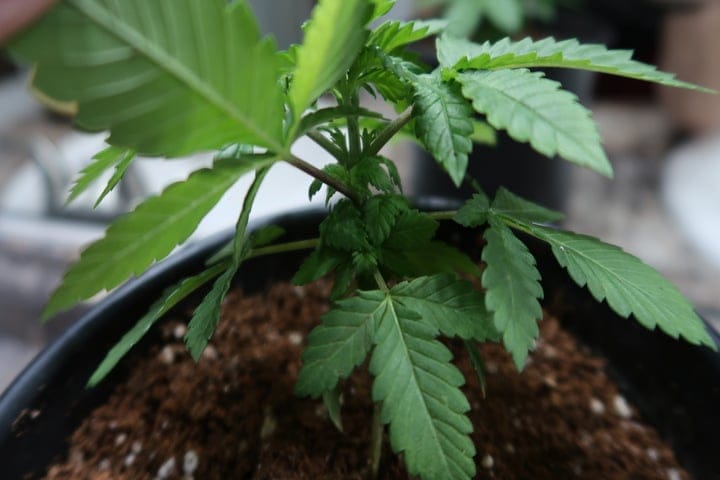
When observing what weed plants look like during vegetative growth, you’ll typically notice thickening stems, wide fan leaves, rich green coloration, and a steady increase in side branches that form a dense, bushy structure.
Stage 4: Pre-Flower
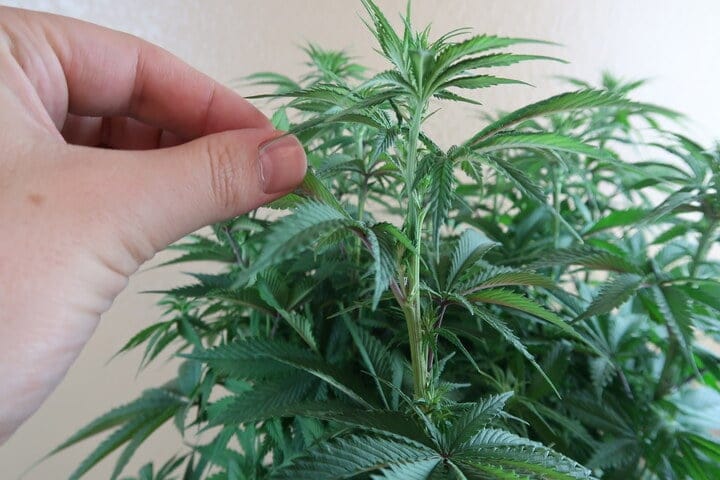
As the plant approaches reproductive maturity, it enters the pre-flower stage. Although some growers group this phase into flowering, it’s actually a distinct transitional period.
During pre-flower, small structures begin forming at the nodes—the points where branches meet the main stem. These early formations reveal the plant’s sex.
Female plants develop small tear-shaped calyxes with thin white hairs called pistils. These pistils are part of the plant’s reproductive system and are designed to catch pollen.
Male plants, on the other hand, develop small round sacs that hang downward. These pollen sacs eventually open and release pollen if they are not removed.
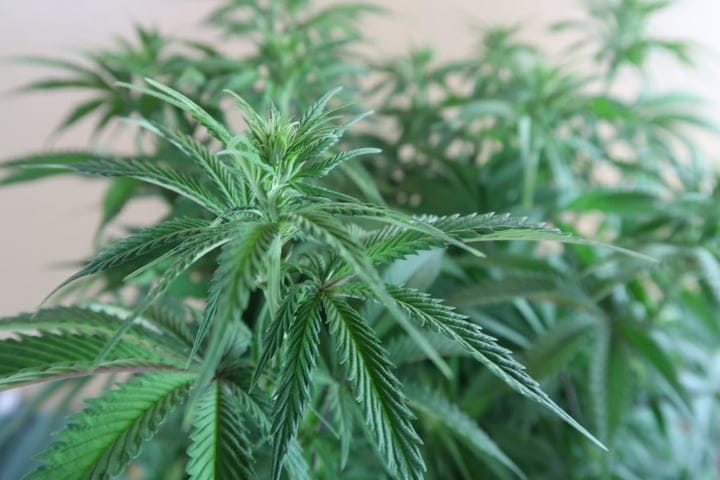
For growers focused on producing buds, male plants are usually removed as soon as they are identified. Male plants produce very little cannabinoid content and can pollinate female plants, causing them to produce seeds rather than dense flowers.
Further Reading:How To Tell If Your Cannabis Plant Is Pollinated
Stage 5: Early Flowering
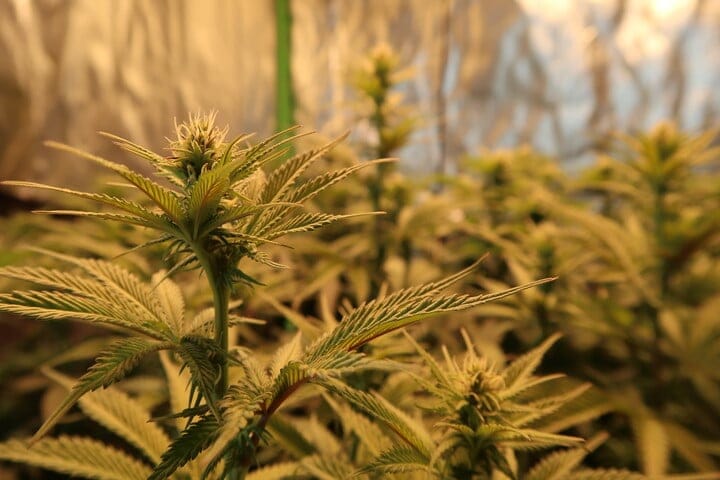
Once flowering begins, cannabis plants undergo another noticeable transformation. Many strains experience a rapid vertical growth phase known as the flowering stretch, during which plants can nearly double in height.
Internodal spacing increases, branches elongate, and clusters of white pistils begin appearing along the branches. These early bud sites mark the beginning of flower production.
During this stage, the plant is preparing to support the development of larger flowers. The canopy expands upward, creating space for the buds that will continue forming over the coming weeks.
Further Reading:Mastering The Stretch: Managing Plant Height Before Flowering
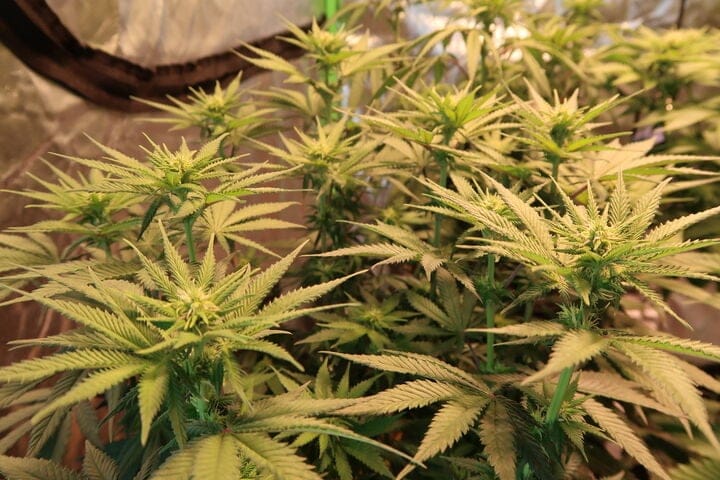
Early flowering plants are often characterized by rapid upward growth, increasing spacing between nodes, visible white pistils at bud sites, and the formation of small flower clusters along the main branches.
Stage 6: Late Flowering
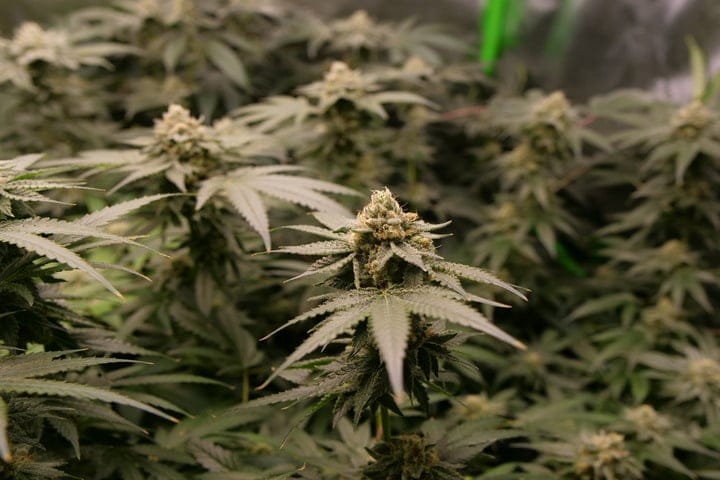
The late flowering stage is what most people imagine when they think about mature cannabis plants. At this point, the calyxes stack tightly on top of each other, forming dense clusters known as colas.
The white pistils extend outward, giving buds a fuzzy appearance, while the flowers begin swelling as they pack on weight. At the same time, trichomes—the tiny resin glands responsible for producing cannabinoids and terpenes—start forming rapidly.
Under magnification, trichomes resemble tiny glass mushrooms. When viewed on the entire plant, they create a frosty or sparkling appearance that gives mature cannabis buds their distinctive look.
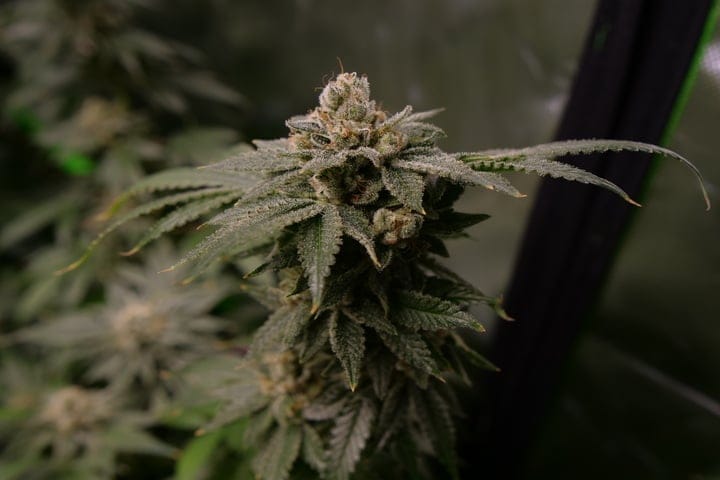
As flowering progresses, pistils gradually darken from bright white to orange or amber tones. Buds become tighter and heavier, and the plant may begin redirecting nutrients from older leaves, causing them to fade or yellow slightly.
What Cannabis Plants Look Like Growing – Final Thoughts
From small seeds to towering plants covered in sparkling buds, cannabis undergoes a remarkable transformation throughout its life cycle. By understanding what weed plants look like growing, you can better recognize healthy development and identify potential problems early.
Now that you know what weed plants look like at each stage, it becomes much easier to track growth, diagnose issues, and guide your plants from germination all the way to a successful harvest. For more details on how to grow cannabis indoors, check out my book 7 Steps To Grow Cannabis. It’s a complete beginner’s guide to growing cannabis indoors. You can get it on my website, or on Amazon. Happy growing!