

If you think THC is just “that one thing in weed that gets you high,” you’re not alone. For decades, THC was treated like a single character in the cannabis story – usually blamed, occasionally praised, and rarely fully understood. But as cannabis science has matured, we’ve learned something surprising: THC isn’t just one compound. It’s a whole family.
Today, when people ask about the different types of THC, they’re really asking how cannabis can feel energizing one day, sedating the next, clear-headed here, foggy there – all from plants that look more or less the same. The answer lies in chemistry, plant biology, and how THC changes over time.
In this article, we’ll break down the main forms of THC, including THCa, Delta-9 THC, Delta-8 THC, THCV, and a few of the lesser-known relatives. We’ll explain what they do, how they form, how they affect consumers, and why understanding the differences matters – whether you’re a curious newcomer or a seasoned stoner.
No PhD required. Let’s get into it.
THCa: The Non-Psychoactive Starting Point

THCa (tetrahydrocannabinolic acid) is where the THC story begins. In raw, freshly harvested cannabis, THCa – not THC – is the dominant cannabinoid. Chemically speaking, THCa is the acidic precursor to delta-9 THC, produced naturally in the trichomes of the cannabis plant.
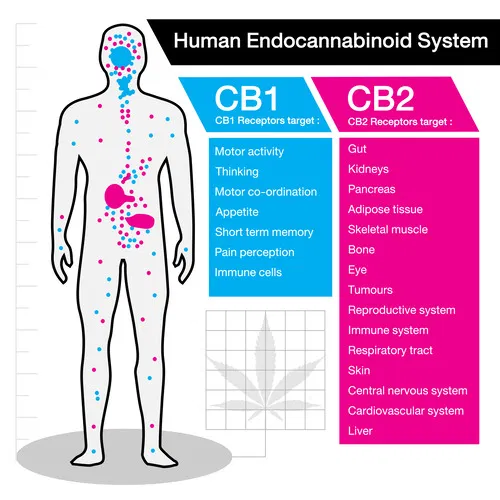
What makes THCa fascinating is that it isn’t intoxicating. On its own, THCa does not produce the classic “high” associated with cannabis. That’s because its molecular structure prevents it from binding efficiently to CB1 receptors in the brain – the receptors respnsible for psychoactive effects.
So how does THCa become THC? Through decarboxylation – essentially heating. When cannabis is smoked, vaproized, or baked, heat removes a carboxyl group from THCa, converting it into Delta-9 THC. This chemical transformation has been well documented in cannabinoid research [1].

Despite being non-psychoactive, THCa isn’t inactive. Emerging research suggests it may have anti-inflammatory, neuroprotective, and anti-nausea properties, without cognitive impairment [2].
For consumers, this is why raw cannabis juices, tinctures, and unheated extracts can offer potential therapeutic benefits without intoxication. THCa also explains why cannabis potency depends not just on genetics, but on how the plant is processed and consumed.
In short: THCa is the sleeping giant of cannabis – inactive until heat wakes it up.
Delta-9 THC: The Classic, The Benchmark, The legend.
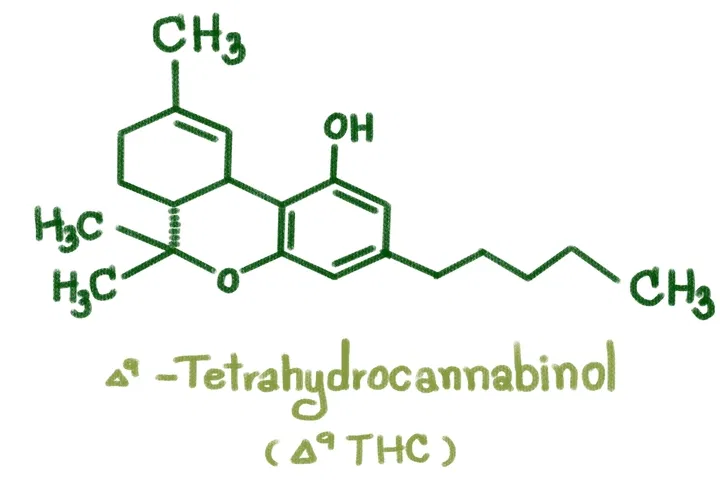
Of all the different types of THC, this is the most widely discussed, because when people say “THC,” what they usually mean is Delta-9 tetrahydrocannabinol. This is the primary psychoactive compound in cannabis and the standard by which all other THC variants are measured. Delta-9 THC forms when THCa is heated and decarboxylated. Once active, it binds efficiently to both CB1 receptors in the brain and CB2 receptors in the body, producing a wide range of effects. Euphoria, relaxation, altered perception, appetite stimulation, and pain relief.
Its effects are now notoriously well-studied. Delta-9 THC has demonstrated analgesic, antiemetic, appette-stimulating, and muscle-relaxant properties in both clinical and preclinical studies [3].
That said, it’s also responsible for the less desirable effects some users experience – anxiety, paranoia, impaired memory, and coordination issues – particularly at higher doses or in THC-sensitive individuals.
From a consumer perspective, Delta-9 THC is predictable but highly dose-dependent. Low doses may feel uplifting and functional, while higher doses can be sedating or overwhelming. Genetics, tolerance, terpene content, and consumption method all influence how it feels.
Legally, Delta-9 THC is the reason cannabis regulation exists at all. In many jurisdictions, it remains tightly controlled, even as other different types of THC slip into legal gray zones.
If cannabis has a main character, Delta-9 THC is it – powerful, versatile, and still not fully understood.
Delta-8 THC: The Smooth Cousin
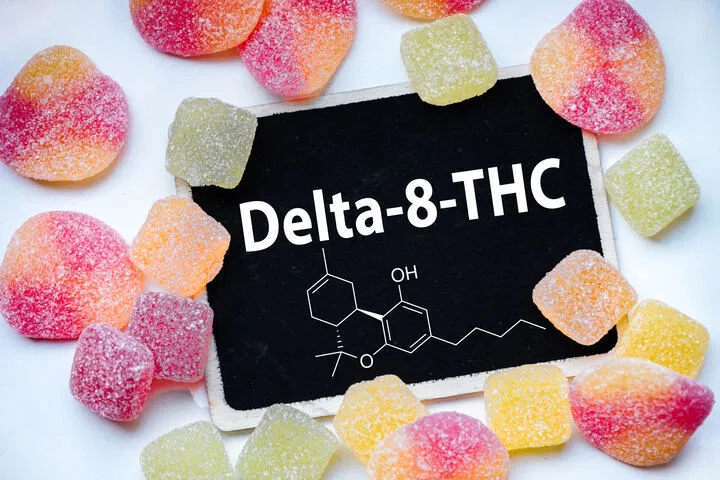
Delta-8 THC has exploded in popularity over the past few years, often marketed as a lighter or clearer version of Delta-9. Chemically, the two molecules are nearly identical – the only difference is the placement of a double bond on the carbon chain. That small shift has noticeable effects. Delta-8 THC bind less strongly to CB1 receptors, resulting in reduced psychoactivity compared to Delta-9 THC [4].
Most users describe Delta-8 as:
- Less anxious
- Less mentally foggy
- More functional during the day
Naturally-occurring Delta-8 exists in cannabis only in trace amounts. The vast majority on the market is converted from CBD through chemical processes, which raises important quality and safety considerations. Residual solvents and byproducts can be an issue if products aren’t properly lab-tested.
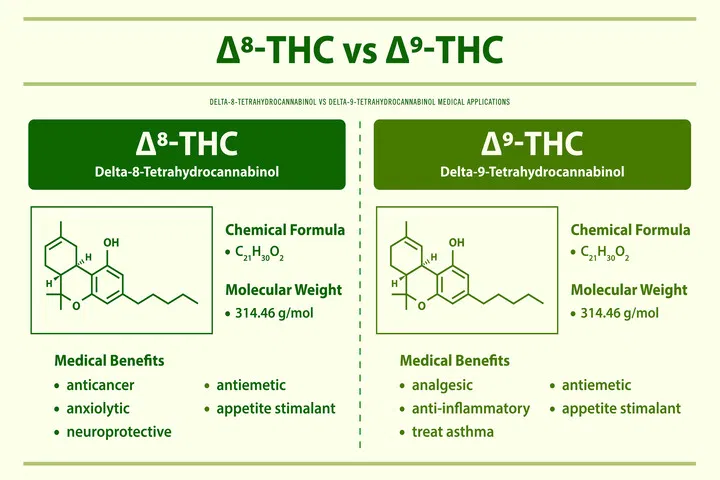
Research on Delta-8 THC remains limited, but early studies suggest anti-nausea and anxiolytic potential, particularly in pediatric oncology patients [5].
For consumers, Delta-8 often appeals to those who find Delta-9 too intense but still want noticeable effects. It sits in a middle ground – psychoactive, but milder.
In the broader THC family, Delta-8 proves that small chemical differences can lead to big experiential changes.
THCV: The Outlier With Energy
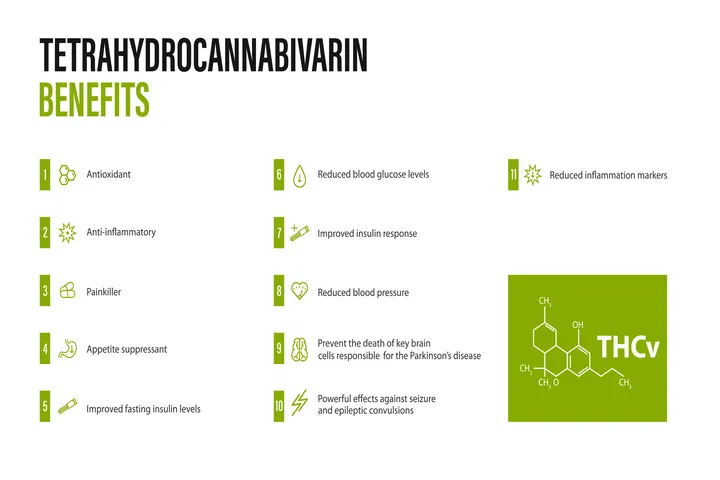
Of all the different types of THC, THCV (tetrahydrocannabivarin) is often described as the most misunderstood THC variant – and for good reason. Structurally similar to Delta-9 THC, THCV behaves very differently in the body. At low doses, THCV can actually block CB1 receptors, reducing THC’s intoxicating effects.. At high doses, it becomes mildly psychoactive, often described as clear, stimulating, and short-lived [6].
THCV naturally occurs in certain landrace and African-origin cultivars such as Durban Poison and other equatorial sativas. Unlike Delta-9, THV is often associated with:
- Increased focus
- Reduced Appetite
- Elevated energy levels
Some strains containing higher levels of THCV are often dubbed “diet weed” due to the apparent ability to suppress appetite – a stark contrast to the famously munchie-inducing properties of THC. While that “diet weed” label oversimplifies its pharmacology somewhat, reesearch indicates that THCV may play a role in blood sugar regulation and metabolic health [7]. If you're keen to try THCV, Seedsman offers an outstanding cultivar we named Diet Durban THCV 1:1.
For new consumers, THCV can feel surprisingly sharp and lucid compared to traditional THC. It also illustrates an important lesson: not all THC produces the same mental state. As breeding and extraction tecnhiques improve, THCV is gaining attention for its unique functional profile – especially among daytime users.
THCP: The New Kid With Some Serious Game
Although only identified in 2019, THCP (tetrahydrocannabiphorol) immediately changed how scientists think about the limits of THC potency. Structurally, THCP looks almost indentical to Delta-9 THC, with one critical difference: it has a longer alkyl side chain – seven carbon atoms instead of five. That small modification dramatically alters how the compound interacts with the body’s endocannabinoid system – though it exists in miniscule quantities [8].
In laboratory models, THCP demonstrated a binding affinity to CB1 receptors up to 30 times greater than Delta-9 THC, suggesting it could produce intense effects even at extremely low doses. This doesn’t mean THCP is 30 times more intoxicating in every context, but it does mean that its psychoactive potential is unusually high compared to other naturally-occurring cannabinoids.
What makes THCP particularly interesting is how rarely it actually appears in cannabis. Researchers found it only in trace concentrations, often far below 0.1% of total cannabinoid content. This explains why THCP went unnoticed for so long and why its real-world effects weren’t recognized until modern anaytical techniques became available
For consumers, THCP is best understood as a potency amplifier rather than a standalone experience. Anecdotal reports suggest effects that are longer-lasting, deeper, and more physically grounding than Delta-9 THC – sometimes bordering on overwhelming for unprepared users. Because of its strength and limited human research, THCP products demand careful dosing and rigorous third-party testing, especially as extracts and isolates enter the market ahead of regulatory clarity.
Other Different Types of THC: Minor Variants
Beyond the better-known cannabinoids, scientists have identified over 100 THC-related analogues, many present in only trace amounts. Here's a look at a noteworthy duo:
Delta-10 THC
Delta-10 THC is one of the newer additions to the list of different types of THC, and while it doesn't carry the same historical weight as Delta-9 or even Delta-8, it has quickly gained attention for its distinctly lighter psychoactive profile. Chemically speaking, Delta-10 is another positional isomer of THC, meaning its molecular structure is almost identical to Delta-9 THC, with the only difference being the location of a double bond in the carbon chain.. That subtle change significantly alters how it interacts with the endocannabinoid system, resulting in noticeably reduced affinity for CB1 receptors in the brain, and, for most users, milder and more functional effects.
Because Delta-10 THC occurs naturally in cannabis in only trace amounts, commercially available products are typically produced by converting hemp-derived CBD through controlled chemical processes - a method that makes proper purification and third-party lab testing especialy important.
In terms of effects, Delta-10 stands out among the different types of THC for being uplifting, energizing, and mentally clear, making it it akin to a mild sativa-like experience. Users report gentle euphoria, increased sociability, and improved focus, wth a much lower likelihood of anxiety or mental fog. As for the science? Research on Delta-10 lags behind compared to the other different types of THC, but early studies support the idea that reduced CB1 binding correlates with reduced intoxication potential [9].
Delta 10's long-term effects are stll being studied, but its popularity highlights growing consumer interest in customized, experience-driven cannabis chemistry rather than sheer potency alone.
THC-O Acetate - And A Warning
Often shortened to THC-O, this is a semi-synthetic compound that stands apart from many of the other different types of THC due to both its origin and intensity. Unlike Delta-8 or Delta-9 THC, THC-O doesn't occur in meaningful amounts in the cannabis plant; instead, it's created through a somewhat dangerous chemical process involving highly flammable and potentially explosive chemicals that acetylates THC, altering how the compound is absorbed and metabolized by the body. This structural change appears to increase THC-O's bioavalability, contributing to reports of effects that are significantly stronger and longer-lasting than traditional forms of THC. It also comes with a delayed onset that catches inexperienced users off guard.
Because of that delay, THC-O is sometimes described as more "psychedelic" in nature, producing deep mental effects rather than immediate euphoria. However, this is argued against as purely anecdotal. Scientific research in THC-O is extremely limited, and concerns have been raised about safety, particularly regarding the use of harsh reagents during synthesis and the potential formation of harmful byproducts if goods containing THC-O are poorly manufactured [10].
When heated (via vaping or dabbing, for example), THC-O acetate produces ketene gas, a highly toxic substance linked to severe lung injury. For consumers, THC-O underscores the importance of cautious dosing and verified lab testing. While it appears to represent and intriguing frontier in cannabinoid chemistry, it's best approached with restraint until more comprehensive human safety data is available. It's not known that THCO-O is even safe to consume.
These compounds are reminders that cannabis chemistry is still unfolding. While intriguing, many minor THC variants lack robust human data, and responsiible consumption depends on transparent testing and regulation.
Conclusion: Understanding the THC Spectrum
So the different types of THC? They’re not gimmicks, trends or marketing tricks – they're the natural result of a remarkably complex plant interacting with chemistry, heat, and human biology.
From non-intoxicating THCa, to classic Delta-9, the milder Delta-8, or the energizing anomaly that is THCV, each THC type offers a distinct experience shaped by structure and dose, not just strength.
For newcomers, understanding the different types of THC can mean better choices, fewer surprises, and a more enjoyable relationship with cannabis. And for the industry at large, it underscores a simple truth: cannabis isn’t getting stronger – it's getting smarter.
As research continues to evolve, one thing is clear: THC is no longer a single story. It’s a whole library – and we’ve only just started reading.
--------------------------------------------
References:
[1] https://pmc.ncbi.nlm.nih.gov/articles/PMC5549281/
[2] https://pubmed.ncbi.nlm.nih.gov/28853159/
[3] https://pmc.ncbi.nlm.nih.gov/articles/PMC6007535/
[4] https://pubmed.ncbi.nlm.nih.gov/36710464/
[5] https://pmc.ncbi.nlm.nih.gov/articles/PMC3165951/
[6] https://pubmed.ncbi.nlm.nih.gov/33526143/
[8] https://pubmed.ncbi.nlm.nih.gov/31889124/