


Recently, we collaborated with one of the most prominent cannabis cultivation content creators—Mr. Grow It. In this exclusive interview, we asked him about his journey into growing cannabis, his approach to content creation, the techniques he uses in his garden, and more. He shares valuable insights that haven't been told anywhere else!
When and how did you first start growing cannabis?
In 2007, a buddy of mine invited me over to his house. When I arrived, I was surprised to see he had just harvested a handful of cannabis plants. I hadn’t even known he was growing cannabis—that’s how secretive it was back then. Intrigued, I started asking him questions about his setup, from the type of lighting and nutrients he used to the environmental conditions, genetics, and more. With his guidance as my mentor, I decided to start growing on my own in 2010.
What inspired you to start creating content about cannabis cultivation?
I first discovered cannabis grow videos on YouTube in 2013. I had no idea that content like that was even allowed on the platform, but there was a small, thriving community at the time. After spending a few years watching other people document their grows, I decided to share my own. I uploaded my first grow video to YouTube in 2015.
Creating videos wasn’t new to me—I’d been filming and editing since I was a teenager, capturing goofy moments with my friends just for fun. I’ve always enjoyed the process of producing videos, and at one point, I even spent two years filming prank videos on the Las Vegas Strip.
What’s your favorite strain to grow, and why?
My favorite strain to grow so far has been Queen Anne’s Revenge by Subcool Seeds, formerly known as TGA Genetics. The phenotype I found was absolutely stunning. It was a fast grower, easy to feed, easy to train, and in flowering, the buds were incredibly dense and coated in trichomes—making it one of the frostiest strains I’ve ever grown.

In its final weeks of flowering, it went through a beautiful transformation, changing from green to a deep purple, starting at the top of the plant and gradually working its way down. I ended up doing a partial harvest, taking the top colas first and leaving the lower buds to ripen. After harvesting the top, the leaves that had been shaded from the light remained green, creating an incredible contrast with the dark purple leaves—a truly gorgeous sight.
The effects were phenomenal too! It delivered a strong, narcotic high that was perfect for relieving stress and pain. Looking back, I wish I had kept that phenotype—it was truly special!
What’s the story behind your strain Chill Out OG? Do you have any other breeding projects in the works?
The first generation of Chill Out OG was created in 2019. The father, Brisker OG, was one of my favorite strains at the time. After pheno-hunting a pack, I discovered a beautiful male plant with exceptional traits: vigorous growth, a naturally balanced structure, purple-tinged pollen sacks, excellent flower stacking, and even admirable trichome production for a male plant.
The mother plant of Chill Out OG was Pakistan Valley by World of Seeds, another favorite of mine due to its smoke. The effects were highly narcotic and couch-locking, making it perfect for evening use and helping me fall asleep easily. It also had notable pain-relieving properties.
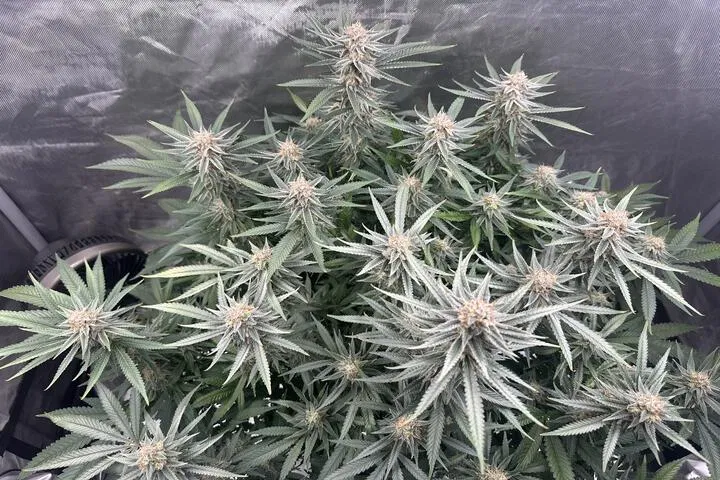
The first generation of Chill Out OG exhibited a lot of variety. Some phenotypes were short and squat, resembling the Pakistan Valley, while others were tall and stretchy like Brisker OG. Over the next few years, I focused on refining the strain. I pheno-hunted to create the F2 generation, then repeated the process to produce the F3, and eventually the F4 generation, which is where the strain stands today.
I’m currently growing the F4 generation for the first time. It’s expected to be a medium-sized plant with a dense bud structure and frosty trichomes. The flavor and aroma profile should feature a mix of earthy, piney, citrusy notes, with a hint of fruity sweetness. The effects are laid-back and euphoric without being overly couch-locking, making it functional while still relaxing. It’s also known to spark hunger.
For the future, I plan to hunt through the F4 generation and potentially create feminized seeds. There’s been a high demand for a feminized version of Chill Out OG, so that’s on my list for this year. I’m also working on a few other crosses, though I haven’t shared details about them publicly yet. Stay tuned!
What does your nutrition schedule look like, and what nutrients do you prefer to use?
My nutrition schedule varies depending on whether I’m growing with organic inputs or synthetic nutrients. Personally, I prefer to grow organically and keep things as simple as possible. My go-to fertilizer is BuildASoil Craft Blend, an all-in-one amendment with a straightforward application—just one cup per plant. This makes it easy to prepare the soil at the start, with top dressing needed only once every 30 days.
The only additive I use alongside it is Stash Blend, a 2-1-5 formula packed with beneficial ingredients like seaweed extract, corn steep liquor, humic acid, silica, beneficial bacteria, and endomycorrhizal fungi. Additionally, I like to incorporate either a cover crop, such as the 12-seed blend from BuildASoil, or a mulch layer to help maintain health and moisture.
What advice would you give to a first-time grower planning a 4-plant grow in a 4’x2’ space?
In a 4’x2’ grow tent, you’ll need to keep your plants relatively small. I’d recommend using 2 or 3-gallon grow pots and flipping to flower early—around the 30-day mark. With four plants in such a compact space, the tent will fill up quickly, so proper plant training will be crucial to prevent overcrowding.
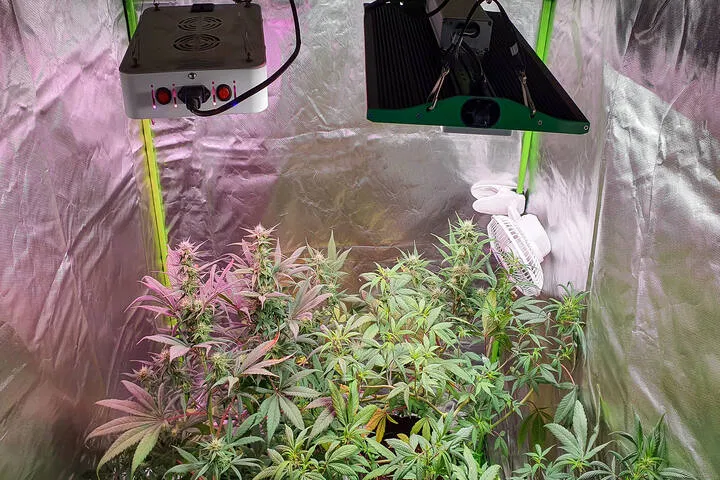
It’s also important to consider your grow light’s distance requirements. Some lights need at least 18 inches of distance from the canopy, which can create height constraints, especially since 4’x2’ tents are often only 5 feet tall. Choosing a grow light with minimal distance requirements can help you make the most of your vertical space.
What’s your advice for preventing fungus gnats? Is it possible to create conditions that are too windy for them?
Fungus gnats can be a frustrating pest to deal with in your garden. I like to start with yellow sticky traps in each container to identify whether or not there’s a fungus gnat problem. Once confirmed, there are several effective strategies to control them.
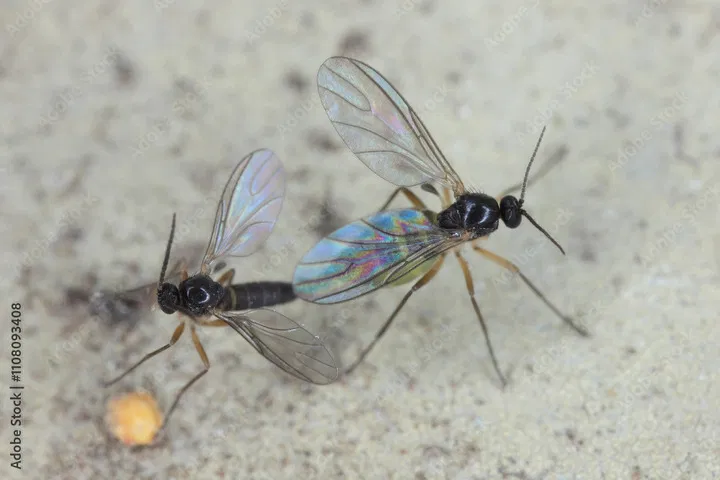
One simple trick is to use a fan to blow across the surface of the growing medium, making it inhospitable for the gnats. Another helpful method is allowing the top layer of soil to dry out. Fungus gnats thrive in moist conditions and typically lay their eggs in the top inch of the soil. By letting the medium—or at least the top layer—dry out, you can significantly reduce their population. When sprays are needed, I recommend products like Mammoth Canncontrol or The Amazing Dr. Zymes. Both are highly effective against fungus gnats.
To target them directly in the soil, you can use Bacillus thuringiensis (BT), a beneficial bacterium found in products like Mosquito Bits. Many growers have great success with this approach. Another effective option is introducing nematodes, which can be applied as a soil drench to attack the larvae. With these methods combined, you can effectively manage and reduce fungus gnat populations in your garden.
How do you eliminate purple lines that appear on the stalk of a plant?
Purple lines running up the stalk often appear when the environment’s temperature is on the cooler side, such as around 60°F/15°C. Many cannabis strains naturally develop purple lines in these conditions, and in such cases, it’s usually not a major issue.
However, if the stalk turns a solid purple, it’s often a sign of a nutrient deficiency. This could indicate that the plant is struggling to absorb nutrients or that there’s simply not enough nutrition in the growing medium. Another potential cause is an imbalance in pH, which can hinder nutrient uptake.
To address this, check the pH and PPM (or EC) of the runoff. This will help you determine whether the plant is within the ideal pH range and whether the medium has sufficient nutrients or is lacking them. Identifying and correcting these issues will ensure your plants stay healthy and thrive.
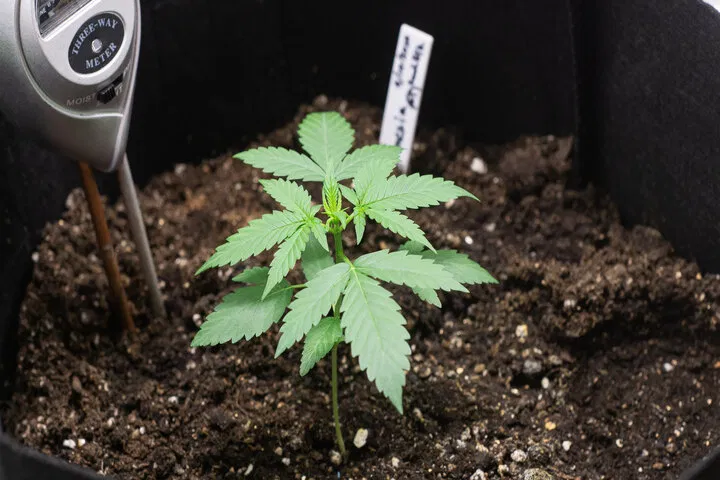
Should you lollipop autoflower plants? If so, when is the best time to do it?
This is a highly debated topic among growers. Some swear by lollipopping autoflower plants, claiming it’s beneficial, while others strongly oppose it, believing it stunts growth and negatively impacts yield.
Personally, I do lollipop my autoflowers, but I take a cautious approach to minimize any potential negative effects. I prefer to wait until after the stretch is complete before lollipopping. This ensures that I don’t stunt the plant’s vertical growth. At this point, I remove about ¼ to ⅓ of the lower growth. By waiting until the plant has finished stretching and is shifting its energy from leaf production to flower development, I can avoid significantly impacting yield while promoting better focus on bud growth.
Is it possible to clone cannabis plants during the flowering stage to preserve their genetics?
Yes, absolutely! Cloning during flowering is often referred to as "monster cropping." I’ve done it many times, though I usually only do it when necessary. For example, if I grow a plant that’s absolutely gorgeous, with the taste, smell, and effects I’m looking for, and I feel it’s worth preserving, I’ll monster crop it to ensure the genetics live on.
Some growers make monster cropping a regular part of their process. Instead of cloning plants during the vegetative stage, they take cuttings during flowering to save space in their grow room.
Whether you choose to clone in the veg stage or during flowering, the cutting should still be able to develop roots under the right conditions. It ultimately comes down to your growing style and specific needs.
What is the best technique for drying cannabis?
I prefer the 60/60 method for drying cannabis—60°F/15°C with 60% relative humidity. However, since I live in the desert, it’s often challenging to maintain 60°F/15°C in my drying space. My drying room temperature typically hovers around 65°F/18°C or even 70°F/21°C, which is still acceptable. The key is keeping the relative humidity around 60%, as this helps bring the plant down to shelf stability, achieving a water activity level of 0.6 without over-drying.
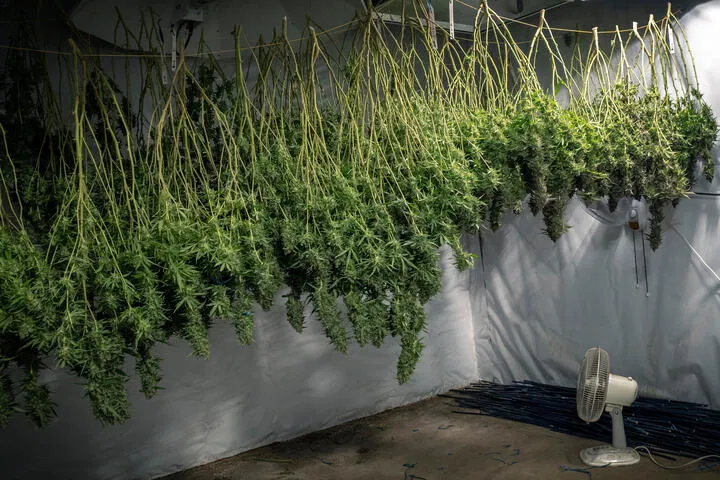
Over-drying can cause harshness and, in my opinion, result in a loss of flavor. To make the process easier, there are a few drying systems on the market, though they vary significantly in price. I’ve been using the Cannatrol Cool Cure for the past couple of years, and it has made drying much simpler. With the Cool Cure, I can place the plant inside, set the target temperature and dewpoint (which controls humidity), and press start. In about 5 to 7 days, the plant reaches shelf stability, and I can even use the Cool Cure for storage.
The downside? The Cannatrol Cool Cure is very expensive. I’m hopeful that other companies will release similar products in the future, which might help bring prices down. Fingers crossed!
What exciting projects are you currently working on?
I have so many exciting things in the works right now! First, for my Garden Talk podcast, I’ve lined up some incredible guests. These include true experts in the field, scientists, and highly knowledgeable, self-taught individuals who will be sharing invaluable insights. I can’t wait for them to drop some amazing knowledge for our listeners.
I’m also gearing up for some travel with the From The Stash podcast, which I co-host with Pigeons 420 and Rob from CLTV. On this podcast, we dive into all things cannabis-related, and the upcoming topics we’ve planned are both fun to discuss and entertaining for the audience.
Another exciting project is the expansion of Stash Blend, a product developed by me, the From The Stash team, and Growers House. We’re working hard to bring it to other countries and reach even more growers. On top of that, I’m continuing to produce content for my main YouTube channel, where I showcase the plants I grow. I have some incredible genetics lined up for my next several grows, and I’ll be filming and editing videos to share every step of the process.
Finally, I’m tackling a big personal project: reviving my backyard. Living in the desert presents unique challenges, but I’ve planted an orchard with several fruit trees and set up a few raised beds for growing vegetables and herbs. While cannabis is my main focus, I’m excited to diversify and turn my backyard from lifeless dirt into thriving, fertile soil.
Explore More with Mr. Grow It
Mr. Grow It’s journey into cannabis cultivation and content creation is both inspiring and insightful. From his humble beginnings to mastering advanced techniques, he continues to share valuable knowledge with growers around the world. Whether you're just starting out or looking to refine your skills, his advice and experiences offer something for everyone. We hope this interview gave you a deeper understanding of his passion and the dedication it takes to grow and create. You can watch Mr. Grow It’s gardening videos on YouTube and listen to his podcast episodes. Additionally, his website is packed with beginner-friendly information on growing cannabis. Stay tuned for more stories like this, and as always, happy growing!