

When congress finally pushed through the spending package that ended the recent government shutdown, few expected one of the most consequential pieces of policy to be a last-minute addition targeting the hemp industry. Yet that’s exactly what happened. A provision embedded deep in the funding bill dramatically tightens federal rules on hemp-derived products – and industry leaders fear it could reshape, or completely dismantle, large parts of the market.
What The New Measure Means

The policy change has left the cannabis industry and the larger cannabis community reeling. The change keeps the long-standing rule that hemp must contain no more than 0.3% THC – the ingredient in cannabis that gets you high – by dry weight. But lawmakers went even further this time, banning most consumable hemp products that contain more than 0.4 milligrams of total THC. If that’s not strict enough, they also prohibited synthesized or “intoxicating” cannabinoids that are chemically altered from hemp extracts, and even non-psychoactive CBD products are affected.
Supporters of the measure argue that this closes a loophole created by the 2018 Farm Bill, which unintentionally allowed intoxicating hemp-derived products – like delta-8 THC gummies and drinks – to be sold nearly everywhere, often outside regulated cannabis markets. Critics, however, say the language goes too far and threatens to erase legitimate businesses that deal in safe, low-dose wellness products.
Why Lawmakers Moved Toward A Ban
Supporters of the measure framed it as closing a loophole in the 2018 Farm Bill. They argue that companies have exploited that law to take legal amounts of THC from hemp, concentrate them, and then market potentially psychoactive products in stores that are easily accessible – even to minors.
Senate Majority Leader Mitch McConnell said the change is meant to curb unregulated intoxicants while still “preserving the hemp industry for farmers.” Critics, however, are furious. Senator Rand Paul (KY), who unsuccessfully tried to remove the hemp language, warned the limits would effectively eliminate almost the entire hemp consumables market. “Nearly 100% of the existing market.....would become illegal,” Paul said.
A Multi-Billion-Dollar Industry At Stake
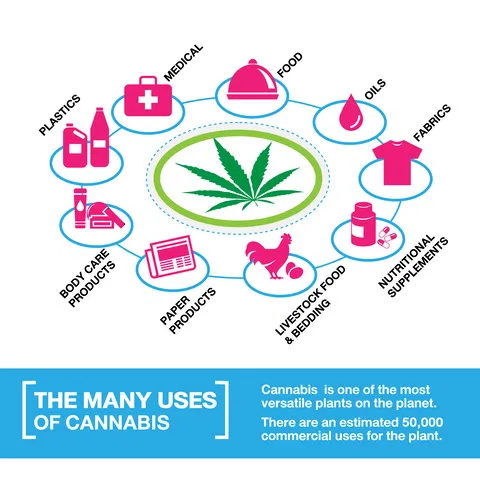
For the U.S. hemp industry, the economic implications are huge. According to the U.S. Hemp Roundtable, the hemp sector is currently worth about $28.4 billion, and the new restrictions threaten more than 300,000 jobs tied to hemp-derived products if companies are forced to withdraw most of their product lines. Some states have even more concentrated exposure: in Texas alone, the hemp sector is estimated to support over 53,000 jobs and generates $4.4 billion in annual revenue.
And while the legal marijuana market is separate from hemp, the two industries overlap in supply chain infrastructure, testing labs, retail storefronts, and agricultural labor. National employment figures in the cannabis industry – including legal THC businesses – sit somewhere around 425,000 full-time positions, highlighting how disruptive federal action could become if it prompts wider regulatory scrutiny.
Which Parts Of The Industry Face The Greatest Impact?
The first and most immediate impact will fall on manufacturers and retailers of:
- Edibles and beverages containing hemp-derived cannabinoids
- Low-dose THC “microdose” products used for relaxation or sleep
- Wellness tinctures and oils
- Over-the-counter CBD products that could now fall into legal gray areas
- Cannabis Seeds
Also at risk are testing laboratories, packaging and formulation companies, distributors, and the thousands of independent retailers – from vape shops to small grocers – that have relied on hemp sales for a significant share of revenue.
Farmers are bracing for upheaval as well. Many shifted acreage toward hemp growth after 2018, but with that demand now uncertain, fiber mills and other hemp-processing infrastructure may be at risk.
Cannabis Clones Appear Unaffected

Interestingly, the new hemp restrictions do not explicitly target cannabis clones, and industry analysts say these young, rooted cuttings fall outside the scope of the shutdown-related hemp measure. Clones are treated as agricultural plant material, not consumable hemp products, and they are already regulated under each state’s existing cannabis program. Because the federal provision is aimed primarily at hemp-derived consumables – especially products that contain measurable or psychoactive levels of THC – non-consumable plant stock such as clones remains governed by state-level marijuana laws rather than federal hemp rules.
In short, cannabis clones are not sold as ingestible cannabis products, so they do not trigger the THC-per-container limits or the ban on processed or synthesized cannabinoids.
An Industry In Shock
The fallout surrounding the new measure has been one of shock, with economists and business owners warning of an extinction-level event across the sector. The decision is expected to directly affect thousands of business owners that built their operations around what Congress initially told them was legal. Industry groups reacted with similar frustration, arguing that they’d been blindsided. Public safety advocates, however, applauded the move, arguing that the federal government is finally stepping in to police an unregulated consumer market that as expanded faster than states could manage.
What Happens Next?
The law does allow for a compliance window – roughly a year – to give manufacturers time to reformulate products or exit from prohibited markets. But many business owners say that simply isn’t enough time to reinvent their entire product lines and business models.
Legal challenges are widely expected. Several state and national trade groups have already signaled plans to sue, arguing the measure contradicts the intent of the 2018 Farm Bill. In the meantime, investors, product developers, and beverage companies that had been exploring hemp-infused drinks may slow or pause expansion plans until the regulatory future becomes clearer. But it is vital that you, the consumer/cultivator takes action.
The Broader Picture
The provision ending up in the shutdown deal may have been a political compromise, but its effects are anything but small. It lands squarely on an industry that has grown at breakneck speed over the past six years. Whether this becomes a temporary setback, a full-scale collapse, or the start of a more stable regulatory framework remains to be seen. What is certain is that the coming year will be pivotal for farmers, manufacturers, and indeed the consumers who rely on hemp-derived products. One thing is certain – the community must fight this proposal tooth and nail.