
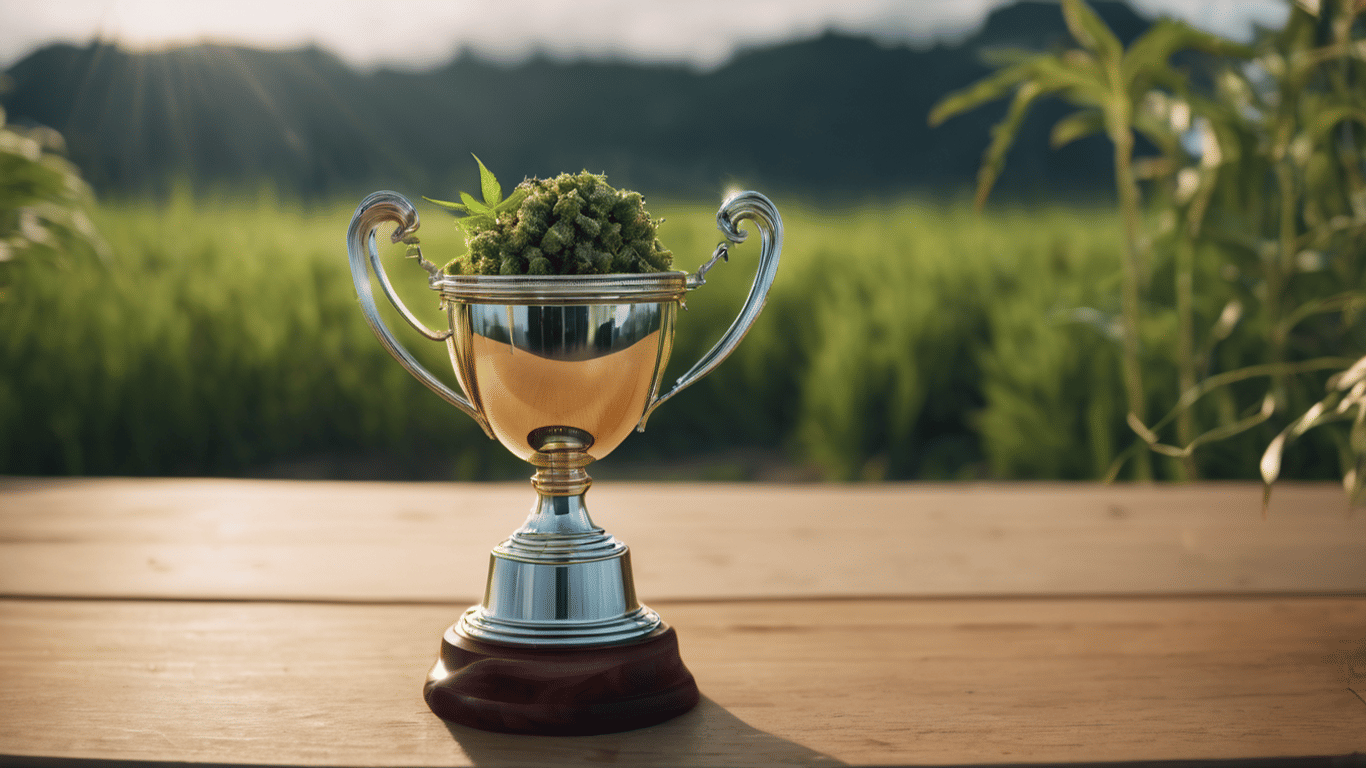

Have you ever wondered how Cannabis Cups work? These prestigious events, which are modern classics to the industry in many ways, have become the stage where the crème de la crème of cannabis cultivators shine. From local showcases to international stages, Cannabis Cups have cemented their prominence in the industry in all manner of stages. But how do these illustrious competitions truly operate? While many organisers adhere to a core set of guidelines, there's always a hint of uniqueness in each cup's rulebook. Here we unpack the intricate details of these renowned contests, highlighting the good, the bad and a bit of the ugly.
Setting The Tone
Although cups can take many forms, it is nearly always an part of a larger event. We don’t find competitions alone at these events, but cultural epicenters where enthusiasts and industry leaders unite under one thread, the love of the plant. In the whirlwind of these events attractions and cannabis-centric festivities, there remains a core focal point, that of competition!. And every competition demands a set of guidelines. The quintessential rules that govern these illustrious showdowns tend to include the following:
- Eligibility, for example: Open only to licensed growers and of legal age etc.
- Product Categories: Defined segments like Best Indica, Sativa, Edible, etc.
- Submission requirements: quantity, free from contaminants proven by lab results
- Blind Judging is often used: So no branding on entries to ensure impartiality.
- Judging Criteria: Usually focus on appearance, aroma, flavor, potency, and innovation.
- Lab Testing: Ensure product safety and verify cannabinoid content.
- Conflicts of Interest: Judges with affiliations to entries in certain category for example.
- Privacy & Media: Participant information confidential; media use permitted for promotion.
- Deadlines & Fees: Strict submission timelines and non-refundable entry fees.
- Disqualifications: Entries can be disqualified for contamination, incomplete submissions, or rule breaches.
These are often ways to keep the competition as ‘real’ as possible. Although some cups have come under scrutiny over the years for bias and various other claims of fraud and dishonesty. In order to address some of these concerns we attempt to highlight some of the issues which may cause menace to the both the organisers and critics alike.


Judging - The Good
Judging at cannabis competitions can come in many forms. From handpicked people of interest in the industry, all the way through to community voting. Judging is generally done in a fair and transparent way. Many cups have a set of guidelines that standardize judging, ensuring fairness and uniformity in how products are evaluated. Renowned judges can bring credibility to the event and therefore also to the results. Their expertise ensures that fairness and competence are paramount and therefore only top-quality products are rewarded. Products are often judged blindly without branding, ensuring unbiased reviews based on quality and not brand reputation. All these efforts make the judging process robust and fair shining a light on the fact that good quality products speak for themselves.
Judging - The Bad And The Ugly
While blind testing is a standard, there could still be concerns or perceptions of bias, especially if judges have known affiliations or preferences, or have simply been paid to pick out a strain, which they may then be offered so as to know what to look out for come competition day.
Even without any deliberate bias, the subjectivity of cannabis effects means that what one judge finds appealing, another might not. This can lead to inconsistent results across competitions or even within the same event. And finally, trying samples one after, this can cause many issues with the ability to judge consistently, with the accumulated effects distorting results and potentially amplifying the effect of subsequent samples and of course, interfering with taste and smell i.e. no palate cleansing.

Products - The Good
By only permitting those who use clean, safe, and sometimes even sustainable cultivation and production practices, Cannabis Cups align with industry-wide quality standards. This is often reflected in the products and their amazing outputs. Not only showing fantastic strains, but putting them sometimes in the hands of elite growers. The feedback gathered from samples entered can also aid in the breeder/grower’s next effort.
Products - The Bad And The Ugly
Requiring large quantities for products entry could be a barrier for smaller growers or new strains that are in limited supply. In some instances the required amount might be close to what the plant can produce. Some critics argue that Cups focus too heavily on high THC levels or particular flavor profiles, potentially sidelining other valuable product attributes. This along with the sometimes overlapping product categories make proper classification more challenging than needs be.
Other issues
High entry fees often cause issues, potentially sidelining the smaller growers in favor of the more established entrants. However, the counter to this is often put as to prevent overwhelming numbers of samples being entered, this does not counter the original point however is a fair problem that needs addressed.
The time between producing the finished product and the judge sampling it, has organizers grappling logistics ensuring every entry is evaluated promptly, all while preserving the integrity of the products.
Without overseeing regulatory bodies or stringent oversight, there lurks the danger of dubious practices. Can genuine quality triumph when commercial interests beckon? Or is it all just going to be another case of ‘who pays wins!’.
Over-commercialization or controversies associated with a Cannabis Cup can lead to negative public perception, potentially affecting the broader acceptance of cannabis in society.
Conclusion
Cannabis Cups come in various forms and are often not just competitions, but huge events and cultural nexuses, bringing together the passionate and the proficient from the world of weed. Although the competition itself comes with stringent rulesets that are designed for fairness and integrity, controversies and challenges nonetheless persist. From the art of judging to the specifics of product entries, the intricate dynamics of these competitions tell a story of both celebration and caution. Whether it's the highs of honouring top-tier cannabis products or the lows of potential bias and commercial influences, Cannabis Cups undoubtedly leave an indelible mark on the industry. To preserve their esteemed legacy and further the acceptance of cannabis in society, striking a balance between commercial interests and genuine quality is paramount.