

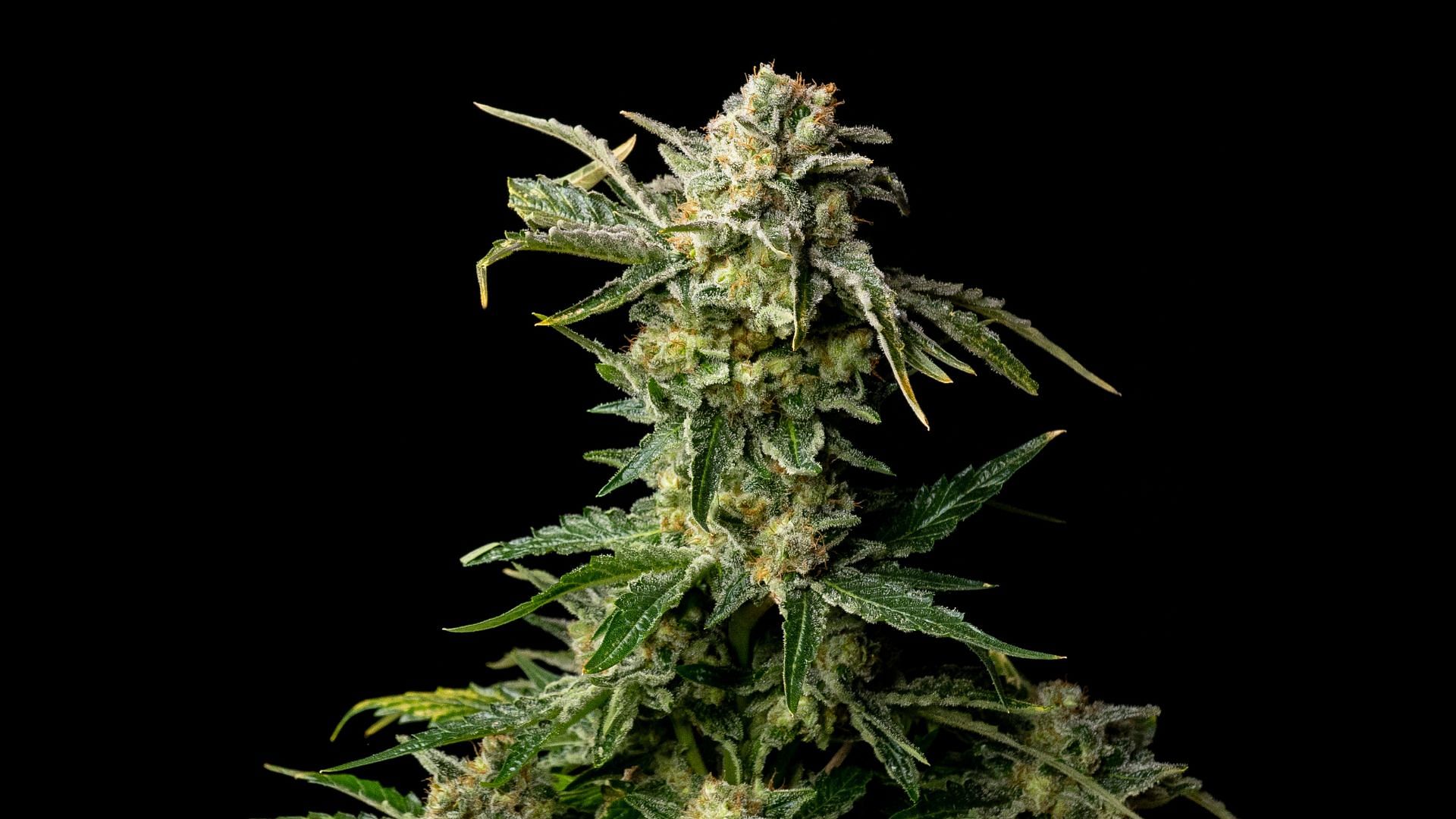
White Widow is without a doubt one of the most successful commercialized cannabis strains on the market today. Perhaps that's also the history of White Widow is so problematic.
This legendary plant has since its birth in 1994, won a number of awards, including the first prize in the 1995 High Times Cannabis Cup. Known to be highly resinous and extremely potent, the plant has the ability to humble even the most experienced smoker and has been used in the making of countless new hybrids, always improving on quality.
The Complicated Origins of White Widow Cannabis
The name White Widow is usually linked with several different breeders and today almost every seed bank offers its own version of the plant, including Seedsman.
The battle over who actually invented the strain has turned into a political struggle, dividing the public into two camps. Some believe that the White Widow was discovered by a man named Ingemar, while others take the side of another skilful breeder known as Shantibaba.
Where White Widow Began - Version #1
The White Widow strain was first released to the public by the Green House Seed Company in 1994.
The pedigree of this famous sativa/indica hybrid is made up of a pure Brazilian sativa mother and a South Indian, Keralan hybrid father. The exact origins of the mother plant remain somewhat of a mystery but the most educated guess is that it could possibly be the old school, Brazilian landrace Manga Rosa, which has a long history of spiritual use.
As the story goes, the genetics were discovered during a trip to India where Shantibaba was approached by a man, who after sharing a joint with him, eventually led him to his farm in the mountains of Kerala. The farmer then introduced him to an indica hybrid that had been selectively cultivated and bred towards optimum resin production in his village for a very long time.

After several days of sampling the farmer’s plants, Shantibaba left for the Netherlands with a batch of fresh seeds, from which he was soon to discover the male for his White Widow cross. He eventually bred it to the Brazilian Sativa mother, forming the spectacular White Widow.
When Shantibaba was still the co-owner of Green House Seeds, he established several new and superior hybrids while working alongside Neville Schoenmaker (the father of Dutch seed banks) on joint projects. Some of the stock that they used dated back to the early days of the Seed Bank that Neville himself had founded, a company that later became reformed under new ownership and known as Sensi Seeds.
After a conflict of interests between the owners of Green House, Shantibaba sold his half to co-founder Arjan in 1998 and left for Switzerland to form the Mr Nice Seedbank in collaboration with Howard Marks and Neville Schoenmaker.
Shantibaba then concentrated on supplying growers with superior quality strains from both old and new world genetics. He started breeding the Widow under the flag of his newly formed brand and gave it the name Black Widow since the name White Widow was already being marketed by Green House Seeds.
White Widow Origins - Theory #2
According to an interview for the German cannabis magazine Grow; a breeder named Ingemar is also accredited with inventing the White Widow strain. This is where the history of the plant becomes problematic.
Ingemar was apparently working on some strains for the Green House Seed Company in the past, much like he is now, and he quite possibly had a hand in developing the White Widow strain.
Ingemar says that the seeds for the White Widow hybrid were accidentally found in a batch of hand-rubbed hashish and that the strain was then worked on for some six years before it was released.
If this is true, the birth of the Widow can be dated back as early as 1988, although there are no records to confirm this. The earliest descriptions of the White Widow were made by Shantibaba in 1995, while he was still working under the Green House flag.
There is substantial support from the Dutch growing community but there is little in terms of historical data to support this claim.
Where Does White Widow Cannabis Come From?
There is no way to know, for certain, the plant's true origins.
Shantibaba claims the parents are tucked away in the Mr Nice Seeds library, and that they alone are capable of reproducing the hybrid
. In other words, most other Widows must be founded on progeny that originates further down the line and they are also most likely out crossed with something else. Further evidence to support this theory comes from the plant itself.
The plant from The Mr Nice Seedbank seems to have the most in common with the White Widow that the Green House Seeds Company entered into the Cannabis Cup in 1995. Ingemar offers his own version of the White Widow and several White Widow hybrids, like the notoriously potent Ingemar’s Punch, through the DeSjamaan seed bank and the White Widow Web.

His substantial contribution to the varieties offered by the Green House Seed Company should, however, not go unnoticed.
The fact however remains that all these plants can be traced back to the original breeders Shantibaba and Neville, who in an attempt to avoid confusion, renamed some of their strains.
Sadly, despite their efforts, confusion and contradiction ensued and even more breeders emerged, claiming to have invented the White Widow strain.
Today almost every breeder and seed bank sell seeds that they claim to be the original White Widow. In 1996, both the Nirvana and Dutch Passion seed companies purchased a single pack of White Widow seeds from Green House Seed Company and within a year released their own versions of the Widow.
Undoubtedly all very potent and nice plants, the question whether or not all the White Widow plants on the market today can actually be considered pure remains highly speculative since the only true parental stock remain in the sole care of Shantibaba and the Mr Nice Seedbank.
Why so many different breeders claim to have personally invented this strain is puzzling although understandable due to its commercial success. New breeders keep emerging, claiming authority over the White Widow strain. There can, however, be only one truth, however hazy it has become over the years.
Can we say for certain who bred the very first White Widow strain? No, we can't, and those that can both have legitimate claims. So, it remains one of the cannabis world's great mysteries.
Grow your own White Widow Cannabis
Seedsman seeds have our own version of White Widow, in 4 different varieties suitable for all types of growers.
White Widow Feminised
White Widow fem is designed for the utmost potency rather than any complex flavour profile although the smoke is very smooth and satisfying. The initial hit comes on fast and strong, which can leave anyone but the most experienced canna-seur needing to sit down, but this then slowly evolves into a very relaxing high ideal for enjoying music.

It is an easy strain to grow almost anywhere; its eight-week flowering period ensures that it will be ready to harvest outdoors in October in northern latitudes before the weather gets too cold. THC levels are high, around 20%.
White Widow Regular
These are White Widow seeds in their purest form.
This is a great indoor strain which takes around 8 weeks for flowering to finish although it can also do very well outdoors in warmer regions where it will be ready to harvest in late October in the northern hemisphere.

It provides great breeding stock and will find favour with those who are looking for a marijuana strain that is quite easy to cultivate but which has a powerful effect that hits hard and fast gradually evolving into a more relaxing effect.
White Widow Fast
White Widow Fast retains the qualities that have made the original White Widow such a hit with smokers and growers alike for so long yet manages to shorten its flowering time by a week.

The South Indian and Brazilian heritage produce white, frosty, knock-out buds that have become a by-word for fast-acting, hard-hitting weed. Buds appear to have been dipped in sugar crystals and have a beautiful smooth smoke. Yields of this high-THC indica/sativa strain are decent at 350 - 450 gr/m2 in 6 - 7 weeks of flowering. Outdoors and greenhouses are also suitable environments due to it being ready to harvest during September in northern latitudes
White Widow Auto
White Widow Auto takes the legendary White Widow strain a stage further so that growers no longer need to worry about reducing photoperiods in order to stimulate the onset of the flowering cycle.

The introduction of ruderalis genetics allows harvesting of trichome-covered frosty buds in only 11 weeks from germination from vigorous, quite short-statured plants that enable discreet outdoor crops to be grown almost anywhere. Yields are pretty impressive; up to 125 gr per plant!
The name White Widow is often linked with several different breeders, and today, almost every seed bank offers its own version of the plant, including Seedsman.
But, as with seemingly about 80% of legendary cannabis strains, deciphering the origins of White Widow requires a level of sleuthing which may still see you turn up empty-handed. The battle over who invented the strain has become a political struggle, dividing the public into two camps. Some believe that the White Widow was discovered by a breeder named Ingemar. In contrast, others take the side of another skilful breeder - Australian breeding royalty, Scott Blakey, perhaps better known as Shantibaba.

Where White Widow Began – Version #1
The White Widow strain was first released to the public by the Green House Seed Company in 1994.
The pedigree of this famous sativa/indica hybrid is made up of a pure Brazilian sativa mother and a South Indian, Keralan hybrid father. The exact origins of the mother plant remain a mystery, but one theory in circulation points to the possibility of an old-school Brazilian landrace, Manga Rosa, which has a long history of spiritual use.
As the White Widow story goes, the genetics were discovered during a trip to India where Shantibaba was approached by a man, who, after sharing a joint with him, eventually led him to his farm in the mountains of Kerala. The farmer then introduced him to an indica hybrid that had been selectively cultivated and bred towards optimum resin production in his village for a long time.
After several days of sampling the farmer’s plants, Shantibaba left for the Netherlands with a batch of fresh seeds, from which he was soon to discover the male for his White Widow cross. He eventually bred it to the Brazilian Sativa mother, forming the spectacular White Widow. When Shantibaba was still the co-owner of Green House Seeds, he established several new and superior hybrids while working alongside Neville Schoenmakers (the father of Dutch seed banks) on - if you’ll forgive the cannabis-themed pun - joint projects. Some of the stock they used dated back to the early days of The Seed Bank, a company that Neville himself had founded, and later became reformed under new ownership and known as Sensi Seeds.
After a conflict of interests between the owners of Green House, Shantibaba sold his half to co-founder Arjan Roskam in 1998 and left for Switzerland to form the Mr Nice Seedbank in collaboration with Howard Marks and Neville Schoenmakers. Shantibaba then concentrated on supplying growers with superior-quality strains from old and new-world genetics. He started breeding the Widow under the flag of his newly formed brand and named it Black Widow since Green House Seeds was already marketing White Widow.
White Widow Origins – Theory #2
According to an interview for the German cannabis magazine Grow, a breeder named Ingemar is also accredited with inventing the White Widow strain. This is where the history of the plant becomes problematic.
Ingemar was apparently working on some strains for the Green House Seed Company in the past, much like he is now, and he quite possibly had a hand in developing the White Widow strain. Ingemar says that the seeds for the White Widow hybrid were accidentally found in a batch of hand-rubbed hashish and that the strain was then worked on for some six years before it was released. If this is true, the birth of the Widow can be dated back as early as 1988, although no records confirm this. The earliest descriptions of the White Widow were made by Shantibaba in 1995 while he was still working under the Green House flag.
There is substantial support from the Dutch growing community to corroborate the Shantibaba narrative, but little historical data supports this claim. Nonetheless, it is Shantibaba who is widely heralded as the engine behind White Widow's creation.
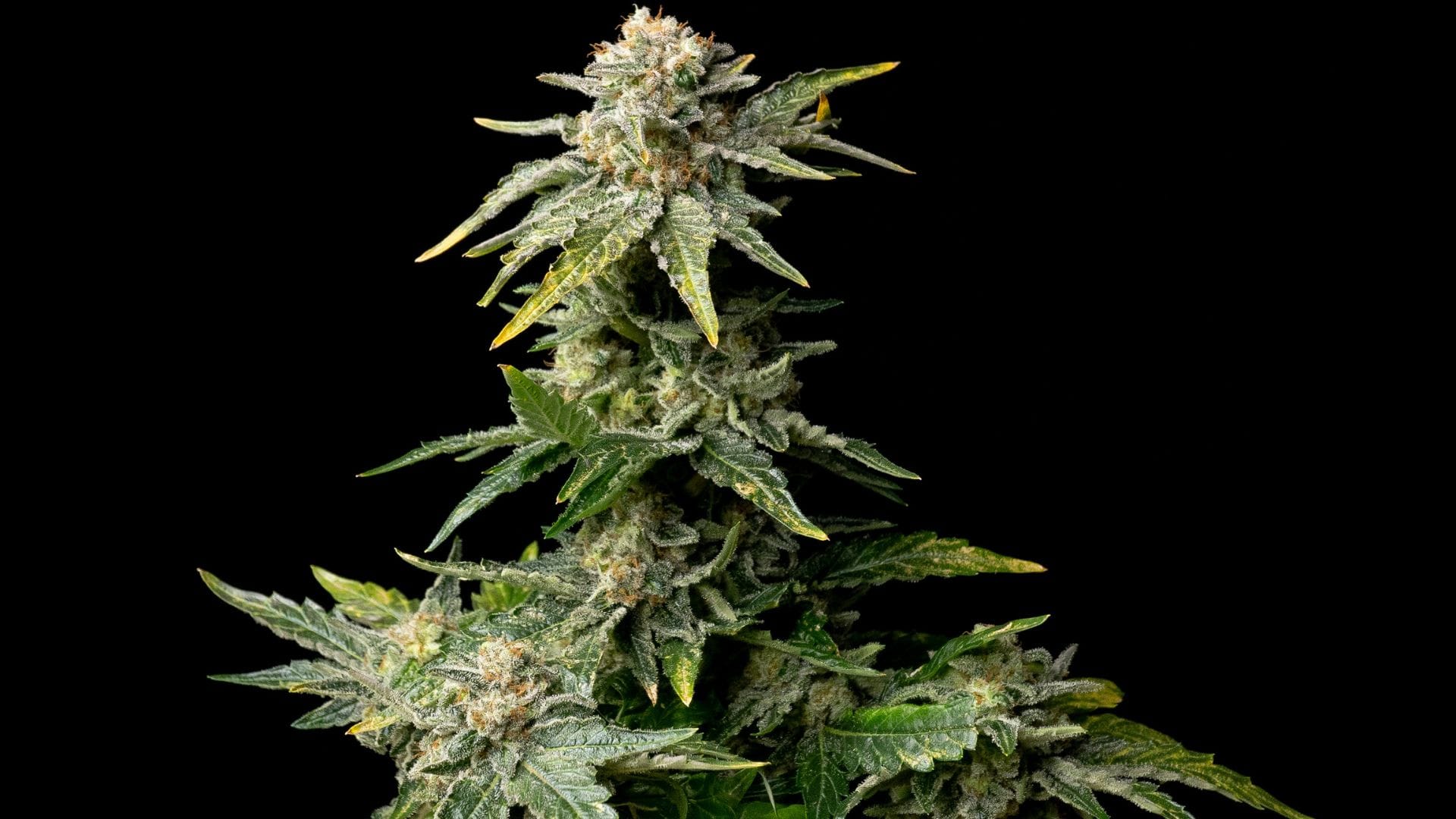
Where Does White Widow Cannabis Come From?
There is no way to know the plant’s true origins for sure. Shantibaba tells us the parents are tucked away in the Mr Nice Seeds library and that they alone can reproduce the hybrid. In other words, most other Widows must be founded on progeny that originates further down the line, and they are also most likely outcrossed with something else. Further evidence to support this theory comes from the plant itself. The plant from The Mr Nice Seedbank seems to have the most in common with the White Widow that the Green House Seeds Company entered into the Cannabis Cup in 1995. Ingemar offers his version of the White Widow and several White Widow hybrids, like the notoriously potent Ingemar’s Punch, through the DeSjamaan seed bank and the White Widow Web. However, his substantial contribution to the varieties offered by the Green House Seed Company should not go unnoticed.
The fact remains that all these plants can be traced back to the original breeders Shantibaba and Nevil, who renamed some of their strains in an attempt to avoid confusion. Sadly, despite their efforts, confusion and contradiction ensued, and even more breeders emerged claiming to have invented the White Widow strain. Today, almost every breeder and seed bank sells seeds that they claim to be the original White Widow. In 1996, the Nirvana and Dutch Passion seed companies purchased a single pack of White Widow seeds from Green House Seed Company and released their versions of the Widow within a year.
Undoubtedly, these are all very potent and nice plants; whether or not all the White Widow plants on the market today can actually be considered pure remains highly speculative since the only true parental stock remains in the sole care of Shantibaba and the Mr Nice Seedbank.
Why so many different breeders claim to have personally invented this strain is puzzling, although understandable due to its commercial success. New breeders keep emerging, claiming authority over the White Widow strain. There can, however, be only one truth, however hazy it has become over the years.
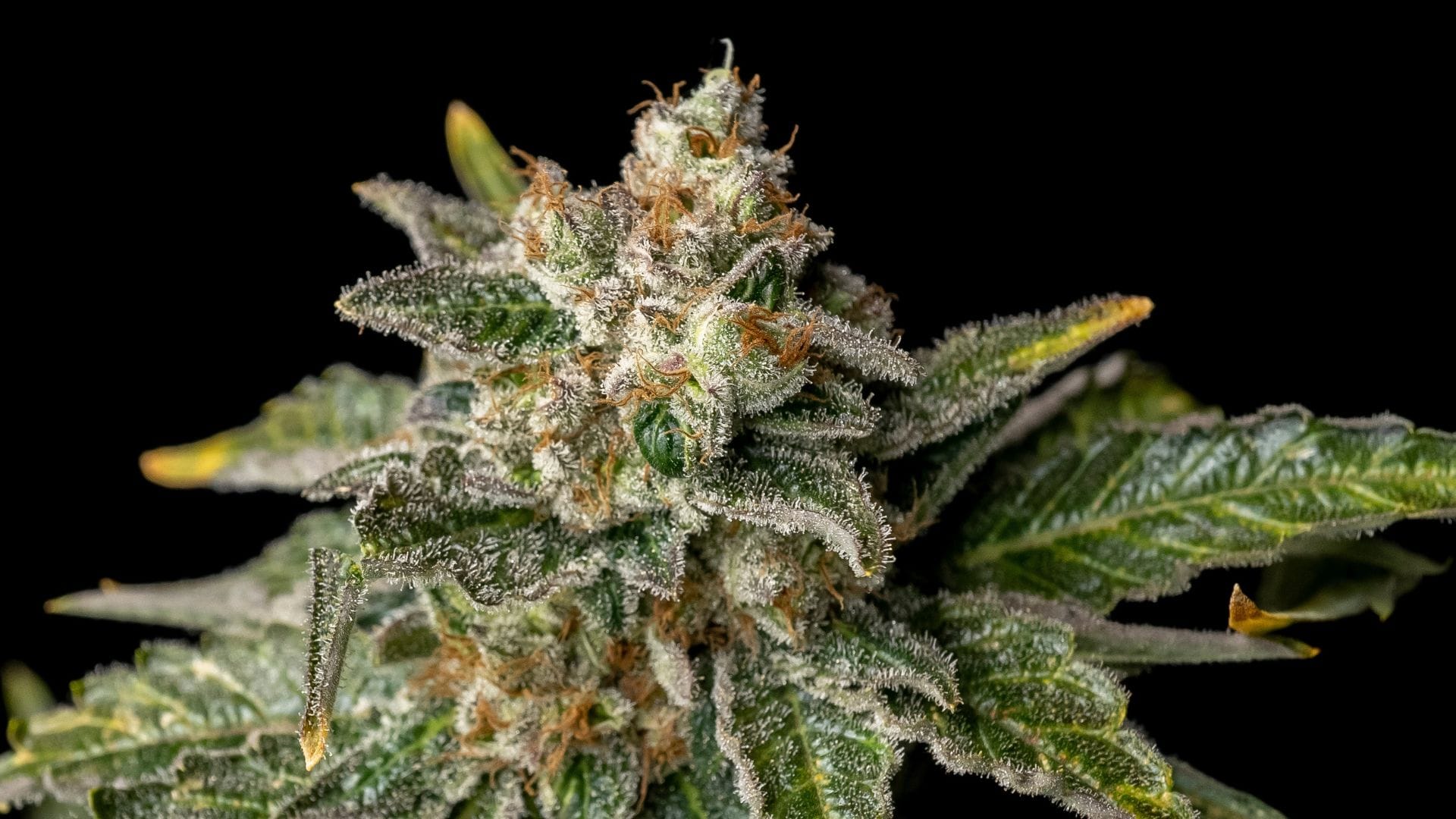
Can we say for certain who bred the very first White Widow strain? Unfortunately, we can’t, and those that can both have legitimate claims. So, it remains one of the cannabis world’s great mysteries. For every person who insists sole credit belongs to Shantibaba, another will tell the story of Ingemar. The debate continues until both come forward with White Widow's true origin.
The Success of White Widow
What’s altogether less debatable is the success and quality of the White Widow cannabis strain. When it first took to the stage in the coffee shops of Amsterdam in the mid-1990s, White Widow immediately turned head, gathering the kind of attention ordinarily reserved for up-and-coming rock stars. Quickly building a reputation based on its staggering potency, White Widow became a darling of the Dutch scene. Like all good rock stars, it had the looks - insanely resinous with a high trichome coverage, which ultimately led to the White in the name, with the Widow seemingly a nod to what at the time was unreal potency.

White Widow was a one-hitter in terms of effects, but it came without the game-over, goodnight power of a indica, and the cannabis connoisseurs of Holland couldn’t get enough. As White Widow’s reputation spread, notoriety became infamy, and fan acclaim was quickly matched by critical acclaim. At the 1995 High Times Cannabis Cup, White Widow took the 1st place ribbon with aplomb thanks to its power, effects and appearance. It would be the first of many awards won by this sativa-dominant hybrid, and it’s still a hugely popular strain to this day.
How White Widow Grows
Green House Seeds advocates using a SCROG (Screen of Green) set-up to get the most out of White Widow. Start by developing a good canopy, then prune beneath the canopy to remove some vegetation during the first week or two of the flowering phase. Avoid going further, as this may cause unnecessary stress to the plants.

While an easy strain to cultivate, White Widow appears to have its preferences regarding environment, nutrients, and training. Regarding climate, White Widow responds well to milder, more temperate environments between 21-26c. Some experienced growers tout indoor growing as the key to keeping White Widow happy and healthy.
A good supply of nitrogen during the vegetative phase will help develop strong plants, then, as flowering approaches, dial it back a little in favor of higher phosphorus levels.
White Widow’s Terpene Profile
Given its famed potency, it makes sense that White Widow’s dominant terpene is Myrcene. This chemical compound carries anti-inflammatory and analgesic properties and is known for reducing anxiety levels and promoting restful sleep. Sounds like a recipe for a pretty blissful experience, with relaxation high on the agenda, right? Throw in a healthy Caryophyllene content, and you have everything you need for a potent cannabis strain.
The overall THC content can range between 16% and 24% depending on the cultivar, but you’re pretty much guaranteed a heavy hit regardless.
How Does White Widow Taste?
White Widow’s reputation is well-established, and if you’re a seasoned smoker, chances are you’ve experienced this famous strain several times. It is, after all, a household name in the cannabis space. But if you’re a newcomer to the game and haven’t experienced the might of White Widow, the lure of that power we keep talking about is bound to pique your interest. But what does it taste like? Woody, earthy, spicy notes make up the aromatic and flavor profiles for White Widow, largely thanks to the dominant terpenes at play. It’s a somewhat intensely aromatic strain, but upon smoking, a slightly sweet fruitiness is detectable, making for an altogether pleasant experience.
White Widow’s Effects
This is what it’s all about - what the reputation was built upon and what keeps it riding high at the top of the charts almost thirty years later. What you feel from White Widow, you will feel in spades. Thanks to its cannabinoid content and sativa-dominant nature, this strain delivers high levels of euphoria and exhilaration, making it a highly sociable and pleasant experience that greases the wheels of conversation and creativity quite nicely - in moderation.

You’ll most likely experience a delightful buzz and remain functional, albeit with a bit of a body buzz to accompany the head rush.
Conclusion - White Widow: Famous For A Reason
If it’s tough at the top, no one's told White Widow. Since its emergence in the 1990s, this killer has seen off copycats and competitors in equal measure and still stands proudly as a titan among its peers. As ubiquitous now as ever, White Widow continues to grace joints and bongs the world over, remaining a go-to cannabis choice for newbies and seasoned stoners alike. It takes something special to do that in an era where potency continues to rise, flavors become more decadent, and marketing often leads the way. That’s how you know White Widow is truly something - regardless of who’s responsible for its creation.
Buy White Widow Cannabis Seeds From Seedsman
At Seedsman, we have an enviable selection of White Widow genetics. Whether you're trying it for the first time, or looking to stock up on an old favorite, you can't miss when you choose from these:
White Widow Feminized
Our unique spin on a classic cannabis strain, Seedsman White Widow feminized cannabis seeds produce truly spectacular, trichome-laden plants that are easy to grow, vigorous, and high-yielding. Indoor growers can look forward to between 45-600gm/m2, while indoor growers should ready their wheelbarrows for up to 700gm/plant under optimal conditions. Flowering time is 8-10, after which you'll collect a good harvest of dense buds that are large, fluffy, and covered in White Widow's famed resin.

White Widow FAST
If you need something that will produce the good before the weather changes for the worse - or even if you're just in a hurry to get your hands on that sticky goodness - our White Widow FAST will get you there. This photoperiod version cuts as much as two weeks off the flowering time, but offers the same quality, bud desnity and potency of the original feminized photoperiod version. Yields are still substantial, meaning you don't have to compromise much in exchange for the speedier return.
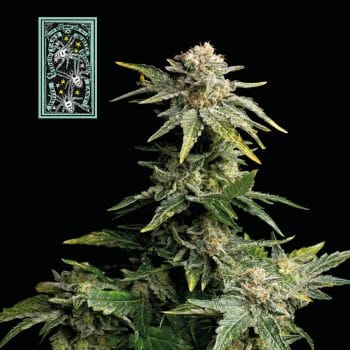
White Widow Regular
Looking to experiment with something new? White Widow Regular lets you put this classic at the backbone of a new creation. All the hallmarks are present - potency, vigor, bud density, and those much-lauded trichomes that made this remarkable strain the talking point in Dutch coffee houses all those years ago - and keep it on top to this day.


