

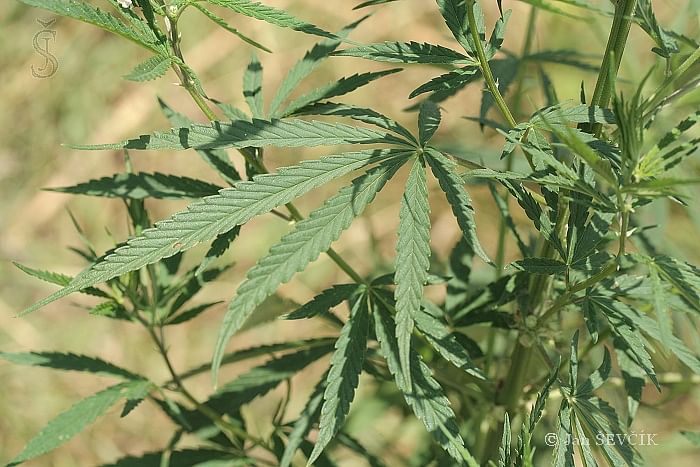
Cannabis Ruderalis is considered a subspecies of Cannabis Sativa and it is known to start flowering regardless of the photoperiod. This somewhat peculiar form of cannabis is thought to have stemmed from cannabis sativa plants that escaped from outdoor plantations somewhere in Russia. Today, ruderalis plants can be found in large populations in the wild all over Central and Eastern Europe.
Origin and Meaning of the Ruderalis Name
The name "Ruderalis" comes from the German word "ruderal", a term used for weeds growing by the roadside. Hence it has acquired the name "Ditch Weed" by growers. Similar ruderalis populations can be found throughout the United States and Canada, where hemp cultivation has been a common practice.
Wild hemp was in fact so widespread in the United States at one point that the government sponsored eradication programmes to battle the rapidly expanding cannabis population. They were, however, ultimately ineffective in their efforts because cannabis spreads so fast that it is almost impossible to eradicate once it gets a foothold. You can learn more about Cannabis Prohibition: The Consequences right here on the Seedsman blog.
Evolution of Cannabis in the Wild
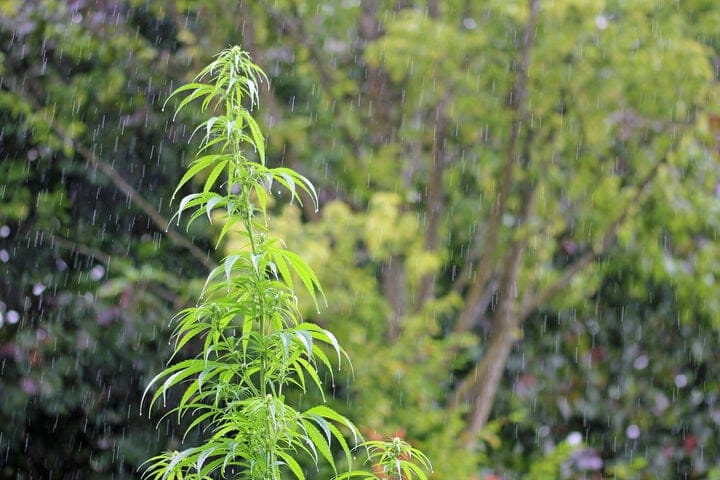
When the Russian cannabis plants escaped from cultivation and beyond the reach of human hands, they lost the traits that they were selectively bred for and developed a new set of traits that were suitable for survival in the wild.
Ruderalis plants are slightly smaller than their sativa and indica counterparts, perhaps because they have less time to grow before they begin flowering. Cannabis ruderalis resembles cannabis sativa in appearance, belonging to the narrow leaf type of cannabis plants. The plants are relatively short but lanky with infrequent nodes and sparse bud structure. Although ruderalis is considered a subspecies of cannabis sativa, it is also possible that they evolved from cannabis indica plants that migrated further and further north. In order to survive, they had to start flowering sooner and finish faster than before - a trait that possibly continued to evolve until they finally became fully autoflowering.
Further Reading:What Is Autoflowering?
Classification and Adapatability of Cannabis Ruderalis
The classification of cannabis plants is sometimes difficult as they can change appearance depending on where they are grown. It goes without saying that the cannabis plant is very good at adapting to different kinds of environments. Unlike their sativa and indica cousins, ruderalis plants are known to contain very low levels of THC, while sporting higher levels of the therapeutic cannabinoid CBD. High THC plants mostly occur in controlled populations and arise from selective breeding by humans. Wild plants can have a totally different chemical profile that contains a wider assortment of cannabinoids.
The environment, and specifically, strong sunlight, is the main factor that puts pressure on the plants to develop trichomes and thereby cannabinoids. Northern climates put less pressure on the plants in that sense and promote early maturation and resistance to high humidity instead.
Sativa, Indica, and Ruderalis: Environmental Pressures
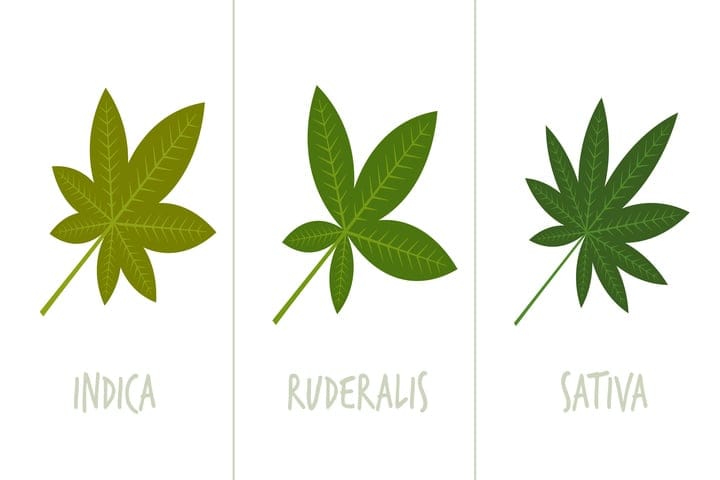
This is one point where we can argue that cannabis sativa could be the ancestor of cannabis ruderalis because cannabis indicas are not very well suited to humid environments, which is clearly expressed in their floral structure. They seem more adept at conserving water, which would indicate that they originate from the dry regions of the world.
Sativas, on the other hand originate in the tropics, where the humidity can rise to very high levels. That is probably one of the reasons why sativas have such loose bud structure which allows more air to circulate around the flowers, and reduces the chance of them being affected by mold. For that reason, you'll often find sativa strains on lists of the top mold-resistant cannabis strains. Presumably, the escaped plants included some individuals that flowered earlier than the others and those were the plants that had time to pass on their genes to the next generation of plants. Over the course of numerous generations even earlier plants emerged. At some point, there came a generation of plants that flowered well before the others, regardless of the photoperiod. They were the first autoflowering plants.
Why Cannabis Ruderalis Is Autoflowering
Flowering in cannabis plants is triggered by a complex series of events that involves sensory pigments and hormones, as well as specifically coded enzymes and proteins. All life forms on this planet have something called the circadian rhythm, which is a mechanism that evolved in response to light and darkness. This mechanism dictates certain behaviour at certain times, - the time of flowering, for example, in the case of plants. It is a sort of internal biological clock that works on a cellular level. It has, however, been shown that this internal clock can switch off at certain times of the year in life forms far north of the equator, where the length of the day varies considerably between seasons. Allowing this mechanism to switch off during the dark winter days and sunny summer nights prevents the organisms from going haywire, or in the case of humans, crazy. This is one of the reasons why cannabis ruderalis can flower automatically. It's a response to the long days and short nights of summertime in the areas where it can be found. All that the plant senses about its environment tells it to continue growing vegetatively and that it is not time to flower yet. However, in order to survive, the plants have to start flowering early in order to have time to make fully developed seeds. By shutting down the circadian rhythm, they also become free to flower at any time. It is also possible that the automatic flowering is boosted thanks to a rapid production of flower-inducing hormones.
Genetic Theories and Interbreeding of Cannabis Ruderalis
The autoflowering ability of cannabis ruderalis might be something that all cannabis plants have embedded into their genetic code, but the ability lies dormant in normal indica and sativa plants because there is no need for it. It's also possible that autoflowering is an acquired trait that developed as a result of rapid evolution among the rogue plants that were struggling to make it in the wild. Perhaps some of the early outdoor growers also had a hand in creating these strains by always selecting plants that matured early among indica or sativa populations. There is a lot of speculation as to where these plants came from, but one thing is certain: indica, sativa and ruderalis plants can interbreed, which makes them very closely related.
The exact taxonomic classification of the three subspecies of the cannabis plant is largely up to how you chose to see the plants. Structurally, you might get one answer while you might get another if you examine the chemical composition of the cannabinoids that are found in the plant.
Early Opinions and Grower Perceptions of Cannabis Ruderalis
To most people, this strange subspecies of the cannabis plant must have initially seemed totally useless because of the traits it possessed. Indeed, early Dutch breeders voiced their concerns when the plants surfaced in the home growing scene. It was said back then that plants containing Ruderalis genetics could not be grown indoors with good results because they would disregard the photoperiod and start flowering automatically within a month after emerging from the soil, usually after the appearance of the 5th to 7th set of true leaves. They also feared these plants were not ideal structurally and produced small harvests of low-potency bud.
These things are still occasionally brought up in discussions about autoflowering plants and many growers still cannot fathom why anybody would bother working with plants that contain ruderalis genes when there are so many excellent sativas and indicas.
Why Growers Use Ruderalis Genetics
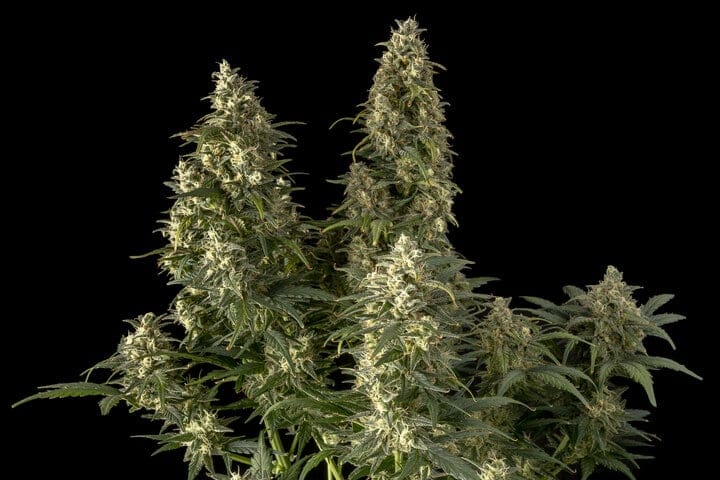
Although the original ruderalis or autoflowering cannabis plants did display some these traits, this is no longer the case thanks to modern breeding techniques. Over time, skilled breeders have worked to refine and shape what autoflowering cannabis plants can offer in terms of yield, cannabinoid content, and more. Modern cultivation techniques have played a big role in understanding how to maximize autoflowering yields. But even so, autoflowering plants are grown for their unusual ability to flower regardless of the photoperiod, as well as for their high resistance to mold, environmental stress and insect predation, things that are invaluable to growers where the photoperiod and environment is unsuitable for regular plants. The argument may be made that autoflowering plants are the best choice for northern growers in climates not suited to growing photoperiod strains. Autoflowering plants start to flower so early and finish so quickly that they can go from seed to bud-bearing adults in as little as ten weeks.
Early Breeding Experiments with Cannabis Ruderalis
During the 1970’s Canadian agriculturalists experimented with ruderalis crosses in hope of finding some clue to its past. They found that ruderalis plants could be crossed with the most potent high-THC strains, which gave them plants with intermediate levels of THC. Over the years, many growers and breeders have tried developing potent autoflowering hybrids from ruderalis genes. Neville Schoenmaker (the father of Dutch seed banks and founder of The Seed Bank), tried combining a number of different plants with Russian ruderalis in order to create stable autoflowering hybrids, but he had little luck in finding suitable plants. Sensi Seeds still offer some of those experimental hybrids, namely Ruderalis Indica and Ruderalis Skunk, as well as Four-Way, which is one quarter ruderalis with Northern Lights and Skunk #1 thrown into the mix. Although these plants contain ruderalis genes, the individuals are not all fully autoflowering according to Sensi Seeds.
Canadian Outdoor Lines and Semi-Autos
During this time Canadian growers on British Columbia's Gulf Islands also experimented with early maturing outdoor varieties. They noticed that some plants always seemed to flower much earlier than the rest and they started exploring those seeds lines in search of good plants. This eventually gave birth to the Mighty Mite strain that has now become famous for its extremely early, if not autoflowering abilities.
There is wide speculation on whether Mighty Mite actually contains ruderalis genes. One thing is for certain– it is one of the earliest outdoor plants that can be found. The Mighty Mite has since spread to both indoor and outdoor grows where it has been hybridized countless times in order to create early maturing but potent varieties including Guerilla Gold. It is sometimes difficult to draw a line between extremely early "Semi-Auto" and fully autoflowering plants because they can be seemingly similar in behaviour although they might have totally different pedigree. Perhaps there should be some distinction between the two, where one is classified as autoflowering based on genetic criteria and the other is considered a normal but early maturing plant that has acclimatized to the colder, northern environment. Some of these strains date back as much as thirty years, meaning that the plants have had time to grow accustomed to the local environment and thereby developed traits that ensure their survival. Coincidentally, many of these strains are pure or sativa dominant which would, in an indirect way, support the theory that cannabis ruderalis stems from that side of the family tree. These plants are not autoflowering per se, but so early that it can be difficult to spot any difference.
Hemp and Industrial Uses of Cannabis Ruderalis
There are many different varieties of commercial hemp - considered by some to be the most advantageous plant known to man - but very few of these strains are based on wild ruderalis. One of the most famous is FIN-314. Better known as Finola, it is an autoflowering hemp strain developed in 1995 for commercial crop growing in Finland (making it suitable for the rest of Scandinavia and other northern countries such as Canada). Its THC concentration is limited to a level acceptable to the government. Athe time of writing, above 0.3%, it is classified as a drug. Although these plants contain very little THC, they are rich in CBD and may have some medicinal uses. Russian ruderalis has also been successfully transformed into industrial hemp strains which are grown for fiber, seed and oil.
The Birth of Lowryder and Modern Autoflowers
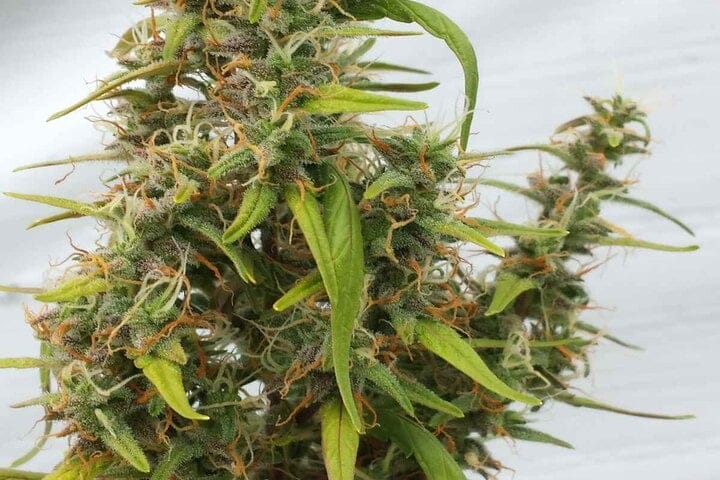
Ruderalis is often frowned upon, but one grower that became very familiar with the ruderalis plant and noticed its potential was The Joint Doctor. He was given a strange autoflowering plant called Mexican Rudy by a friend who was collecting exotic cannabis strains. The name cryptically suggests Mexican origin, but what exactly made up this plant is pure speculation. Some would like to believe that the ruderalis plants that were used in these crosses originated from the commercial hemp strain FIN-314, while others believe that the Mexican Rudy was based on experimental plants that were grown at some university or other government institution in the United States sometime during the 1970's. Regardless of its past, the Joint Doctor recognized its potential and started working with it in order to create a more appealing plant with a bigger yield and better quality finished product. It soon became apparent to him that the small size of the autoflowering plants was somehow connected with the unusual autoflowering trait. Over the course of several generations he crossed the Mexican Rudy with Northern Lights and William's Wonder, making this collection of strains the origins of Lowryder cannabis strain. This plant begun the era of autoflowering plants which are now widely used by both indoor and outdoor growers. Since then, the Lowryder and its relatives have evolved into more potent hybrids.
Breeding Autoflowering Cannabis
Breeding autoflowering hybrids is no easy task. In fact, they are just about the most difficult because the autoflowering trait is recessive. This means that if you cross an autoflowering plant with a regular plant, the traits become masked by normal flowering. If one wants to create a new autoflowering hybrid based on a normal plant, the resulting offspring has to be selectively back crossed at least twice to true breeding autoflowering plants in order for the offspring to retain this trait. That generation of plants will only contain a small percentage of the genes from the normal plant that we started out with, so several additional back crosses might become necessary in order to lock down the traits from the normal parent. In theory, this means that every commercial autoflowering strain has been grown for at least three generations before its release. In reality, it might be less in some cases, but probably more in most because fixing certain traits can be hard work.
Many have followed in the Joint Doctor's footsteps since the early days of the Lowryder and now you can find many different seed banks and breeders that offer autoflowering plants. It has always been the dream of these breeders to create a full sized autoflowering plant and that dream might soon become a reality as many breeders are working on "Super Autos" that retain the autoflowering trait but also grow into the size and shape of normal plants. The other dream, of creating autoflowering Haze, will also soon become a reality as we see many private growers making an effort to create the ultimate autoflowering strain based on these notoriously potent seed lines.
The Medicinal and Genetic Importance of Cannabis Ruderalis
The greatest use of autoflowering strains might actually be medicinal due to their ruderalis heritage and relatively high concentrations of CBD. Ironically, autoflowering strains are often overlooked by people looking for good quality high-CBD strains, simply because of a general unawareness of this particular property.
No matter how you choose to regard these plants, they are an asset in one form or another. They do require some degree of responsibility from the grower, especially in outdoor crops because unwanted pollination by these plants will infuse ruderalis and hemp genes into the gene pool. As long as populations remain controlled, we have little to fear from these plants and statements that they are ruining the gene pool of the entire species, are unwarranted. Cannabis Ruderalis is proof of how well this plant can adapt to different environments. It is a survivalist of the highest degree and can change shape and behaviour in order to grow accustomed to its new habitat. Where other plants fail and die out, ruderalis plants prosper and give rise to new generations of plants. But above all, they provide numerous solutions to common problems growers face.


