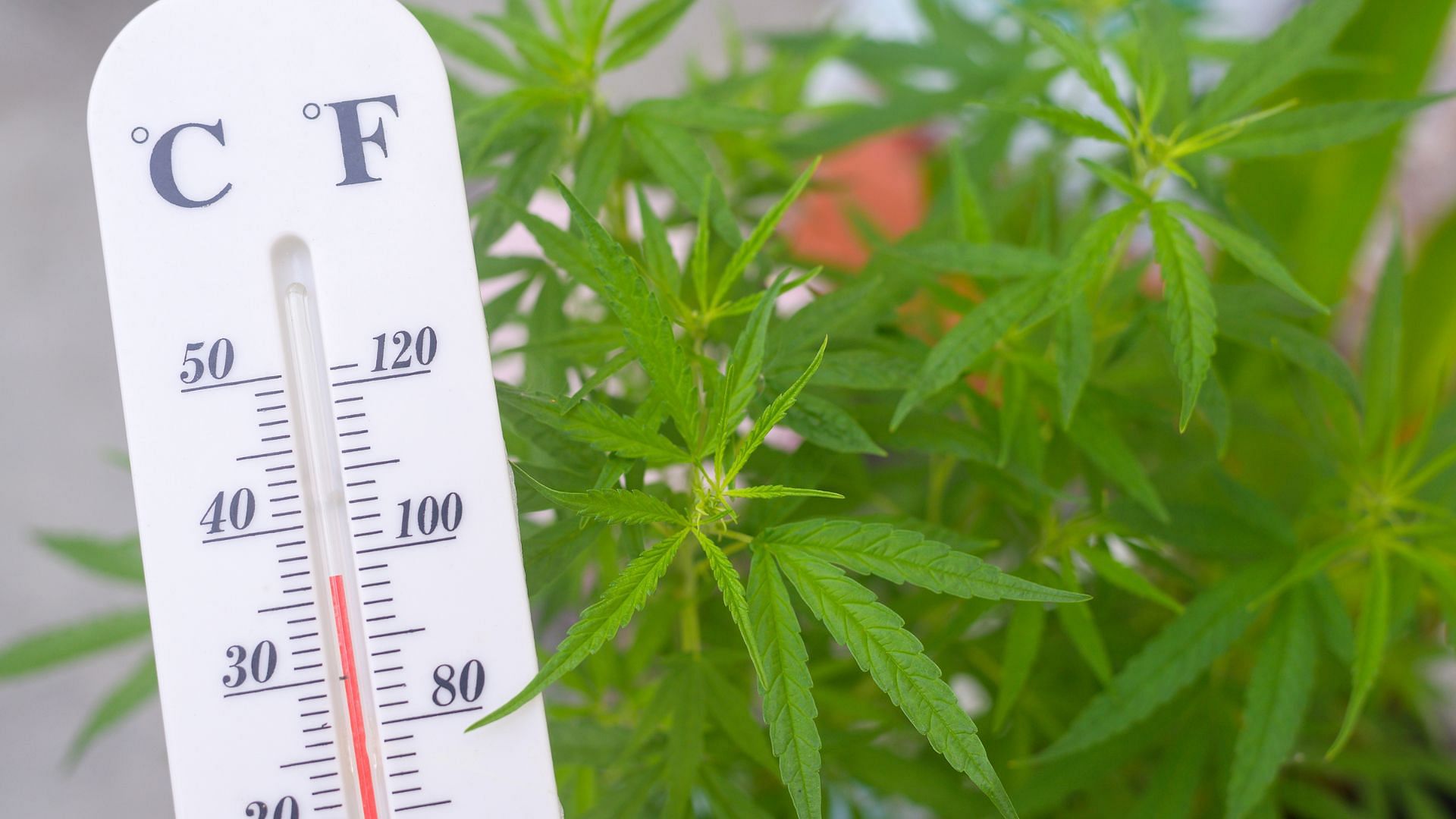
When it comes to growing cannabis, determining the ideal conditions can be a complex task. Much like the old adage, “how long is a piece of string”, the ideal growing conditions for an individual plant is subjective, let alone an entire species.
Each plant and its different stages of growth have specific requirements. Additionally, factors such as indoor cultivation and regional adaptation further complicate the matter. Therefore, it is impossible to pinpoint a single set of ideal conditions. However, we can explore the extremes of temperature and understand why they can be tolerated.
Chemistry And Temperature
In general, the naturally occurring chemistry of plants operates ideally at temperatures of around 25-30 degrees Celsius. This is the temperature at which most molecular biologists work on plants. In contrast, mammalian chemistry typically operates at body temperature, around 37 degrees Celsius.
High Temperature Tolerance
Having the gene for heat tolerance and having an active gene are two different things. Heat Shock Proteins (HSPs) are genes responsible for heat tolerance and are controlled by temperature-induced transcription factors. HSPs belong to a family of chaperone proteins that help maintain protein balance during heat stress. They act as protectants, preventing degradation of important genetic elements.
Physiological
Cacti, Agave, and Dessert Marigold are amongst the most adapted plants to high temperatures, and they have many features which allow them to be heat tolerant. These features include:
- water storage mechanisms
- reduced leaf surfaces
- specialized leaf structures,
- increased water efficiency
- minimizing water loss
- maximizing water uptake
- optimizing heat dissipation
These features allow plants to survive and even thrive in extreme heat conditions. For cannabis cultivation in high temperatures, it is important to induce the expression of heat-tolerant genes in the plant. This can be achieved through conditioning over early life, or down generations, resulting in an epigenetic shift towards better high-temperature tolerance. Looking at the physiology of the plant, typical indica varieties with large bushy leaves, darker green colouring and short stature, are well-adapted to high temperatures thanks to their tendency to grow in climates with hotter day temperatures and significantly colder evenings.

Low Temperature Tolerance
Just as there are heat-responsive genes, there are also cold response genes associated with low temperatures. Lower temperatures slow down biological processes, including chemical reactions. Cold-Regulated (COR) genes are involved in plant responses to cold stress, and antifreeze proteins (AFPs) help metabolic processes continue in low temperatures. If seeking out genetics, you cannot know for sure if a plant has good genes for temperature tolerance without sequencing the DNA, so instead we look at the physiology. Indica plants have typically adapted to grow successfully in climates with high daytime temperatures and much lower nighttime temperatures, giving them a survival edge over sativa varieties.
When growing cannabis in cold climates, it is important to consider shorter summers and choose varieties that can finish flowering quickly. Cold tolerance can also enhance disease resistance. However, constant cold conditions can negatively impact yield and potency due to slower metabolism. Nevertheless, using fast-growing plants that have been acclimated can result in successful harvests in cold climates.
Humidity Resistance
High humidity can have negative effects on plants, including increased disease susceptibility, reduced photosynthetic efficiency, leaf drying, and accumulation of reactive oxygen species (ROS). Ethylene Response Factors (ERFs) and WRKY transcription factors play roles in humidity response and disease tolerance. Some plants have unique adaptations to high humidity, such as epiphytic orchids with aerial roots that extract moisture from the air and pitcher plants that collect water and trap insects.

Cannabis is not particularly suited to very high humidity, but breeding efforts have focused on disease resistance. Mold-resistant strains have been developed, and managing relative humidity in the growing environment is crucial.
Ideal Temperature And Humidity For Growing Cannabis
Cannabis plants generally thrive within a wide range of temperatures and humidity levels. A temperature range of 20-30 degrees Celsius and relative humidity of 40-60% is generally safe for the plants. However, fine-tuning these conditions depends on various factors. It is important to gradually adjust temperature and humidity to the desired levels over a few days or weeks. Mimicking the natural growing season with cool humid springs, long day hot dry summers, and a warm end to the season can serve as a rough guide.
Typical ranges are:
Germination – 20-25 - +70% RH
Vegetation – 22-26 – 60% RH
Flower – 24-28 – 45-55% RH (Start warm and high RH and slowly reduce over the second half of flowering)