


After the advent of Islam, in the 7th century CE, Sūfīs—who are sometimes referred to as the 'mystics of Islam'—played a significant role in the global spread of Islamic culture. Some of the more radical sects of Sūfīs use cannabis to excess. In this article, we will briefly survey Sūfīs and cannabis culture.
The Origins Of Sufism
The term 'Sūfī' most probably derives from the Arabic word for wool, suf, which was used to refer to ascetics dressed in a simple woollen garment. However, only rarely do Sūfīs refer to themselves as 'Sūfīs' in literature or poetry.i Sūfīs are more commonly referred to by observers as faqīr (from the Arabic term faqr, meaning 'poor person'), or darvīsh (meaning 'lying in a doorway'). These terms signify the poverty of the individual in relation to God, the rejection of the 'material' world, and becoming itinerant.
Other terms that are used to refer to Sūfīs include 'abid (devotee) zahid (ascetic), salih (righteous), siddiq (sincere) 'alim (learned), 'arif (gnostic), hakim (sage), salik (wayfarer), 'ashiq (lover of God), and majdhub (ecstatically absorbed).

Sūfī institutions, such as hospices or monasteries (khānqāh), initially gained momentum in Syria, Iran and Egypt in the 11th century and subsequently spread to Turkey, Spain, East Africa, Central Asia and South Asia.ii There are many branches of Sūfīs. The first major sect of Sūfīs was the Qādirī order, instituted by Shaykh Abdul Qādir (1077–1166) from Baghdad.iii The Persian mystic and theologian Al-Hujwīrī (1009–1072), also known as Dātā Ganj Bakhsh in South Asia, classified twelve Sūfī schools. Later Persian authors classified fourteen families of Sūfīs,iv while in the 19th century, al-Sanusi listed forty Sūfī orders.v Some Sūfīs trace their lineage back to the Prophet Muhammad, while other sects claim that their lineage originates with either 'Alī (Muhammad's cousin and son-in-law) or Abu Bakr (Muhammad's father-in-law).
Sufism And Buddhism
Some scholars have proposed a Buddhist influence on Sufism. Almost a century ago, Nicholsonvi suggested that Sufism may have been influenced through contact with Buddhism, which was widespread in Khorāsān (Afghanistan/Tajikistan/Eastern Iran) at the time of the diffusion of Sufism in the late first millennium CE. He noted that the use of rosaries by Sūfīs was similar to their use by Buddhists, and that the Buddhist notion of nibbāna (nirvāṇa) is like the Sūfī notion of fanā (extinction/passing away, in trance). The final 'extinction' of the individual personality for Sūfīs is called fanā-al-fanā.
Sufi Initiation
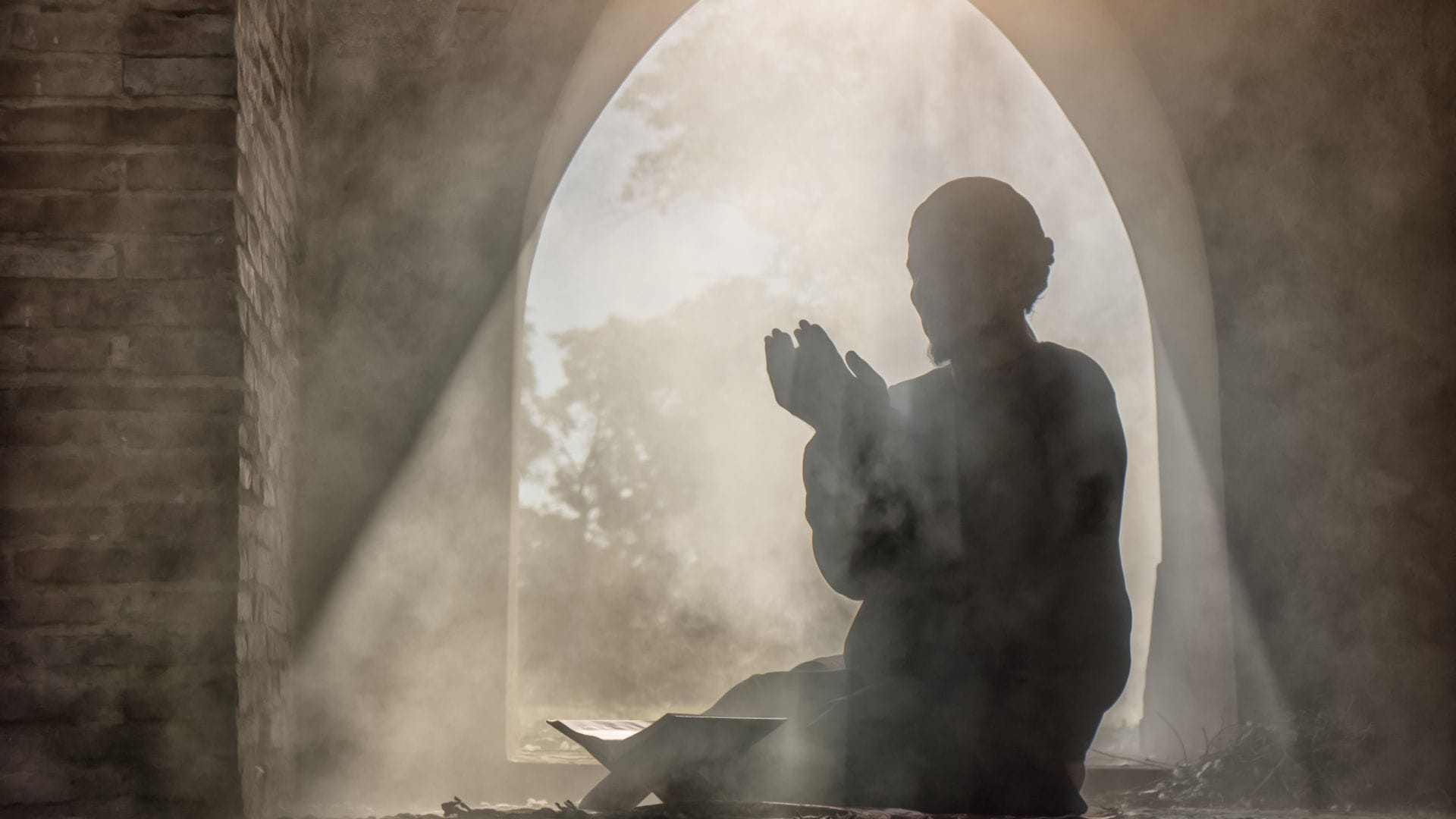
The relationship between teacher/master (pīr/shaykh) and disciple (mūrīd) is central to Sufism. During initiation (bay'a), the disciple shakes hands with the Master and swears an oath of allegiance to him. He professes the five vows of Islam (profession of faith, ritual prayer, fasting, pilgrimage, giving of alms). The disciple is usually given a cloak, which in earlier Sufism was usually blue, but later became a patchwork woollen garment. He is also sometimes given a distinctive hat, indicative of a particular order or sect. Often men's heads are shaved, in imitation of an act of the Prophet. Sometimes the disciple is required to write out a 'family tree' (shahaja) of the Master's sect.
Sufi Practices
It is important to note that there are many kinds of Sūfīs with very different lifestyles. Many have ordinary, householder lives and work in regular jobs, at all levels of society. Some Sūfī sects, such as the Chishti— which, together with the Suhrawadī, first became established in South Asia in the 13th century—emphasise the renunciation of wealth and the requirement to live on unsolicited alms (futūh). On the other hand, the Suhrawardīs became very wealthy and influential in Central and South Asia, owning extensive properties and fraternising with the political elites of the time.
Besides pious Sūfis, waves of warrior (ghāzī) Sūfī shaykhs arrived in India at the beginning of the 13th century. Between 1296 and 1347, militant Sūfīs were extensively involved in Muslim military expansion in India in the Deccan in central India.vii
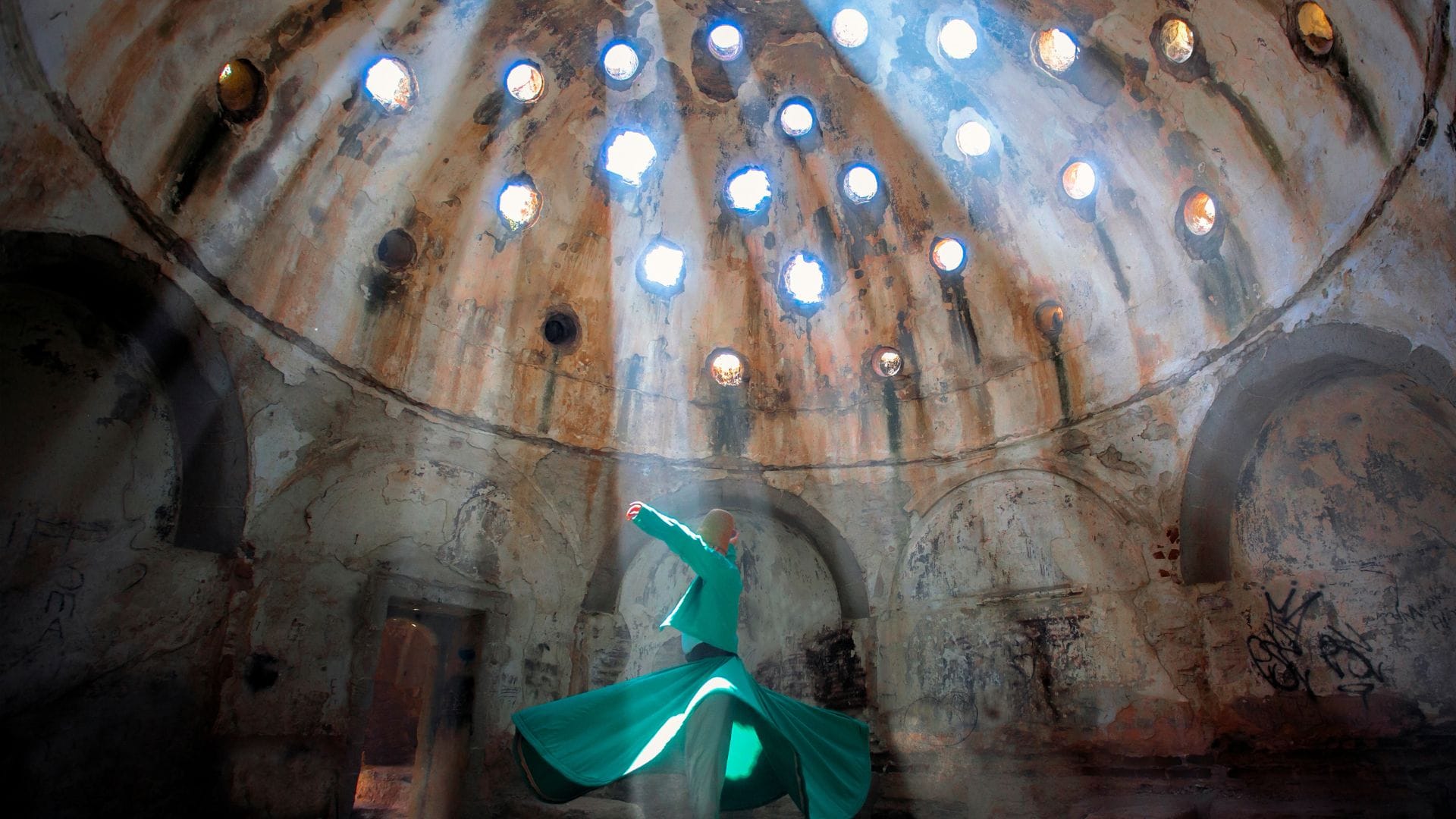
The Mehlevi (or Mawlawiyya) sect of Sūfīs, which originated in Konya, Turkey, was founded by the followers of perhaps the most famous of all Sūfī mystics, Jalaluddin Muhammad Balkhi Rumi, a 13th-century Persian poet.viii Mehlevis are famous as the 'whirling dervishes', who whirl (sema) into a trance-like state, while performing dhikr/zikr, the 'remembrance' of God. The use of music in religious practices is endorsed by some Sūfī sects, but forbidden in others. Hazrat Inayat Khan (1882–1927), an Indian Chishti, published an influential study of music and sound (originally between 1919 and 1926), making more widely known the role of music in Sūfī spiritual practices.ix
Visiting the tombs/shrines (dargāh) of saints is another important practice for Sūfīs. These tombs are numerous and found everywhere in the world where Sūfīs lived. Some tombs, such as that of the 13th-century Sūfī, Lal Shahbaz Qalandari, in Sehwan Sharif in Sindh Province in Pakistan, attract thousands of visitors, particularly at times of festivals.
Qalandars And The Global Spread Of Cannabis Culture, 1200–1550 CE
Beginning in the 10th–11th centuries, when Sūfī institutions began to develop and lineages of teachers and disciples (silsila) began to become more formalised, there emerged several sects of very radical Sūfīs, who were a major influence in the global spread of cannabis culture, all the way from Spain, Egypt and the Balkans to Central Asia, India and Western China. There were several sects of these radical Sūfīs, who mostly spoke Persian, known variously as Qalandarī, Haydarī or Malang, among other designations. The Qalandarī movement first noticeably appeared in Iran in the 11th century.x The numbers of Qalandars swelled after the Mongol invasions of Persia, which erupted at the beginning of the 13th century.
Many Qalandars went to India to escape persecution, becoming a major influence in the development of cannabis culture in South Asia. By the 14th century they had become a familiar sight.xi Sub-sects of Qalandars, such as the Jalālīs and the Madārīs (founded by Badi al-Din Qutb al-Mardar, d. 1440) augmented the significant Sūfī presence in north India from the 13th to 16th centuries. To this day, Qalandars/Malangs still go from shrine to shrine at religious festivals, smoking cilams of hashish or gāñjā, eating bhāṅg, and receiving alms from prayers and songs.xii
Influential Qalander Sufis
The most significant person in the development of the Qalandar movement was an Iranian, Jamal al-Din Sāvī (d. 1232), who was born in Sāvah, south of Tehran. Sāvī, who had been initiated into Sūfism, was inspired while he was studying in Damascus by Jalāl Darguzīnī, an ascetic who lived naked but for leaves covering his genitals. Darguzīnī ate only leaves and weeds, used to sit motionless for long periods of time, sometimes in graveyards, and regularly consumed bhāṅg.
Sāvī reacted against institutional Sufism and took to the radical path of the Qalandars, shaved his head and eyebrows and sometimes lived in a tree or graveyards.xiii He became known as a 'walking library' owing to his exceptional knowledge of religious and legal texts. He believed that he had discovered the secret of the divine revelation in cannabis inebriation.xiv The excessive use of cannabis, which was eaten, not smoked—the social habit of smoking only began in the 17th century—was one of the hallmarks of the Qalandars.
Another important figure in the development of the Qalandar movement was another Iranian, Qutb al-Din Haydar (d. 1222), who is credited with the discovery of hashish by many Sūfīs.xv Haydar was also from Sāvah. He carried an iron staff, had piercings in his ears and genitals, lived in nature and drank gazelle's milk. He travelled little and died in Sāvah.

Other significant branches of this movement included the followers of Bābā Barak, centred in Anatolya (in Turkey), the Abdals of Rūm (who had a reputation for being able to fly through supernatural power), the Jāmīs, the Shams-i-Tabrīzīs, and the Bektashīs.
Qalandar Practices
Qalandar ascetics who followed Sāvī, Haydar and other radical leaders, lived entirely outside the law (be-shar) and 'in ruins' (kharabat). The antinomianism of the Qalandars included a disdain for all social conventions, including attitudes to money, property, sexuality and inebriation. They completely renounced wealth and property and were supposed to remain entirely celibate. They wished to rely only on God (tawakkul).
Initiation into most of the radical sects, particularly by the followers of al-Sāvī, entailed shaving the hair from four parts of the body: the hair, beard, moustache and eyebrows (char zarb); however, the followers of al-Haydar (the Haydarī) retained long moustaches. In conventional Islam the loss of one’s hair and beard symbolized a loss of social status.
Qalandars often travelled in large bands, of up to a few hundred, and were known for begging aggressively and anti-social behaviour. They did not go to mosques nor did they regularly pray, but would utter mystic formulae, such as 'God is the Creator'. They also used a secret language. One of the practices of some Qalandars was to gaze at good-looking, unbearded boys as the manifestation of a reflection of divinity.
At night they would often dance, sing and bang tambourines or drums around fires. Some would walk on the hot coals of the fire; others ate snakes; some would pierce their bodies with swords or sharp, iron rods. They were sometimes described as sleeping with a brick for a pillow.
Appearance of Qalandars
The members of the various sub-sects of Qalandars wore distinctive apparel, which varied according to the sub-sect they were in; most went barefoot. Some wore woollen or felt garments or animal hides. A distinctive hat, a begging bowl, animal bones, a club, a hatchet, a spoon, a candle, and a razor were their other distinguishing accoutrements.
Followers of al-Sāvī wore sackcloth, while the Haydarīs were distinguished by their conical hats, iron collars, bracelets, chains and metal rings suspended from their genitals. Some Qalandars had dreadlocks, some were heavily tattooed, while others went entirely naked, covered merely with ash. In order to control the soul (nafs), some would perform penances such as remaining in icy water in the winter or around fires in the summer.
The Qalandars were accused by many conventional Muslims as being entirely degenerate; and there was concern over the seduction of the youth into the movement. Although Qalandars occasionally ended up as advisors to various rulers, others, such as the Mongol Hülagü Khan, one of Ghenhis Khan's grandsons, who conquered large parts of Asia in the 13th century, sentenced many Qalandars to death; some had their nose and ears chopped off.xvi
Wherever they appeared, whether in Asia Minor, Egypt or India, the Qalandars, with their wide-ranging networks, influenced to some degree local culture and religion.xvii Such was the influence of the Qalandars on Iranian culture that in the Ḥadīth (‘Commentary’) literature of Islam, it is implied that hashish (cannabis) came originally from Iran.xviii
Bibliography
Bey, Hakim, and Abel Zug (eds.) (2004). Orgies of the Hemp Eaters: Cuisine, Slang,
Literature & Ritual of Cannabis Culture. Brooklyn, NY: Automedia.
Boivin, Michel (2012). Le soufism antinomien dans le sous-continent indien: La 'l Shahbâz
Qalandar et son héritage XIIIe-XXe siècle. Paris: Les Éditions de Cerf.
van Bruinessen, Martin (1991). 'Haji Bektash, Sultan Sahak, Shah Mina Sahib and Various
Avatars of a Running Wall'. Turica, vol. XXI–XXIII, pp. 55–69.
Clark, Matthew (2020). 'Religious Sects, Syncretism, and Claims of Antiquity: The Daśanāmī-Saṃnyāsīs and South-Asian Sūfīs'. In Mirko Breitenstein and Gert Melville (eds.), Between Community and Seclusion: Defining the Religious Life in the South Asian Traditions, in Buddhism, and in Eastern and Western Christianity, pp. 63–91. Berlin: Lit Verlag.
Dehlvi, Sadia (2010). Sufism: The Heart of Islam. New Delhi: HarperCollins/The India Today Group.
Digby, Simon (1984). 'Qalandars and Related Groups: Elements of Social Deviance in the Religious Life of the Dehli Sultanate of the Thirteenth and Fourteenth Centuries'. In Yohanan Friedmann (ed.), Islam in Asia (vol. 1: South Asia, pp. 60–108. Jerusalem/Boulder, Colorado: The Magnes Press, The Hebrew University/Westview Press.
Ernst, Carl W. (2011). Sufism: An Introduction to the Mystical Traditions of Islam. Boston/London: Shambhala.
Karamustafa, Ahmet T. (2006) [1994]. God's Unruly Friends: Dervish Groups in the Islamic Middle Period 1200–1550. Oxford: Oneworld.
Khan, Hazrat Inayat (2014) [1919]. The Mysticism of Sound and Music (Revised Edition). Boston/London: Shambhala.
de Lacroix, J. F., and A. Hornot (2004) [1772]. 'The Discovery of Cannabis by Sheykh
Heydar'. In Anecdotes Arabes et Musulmanes, p. 534, trans. from an Arabian
manuscript circa 950. Reprinted in Bey and Zug (2004:209).
Matthee, Rudi (2005). The Pursuit of Pleasure: Drugs and Stimulants in Iranian History, 1500–1900. Princeton, New Jersey/Woodstock, Oxford: Princeton University Press.
Nicholson, Reynold A. (1975) [1923]. The Mystics of Islam. London/Boston: Routledge and Kegan Paul.
Papas, Alexandre (2016). 'Vagrancy and pilgrimage according to the Sufi qalandari path: the
illusions of anti-structure'. In Michel Boivin and Rémy Delage (eds.), Devotional Islam in Contemporary South Asia, pp. 15–30. London/New York: Routledge.
Rosenthal, Franz (1971). The Herb: Hashish Versus Medieval Muslim Society. Leiden: E. J. Brill.
Shah, Idries (1977) [1964]. The Sufis. London: Octagon Press.
, J. Spencer (1998) [1971]. The Sufi Orders in Islam. New York/Oxford: Oxford University Press.


