
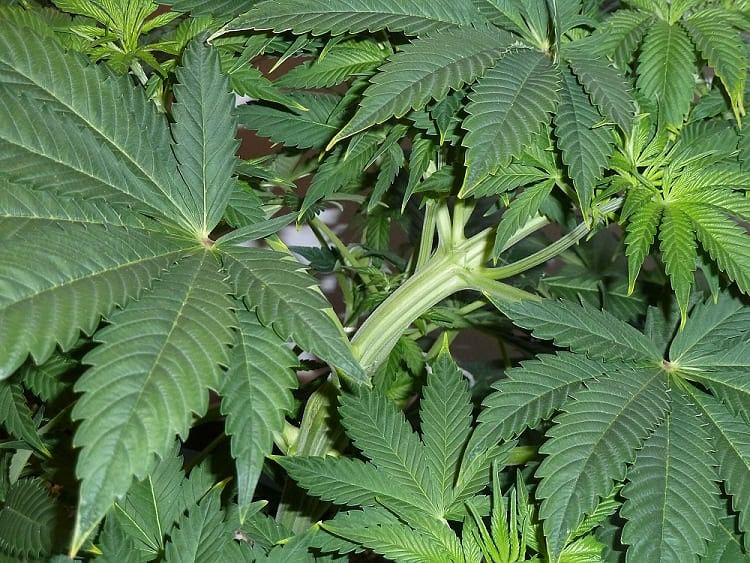

Telling the complete story of Cannabis Indica is not an easy task. Its history covers many areas of the world which are known for their traditional production of hashish. Many of these areas have undergone political changes over the years which makes the history of cannabis indica a very interesting one. Since it’s introduction to the commercial breeding scene, it has helped to generate an impressive number of new strains, including the undisputed king of cannabis Skunk #1, which is one quarter Afghani.
The Story of Cannabis Indica: Beginnings

The best place to start the story of Cannabis Indica is by classifying the plant; what we today call Cannabis Indica is a desert and mountain cultivar that has adapted to dry climates. It is often short and squat, densely branched with large leafs and tight buds, although this is not always the case as some also grow very large. Structurally, the indica plant seems to be specialized in preserving water which makes sense as it comes from a dry region of low humidity and rainfall. Indica type plants are usually fast flowering while pure sativas can take a very long time to finish.
Cannabis Indica has been classified as a subspecies of Cannabis Sativa, because it was discovered first, but recent studies have led researchers to believe that the opposite is probably true. The plant might actually have originated from Central Asia or the Indian subcontinent, more precisely somewhere in the Hindu Kush mountain region. There is also some speculation as to whether Cannabis Indica and Cannabis Sativa are actually the same species or not. Either way, all cannabis plants can interbreed and give rise to new variations of the plant.
Cultivation of Cannabis Indica

Cannabis Indica has a long tradition of cultivation for the production of hashish, while sativas are mainly grown for seeds, sinsemilla (seedless bud) or fiber. Sativas have traditionally been grown in almost all equatorial regions of the globe (Mexico, Thailand, Colombia, Jamaica etc.) and indicas in Central and Southern Asia as well as the Indian subcontinent (Afghanistan, Pakistan, China, India, Tibet, Nepal). It seems likely that the cannabis plant is so widespread thanks to the human cultivation of it. Sailors and travelers have exported cannabis seeds throughout the ages and those plants were then selectively bred in different areas for different purposes, and have since adapted to the local environment and climate. This has also led to a wide assortment of plants that differ from each other in both appearance and chemical composition.
Cannabis Indica: Classification
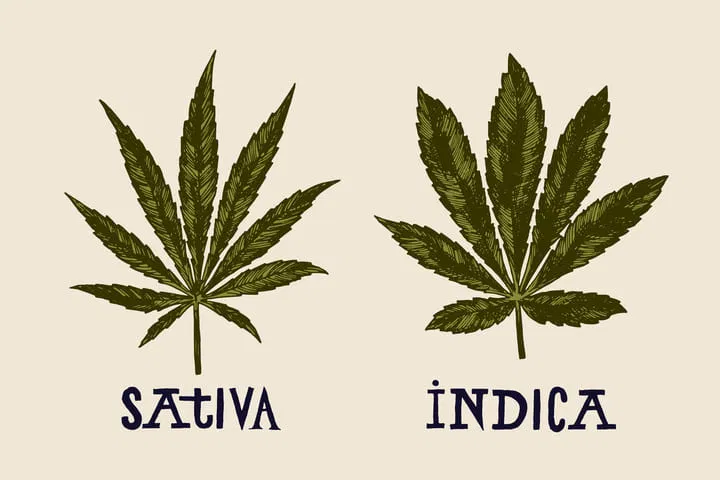
Although the most recent classification of cannabis plants makes a clear distinction between indicas and sativas, there is room for discussion. Most plants fall into one of two groups; the narrow leaflet dominant type or the wide leaflet dominant type. These are also divided into subgroups of cultivated and feral strains which are grown either for drug or fiber use. The broad leaf indica type plant is usually short and squat while the narrow leafed type can be taller and more slender, resembling sativa plants. As a matter of fact, recent studies have shown that most of the sativa plants that are grown today should actually belong to the narrow leaflet indica category.
The chemotype and cannabinoid profile of the plants vary with tradition and geographical location and that has become the new way of keeping track of the various strains. Classification is not that simple because crossover strains exist that fall somewhere in between, like Indica-type plants with Sativa-like buds and vice versa. Different types of indicas have also been interbred over the years, which make their classification even more difficult. The broad leafed plant is what typically associated with cannabis indica and it is for the most part made up of Afghanicas and Pakistani Kush. Both drug-type indicas and sativas can be high in THC but that is usually the product of selective breeding as wild cannabis plants usually display a relatively high CBD content. The indica high, or stone, can in one word be described as narcotic. Whereas sativas target mostly the head, the indicas provide a strong all-around stone that will sometimes leave you numb. This makes indicas useful as pain killers, and they are often favoured by medical cannabis patients.
Impact of Politics on Cannabis Indica
The political histories of the areas most known for traditional indica farming are troublesome and that has also had an impact on the plant itself. The areas cover parts of Central Asia, China, India, Northern Africa and the Middle East. The course of history and political turmoil has many times redefined the areas where hashish is produced. Afghanicas are perhaps the most well known, partly due to their commercial success. Afghanistan has a turbulent history of warfare and occupation, most recently by the Soviet Union. Without going too deep into the details surrounding that war, it had a great impact on the traditional production of hashish that the country was once known for. It has now been largely replaced with an opium trade that has grown to be the one of the largest in the world.
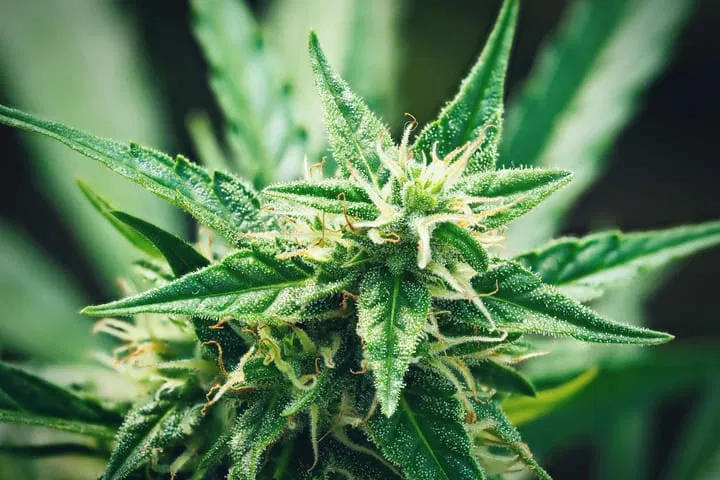
The Afghani indicas were traditionally grown in many different areas of the country. Some were grown in the mountains while others were grown at the foothills or in the lowland. Indica is widely accepted as the drug type strain while Kafiristanica is the indica equivalent of Ruderalis. Kafiristanica is thought to be based on hash plants that escaped from plantations in northern India. These plants were widely documented by the renowned Russian botanist and explorer Nikolai Vavilov and they give us an idea of what the broad leaf indicas looked like before they were domesticated.
Purple Kush The Afghanica variety has become quite dominant but some seem to think that there are also some Kafiristanica in circulation. Some of the long lost Afghani charas cultivars like the giant Mazar-i-Sharif #2 and Sheberghan have also recently become available again in pure form from The Real Seed Company. The Hindu Kush indicas come from the mountain region with the same name that stretches between eastern and central Afghanistan to north-western Pakistan. This mountain range is part of the Himalayas and at its highest point lies the capital district of Chitral. The Chitral Pakistanis are perhaps some of the best known along with the lowland cultivars from the Kashmir Valley. In some of these areas sativas grow alongside indicas.
Distinctions Between Indica Strains
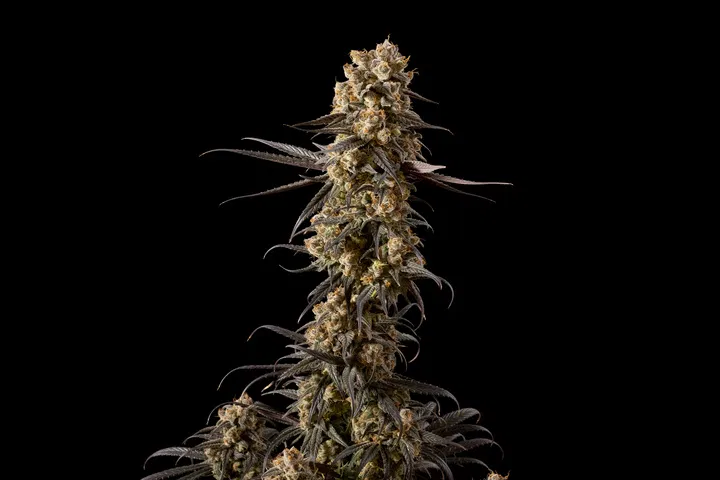
Making distinctions between the different indica strains is sometimes difficult due to the fact that cultures sometimes cross borders and with culture comes tradition. Some of the most highly regarded strains today, like OG Kush, are also partly founded on old world Pakistanis. Many of these old indica strains, including the Purple Kush, have been preserved in the United States since the late 1970’s, especially in the Mendocino, Humboldt and Trinity counties in California. Hindu Kush is one of the most affordable, stable and uniform lines from Seedsman, so it is well worth a look. Dutch Passion has a wide assortment of indicas, including Master Kush which is a hybrid of two Hindu Kush varieties. Moroccan Hash Plant, Afghan, and Kush hybrids are offered by most seed banks.
The Indica subspecies of cannabis also stretches into the Middle East and Northern Africa, where the Lebanese and Moroccan hash is perhaps the best known today. These strains are sometimes closer to the narrow-leafed indica type plant. Plants which are more sativa-like in appearance can be found further south from these areas. Some indica dominant plants can, however, also be found in northern parts of India, Nepal and Tibet. Yet other indica plants come from the Chinese province of Xinjiang that borders with several of the countries previously mentioned. The plants from the southern Chinese provinces of Yunnan and Sichuan are considered to be clear cross-over varieties between indica and sativa.
North from Afghanistan are areas that used to be part of the Soviet Union and even before that Turkestan. These areas were liberated as the Soviet Union collapsed, and many of the new sovereignties have their own traditional strains of cannabis indica. Other areas of interest are Turkmenistan, Tajikistan, Kyrgyzstan and Kazakhstan. Many of the indica strains from these areas cannot be acquired in seed form without some good contacts.
Indica plants have spread to many areas of globe and today can be found in places ranging anywhere from Canada to Africa.