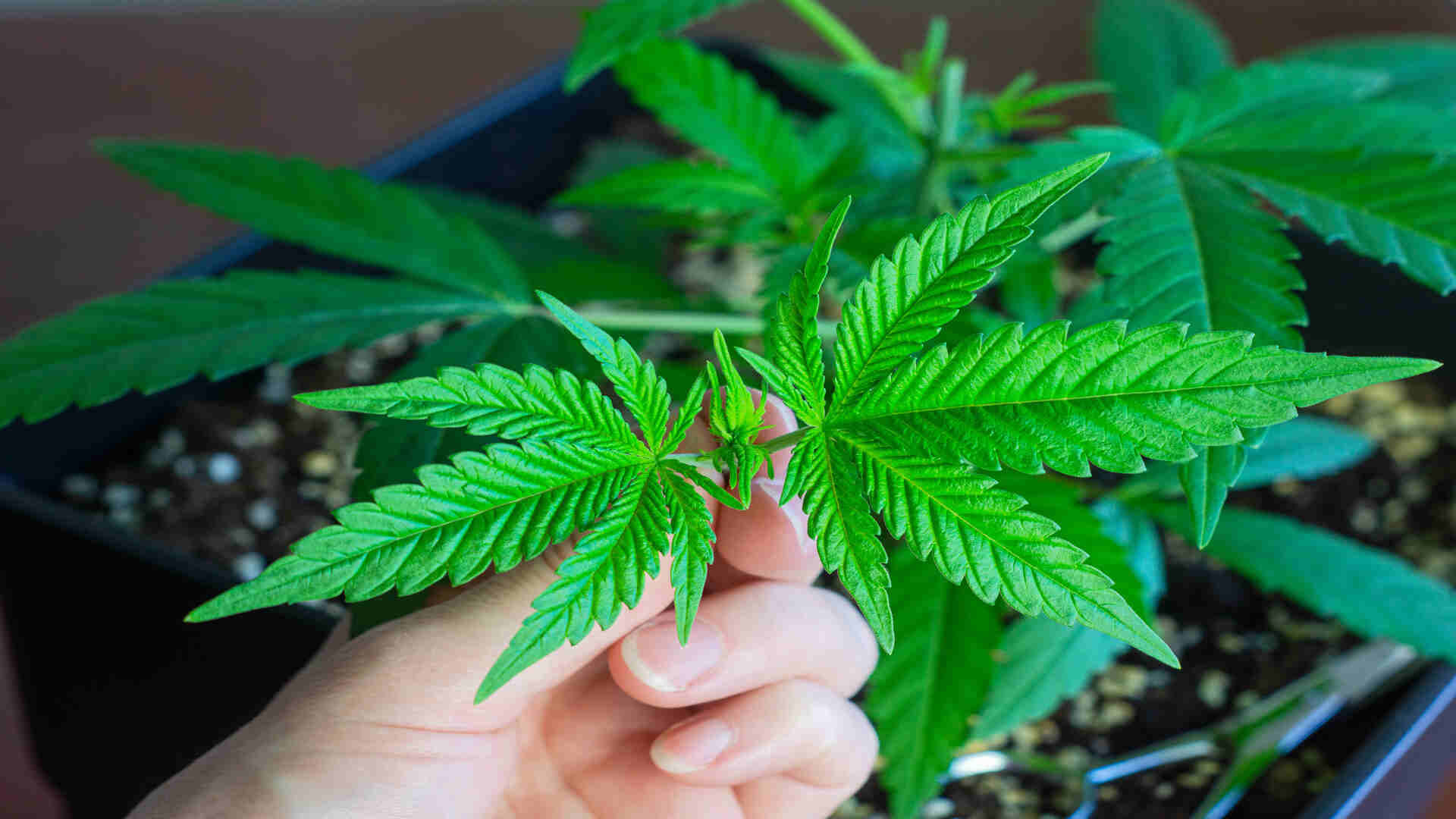
A common question asked by growers is, "Should you top autoflowering cannabis plants?" Of course, this gives rise to a heated debate over "can you?" versus "should you?" as well as whether or not this is achievable or, most importantly, if it's wise. That conversation can often get dragged into the territory of "Should you train autoflowers at all?" where you will encounter various answers and differing accounts of successes and failures regarding training autos.
For this blog, we will focus on the first part, "Should you top autoflowering plants?" and see if we can answer some of the big questions regarding that subject. We can't promise you'll agree; of course, your mileage may vary. For the benefit of the uninitiated, here are the ins and outs around the question, "Should you top autoflowers?"
First of all, What Is Topping?
Topping cannabis plants is a cultivation technique employed to manipulate the growth pattern of cannabis plants by removing the apical meristem, or the dominant central shoot, thereby encouraging lateral growth and the development of multiple colas. This process involves cutting off the topmost growth tip, typically during the vegetative stage, to stimulate the plant to redirect its energy towards lower branches. The result is a bushier plant with multiple main colas instead of a single dominant one.

Not to be confused with fimming, a similar technique where you snip slightly higher up the main stem, the primary goal of topping plants is to maximize yields and improve light distribution throughout the canopy, thereby increasing the potential for abundant bud production. Cultivators aim to capitalize on the plant's ability to produce more flowering sites by encouraging lateral branching, ultimately leading to a higher harvest. Topping, fimming, and pruning are high-stress techniques that will cause plants some degree of shock. Think about it; if you broke a toe, it would take longer to heal than if you stubbed it, right?
Topping Autoflowering Cannabis Plants: Factors to Consider
While topping has proven effective in increasing yields in photoperiod plants, its application to autoflowering plants requires careful consideration due to their unique characteristics. To have the best chance of maximizing yields, it all starts with the right genetics. Using high-quality autoflowering cannabis seeds is crucial for better yields and potent THC crops. Choosing a good autoflowering cannabis strain is essential, and Seedsman has you covered with unbeatable offers throughout the month of May.

Autoflowering cannabis plants have a distinct advantage in their abbreviated lifecycle, characterized by a predetermined flowering period rather than reliance on changes in light cycles. Unlike photoperiod strains, which can be vegetated for an extended period to allow plants time to recover from stress, autoflowering strains have limited time to recuperate from any form of manipulation. This means that carrying out an act like cutting into the plant, as topping involves, can significantly impact how the plant grows. In other words, it will cause the kind of stress an autoflowering cannabis plant doesn't have enough time to recover from. This should give you your first pause for thought.
Why Topping Autoflowering Strains Can Be Detrimental
Autoflowers must transition swiftly from vegetative growth to flowering, leaving little room for recovery. Topping can significantly influence how the plant produces multiple colas by cutting off the tip of the plant's main stem, forcing the development of several colas rather than one main cola.

Topping disrupts the plant's natural growth pattern and can delay flowering, potentially reducing overall yields and compromising the plant's health. Furthermore, autoflowers may not have sufficient time to produce new growth and establish a robust canopy before the flowering stage, leading to stunted growth and diminished bud production. By employing topping in a bid to produce great yields, you actually run the risk of ending up with lower flower production.
Alternatives to Topping Autoflowers: Low-Stress Training
Answering the popular question, "Should you use training techniques on autoflowers?" is a great way to get hate mail! Many growers swear by it, and many experienced growers think it's dicing with death. The camp has a definite split, and debates can turn ugly. Everyone needs to have a joint and calm down! The answer is a resounding yes - you can employ training techniques to auto plants, but keep it to low-stress training techniques and do it carefully. While topping may not be advisable for autoflowering cannabis plants, cultivators can employ other training techniques for training autoflowering cannabis to enhance yields and promote growth without risking the plant's health and productivity by requiring time to recover. Some viable alternatives include:
Low Stress Training (LST): LST is a popular technique when growing cannabis. It involves gently bending and securing branches to encourage horizontal growth and maximize light exposure. This technique can effectively increase bud sites and improve overall canopy coverage without inducing the same level of stress as topping. These techniques help control how plants grow and improve yields by distributing light evenly and encouraging the development of multiple colas. It's minor work for a tidy bump in harvest weight, so it's well worth the effort.

Defoliation: Strategic leaf removal during the vegetative stage can improve airflow and light penetration, promoting the development of lower bud sites without the need for topping. However, caution must be exercised to avoid excessive stress on the plant. Gentle defoliation can even mean some leaf-tucking to allow light to penetrate bud sites without causing harm or overly compromising how plants grow. Ordinarily, you would employ a little judicious pruning, with indicas especially likely to benefit from this tecnhique due to their bushier structure - but these are autos, so by all means, remove excess foliage but do so with caution.

Supercropping: This technique involves gently squeezing and bending the stems to promote lateral growth and increase bud production. Compared to topping, supercropping can be less stressful for autoflowers while still encouraging bushier growth.
Conclusion
In conclusion, while topping has proven effective for ensuring great yields in photoperiod cannabis strains, it is not recommended for autoflowering plants due to their abbreviated lifecycle and limited time to recover. Topping autoflowers can induce stress that may compromise the plant's health and diminish its potential for robust bud production.
Cultivators interested in maximizing yields and promoting bushier growth in autoflowers are advised to explore other techniques, such as low-stress training, defoliation, and supercropping. By understanding the unique characteristics of autoflowering cannabis plants and employing appropriate cultivation methods, enthusiasts can optimize their harvests without risking the health and vitality of their crops. Growing weed, especially when applying training techniques to autoflowering cannabis plants, requires a certain level of experience to ensure successful outcomes.