
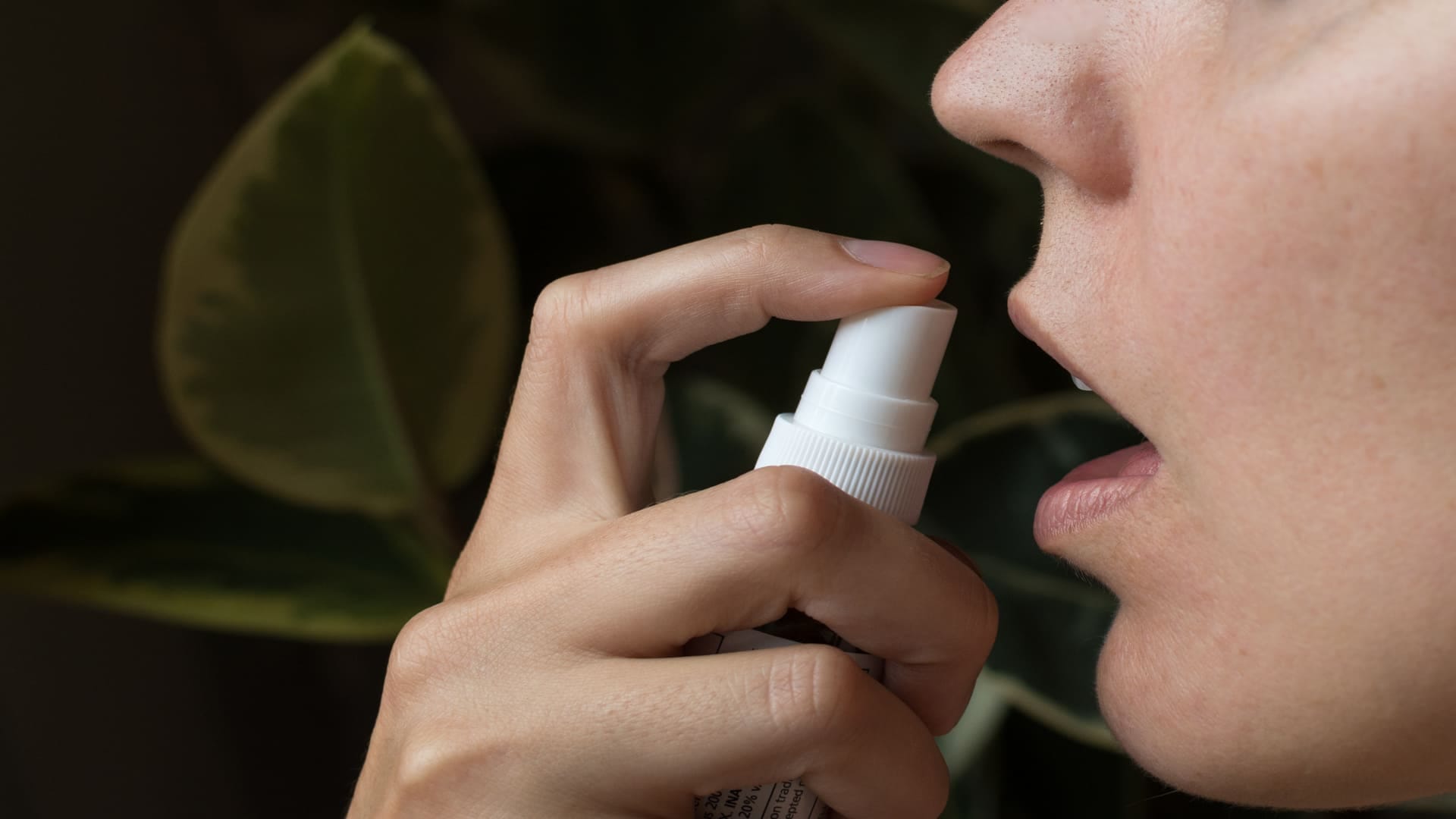

More than a decade has passed since the cannabis-derived mouth spray Sativex first captured public attention for its potential therapeutic value – most notably in the early hypothesis that it might help treat glioblastoma, the most aggressive form of brain tumour. Since that time, the UK’s relationship with cannabis-based medicines has evolved considerably, and Sativex has moved from a niche experiment to a licensed therapy availble on the NHS with ongoing research that continues to generate interest.
Sativex: From Brain Tumour Hypothesis To Phase II Trial
One of the most compelling developments in recent years is the ongoing ARISTOCRAT trial, a UK-led Phase II Study taking place at the University of Birmingham. The study tests whether Sativex (nabiximols) can improve outcomes in recurrent glioblastoma when combined with the standard chemotherapy drug temozolomide. The trial is double-blind, placebo-controlled and coordinated at the University of Birmingham via the Cancer Research UK Clinical Trials Unit.
The ARISTOCRAT design is ambitious, enrolling patients whose tumours have recurred at least three months after first-time treatment, and randomises them in a 2:1 ratio to receive either Sativex or placebo alongside temozolomide[1]. The primary outcome is overall survival, but the study also tracks 12-month survival, progression-free survival, quality of life (using patient-reported measures) and adverse events.

This isn’t the first time Sativex was tested in glioblastoma. A Phase 1/1b trial carried out between 2013 and 2015 investigated Sativex plus temozolomide in recurrent GBM. The study found that with personalised dose escalation (up to 12 sprays per day), Sativex was reasonably well tolerated and improtantly, one-year survival was markedly higher in the Sativex group (83%) compared to placebo (44%) - though the small sample size meant caution was needed before taking Sativex further.
What these encouraging early results did do, was spark ARISTOCRAT, which aimed to recruit over 200 patients across UK NHS hospitals, (including London, Glasgow, Edinburgh, Manchester and others). If ARISTOCRAT confirms a survival benefit or meaningful quality-of-life improvement, Sativex could become one of the first cannabis-derived medicines used in a mainstream cancer therapy regimen.
Sativex on the NHS: Licensed Use and Access
While the brain-tumour work provides exciting grounds for optimism, Sativex’s current medical home in the UK remains firmly rooted in multiple sclerosis. It is licensed by the MHRA (Medicines and Healthcare Products Regulatory Agency) for adult MS Patients with moderate to severe spasticity, specifically when they have not responded to other anti-spasticity treatments.
In England, NICE (National Institute for Health and Care Excellence) issued guidance back in November of 2019 recommending a 4-week trial of Sativex for qualifying patients [3]. In Scotland, the Scottish Medicines Consortium followed in September of 2022, approving Sativex for NHS use in the same indication[4]. Despite these approvals, however, access to Sativex remains patchy - which patients actually get Sativex depends heavily on local NHS funding decisions or whether their hospital trust supports the drug.
How Patients Receive And Respond To Sativex

Under standard NHS protocols, patients start Sativex on a 4-week trial. The approach is very cautious: individuals begin with just one spray per day and gradually increase up to 12 sprays per day to find a balance between benefits and side-effects.
Prescribing is done under specialist supervision. Shared-care protocols across UK NHS trusts typically require a 20% reduction in patient-reported spasticity [5](on a 0-10 numerical scale) for continuation beyond the initial trial. If that threshold is met, patients may be maintained on Sativex, usually via hospital pharmacy with periodic follow-up.
But how well does it work? A recent meta-analysis of randomised controlled trials (involving 1,000 MS patients) found that nabixomols (Sativex) is significantly better than placebo at reducing spasticity in patients who had not responded to standard therapy. This supports the role of Sativex as a valid “add-on” therapy even if it is not a cure.
Safety-wise, common side-effects of Sativex include dizziness, fatigue, nausea, dry mouth, or sleepiness – particularly during dose escalation. Shared care guidelines also warn about driving risks, noting patients should not drive until they know how the spray affects them.
Why This Matters

Putting it all together, Sativex’s story shows two parallel arcs:
Established Therapy: For people with MS whose spasticity is resitant to other drugs, Sativex is a licensed, evidence-backed option. The meta-analysis data, along with NICE and SMC support, make it a real part of the therapeutic toolkit – though inconsistent prescribing across NHS regions remains a barrier.
Experimental Oncology: The ARISTOCRAT trial represents a bold, carefully-designed effort to repurpose Sativex as a potential adjunctive cancer therapy. If Phase II results are positive, it could open the door to a new generation of cannabinoid-based treatments for glioblastoma – a disease desperately in need of some innovation.
There are still hurdles to clear, though. Even with with NICE/SMC approval, “postcode variances” in NHS funding mean not all eligible MS patients can easily access Sativex. For the cancer side, long-term survival benefit needs to be convincingly demonstrated, then larger-scale trials or regulatory updates will be required.
What’s Next For Sativex?
Sativex has come a long way in the UK. Once a curiosity in laboratory studies, it now serves as a real-world, licensed medicine for multiple sclerosis while simultaneously being studied – in a rigorous clincial trial – as a potential weapon against one of the deadliest brain tumours.
If the ARISTOCRAT trial delivers positive data, Sativex could find a much bigger role in oncology, making good on early hopes raised years ago. But even today, for many MS patients, it offers genuine relief, and for others, the ongoing cancer research involving Sativex brings a powerful dose of hope, and a symbol of how cannabis-derived medicines are slowly but decisively entering mainstream healthcare.
-------------------------------------------------------------
References:
[1] https://pubmed.ncbi.nlm.nih.gov/38225549/
[2] https://pubmed.ncbi.nlm.nih.gov/37519000/
[3] https://www.cuh.nhs.uk/patient-information/thc-cbd-spray-sativex/
[4] https://www.mssociety.org.uk/research/news/smc-recommends-sativex-use-nhs-scotland