
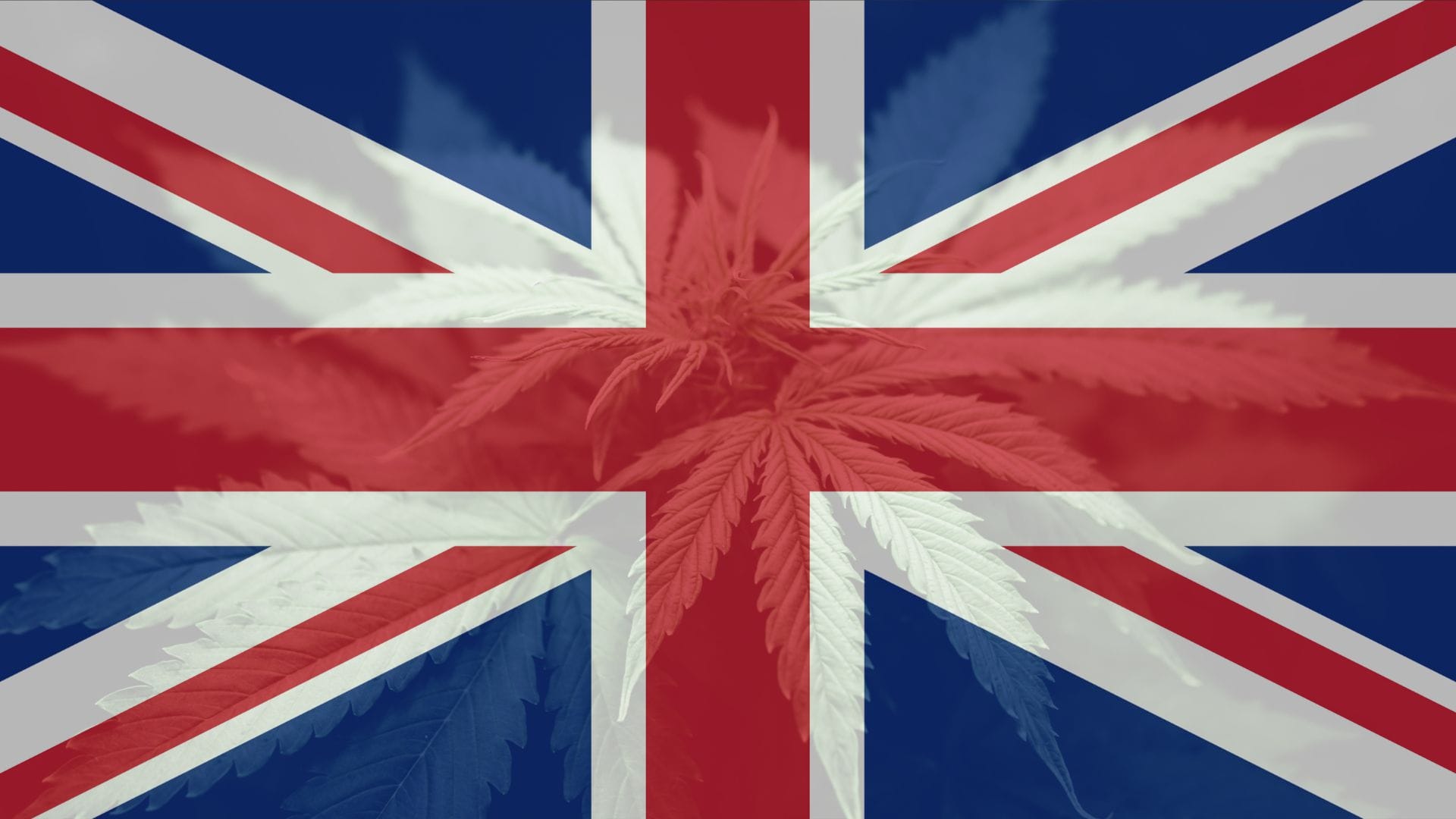
Without any announcement in the press or by government officers, high-THC cannabis has become legally available in the UK. Since August 2022, not only CBD products, but high-grade cannabis has also become legally available on prescription from doctors for a wide range of medical conditions, through a system known as Project T21.
Medical Cannabis Law Globally
Apart from a few countries that outlawed cannabis in previous centuries, the global prohibition of cannabis for any purpose began after a UN Convention came into force in 1924. Only on 2nd December 2020 did the UN partially reverse the policy, formally recognising the potential use of cannabis for medical purposes.
Even though a technical ban on medical cannabis was in force everywhere until 2020, several countries began legalising it in the 1990s. In the USA, after the passing of Proposition 215, California became the first state in the USA to legalise medical cannabis, in 1996. In 1998, Oregon, Alaska and Washington followed suit. Today, most states in the USA have legalised medical cannabis. The legalisation of cannabis for recreational purposes began in the USA in 2012, in Colorado and Washington, and, similarly, the trend towards full legalisation continues elsewhere, not only in the USA but also worldwide.
Around thirty-five countries have legalised medical cannabis in the last twenty years or so;[i] some countries, however, only permit the use of synthetic cannabis medicines—notably Sativex, Epidiolex, Nabilone and Dronabinol—for particular medical conditions, particularly epilepsy.
The Effectiveness of Medicinal Cannabis
The most common reasons for using medicinal cannabis are depression, high blood pressure, anxiety, arthritis and chronic pain. The majority of prescriptions, internationally, are for chronic pain.[ii] In Germany, 71% of prescriptions are for chronic pain, while in Canada 30% of prescriptions are for anxiety.[iii]
One of the main factors in the effectiveness of cannabis as a medicine for such a wide range of medical conditions is that cannabis is the only known drug that increases brain metabolism, and thereby the uptake of glucose in the brain. All other drugs, including psychedelics, tend to dampen down brain activity.[iv]
Medical Cannabis in the UK
In the UK, even though still technically forbidden by international law, medicinal cannabis was still available on prescription in the form of a tincture until 1971. It was one of the last countries to withdraw all licences for medical cannabis.[v]
It has been estimated that around 1.4 million people—around 2% of the population of the UK—use cannabis for a medical condition,[vi] with 81% of people obtaining their cannabis from the black market.[vii] Among the most common reasons for use are for pain and anxiety. It has been calculated that around half of the cannabis grown illegally in the UK is for medicinal use, and that around one million people are self-medicating with cannabis.[viii]


Despite the change in UK regulations, which happened on 1st November 2018, allowing prescriptions for medical cannabis, procedural complexities have meant that patients requiring it for a particular medical condition have nevertheless been unable either to obtain it or pay for it, as treatment via the NHS remains prohibitively expensive.[i] In 2019, only around 0.25% of the total case volume (757 patients) managed to obtain cannabis through an NHS prescription.[ii]
CBD
Owing to legal and technical restrictions, to avoid the charge of providing cannabis in the form of a mind-altering "drug", for a decade or so CBD has been widely available in the UK (and in many other countries) in high street shops. "Medical" CBD has developed into a large industry worldwide. In 2019, between four and eight million UK adults used a CBD product.[iii] Dani Gordon (2020) details a wide range of medical treatment programs now based on CBD, and also highlights the effective role of particular terpenoids found in cannabis plants—such as limonene, humulene and myrcene—in complementing the treatment activity of CBD.

One of the interesting features of CBD is that it acts as a negative allosteric modulator (NAM), decreasing the uptake of THC at CB1 receptor sites, which are in the brain and also the nervous system.[i] CBD consequently has anti-psychotic and anti-schizophrenic properties; it may also help with THC addiction, which seems to affect around 8%–10% of the cannabis-using population,[ii] though far fewer people, proportionally, become addicted to THC than to alcohol.
Full Spectrum Medical Cannabis
Despite the effectiveness of CBD for a host of medical conditions, the addition of THC and other cannabinoids to the medical repertoire significantly increases the range of medical conditions for which cannabis can be effective. Michael Backes (2017) provides a comprehensive menu of different kinds of cannabis, all with slightly different chemical profiles, matched to around seventy kinds of illnesses for which they are appropriate.
Project T21
Without any press or government fanfare, in late December 2019, Sapphire Clinics (Sapphire Medical) became the first medical cannabis clinic registered in the UK. It began by holding two free online educational webinars, designed for physicians on the use of cannabis for patients.[iii] Then, beginning in August 2022, through Project T21 patients could sign up for a "trial" of full-spectrum cannabis, including high-THC flower and hash oil, for a wide range of medical conditions.
An online consultation with a doctor is arranged with the patient. If the patient has a previous medical condition for which cannabis may be appropriate, then the doctor will require access to the person's medical record to establish their condition. If, after further consultation with a medical team, the patient is deemed suitable for a trial, then payment can be made to buy from a range of up to twenty kinds of cannabis flower or around a dozen kinds of hash oil. Prices for high-THC cannabis from MedBud (2023) start at £140 (US$170) per ounce, while cannabis oil starts at £2.66 per millilitre. These products are supposed to be vaped. The cannabis is delivered by courier to your home, via a pharmacy or clinic registered in the scheme. There are now around fifteen pharmacies and clinics registered in the scheme in the UK, and several others are soon going online.

According to several websites, including Drug Science (2023):
"T21 allows patients to access medical cannabis treatment at a discounted price while collecting data to build up the real-world evidence on the effects of Cannabis-Based Medicinal Products (CBMPs). Drug Science will use the data from T21 to provide evidence for NHS funding of medical cannabis treatment".
Conditions for Eligibility in the Trials
The range of conditions for which cannabis medicine may be prescribed is impressive. Drug Science (2023) lists thirty medical conditions for which a prescription may be issued for Project T21. Once a medical prescription has been issued under the supervision of a registered Project T21 provider, then the patient is no longer potentially subject to arrest by the police for possession of an illegal substance; they can vape in peace.
This is a very welcome development in medical practice in the UK. It means that up to perhaps a million or more people will now have easy and affordable access to high-quality cannabis that can be used for medical purposes. After 12,000 years of human trials, sense seems to have finally prevailed in Britain's medical and regulatory worlds.
References:
Backes, Michael (2017) [2014]. Cannabis Pharmacy: The Practical Guide to Medical Marijuana. New York/London: Black Dog and Leventhal Publishers/Elephant Book Company Limited.
Drug Science (2023) https://www.drugscience.org.uk/apply/
Gordon, Dani (2020). The CBD Bible: Cannabis and the wellness revolution that will change your life. London: Orion Spring.
King, Dave, and Amber Moore (2020). The UK Review of Medicinal Cannabis: The needs of a nation. (Part A: The Current Landscape: A review of pathways and barriers to access of cannabis-based products for medicinal use in the UK). London: Conservative Drug Policy Reform Group.
MedBud (2023). https://medbud.wiki/guides/special-schemes/project-twenty21/
Nutt, David, and Brigid Moss (2021). Cannabis (Seeing through the Smoke): The New Science of Cannabis + Your Health. London: Yellow Kite/Hodder Stroughton Ltd.
Sapphire Medical (2023). https://app.sapphireclinics.com/process/create-account?gclid=Cj0KCQiAx6ugBhCcARIsAGNmMbhFOkqW6F0K7TaJe5V0XrXFk-828Wpi05vA5XkeGLrzN7lkrJhbCd4aAhK1EALw_wcB
Wikipedia (2023). 'Medical cannabis'. https://en.wikipedia.org/wiki/Medical_cannabis
________________________________________________________________________________________
[1] These include Argentina, Australia, Brazil, Canada, Chile, Colombia, Costa Rica, Croatia, Cyprus, Czech Republic, Finland, Germany, Greece, Israel, Italy, Jamaica, Lebanon, Luxembourg, Malta, Morocco, the Netherlands, New Zealand, North Macedonia, Panama, Peru, Poland, Portugal, Rwanda, Spain, Sri Lanka, Switzerland, Thailand, the UK, and Uruguay (Wikipedia 2023).
[1] (King and Moore 2020:84–85).
[1] (Nutt 2021:126).
[1] (Nutt 2021:88).