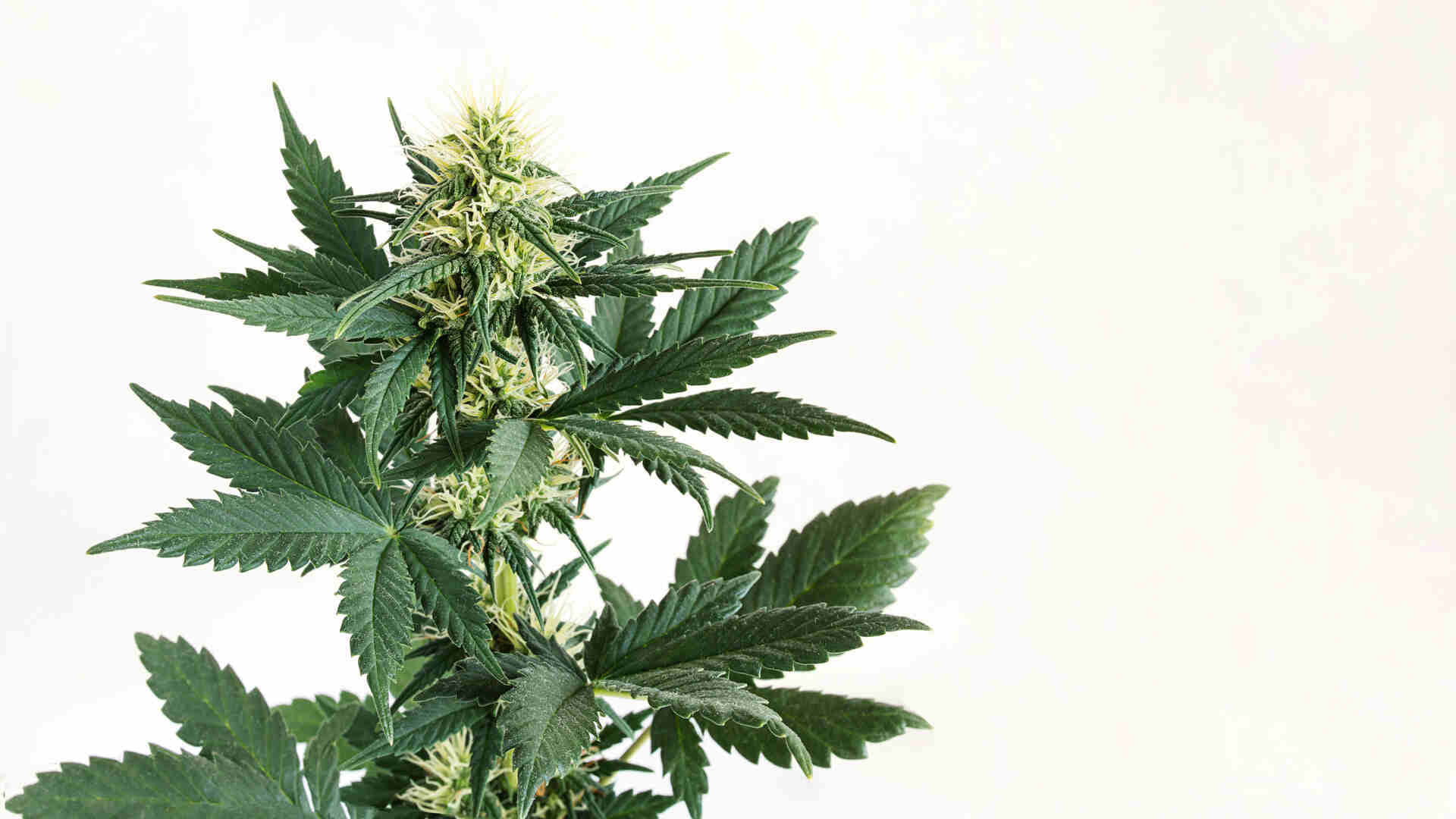
Depending on your location, this is when full-season outdoor cannabis plants begin their natural transition into the flowering stage. As the nights grow longer, photoperiod plants respond to the changing light cycle by producing hormones that trigger bud development. This shift marks the beginning of the growing season's most rewarding and demanding phase. In this article, we’ll cover everything you need to do to prepare your plants for flower, from pruning and pest management to nutrient adjustments and irrigation strategies, so you can maximize yields and maintain peak plant health.
Landrace Strains to Modern Hybrids
Cannabis plants evolved in various places worldwide, with sativas originating closer to the equator in warmer climates, indica in harsher, shorter climates, and autoflowers or ruderalis in the most extreme growing environments. Today, sativa and Indica strains are hybridized between the landraces that originated in these locations. Unlike autoflowers, they are photoperiod plants, which means they trigger into flower when the length of darkness increases. In this article, we will mainly focus on photoperiod plants.
Check out our article on Why You Should Grow Autoflowers to learn more!
Depending on your location relative to the equator, your flowering initiation will be different. This is because the further you get from the equator, the more variances there are in the length of daylight. For places like Alaska, there is simply too much sunlight for full-season photoperiod plants to transition into flower and mature before frost. In these places, greenhouses with light deprivation tarps or autoflower strains are essential.
Join BLAZE & Help Us Create Outdoor Growing Zones

As you travel south, flower initiation begins sometime between mid-July and mid-August. Currently, we don’t have delineated growing zones based on latitude and hardiness zones, but that’s about to change with BLAZE—Botanical Latitude And Zonal Evaluation. This citizen science project collects data on both sativa and indica hybrids. This year, it’s Strawberry Banana Grape and Purple Oreoz to determine when flowering begins across the United States. This past week, citizen scientists have started to report the beginning of the transition with the arrival of pistils.
Support the science and join Friends of BLAZE to be updated on our progress be the first to know about next year's strains.
Are your Plants Transitioning?
Cannabis plants go through a distinct period known as the transition or stretch. This transition from vegetative growth to flowering is accompanied by thickening of the stems, tighter internodal spacing, and the emergence of cannabis pistils and the calyx. The cannabis pistil is a female reproductive organ that signifies sexual maturity. The pistil contains the stigma, the hair-like structure you can visibly see, that connects to the ovules within the bract. These hairlike structures are often referred to as the pistil and signify that your plant is beginning to transition into flower.
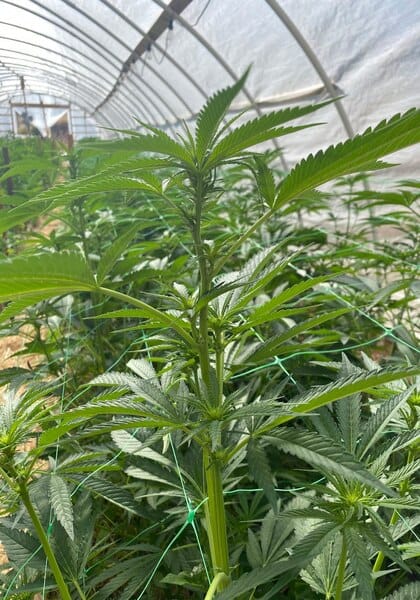
With the arrival of flowers, there are a variety of things you should do to make sure your plants have the best flower time possible. Have you done everything on the checklist?
Flowering Stage Checklist for Healthy Cannabis Plants
- Optimize your cannabis IPM strategy – A strong Integrated Pest Management plan during flowering helps prevent pests and mold, protecting your buds naturally.
- Prune cannabis plants for better airflow and bud development – Remove lower leaves and unnecessary growth to increase light penetration and reduce disease risk.
- Support heavy cannabis buds with trellising or plant supports – Use netting, stakes, or cages to prevent broken branches and improve overall yield.
- Increase bloom nutrients during flowering – Topdress with phosphorus- and potassium-rich amendments or adjust your liquid feeding schedule to fuel flower production.
- Adjust irrigation to meet increased water demands during flowering – As cannabis plants develop dense buds, their water needs rise. Monitor soil moisture closely and modify your watering schedule to prevent stress and support optimal flower growth.
Further Reading:Transitioning Nutrients From Vegetative To Flowering Phase
Optimize Your Cannabis IPM Strategy
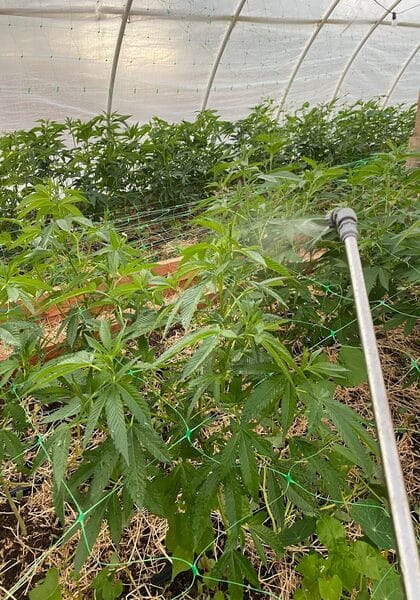
As your plant begins to go into flower, it’s important to ensure you’ve got a handle on your pests. If you haven’t sprayed sulfur, this is your last chance to do so. Sulfur is an essential micronutrient required by plants, and it is also a natural fungicide. Spraying plants with wettable or JADAM sulfur at least once can help prevent fungal pathogens. Once you're in flower, you cannot use sulfur. It is also incompatible with oil-based sprays, like neem, which can knock back various pests such as aphids or spider mites. Again, this product cannot be used on flowers. The only things safe to spray on flowers are unscented castile soap and water, or products like Organishield that break down into water and CO2. As soon as you see pistils, get any last-minute IPM sprays in. You will know if you need to spray when you are pruning.
Prune Cannabis Plants for Better Airflow & Bud Development
As you prune, don't forget to check your leaves for pests. And remember, pruning your outdoor plants is different from pruning your indoor plants. When you grow outside, the sun moves across the sky, allowing much more light penetration than static light hanging from the ceiling. This means you don’t need to go crazy pruning. You can remove lower branches that are touching the ground, but lollipopping is not necessary. Remove any branches growing inward or up through the center of the canopy. Think about what these branches will look like in two months when they are heavy with buds. Are they growing into each other, or have enough room to grow and space for air to flow between? Once you’ve completed your pre-flower pruning, it’s time to get trellising up.
Further Reading:How To Prune Cannabis Plants
Support Heavy Cannabis Buds with Trellising or Plant Supports
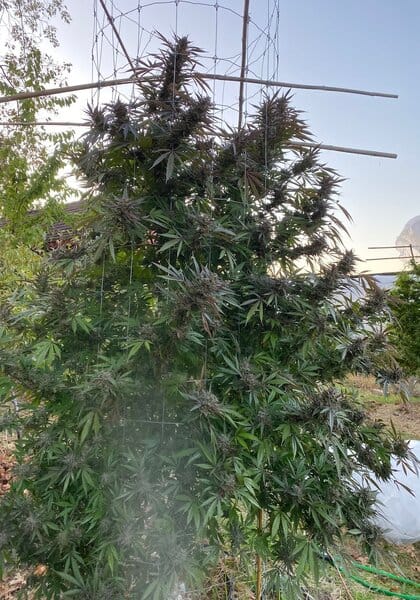
As your buds begin to swell, the added weight can cause branches to break, so it’s essential to ensure you have your trellising and plant supports up before that happens. Depending on how your plants are growing, you may want to use individual plant supports with trellising wrapped around the plant, or if you have many plants in a row, like sea-of-green, you can use fencing and trellising across the row. Different types of support include rigid agricultural fencing, bamboo stakes, t-posts, plastic or jute netting, to name a few. However you decide to support your plant, it is critical to do it before the stretch to support lower buds and then add another layer to support the out branches. This transition from vegetative to flower can see growth increase 25-50% depending on the strain and the conditions. That means these plants will need sufficient food for all that growth.
Increase Bloom Nutrients During Flower
During the flowering phase of growth, your plant is packing on the weight with top kolas weighing anywhere from 1-16 ounces. That means your plant’s nutrition needs to be on par. If you’re growing in the ground, your plant can access more naturally available nutrients than those grown in a container. You can use products like ImmuniTea to increase nutrient cycling and overall plant vigor during this time. It’s also good to topdress with dry amendments with higher P-K ratios. Ingredients like Cal-Phos, a rock phosphate high in calcium, are a great start, along with langebeite or kelp meal. Don't forget that your plant needs that Nitrogen too, though, so don't pull back yet. Keep up with the fish or soy amino acids to ensure adequate Nitrogen for the remainder of the stretch. You can slow down once that plant stops stretching and buds are swelling.
Water Demands Increase During Flowering
As cannabis transitions into the flowering stage, water demands increase significantly to support the rapid development of buds. During this time, plants are actively building floral structures, expanding biomass, and driving nutrient uptake, all of which require consistent hydration. Flowering plants typically transpire more due to their larger leaf surface area and higher metabolic activity, especially in warm, sunny conditions. This makes regular monitoring of soil moisture and environmental conditions essential. Underwatering during flower can lead to reduced yields, stunted bud growth, and an increased risk of nutrient lockout or deficiencies, while overwatering can cause root rot or fungal problems. To meet these changing needs, growers should consider adjusting irrigation frequency and volume, ensuring water reaches the root zone deeply without causing waterlogging. Automated drip systems, mulch to reduce evaporation, and moisture-retaining soil amendments like compost or coco coir can help maintain stable hydration.
Seasonal shifts in temperature and rainfall must also be factored in. Responsive irrigation practices during flowering prevent plant stress and directly contribute to denser, more resinous buds. Understanding and adapting to increased water demands is key to successful cannabis cultivation during the most critical phase of the plant's lifecycle.
Off to the Races: Flowering with a Strong Start
By checking off these items and making sure your plant has the best foundation for a healthy flower, you increase your chances of a pest-free harvest with a higher yield. Pay attention to your plants and your soil. This is the hottest time of the year, make sure your plants have adequate water and dial in the moisture content so they stay on track.